VI
VI


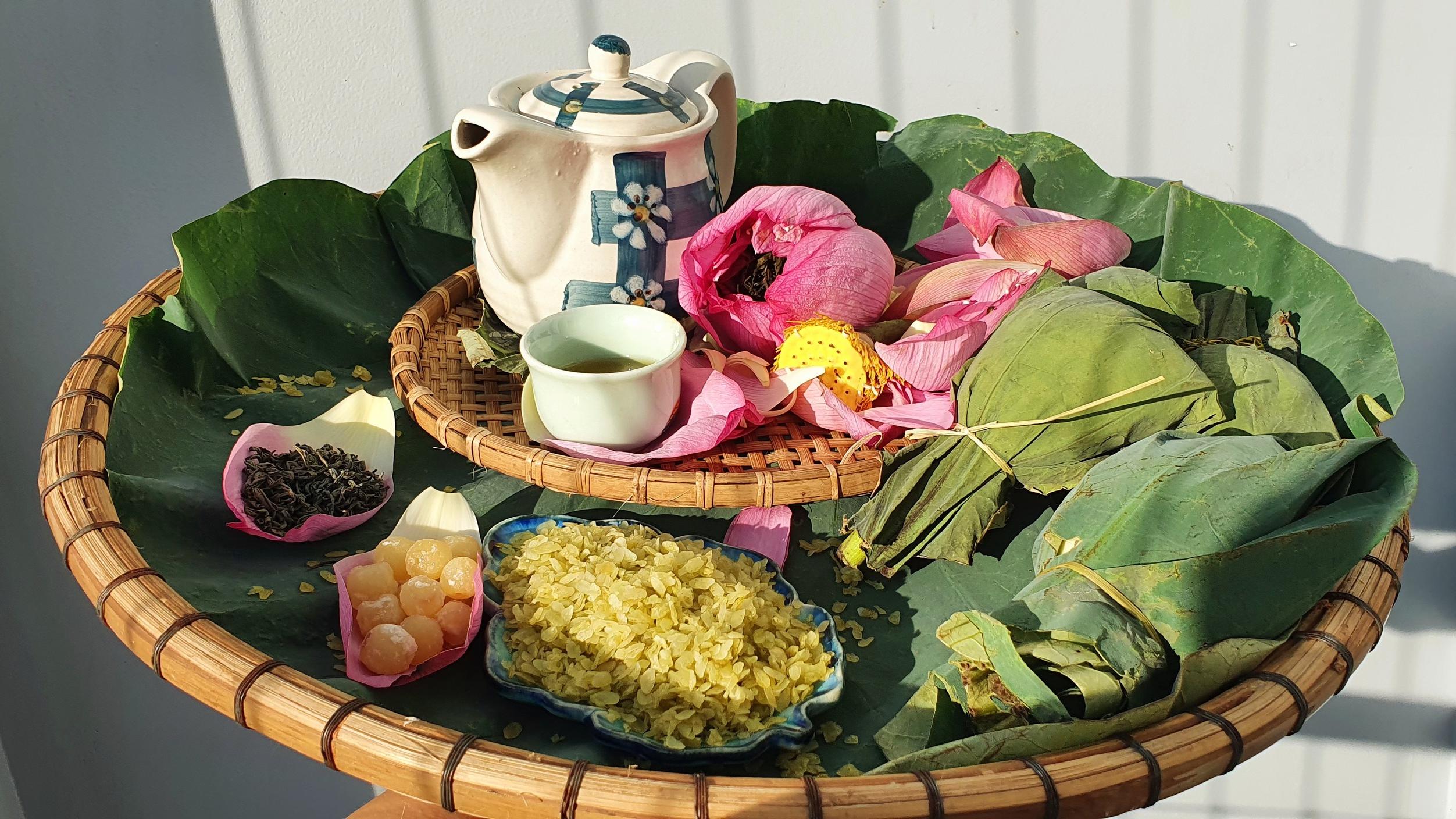
"The scent of young rice in autumn beckons."
A strangely captivating feeling of the countryside's scent at the beginning of the season.
The sunlight is pale yellow, and a gentle breeze blows.
The autumn wind rustles through Hanoi's ancient streets.
The gentle autumn breeze sweeps by, heralding the arrival of a refined and pure delicacy. The fragrant aroma of young rice grains evokes memories of a simple, rustic dish that encapsulates the essence of nature, found only in Hanoi – green rice flakes (cốm).
Each season in Hanoi has its own unique beauty. But it is in autumn that one can truly appreciate the charm of the capital city. This beauty comes from the crisp, cool mornings, the quiet streets bathed in the first rays of sunlight, or from the rows of trees turning golden...
And somehow, since when, every autumn, people seek out the "season of young green rice flakes." Hanoi in autumn is the image of women and mothers carrying baskets of green rice flakes on their shoulders, weaving through every alleyway; it's a rustic flavor that seems to find peace in the heart of the bustling city. These delicate, green rice flakes, sweet and fragrant, embody the essence of the earth and sky, of the sun and wind, leaving a lingering, nostalgic feeling with each bite.
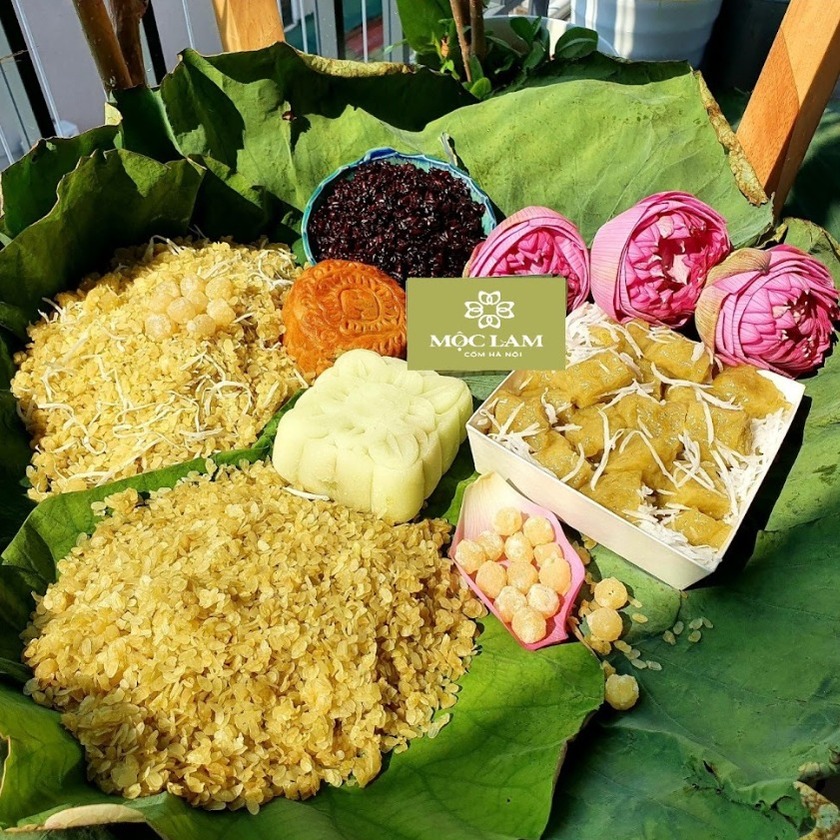
Every autumn, people go in search of "the season of young green rice flakes."
"A precious gem" bearing the distinct mark of home.
In Hanoi, many places know the recipe for making sticky rice flakes (cốm), but when mentioning the traditional craft of making fragrant sticky rice flakes recognized as a National Intangible Cultural Heritage, one must remember Me Tri village. Located in the suburbs of Hanoi, Me Tri has a rich history spanning hundreds of years, and has always strived to maintain and develop this traditional craft with the desire to preserve the cultural essence of the people of Thang An (Hanoi).

Driven by the desire to preserve the traditional rice flake making craft passed down from her grandparents to her parents-in-law for over 40 years, since marrying into the family in Me Tri village, Ms. Vu Phuc has built the Moc Lam – Hanoi Rice Flakes brand and hopes that these delicious Vietnamese rice flakes will reach more customers both domestically and internationally.
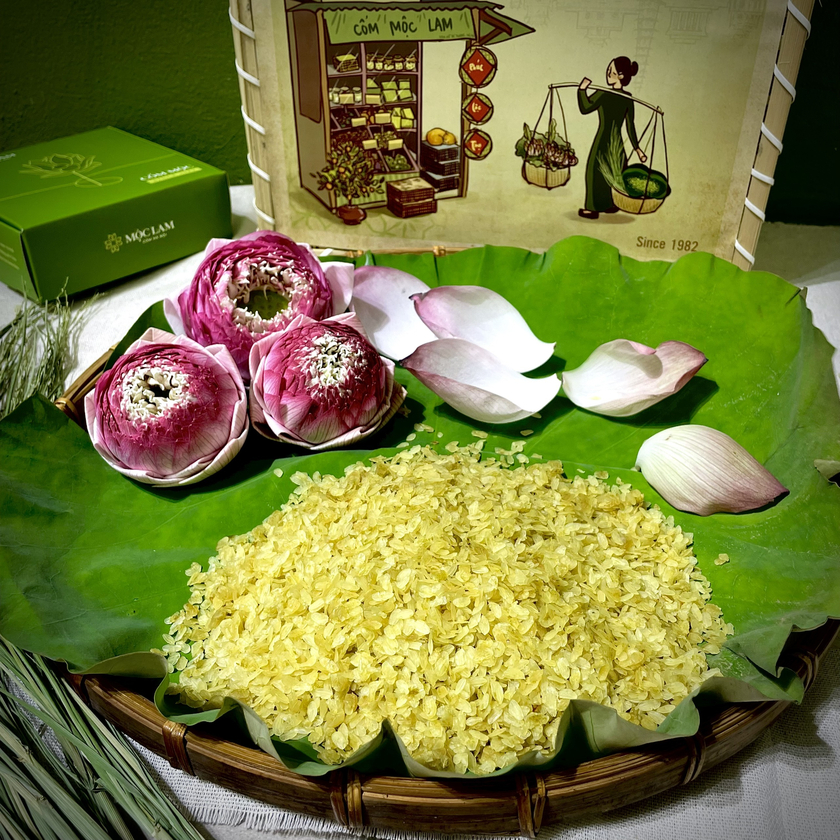
With a history spanning hundreds of years, Me Tri village has always strived to preserve and develop this traditional craft, hoping to pass on the finest cultural traditions of the people of Thang An.
In a conversation with Travellive, Ms. Phuc shared: “Since getting married and moving to Me Tri in 2016, my husband's family has a rice puff roasting workshop run by his parents, and the products are readily available, so I started my own rice puff business. From 2016 to 2021, I still worked in an office and only maintained a seasonal online business, with customers mainly being friends and relatives. Later, the number of regular customers who referred me gradually increased. The more involved I became with the product, the more I realized that making rice puffs is really hard work, and fewer and fewer young people are following in their parents' footsteps.”
There are two rice flake production seasons a year, from the 15th day of the 7th lunar month to the end of the 9th lunar month. Nowadays, we can enjoy rice flakes year-round, but the harvest season is always when the young, tender flakes are at their best. Each step requires highly skilled and meticulous techniques that only experienced artisans understand. In particular, each place possesses its own unique, closely guarded family secrets.
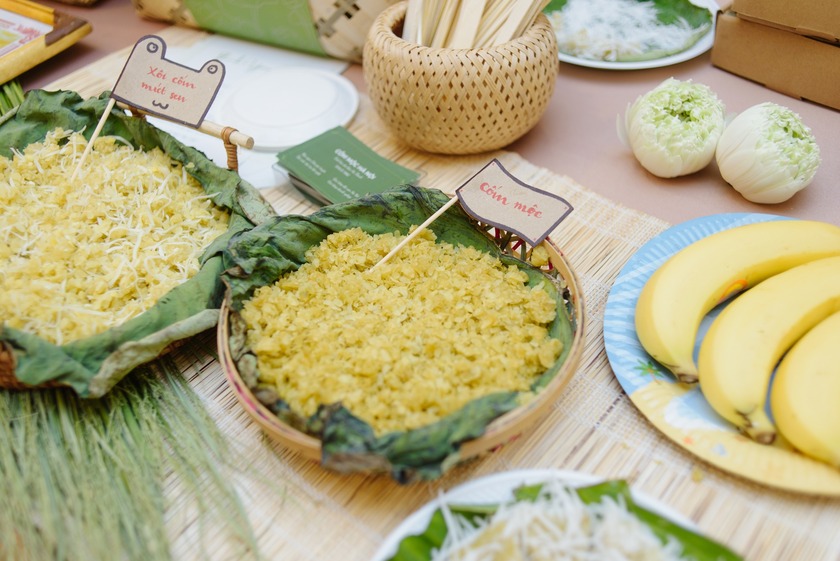
Each step requires highly advanced and meticulous techniques that only skilled professionals understand.
According to Ms. Phuc, Me Tri sticky rice flakes are made from young, perfectly ripe glutinous rice grains, the grains of which are just beginning to turn glossy and full of milky juice. Before harvesting, the quality of the glutinous rice must be checked; only when it meets the standard of being milky-colored is harvesting permitted. After harvesting, each rice stalk is carefully picked clean, then skillfully washed in a water tank to select plump, glossy grains. The rice is then roasted over wood fire in a thick-bottomed cast-iron pan, ensuring even heat distribution until the grains absorb the heat and turn into a milky, curdled state. Each batch takes about two hours to roast. During the roasting process, someone must constantly monitor and adjust the fire. Once the rice flakes are roasted to perfection, they are thoroughly cleaned, then pounded three to four more times to produce thin, flat, chewy, fragrant rice flakes with a milky aroma.
To achieve those irresistibly delicious puffed rice grains, Ms. Phuc readily shared her secret: “When making puffed rice, the most important step is roasting. The artisan must carefully monitor the temperature to ensure the rice grains are roasted to the perfect degree of doneness. Overcooking will burn the rice, while undercooking will cause it to stick together and be difficult to separate the husks. The roasting process is crucial to the deliciousness, chewiness, and firmness of the puffed rice.”
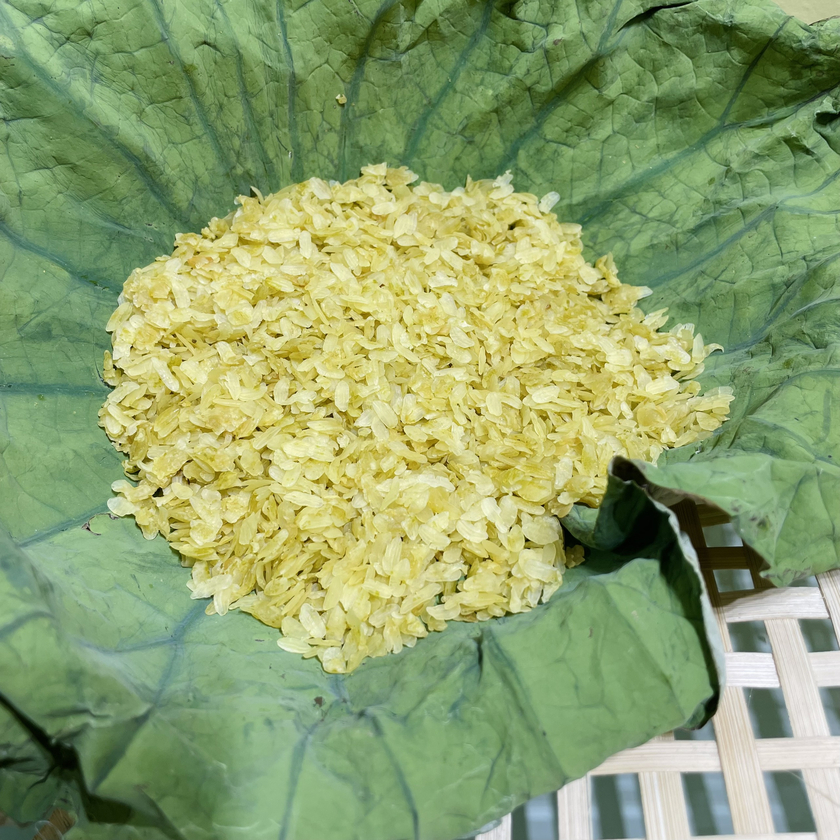
When making puffed rice, the most important step to pay attention to is roasting the rice.
Every autumn, the village of Me Tri is ablaze with fire from two or three in the morning as farmers roast young rice flakes (cốm). This is partly to save time between harvesting and roasting, ensuring the rice grains retain their freshness for a soft, fragrant, and tender product, and partly to take advantage of the time before sunrise to reduce the heat and make the work less strenuous for the farmers.
To identify authentic, delicious young rice flakes from Me Tri village, Ms. Phuc said: “When eating, the rice flakes must stick tightly to the mouth, making them difficult to remove – that's the real deal. Young rice flakes are made from rice grains that have just entered the milky stage, so after roasting, the finished product is thin and translucent like a tamarind leaf. When held up to the sunlight, it looks transparent, soft to the touch, and each grain is small, not broken or cracked. The rice flakes are soft and moist to the touch, but must be loose and not clumpy. Authentic Me Tri village rice flakes have a light yellow color, not green. Depending on the rice variety, the temperature, and the roasting experience of the artisan, the resulting rice flakes can have a light or dark yellow color.”
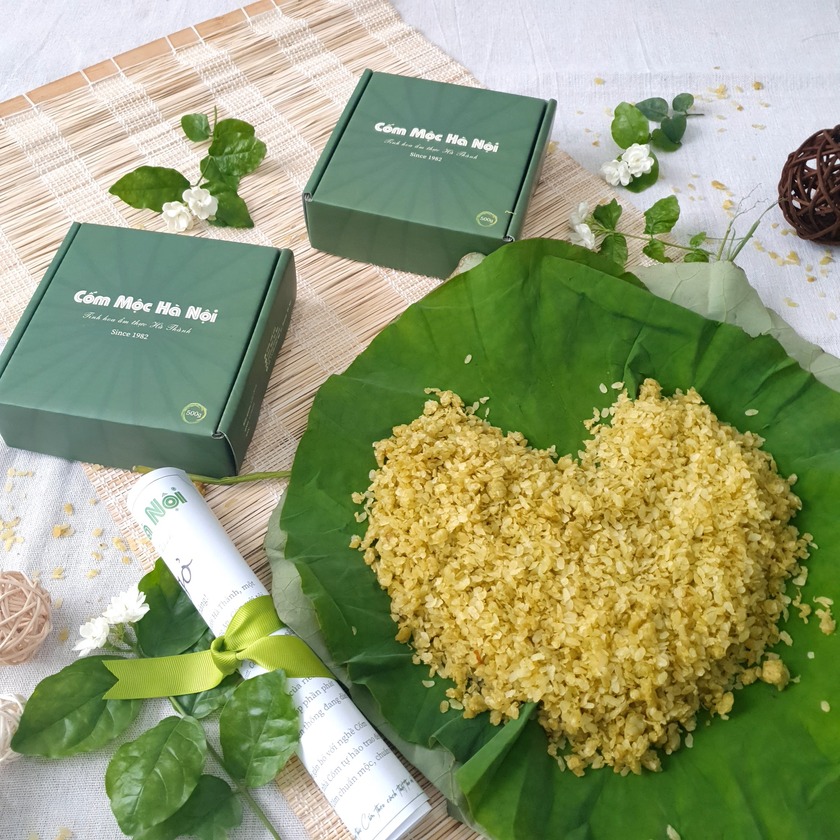
Authentic sticky rice flakes from Me Tri village have a yellowish-brown color, not green.
The art of appreciating the essence of nature.
Green rice flakes are a unique delicacy of Vietnam, a gift from the vast green rice fields, carrying within them the flavor of all the rustic simplicity and purity of the Vietnamese countryside.
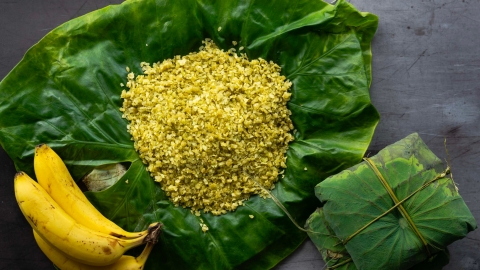
Green rice flakes (cốm) are not a snack for those who eat quickly; they should be eaten little by little, leisurely, and savored. Eating cốm means chewing slowly, calmly, and savoring the chewy, nutty flavor of the fragrant rice flakes, subtly blended with the delicate aroma of lotus leaves – so sweet and pure. Hanoi people eat cốm on its own, enjoying its delicate and elegant colors and flavors, truly "eating the fragrance and the flowers," savoring the autumn weather, letting their souls wander with the mountains and rivers. Besides, fresh, young cốm is also perfect for dipping with ripe bananas. The sweet, nutty flavor of the banana combined with the soft, chewy young rice flakes creates a harmonious flavor that melts in your mouth.
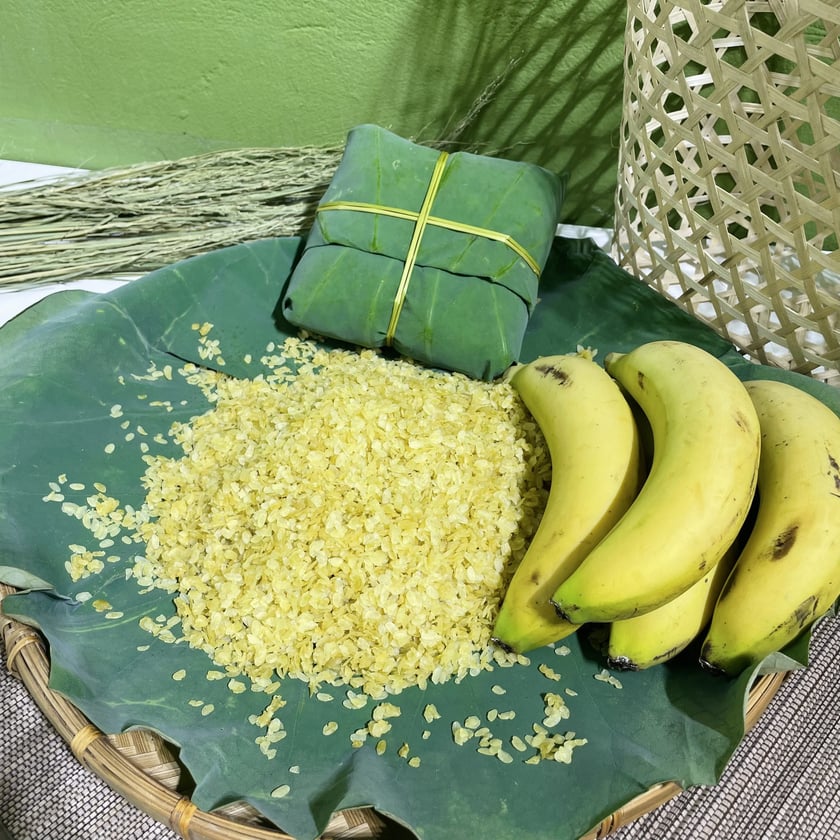
Green rice flakes are not a snack for those who eat quickly; they should be eaten little by little, slowly, and savored.
In particular, fresh green rice flakes are often wrapped in lotus leaves. This is because lotus leaves do not detract from the aroma of the green rice flakes, and the lotus flower symbolizes purity and innocence – "growing near mud but remaining untainted by its stench." Only lotus leaves are worthy of wrapping these "precious green rice flakes"—the finest gift from nature to mankind.
The vibrant green of the fragrant young rice flakes, combined with the pure scent of lotus leaves, creates a unique flavor. The vendors skillfully use strands of sticky rice straw loosely tied around the package, adding an appealing and delicate touch that captivates diners. For those far from home, especially the elderly, a package of young rice flakes wrapped in lotus leaves and tied with golden straw is considered a luxury.
For the people of Hanoi, green rice flakes (cốm) have a very unique flavor, symbolizing refined culinary traditions. From these green rice flakes, many unique and flavorful treats can be made, imbued with the taste of the countryside.
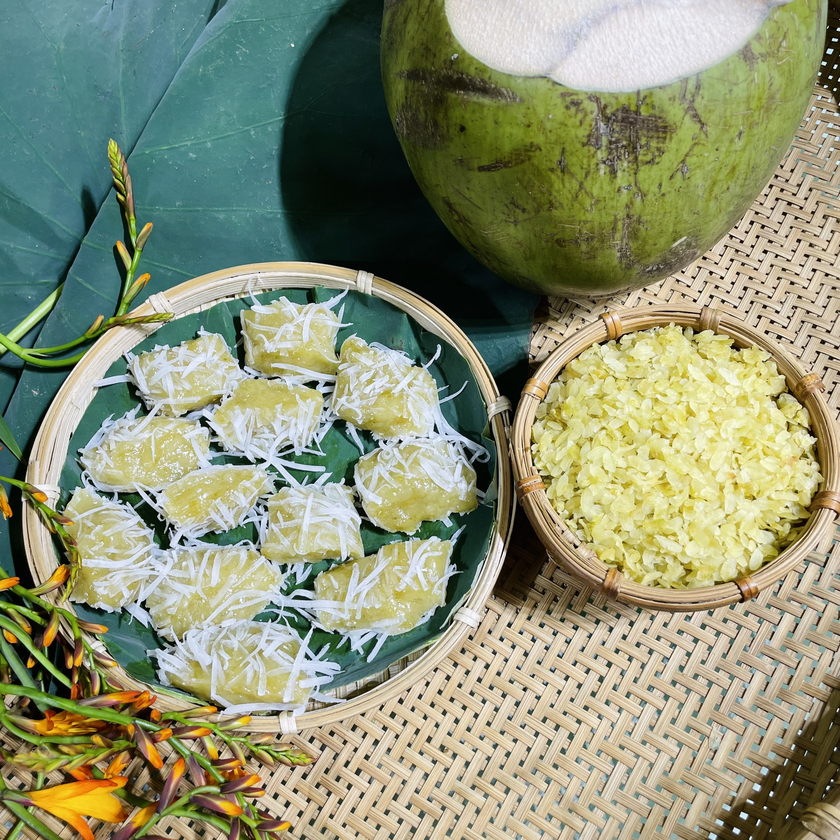
From these rice grains, people can create many unique and flavorful treats that evoke the taste of the countryside.
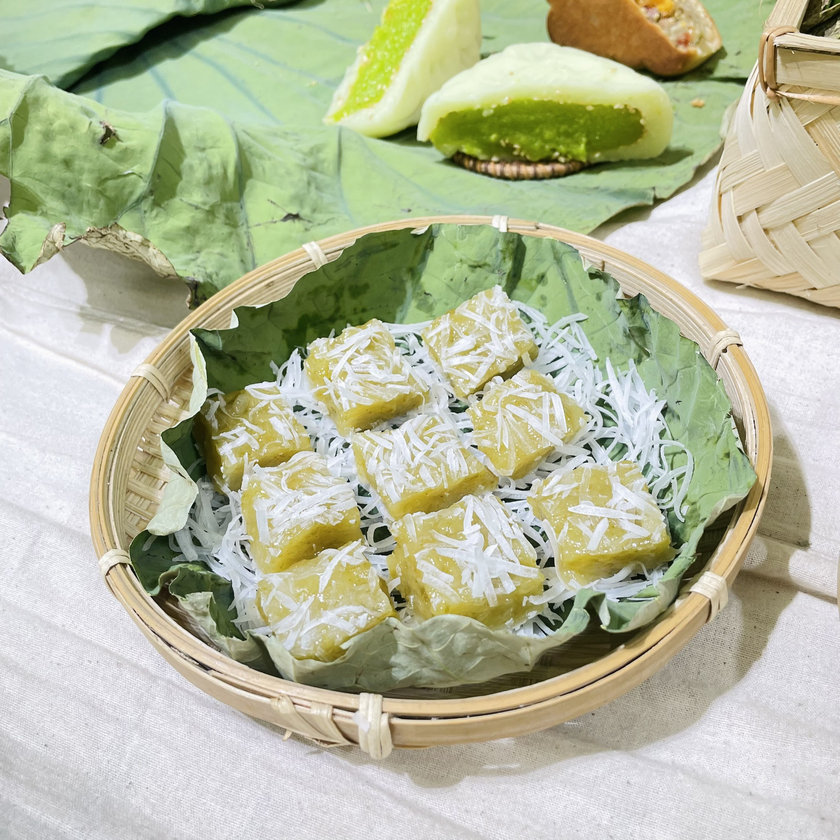
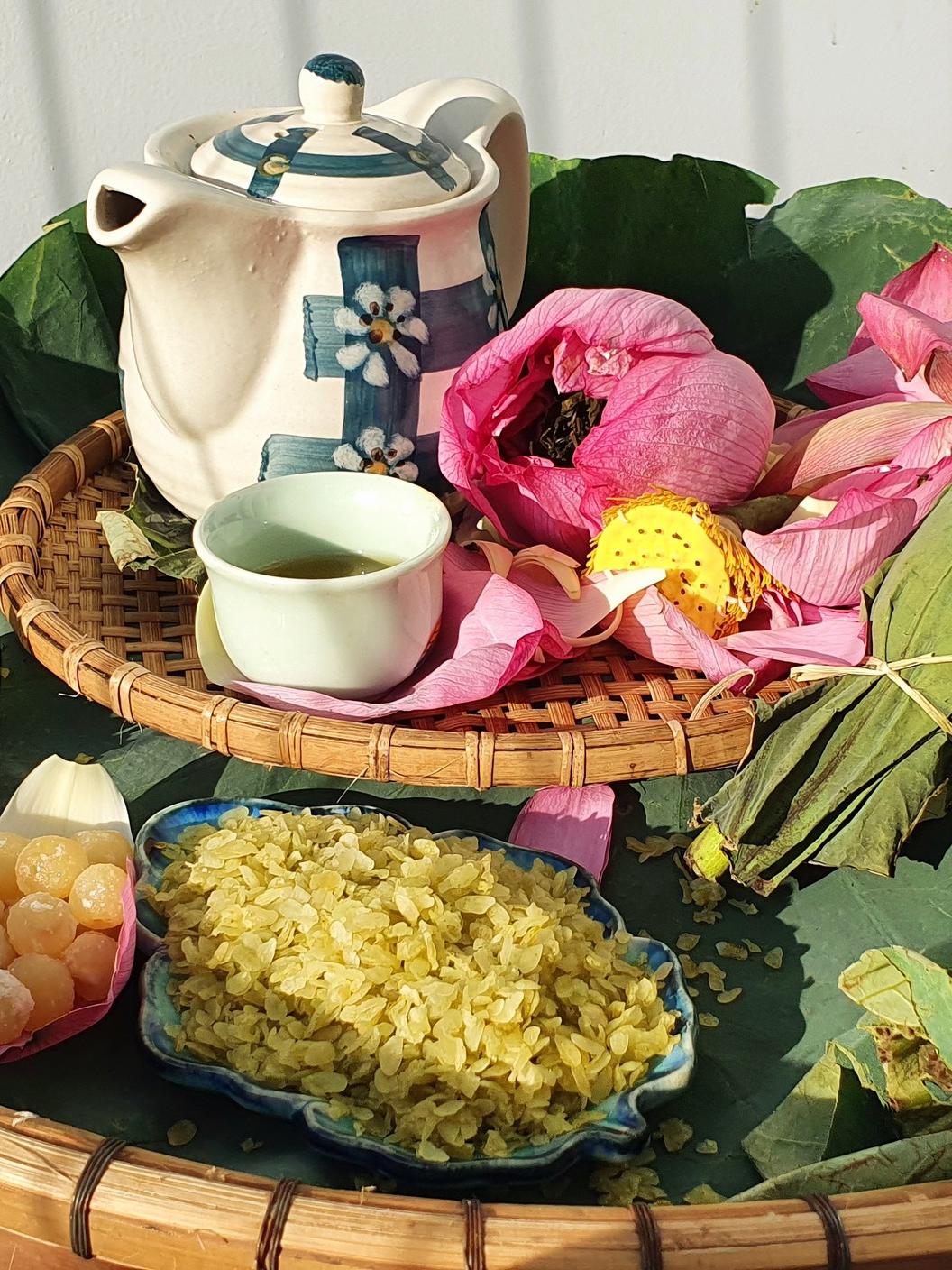
Coconut-fried glutinous rice flakes are one of the most memorable snacks of autumn. Made from plain glutinous rice flakes, young coconut water, shredded coconut, and refined sugar, through a meticulous processing method, the glutinous rice flakes achieve a chewy texture and a delicate sweetness. At Moc Lam, we don't use rich coconut milk as a dipping sauce like others often do. Instead, they are simply rolled in a layer of fresh, sugar-coated shredded coconut, preserving the rich aroma of the glutinous rice flakes, true to the refined taste of ancient Thang An. Brew a pot of delicious tea, choose a beautiful plate, cut each piece of glutinous rice flakes, admire them, inhale the aroma, savor the exquisite chewy and fragrant flavor, and sip some lotus tea… you will feel the essence of autumn there.
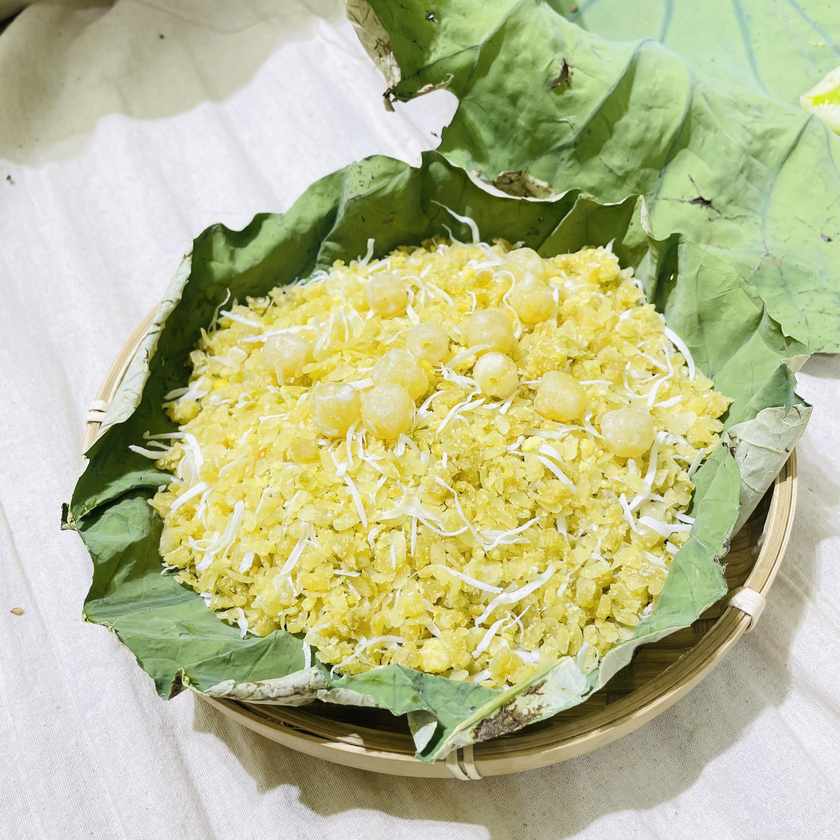
Besides, sticky rice with young rice flakes is also an elegant dish that contributes to highlighting the diverse and unique beauty of Vietnamese cuisine. Made from simple ingredients such as young rice flakes, lotus seeds, mung beans, and shredded coconut, the sticky rice has a mild, sweet flavor from the green rice flakes made from young rice, giving off a distinctive aroma. The flavor of the young rice flakes blends with the nutty sweetness of the mung beans, the soft simmered lotus seeds, and the rich creaminess of the shredded coconut, creating an irresistible appeal.
In addition, Hanoi also has many dishes made from young rice flakes with authentic and unique flavors, such as young rice flake cakes and young rice flake patties…