VI
VI


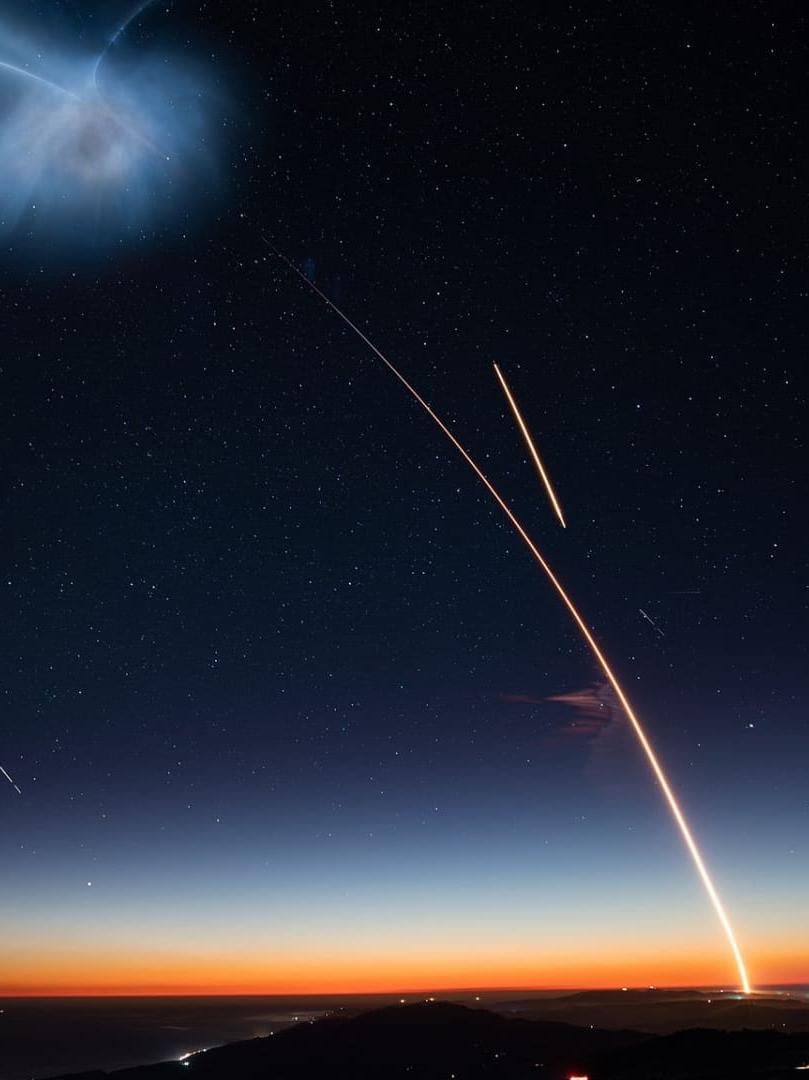
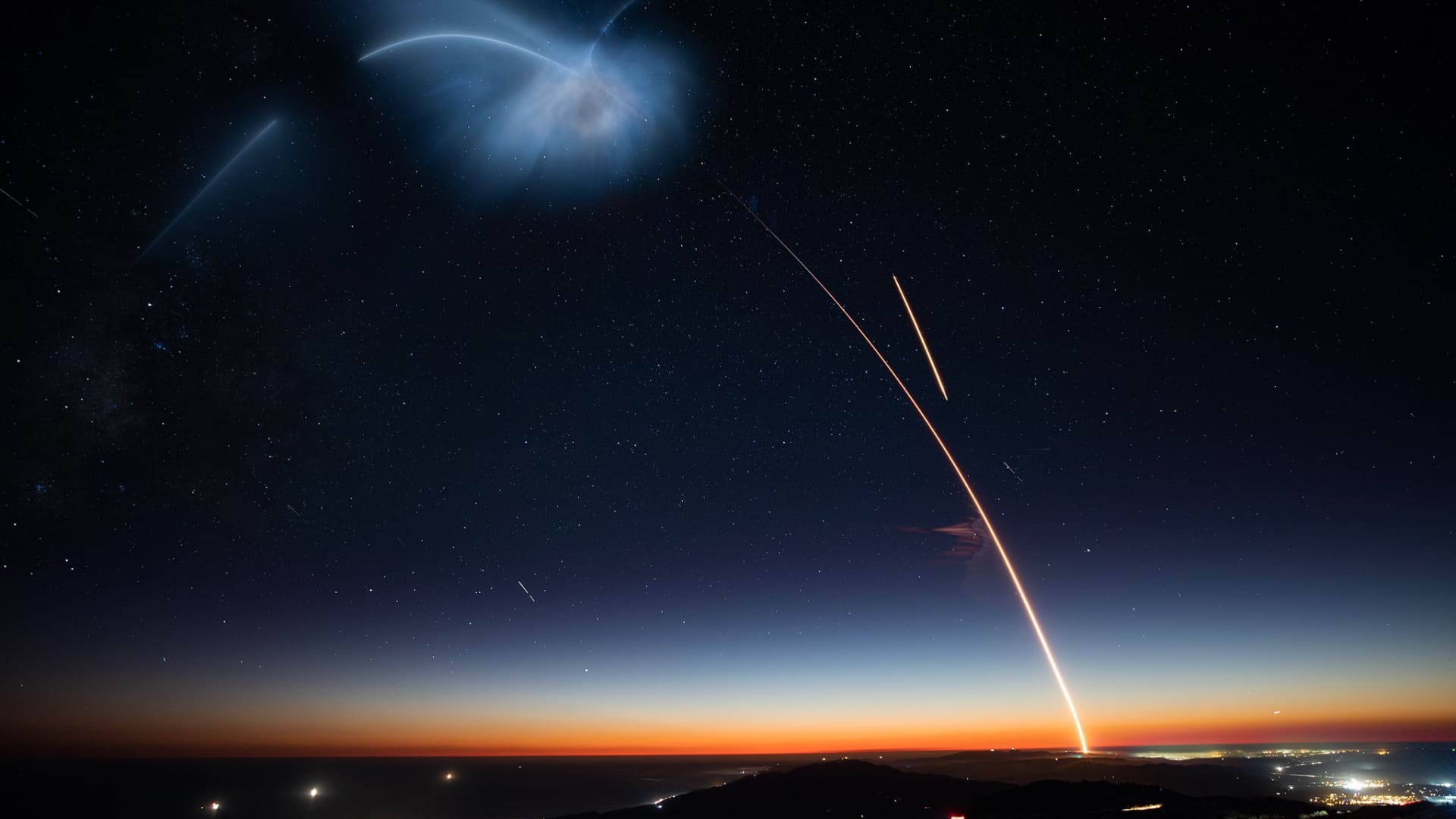
The Fram2 mission lifted off from NASA's Kennedy Space Center in Florida at approximately 9:46 p.m. (ET) on March 31st. This commercial flight was funded by cryptocurrency billionaire Chun Wang, along with three other explorers: Norwegian director Jannicke Mikkelsen, German robotics researcher Rabea Rogge, and Australian explorer Eric Philips.

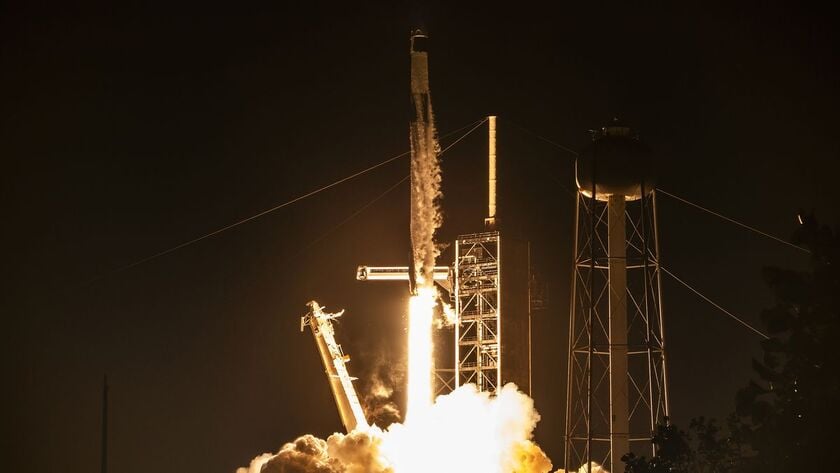
The Fram2 mission lifted off from NASA's Kennedy Space Center in Florida at approximately 9:46 p.m. (ET) on March 31st.
Chun Wang is a Maltese businessman, well-known in the Bitcoin mining industry. He co-founded F2Pool, one of the world's largest Bitcoin mining pools, accounting for approximately 11% of the total global computing power in the sector. However, information about Wang is quite private, and there is not much publicly available data on his net worth.
Jannicke Mikkelsen is a filmmaker and explorer, currently a neighbor of Wang in the Svalbard archipelago, Norway – one of the closest regions to the Arctic Circle in the world. She specializes in producing documentaries and science fiction, and also develops technology for filming in harsh environments. Mikkelsen plans to make a film about this trip.
Rabea Rogge is a PhD student at the Norwegian University of Science and Technology, specializing in navigation, guidance, and control systems for autonomous vehicles in harsh conditions. With this flight, she also became the first German woman to fly into Earth orbit.
Eric Philips is a professional explorer who has undertaken approximately 30 expeditions to the Earth's polar regions since 1992. He says the harsh environment of the polar regions is very similar to outer space: "We would be locked in the Dragon capsule for three to five days, an experience similar to a blizzard in space."

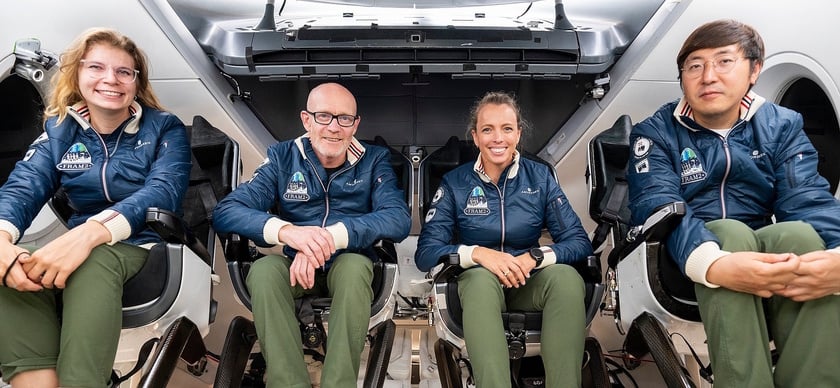
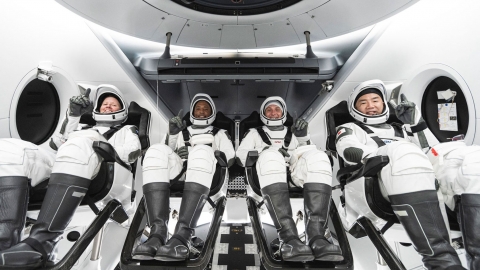
(From left to right) Rabea Rogge, Eric Philips, Jannicke Mikkelsen and Chun Wang
To launch them into orbit, SpaceX's Falcon 9 rocket had to fly south, following a route never before used in crewed flights. Fram2's planned trajectory would take the spacecraft over Cuba and Panama before reaching the necessary altitude.
Minutes after liftoff, the first stage of the Falcon 9 rocket separated and returned to land on a barge at sea, while the upper stage continued to activate its engines, propelling the Dragon spacecraft to speeds exceeding 28,000 km/h into orbit.
Fram2's unique orbit was not only a technical challenge but also showcased the adventurous spirit of the crew, true to its name, which was derived from the Norwegian Arctic and Antarctic exploration ship "Fram" from the late 19th and early 20th centuries. Training for the Fram2 mission lasted over a year, including rigorous training in Alaska and at SpaceX headquarters in Hawthorne, California. At the pre-flight press conference, Jannicke Mikkelsen shared: “We are not typical NASA astronauts… From people with no space experience, we were trained and certified to undertake this mission.”
Flying into polar orbit is no simple task. Most flights from the East Coast of the United States typically follow an eastward trajectory to take advantage of Earth's rotation, thus saving energy. However, Fram2 had to fly south, requiring significantly more fuel. According to Dr. Craig Kluever, a professor of aerospace engineering at the University of Missouri, this orbit significantly reduced the rocket's payload capacity.
Nevertheless, given the capabilities of the Falcon 9, launching the Dragon spacecraft into this orbit remains feasible. Dr. Christopher Combs, associate professor of research at the University of Texas at San Antonio, commented: “This is a commercial flight, so it needs something special to make a difference. Flying around both poles of the Earth is something no one has ever done before, and it’s great that commercial companies are helping to make space tourism more accessible.”
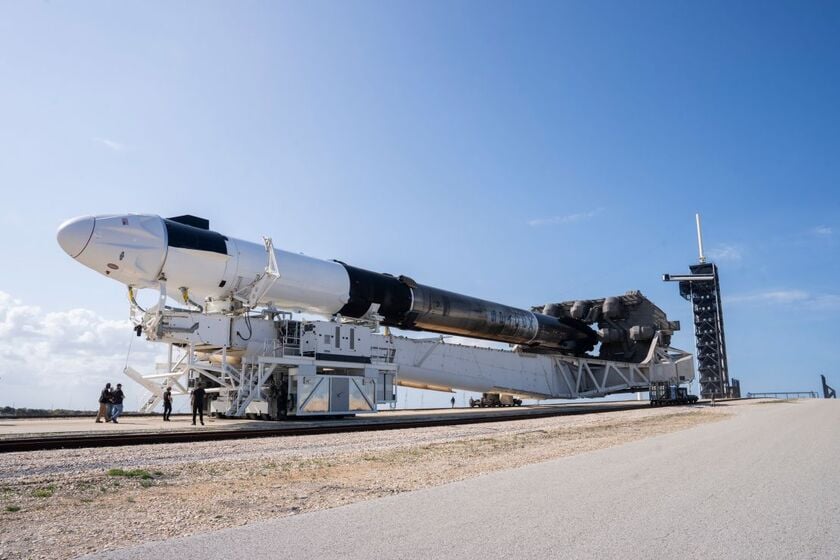
Falcon 9 rocket and Dragon spacecraft
In addition to setting a record for orbital flight, the Fram2 crew also conducted 22 scientific experiments in space, primarily focused on crew health. However, much of this research was not dependent on polar orbit and could have been conducted on other flights.
It's unclear exactly how much Wang spent on this flight, but it certainly wasn't cheap. Previously, billionaire Jared Isaacman has spent millions of dollars on SpaceX's commercial missions. While Fram2's primary goal is exploration, it marks a new step in the commercialization of space and opens up new opportunities for future space travel missions.