VI
VI


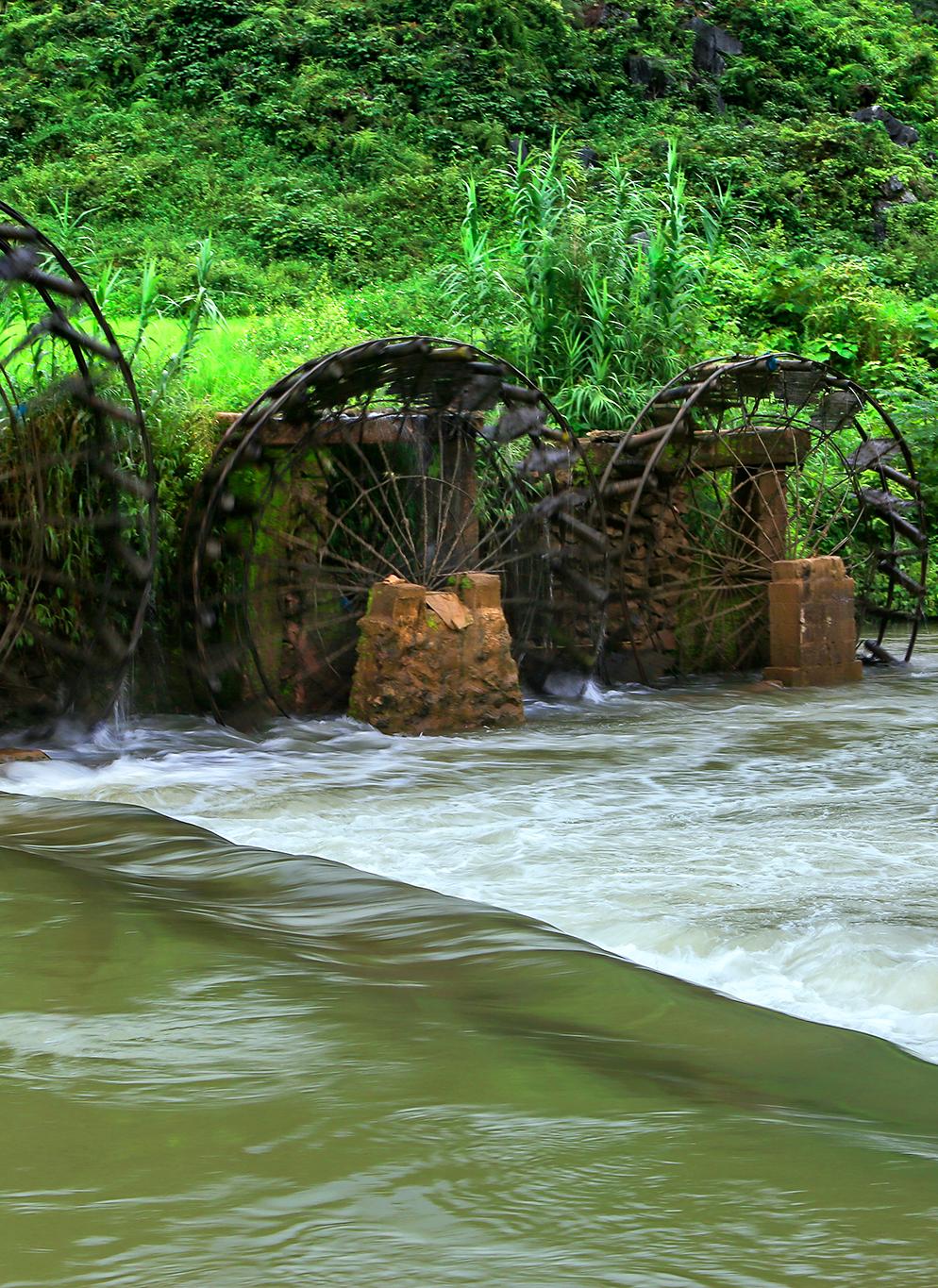
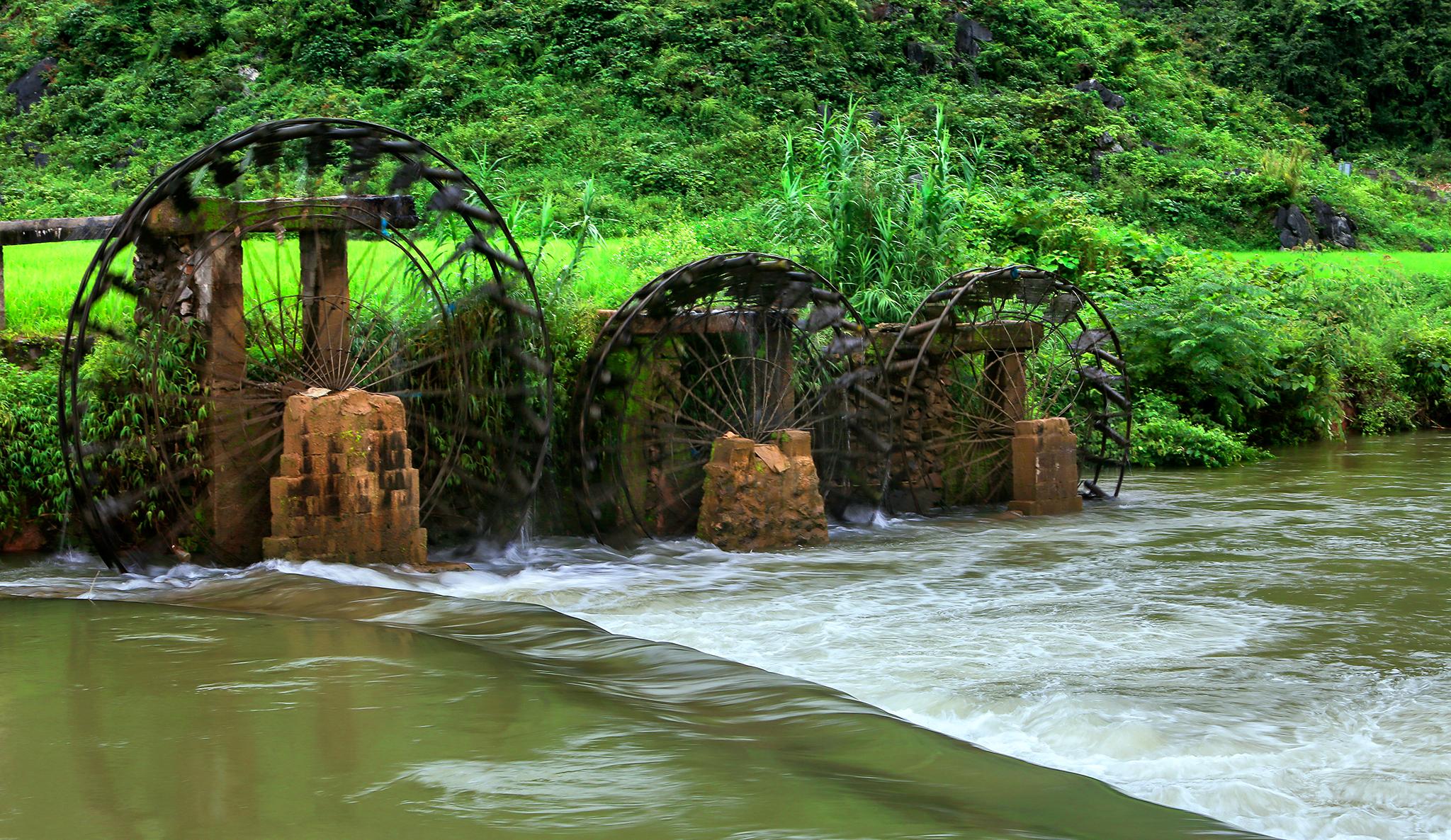
It's unclear when exactly, but the image of waterwheels, like giant wheels slowly turning steadily beside streams, has become a distinctive feature of the Northwest mountainous region. Born from the need for irrigation in highland areas, where rivers and streams have lower flow rates than the cultivated fields, waterwheels were created to utilize the power of natural water flows to bring water to higher ground, channeling it to fields and villages.
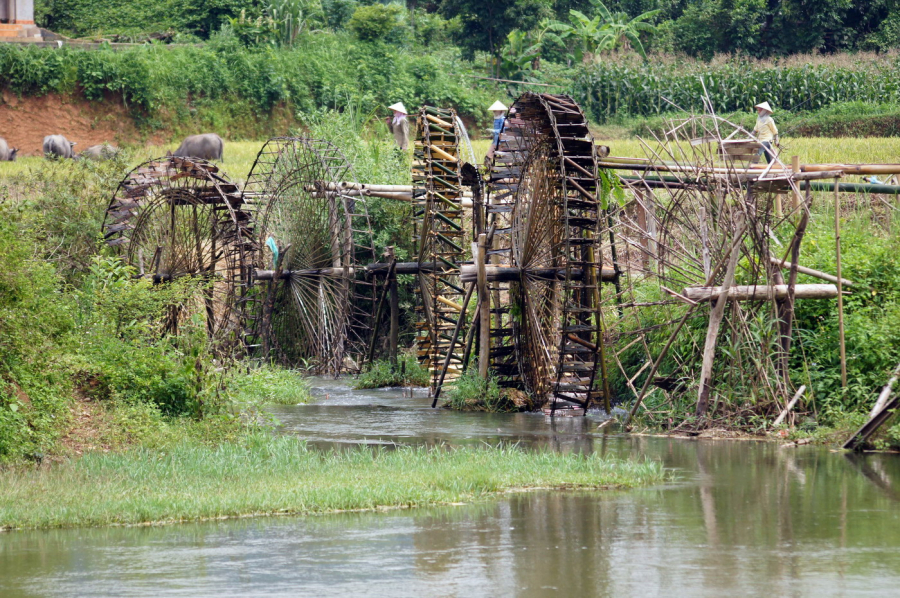
Waterwheels are closely associated with the traditional farming methods of the ethnic minorities in the highlands.
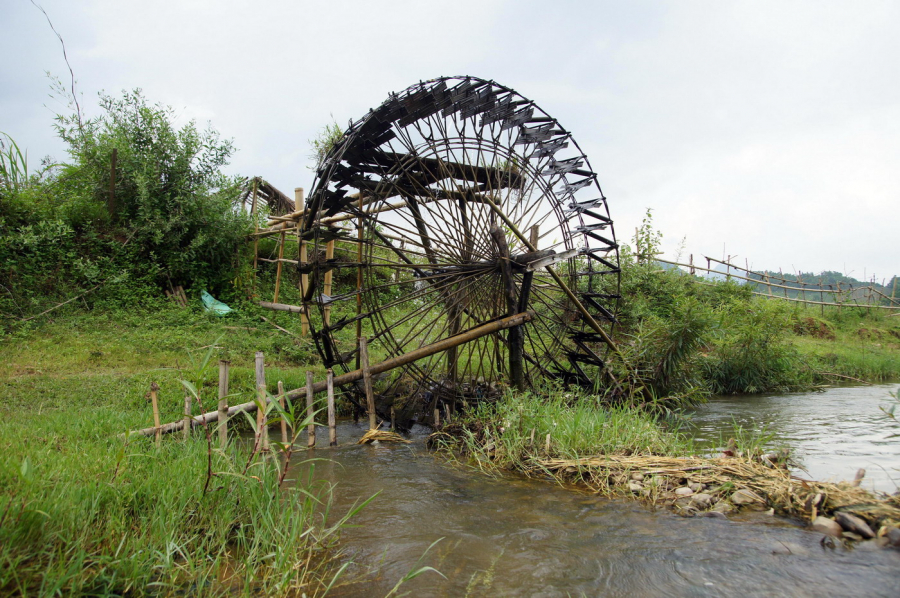
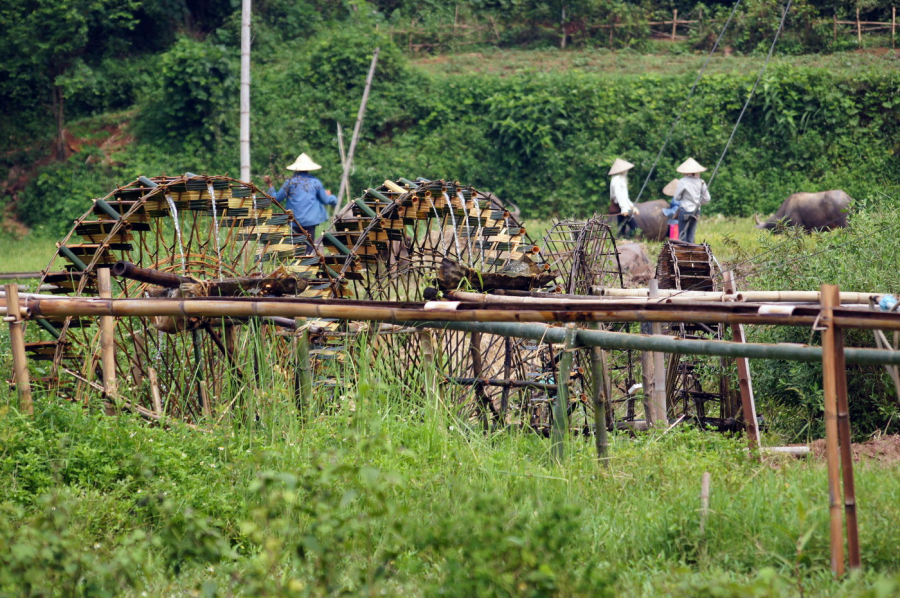
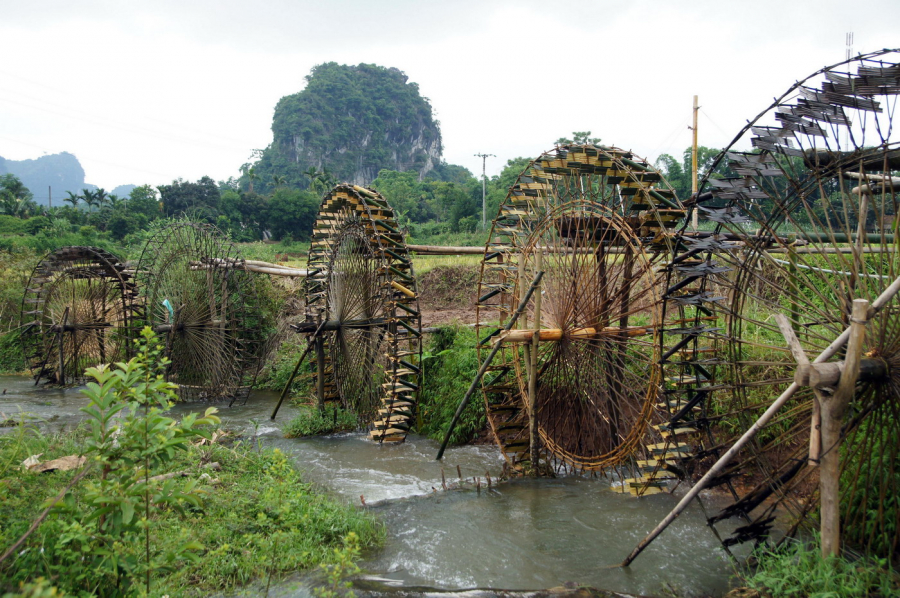
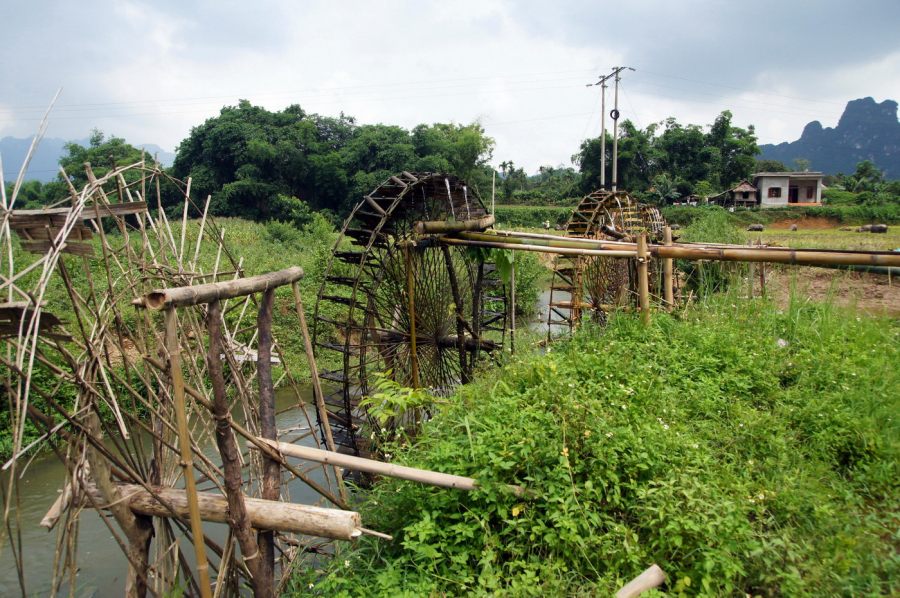
Waterwheels in Hoa Binh province
Unlike noisy engines or fuel- and electricity-consuming pumps, waterwheels operate using water power, yet still ensure sufficient water for agricultural production. Beyond their economic and scientific value, waterwheels also hold significant cultural and traditional value for the ethnic minority communities in the highlands.
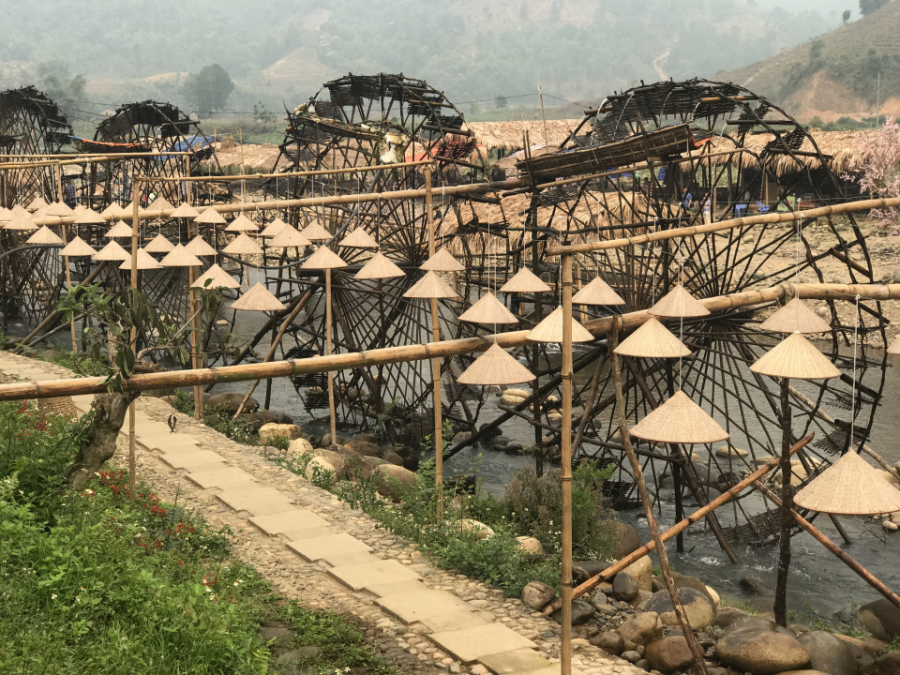
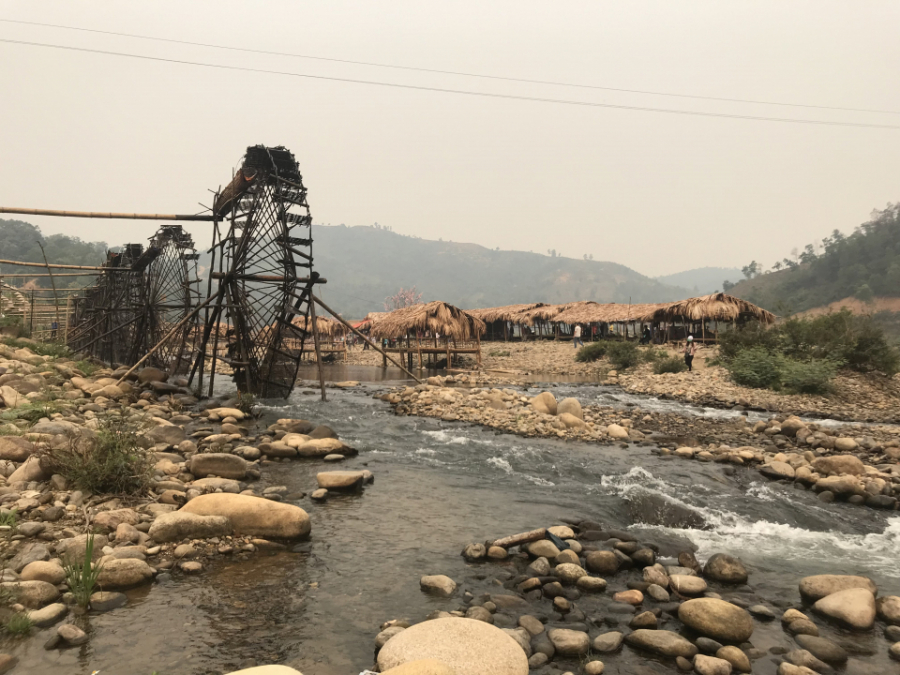
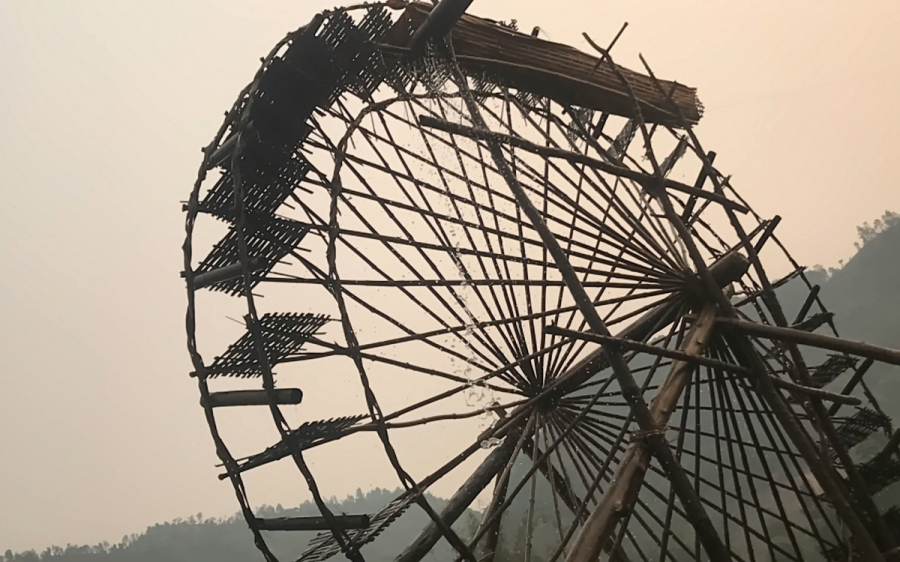
Waterwheel in Ban Bo village, Lai Chau province
According to locals, building waterwheels requires meticulousness, carefulness, and a fairly precise sense of planning. They usually build waterwheels before the start of a new farming season. The process of making each waterwheel is a labor of love, with secrets passed down through generations. Completely handcrafted, utilizing readily available natural materials such as bamboo, reeds, wood, rattan, and other similar materials, waterwheels have become a unique characteristic of the mountainous region.
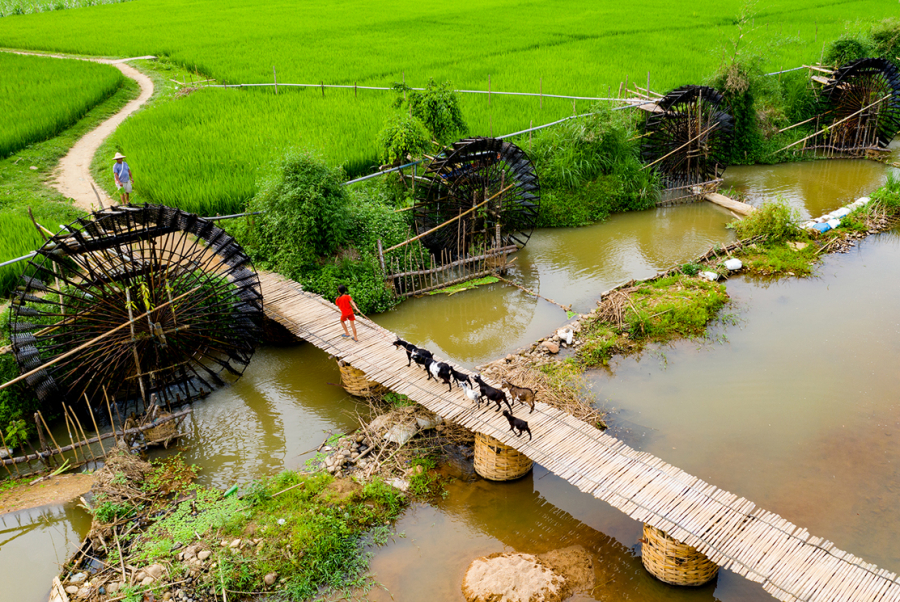
Waterwheels in Phu Tho province
The most important thing when building a waterwheel is to choose a firm plot of land, adjacent to the rice field, so that the waterwheel can remain stable and not be swept away during floods. The location should not be too deep or too far from the water source. The water flow should be relatively stable. The elevation difference from the water intake point should usually not exceed 12 meters. The rotating shaft of the wheel is made of sturdy bamboo or concrete, along with many spokes to form a solid frame for the waterwheel.
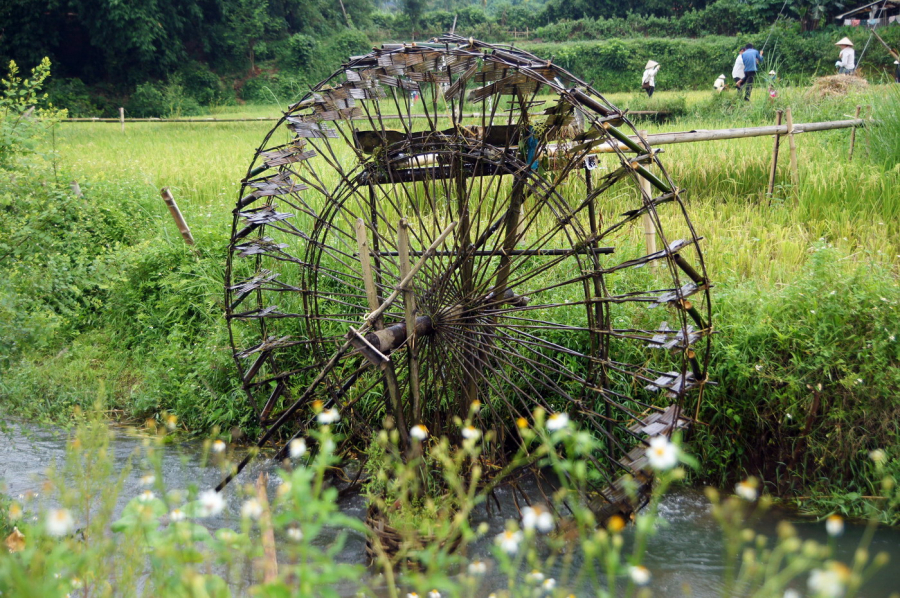
The wheel of the waterwheel is a large wheel with a diameter of approximately 5 meters.
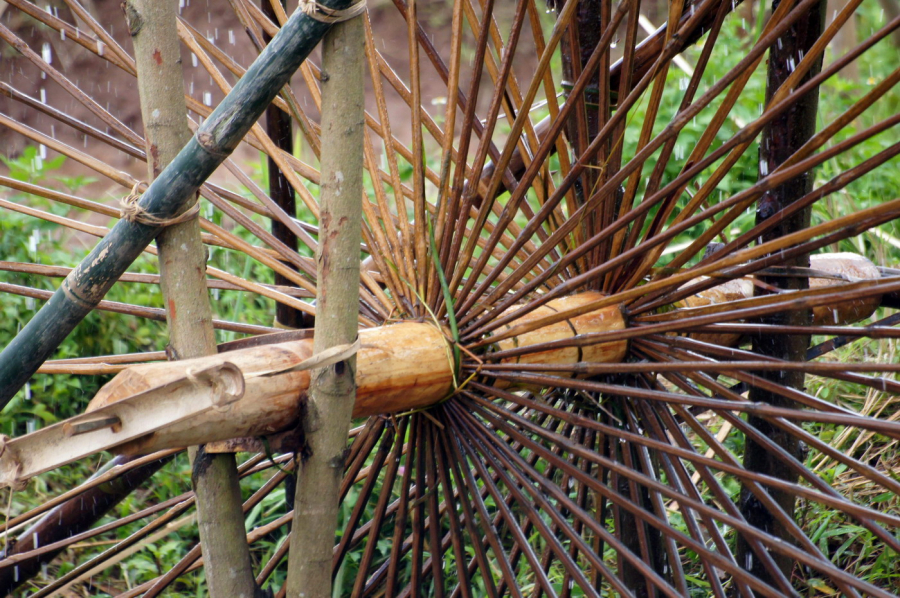
The rotating shaft, made from a bamboo trunk, along with hundreds of spokes, forms a sturdy frame for the waterwheel.
To make a durable and beautiful waterwheel, the builders carefully select each piece of wood; meticulously attending to every knot and joint… Local people consider the rotating shaft to be the “heart” of the waterwheel, so when using materials for the shaft, they choose straight, lightweight, and soft wood that is resistant to wear and tear and has high water resistance, allowing the waterwheel to operate smoothly without the need for additional bearings or bushings like other types of rotating shafts.

Next comes the process of making the waterwheel spokes. The bamboo must be straight, pointed, mature, and of sufficient age. The length and number of spokes depend on the size of the waterwheel. The spokes are connected to the rotating shaft to form a sturdy frame by skillfully drilling holes in the shaft corresponding to the number of spokes, ensuring a snug fit. These holes are then secured with strong, flexible rattan or forest vines.
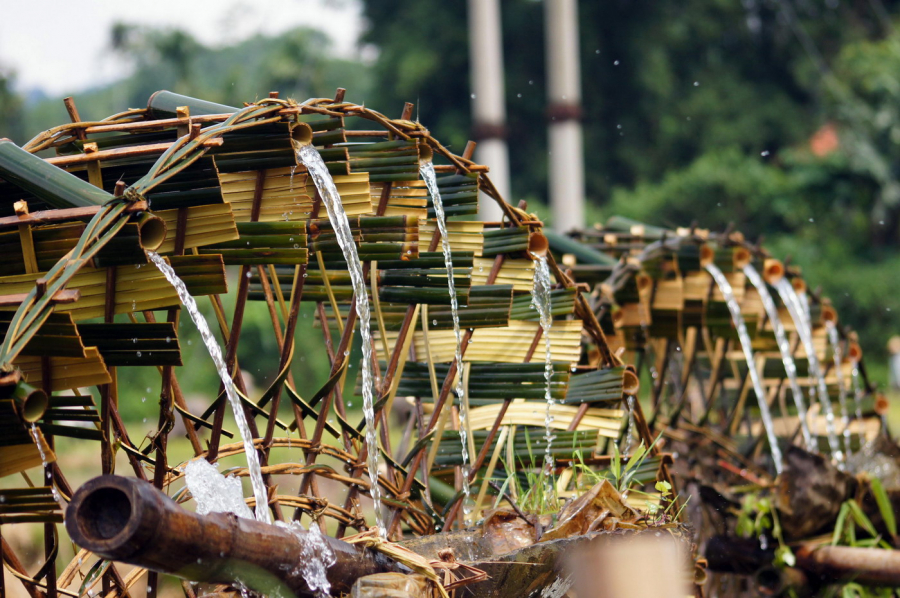
The force of the water causes the wheel to rotate continuously, and at a certain height, the steps begin to pour water into the long troughs.
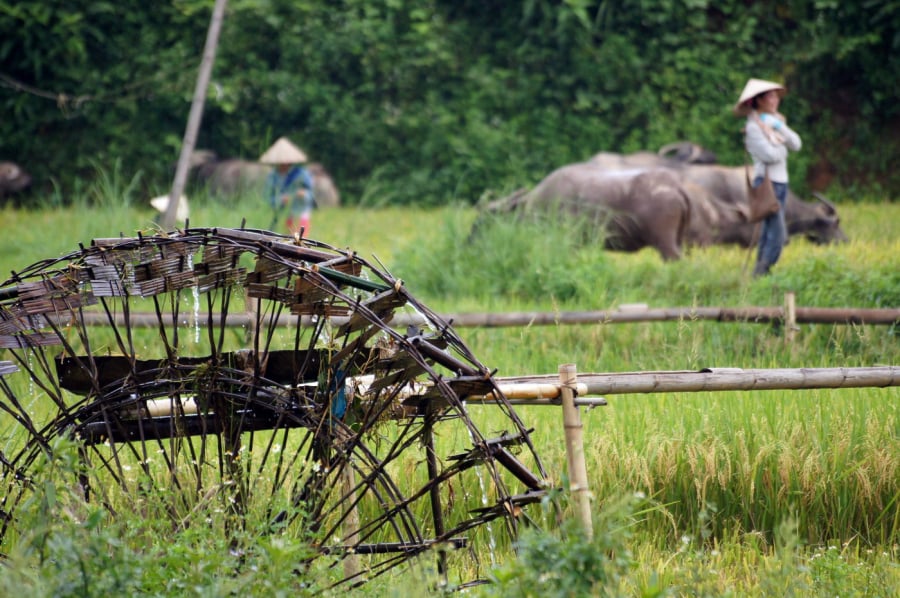
Around the rim of the waterwheel frame, woven bamboo blades are placed to create a water-blocking mechanism, generating the force to rotate the wheel; at the same time, buckets made of bamboo tubes are attached to draw water. The force of the water causes the wheel to rotate continuously, drawing water from the buckets. Once the buckets reach a certain height, the water is released into the bamboo pipes. Following a system of channels down the slope, the water flows to the fields. Depending on the terrain and topography, waterwheels of appropriate size are chosen to ensure adequate irrigation for crops and reduce labor.
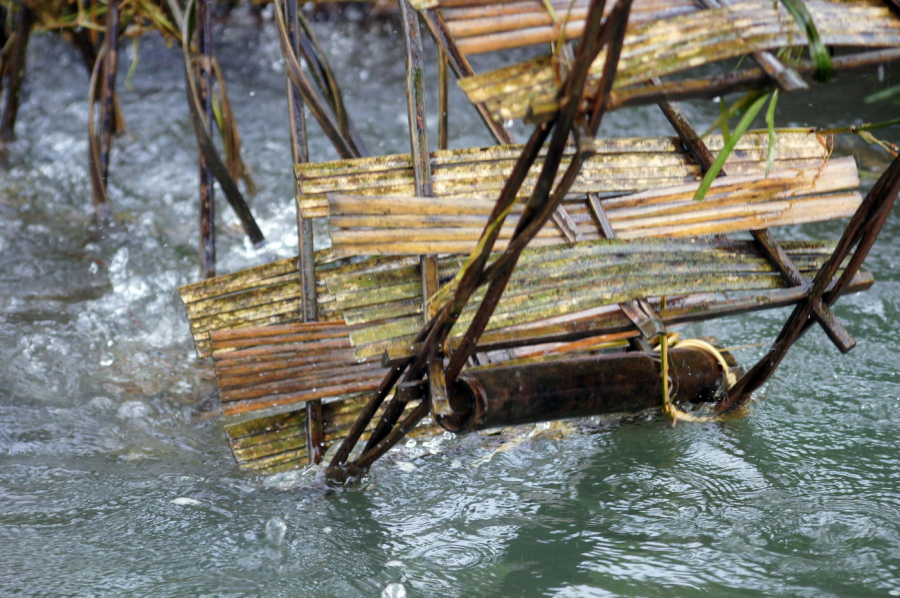
The waterwheel rim is about 80 cm wide, fitted with bamboo panels to block the water flow, creating the force to propel the wheel to rotate, and attached with bamboo tubes to scoop up water when it sinks.
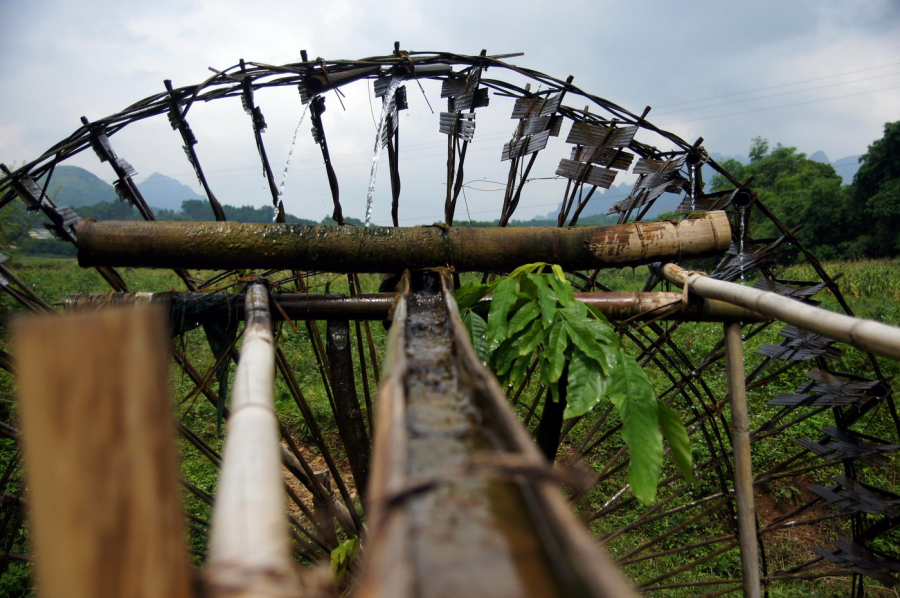
These troughs are made from split bamboo stalks.
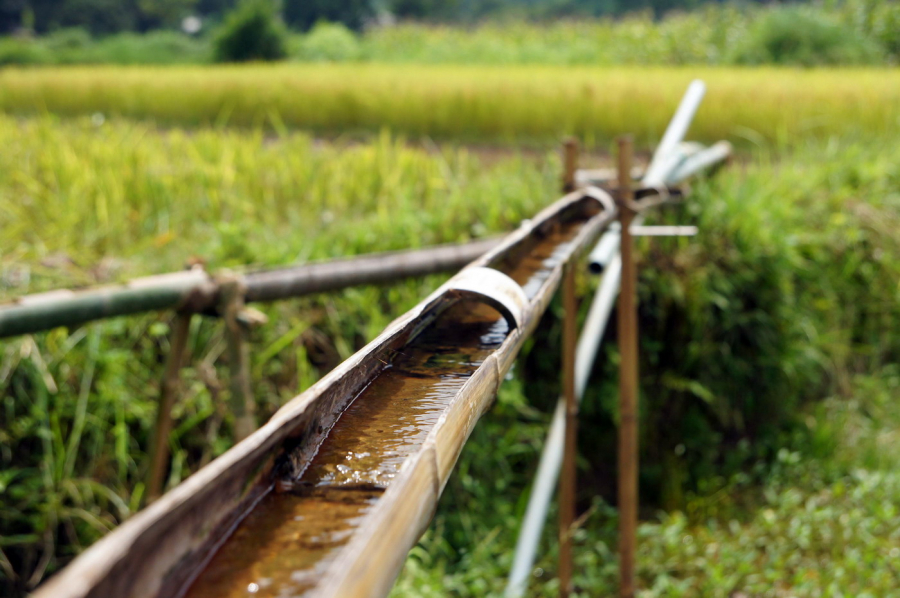
Water flows down the slope of the channel system.
Cleverly designed, these waterwheels demonstrate the remarkable creativity of the ethnic minority people in the mountainous regions in conquering nature to serve their labor, production, and daily lives.
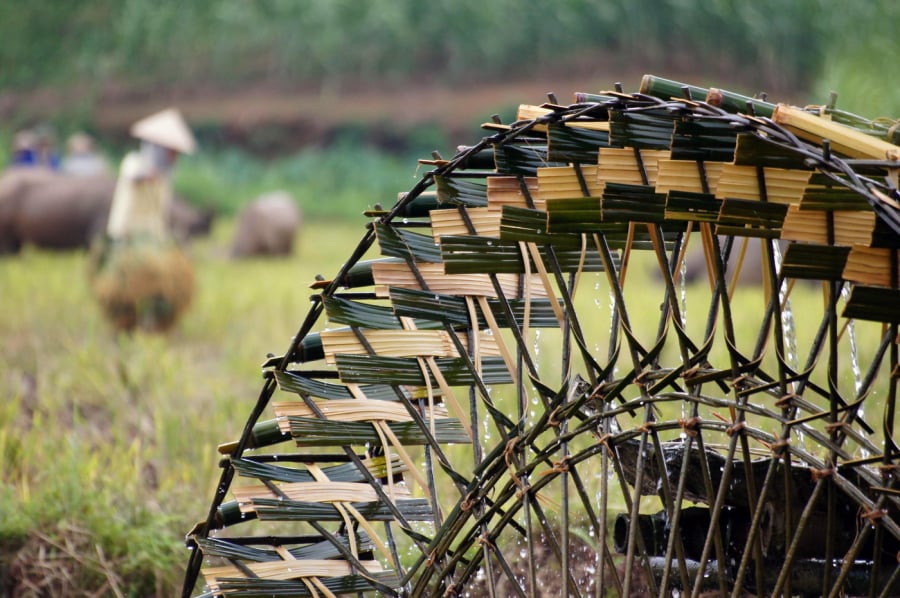
Often likened to a perpetual motion machine operating day and night, the waterwheel has shouldered a significant portion of the arduous work for farmers of the Thai, Muong, Dao, Tay, and Nung ethnic groups.
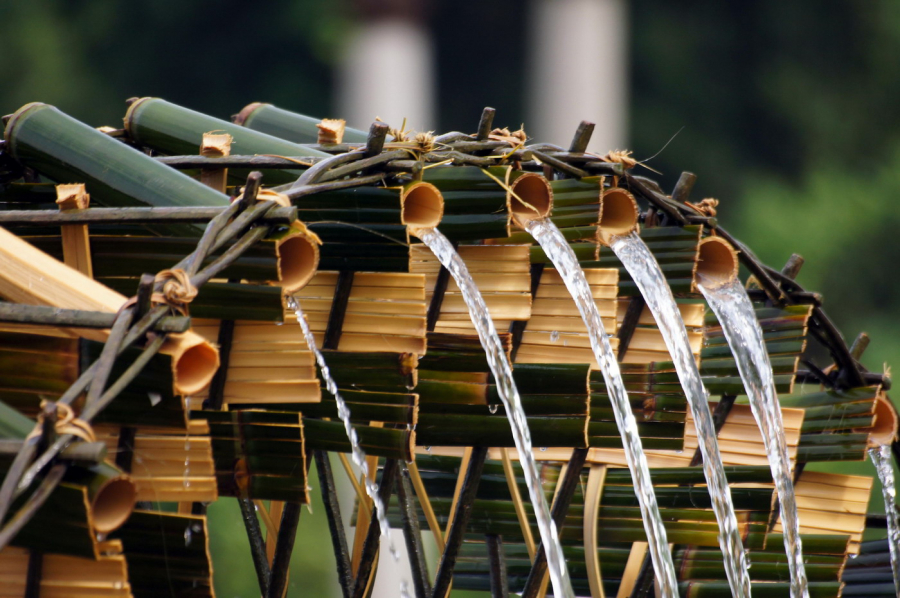
This "machine" operates with a low, rumbling sound, imbued with the sounds of the mountainous region, day and night.
Typically, each waterwheel lasts for 2-3 years. However, after each rainy season, many waterwheels are swept away or damaged. People from the surrounding villages then work together to repair and rebuild waterwheels to ensure they are ready for the planting season. Older men handle the technical aspects, while young men and women help with cutting wood and bamboo, splitting strips, and weaving fences.
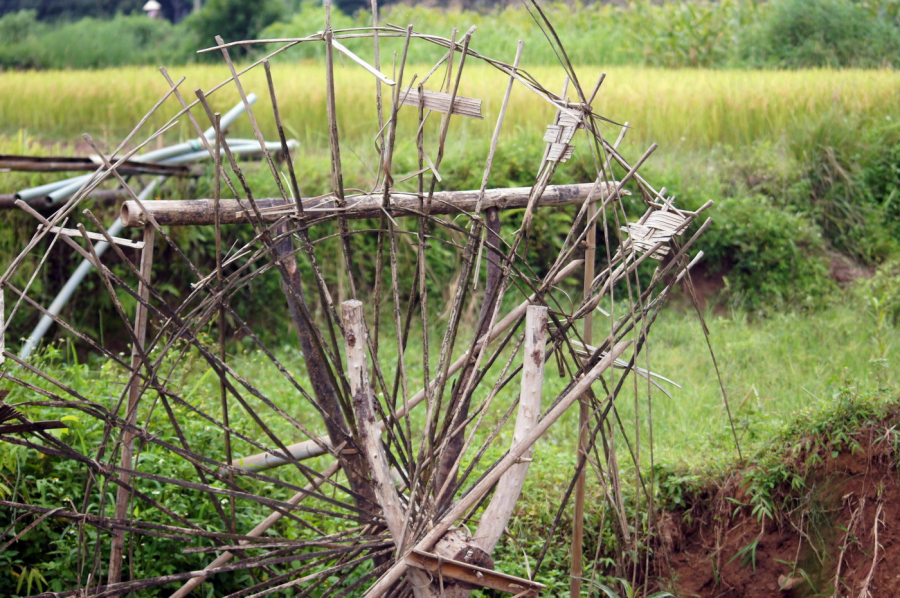
Broken waterwheels will be replaced with new ones.
Therefore, waterwheels are not merely tools in labor and production, but works of art bearing the unique imprint of human hands and minds. They also embody the beauty of traditional culture, serving as a knot of affection and solidarity within the village, strengthening bonds of friendship and affection. It can be said that these gently turning wheels represent the life of the people here – slow-paced, unhurried, yet always strong and close-knit. It is also from these waterwheels that countless young men and women have met and married. Thus, from generation to generation, the image of the waterwheel has always been present in the lives of the highland people; the waterwheel has become a solid spiritual anchor for them.
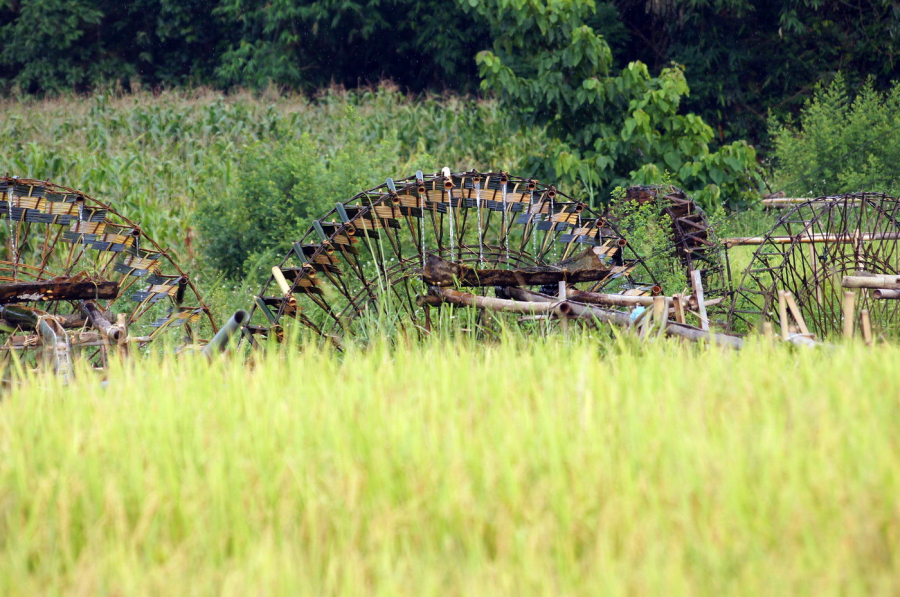
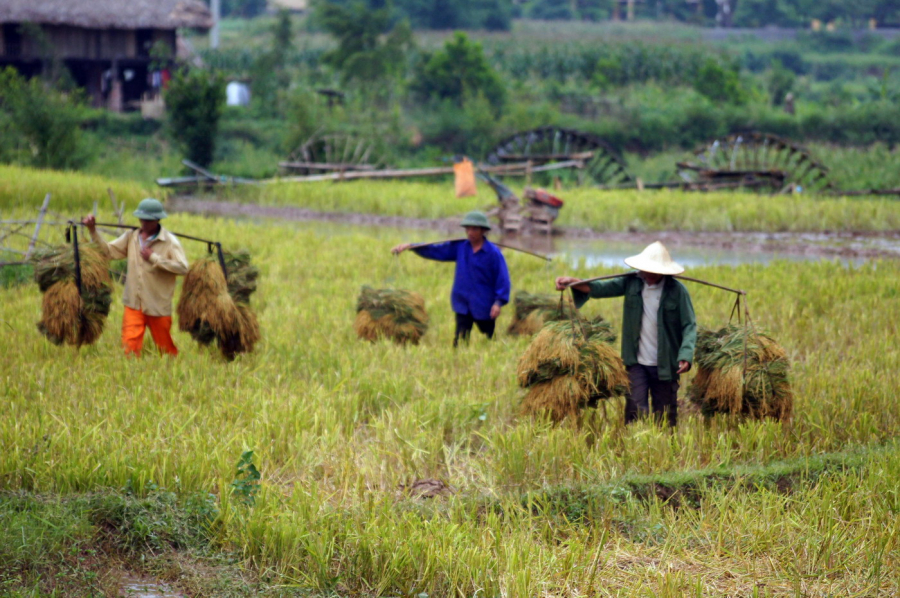
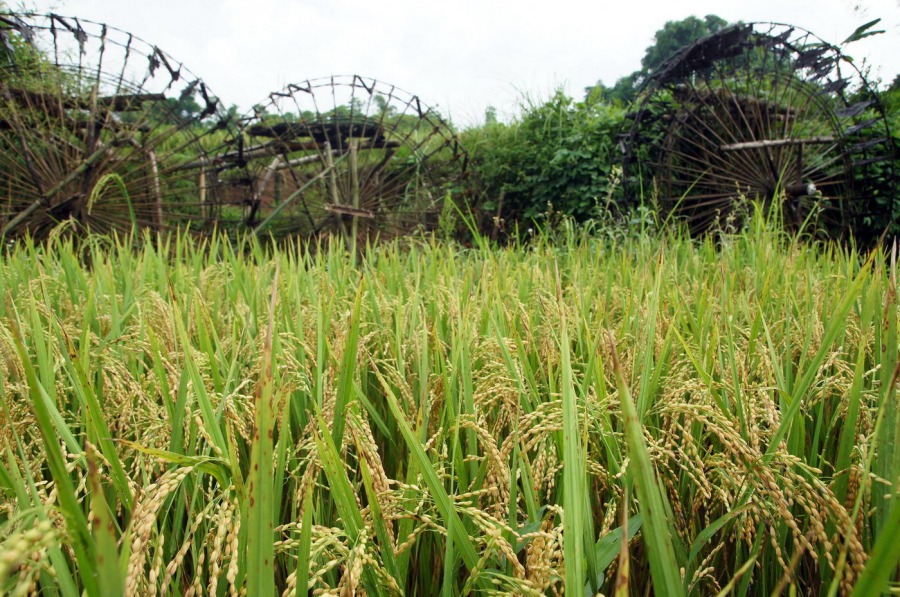
In addition, waterwheels are also witnesses to the rice-farming civilization in the mountainous region.
Closely associated with the lives of many generations, embodying the dedication and wisdom of the mountain people, the giant waterwheel is gradually disappearing amidst the rapid changes in life. The modernization of agriculture has led to many streams being replaced by reinforced concrete canal systems, and the waterwheels have given way to water pumps.
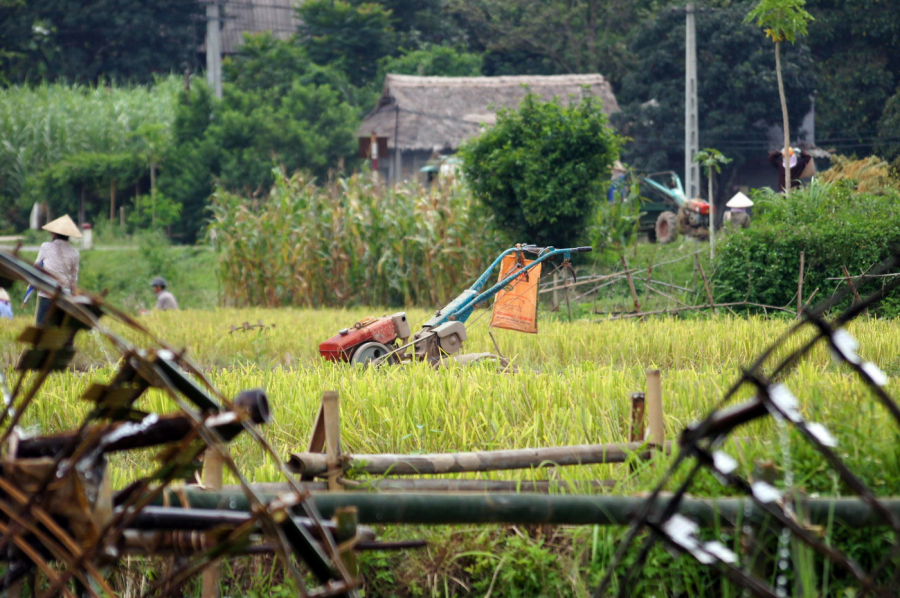
With this trend, waterwheels may disappear in the not-too-distant future.
But, with the remaining waterwheels, one can still glimpse the image of the village, the soul, feelings, and the resilience, hard work, and patience of the highlanders. These simple, rustic waterwheels still hum and stir the streams day and night, carrying water to irrigate the fields, bringing bountiful harvests to the villages in their eternal rotations, imbued with the freshness and closeness to nature of the people of Northwest Vietnam.