VI
VI


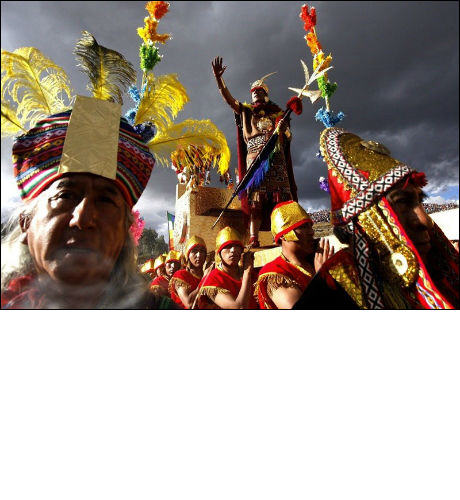
Originating in the 16th century, when the Incas were one of the most powerful empires in South America, Inti Raymi is a festival honoring the sun god – the supreme deity of the Incas. Considered an important festival of ancient Inca culture, it fortunately survived the Spanish rule.
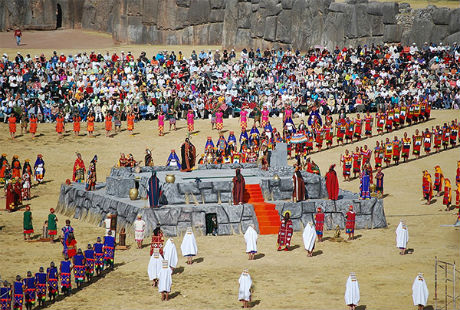
The Inti Raymi festival is held annually on June 24th in the city of Cuzco to honor the sun god, whom the Incas considered the creator of all things on earth and the one who determines the fate of humanity and the universe, in order to pray for a bountiful harvest and fertile fields.
The festival typically lasts a week. During the day, there are displays, exhibitions, and street performances of dancing and singing. In the evening, many free live music shows are held in Plaza de Armas for the local community.
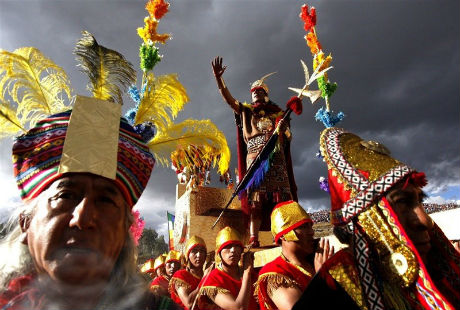

Notably, a year before the festival, hundreds of actors are selected to play the roles of historical figures. Traditional rituals such as sacrificing white llamas to the gods, burning straw and dancing around bonfires, etc., are all performed with great solemnity.
The centerpiece of the festival is the celebratory events that take place throughout June 24th, considered the soul of Inti Raymi. On this day, the rituals begin with the Sapa Inca's prayers invoking the sun god for blessings. Afterward, the Sapa Inca sits on his throne and is carried in procession to the ancient fortress of Sacsayhuamán.
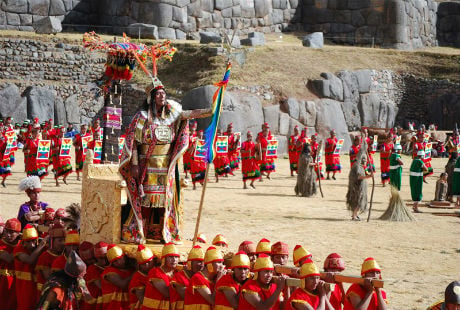
The streets will be swept clean to ward off evil spirits and adorned with flowers; the Sapa Inca will pass through amidst music, prayers, and dances. The Sapa Inca will climb the sacred altar at Sacsayhuamán so that all the waiting crowds can see him.
Once all the priests were seated in the main square of the Sapa Inca fortress, the monks and representatives of Suyos would recite their prayers.
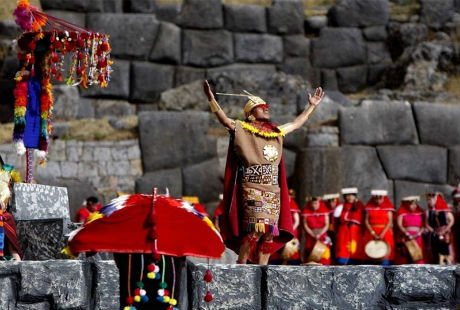
This ritual was performed to ensure the fertility of the land, combined with the light and warmth of the sun, for a bountiful harvest. The highest-ranking priests would perform the ritual, raising the bloody heart of a white llama as a sacrifice in the name of the goddess Pachamama (also known as Mother Earth). Other priests would read the bloodstains to predict the future for the Incas. However, today, animals are no longer killed, and the sacrificial ritual is merely a reenactment.