VI
VI


The earthquake killed more than 18,000 people and damaged a nuclear power plant, leading to a radioactive leak and forcing 150,000 people to relocate. Twelve years later, 30,000 people are still unable to return home. Several sites document Fukushima's gradual recovery, including the East Japan Great Nuclear and Earthquake Memorial Museum and the Iwaki 3.11 Resurrection and Memorial Museum. These sites provide resources and information for visitors, from multilingual guidebooks with maps, graphs, and images to auditoriums showing video clips about the disaster.
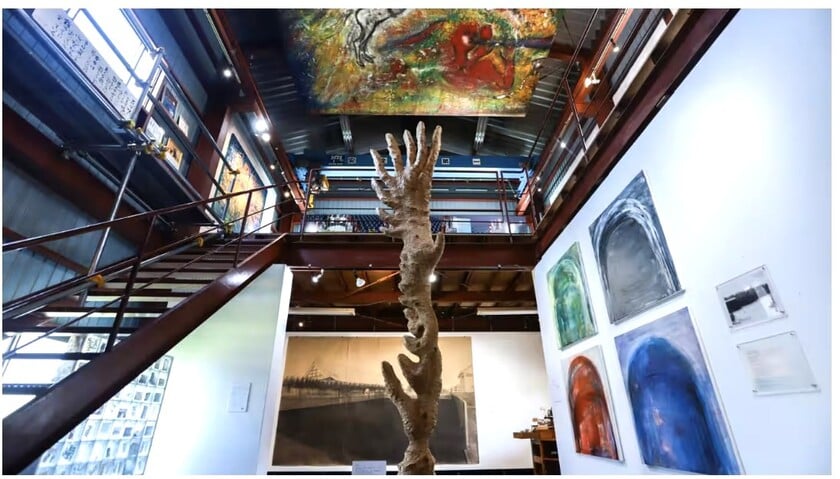
The images and artifacts evoke strong emotions in viewers.
Recently, smaller sites commemorating the Fukushima tragedy have gained local recognition. For example, in a "ghost town" after the evacuation, a two-story wooden warehouse on an empty plot of land in Minamisoma, about 15km from the Fukushima nuclear power plant, has become a display of 50 works of art inspired by the disaster. A highlight is a wood carving by a sculptor. A sign at the entrance reads "Our Memorial Museum." A barrier, similar to those used to cordon off evacuation areas, stands in front of a wall filled with paintings, delicate seashells, and soft-colored display shelves…
The museum curator, photographer Jun Nakasuji, famous for his photographs of Chernobyl, Ukraine, devastated by the 1986 nuclear power plant disaster, said that artists have held several exhibitions since 2011. But he had long wanted to create a gallery of art related to the disaster.

Nakasuji said, “The public memorials run by the prefectural government and TEPCO present the narratives they want people to hear. But behind those stories, there are many people who were victims or suffered from those incidents. I think we also need to highlight that.”
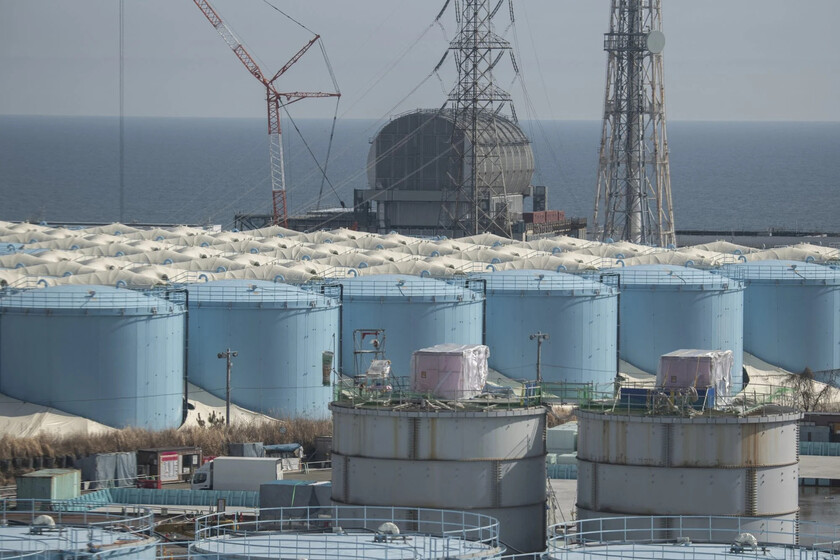
Reactor No. 3 building and contaminated water storage tanks at the Daiichi nuclear power plant in Okuma, Fukushima Prefecture.
From these small, spontaneously established local museums, recognizing the potential opportunities presented by tourists revisiting the disaster site, Fukushima Prefecture launched the Hope Tourism initiative to help visitors learn about the disaster and broader socio-economic issues, such as population decline, Japan's aging society, and energy problems. This initiative has been successful, with a record 17,806 visitors to Fukushima in the 12 months leading up to March 2023, nearly double the number from the previous year. According to the Fukushima-Minpo newspaper, this demand is growing among schools, companies, and public organizations.
Hope Tourism is considered innovative, offering a more humane and in-depth perspective. Furthermore, the appeal of this initiative may lie in the program's name, which sounds much more positive than "dark tourism," a term often used to describe travel to places associated with death and tragedy. The program's promotional materials note: "We do not use terms like 'earthquake education' or 'disaster prevention' to describe what we have learned from this reality and from this disaster, or the challenges it poses to the recovery process."