
 VI
VI


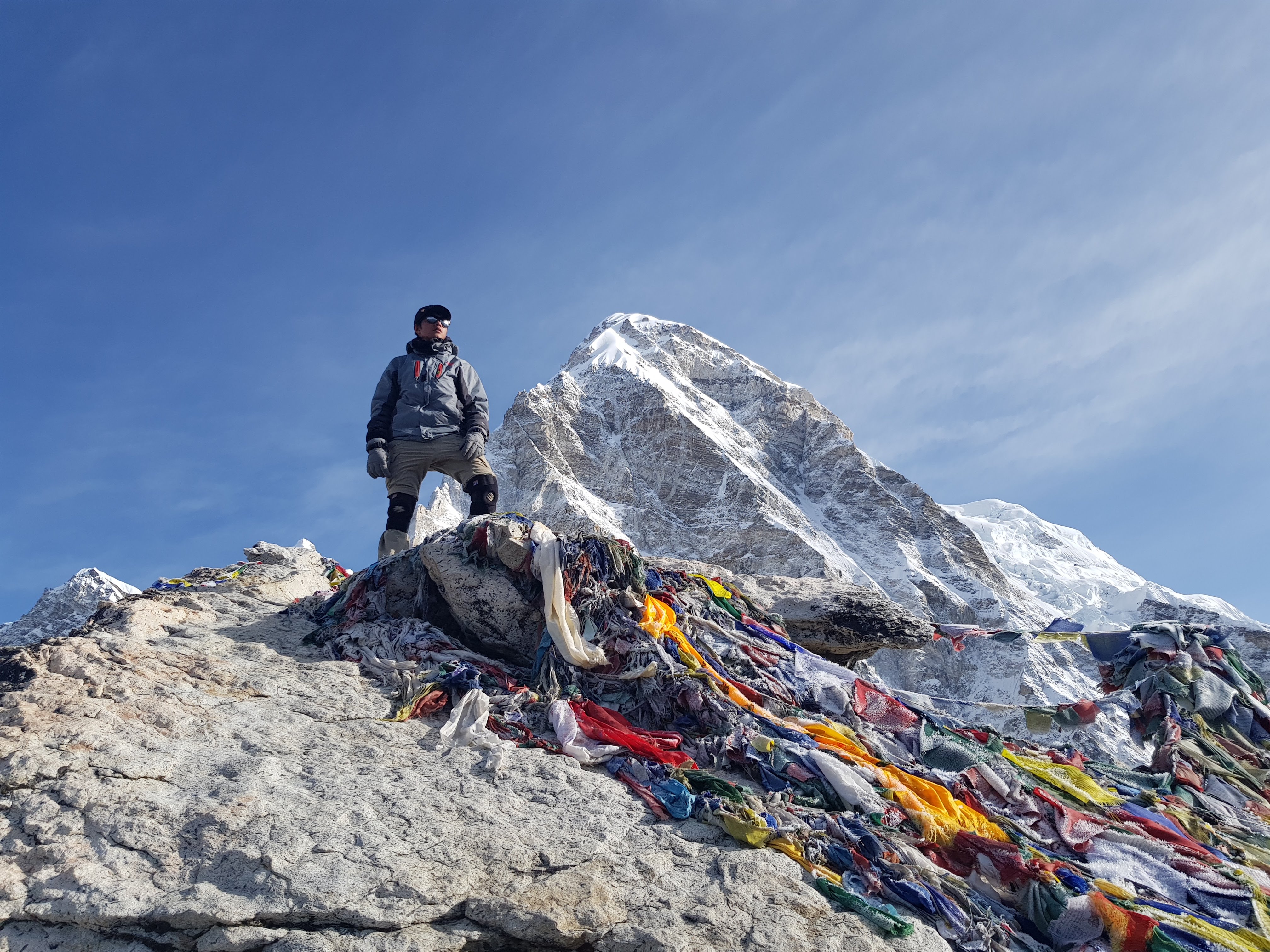
The dream of mountain climbers.
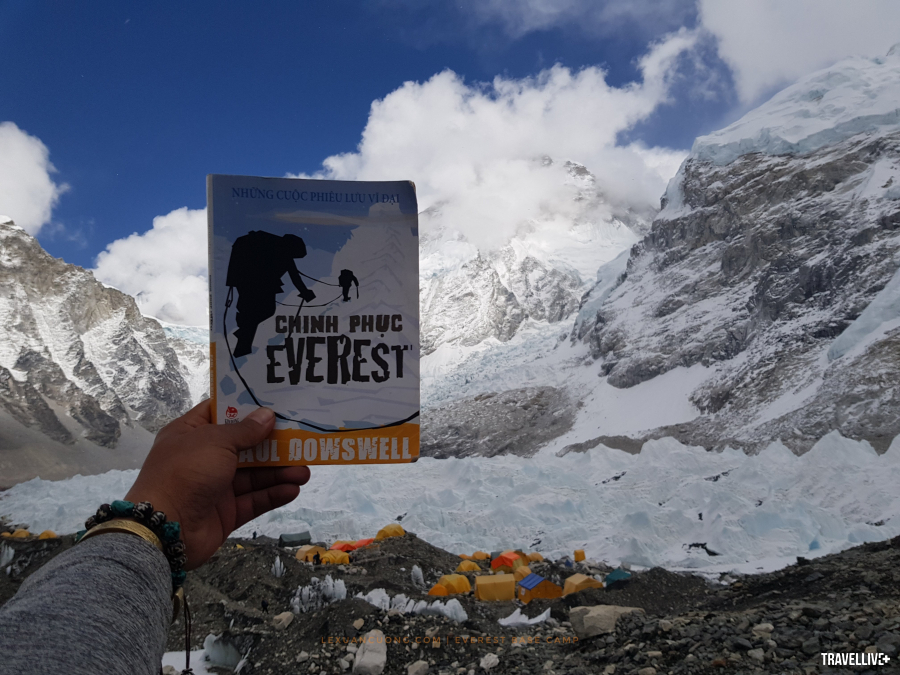
When my friend heard I was preparing to go to Nepal to climb Mount Everest, she sent me "Everest"—a rather old book, probably passed through many hands—sharing stories about the first attempts to conquer the mountain, about the aspirations of people from the last century, and portraits of the great mountaineers, the first people to reach the summit of Mount Everest.
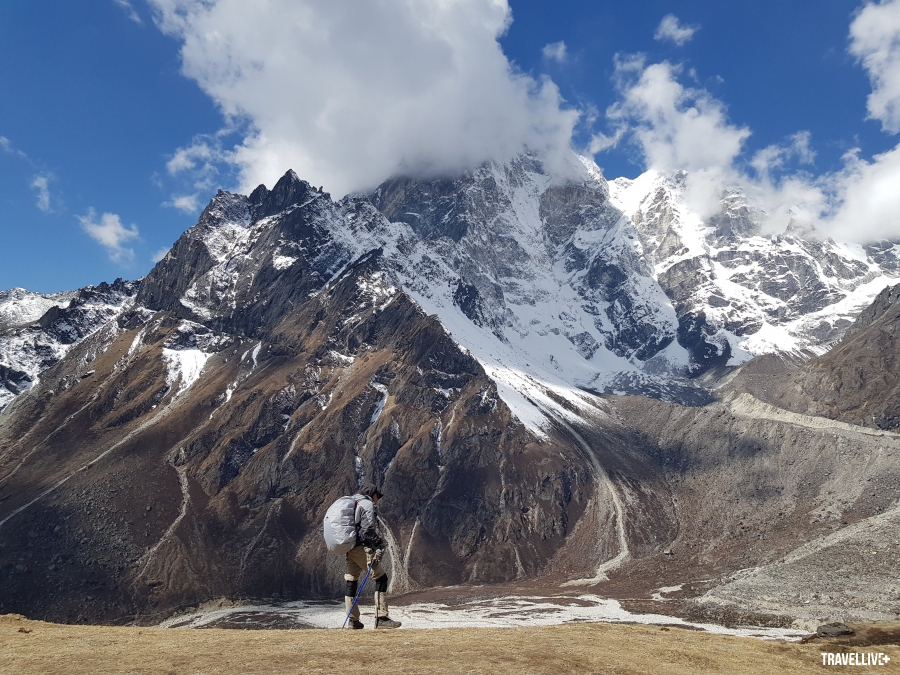
If Fansipan is the roof of Vietnam and Indochina, then Everest is the roof of the world, reaching over 8,000 meters. In Vietnam, a few people have set foot on it on a trip more than 10 years ago, and today, becoming the next conquerors of Everest seems like a dream for many. But this is truly not easy. Statistics show that for every 16 successful climbers, one will perish or go missing. For Vietnamese people, with their physical disadvantages, the dream of conquering Everest is even more distant.
On this trip, our group chose Everest Base Camp as our target – the first step for climbers to continue on to Station 1, Station 2, Station 3… and the summit of Everest. Along the way, we might also have the chance to catch a glimpse of the roof of the world.
Along the way to conquer
After booking our flights and researching the itinerary, our next task was to find a trustworthy partner to guide the group on this trip. Although we had climbed a few peaks before, with altitudes ranging from approximately 3,000m to over 5,000m in harsh weather conditions, we couldn't risk backpacking alone.
In Kathmandu, we chose to stay in the Thahity area for easy access to supplies for the trip, then treated ourselves to dinner at the famous Mountain Steak House, popular with trekkers for its enormous beef steaks (500g and 1kg per serving). The beef here is fresh, delicious, and a great energy booster. We visited this place both before and after completing our Everest Base Camp trek.
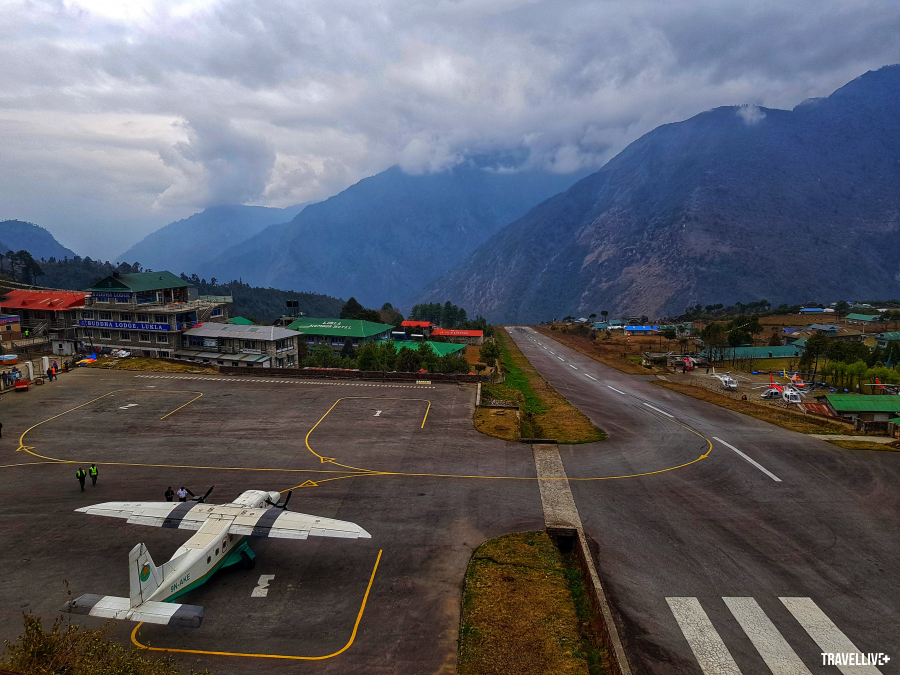
The flight from Kathmandu to Lukla is one of the most dangerous in the world, using a small 14-seat propeller plane, and Lukla Airport boasts the world's steepest runway, less than 2 km long, situated right on a cliff. Landing and takeoff on this route are highly dependent on weather conditions, especially the fog in Lukla. If safety is not sufficient, the flight may be suspended for several days, and tourists can choose to cancel their trip and get a refund, wait, or pay extra to hire a helicopter to fly directly to Lukla. We experienced delays on both our outbound and return flights. Even our return flight was canceled, and we had to wait 24 hours before finally being able to fly back to the capital.
Due to a three-hour flight delay, we had to hurry to Lukla before dark. At this point, we were at an altitude of approximately 2,800 meters; even the lowest point here is comparable to some of the top 10 mountains in Vietnam. Our group was greeted by a Sherpa tour guide, a highland ethnic group in Nepal, best suited to assisting mountaineers in conquering the world's highest peak.

The first part of the trekking route was mostly downhill, following a small path winding around the cliff. The first stretch was filled with the cheerful greetings of trekkers, including both newcomers and those returning after achieving their goal. We, however, were bewildered and surprised by what we were seeing for the first time – it was vastly different from the trekking routes I had seen in Vietnam.
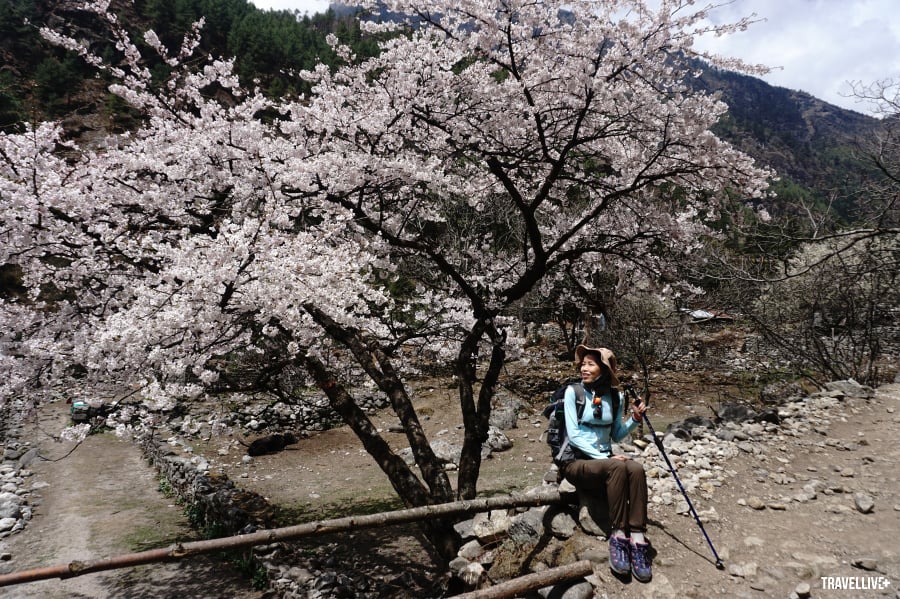
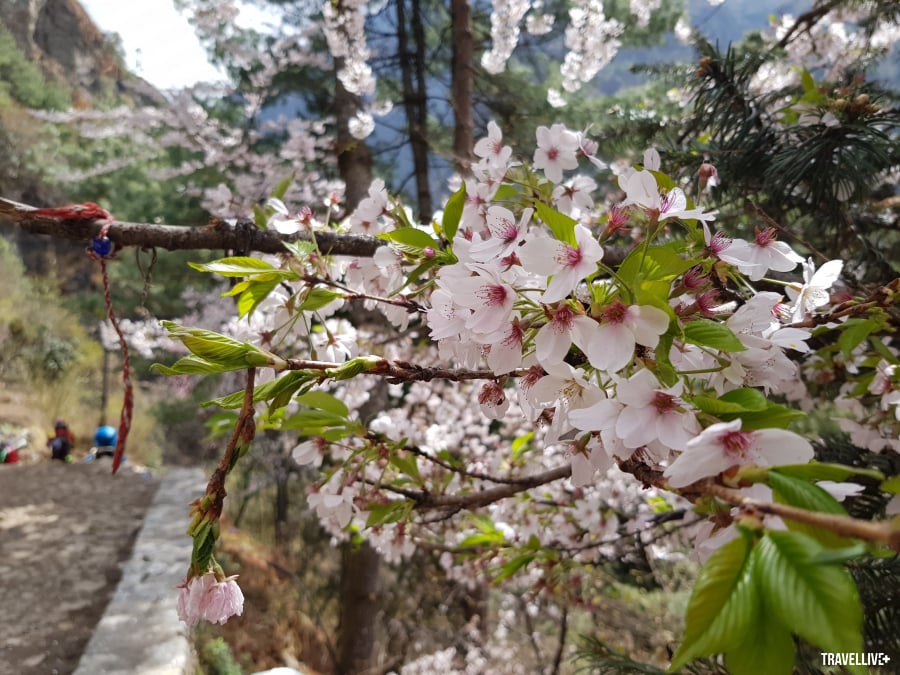
"In April, there will be many beautiful flowers along the Everest Base Camp trekking route." I was skeptical of the tour guide's Facebook post, which included photos. But when the path, covered in rhododendron blossoms, appeared before my eyes, all my doubts vanished.
Rhododendron is the national flower of Nepal, depicted on currency and used as a symbol to promote tourism. Unlike the large rhododendrons in Vietnam, the flowers in Nepal are smaller, perhaps due to the altitude and harsh weather. At each altitude, we encountered different types of rhododendrons in various colors, from pink and white to pale pink, and the flowers became smaller the higher we went. This was also the peak season for cherry blossoms, but just a week later, when we returned, all the blossoms had fallen.
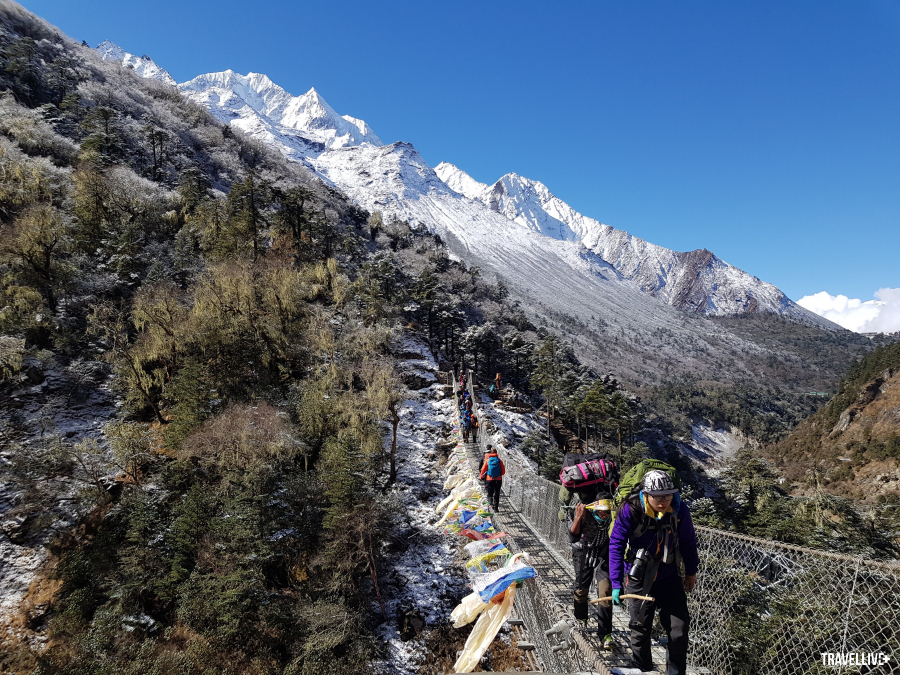
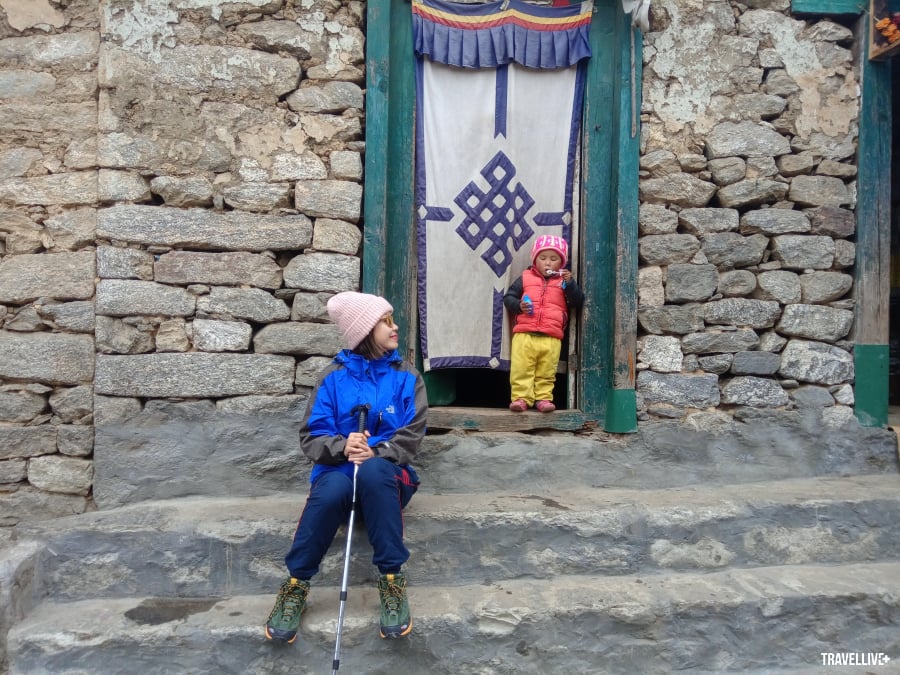
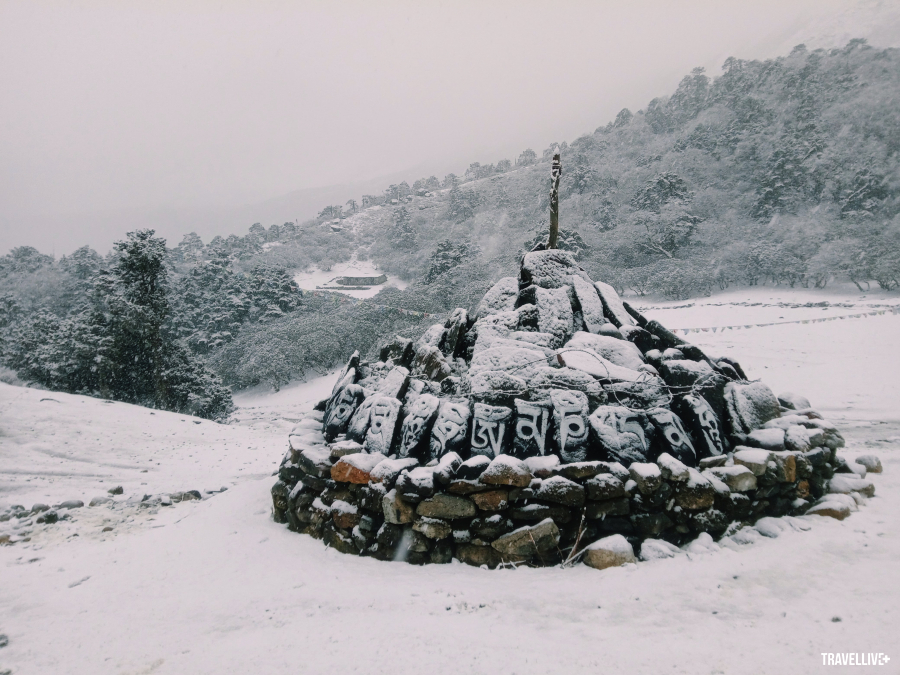
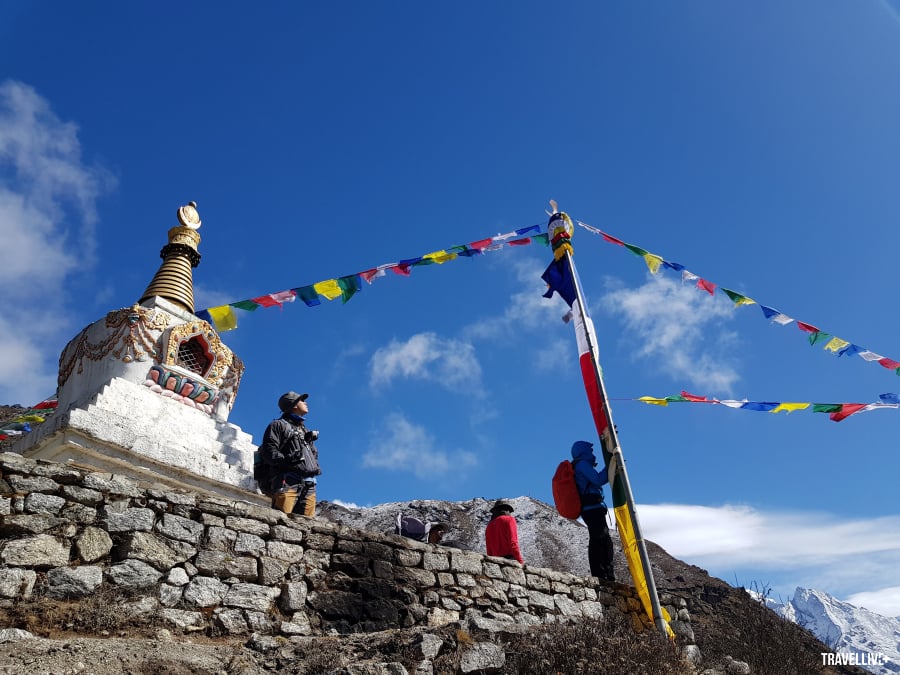
As a Buddhist country, it's not uncommon to see prayer flags in Nepal, consisting of five flags in five different colors, hung everywhere – along bridges, in houses, and on mountaintops. For the people of Nepal and many other Buddhist countries, these prayer flags hold great significance and are often decorated with Buddhist images and scriptures, hung high to flutter in the wind in the hope of bringing good fortune and peace. Additionally, you can easily find inscriptions carved into rock walls and other surfaces, which, according to the tour guide, are ancient Buddhist scriptures inscribed on stone.
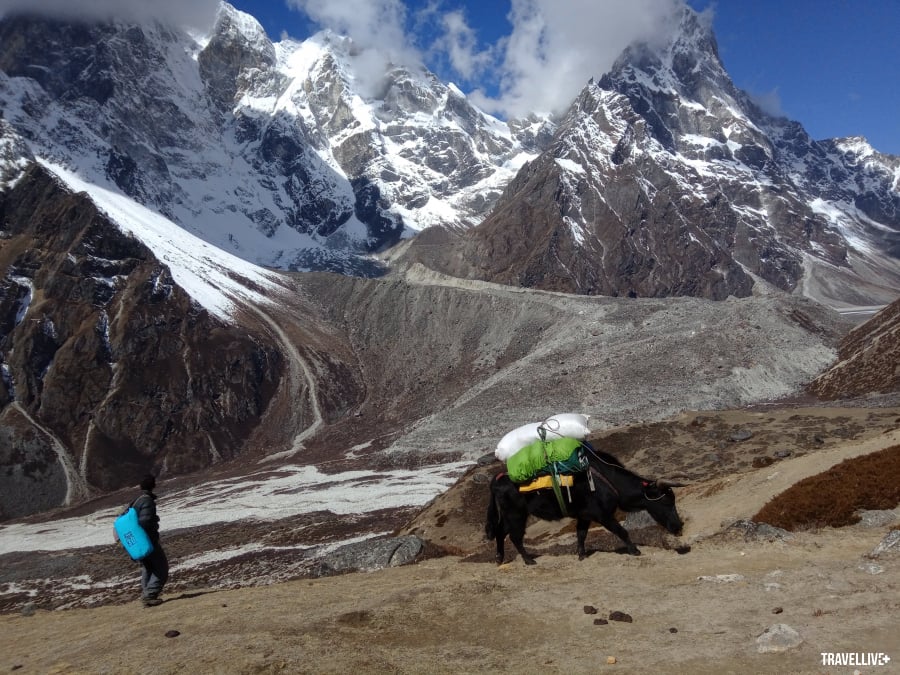
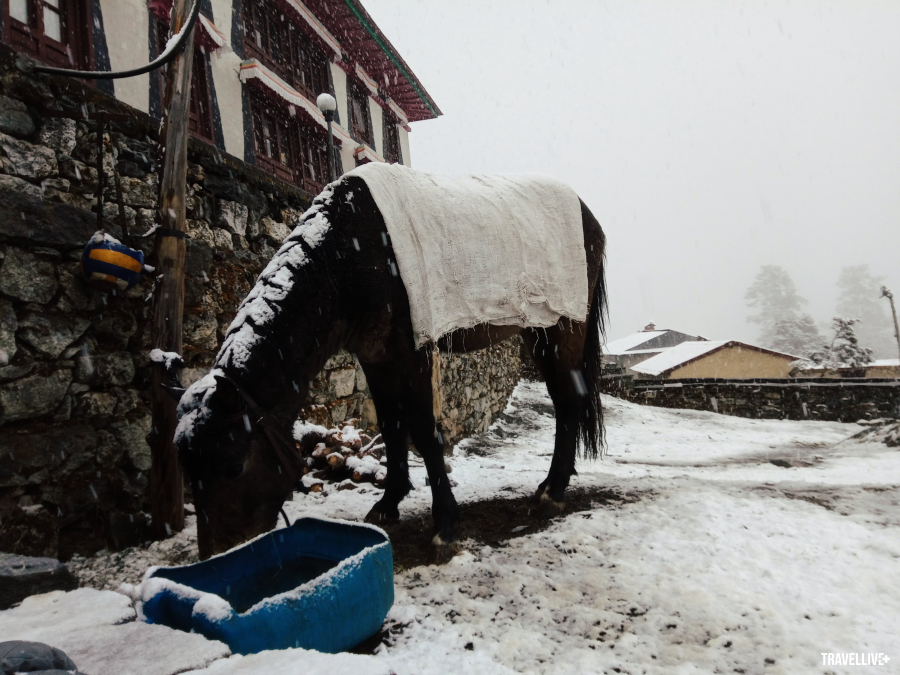
The trekking route to Everest Base Camp is paved with stones and is not only used by climbers but also as a transport route for food and supplies, mainly for the tea houses catering to tourists. This transport relies entirely on human power and livestock; no motorized vehicles are used. With sacks of supplies slung over their backs, herds of yaks (a giant Tibetan cattle breed) and donkeys jostle their way up the mountain. If you hear a clanging sound approaching, remember to quickly move to the edge of the mountain, making way for the yaks or donkeys. At least twice during this journey, I witnessed donkeys slipping and falling into the ravine due to the jostling, luckily being caught by large trees and pulled back up by people… Remember, stay close to the edge of the mountain to avoid being pushed into the ravine by either the donkeys or yourself.
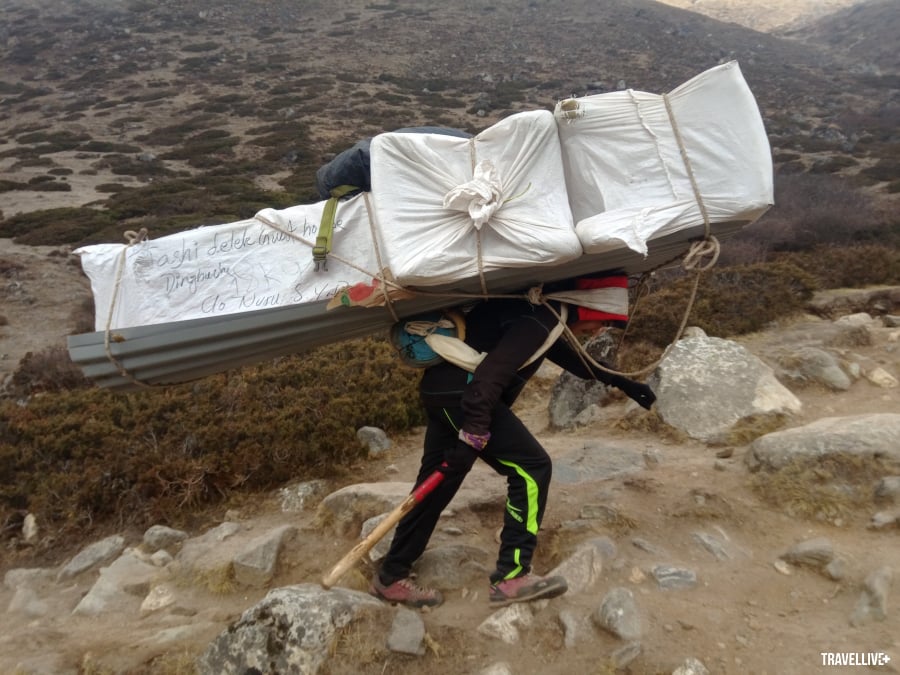
Accompanying our tour guide were two yaks carrying the belongings of seven people. Other climbing groups hire Sherpa porters. Large bags, bigger than their own bodies, even large logs and corrugated iron roofing for building shelters, are carried on their backs, inching forward step by step. With a daily wage of $18-20, despite the hard work, this job provides them with a decent income to support themselves since tourists started visiting Nepal and the Everest Base Camp route became more well-known.
The destination is the beginning!
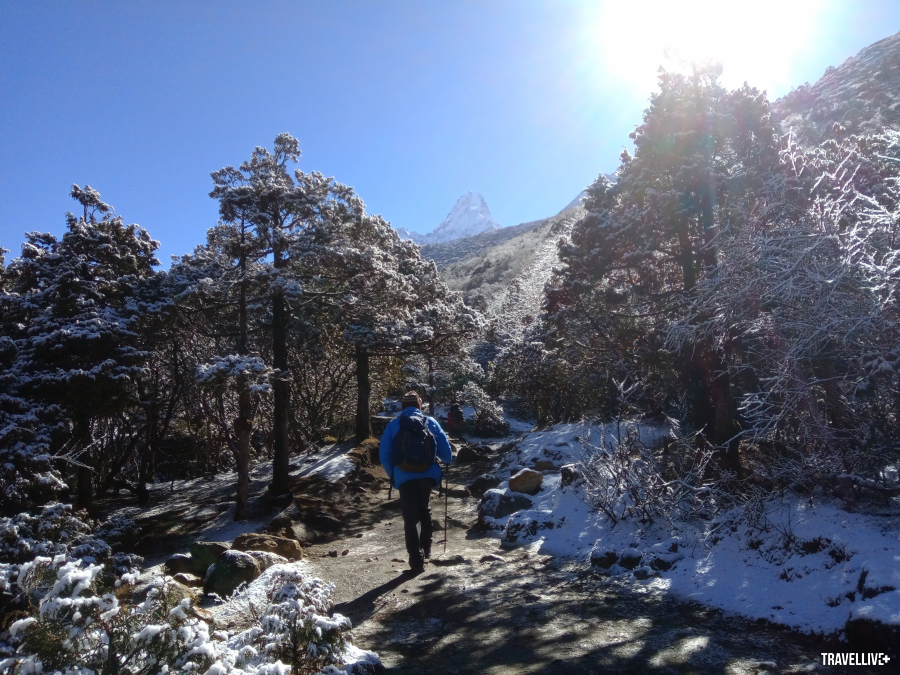
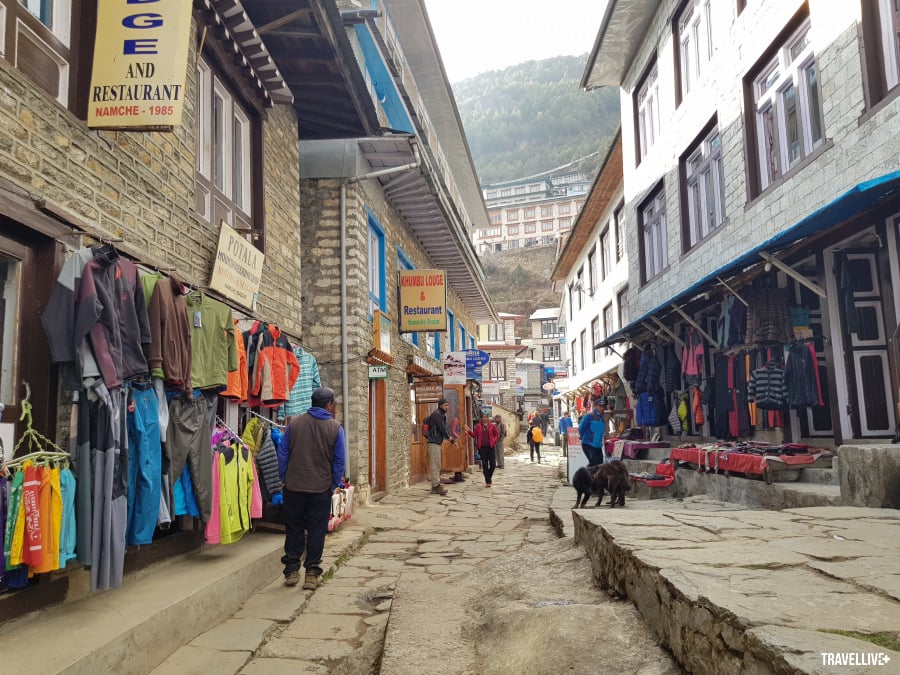
On the third day of my journey, I woke up after a cold, rainy night in Namche Bazaar in my hostel room. The altitude was around 3,405 meters, higher than Fansipan peak, and the temperature was about 1°C.oC. Outside the window, the snow-capped Kongde Ri mountain, over 6,107 meters high, was emerging in the first rays of sunlight. After this day, along the way, the mountain range, the river, or even the roads were mostly covered in ice or shrouded in bone-chilling fog.
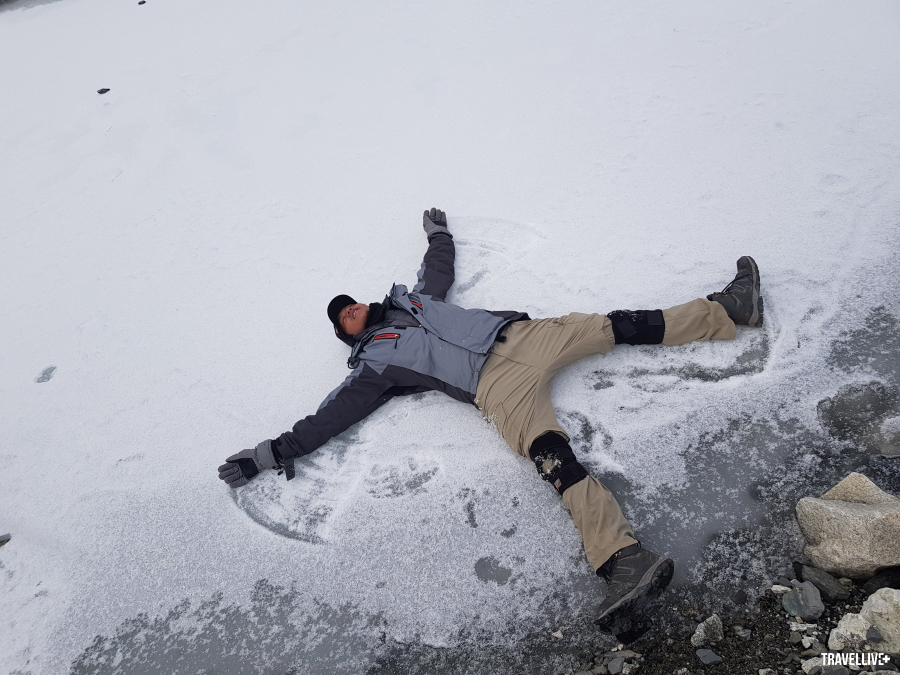
It was here that I first touched snow. Seeing snow and playing with snowflakes was a wonderful experience for us, who live in a tropical country year-round.oC felt like a child receiving a new toy for the first time.
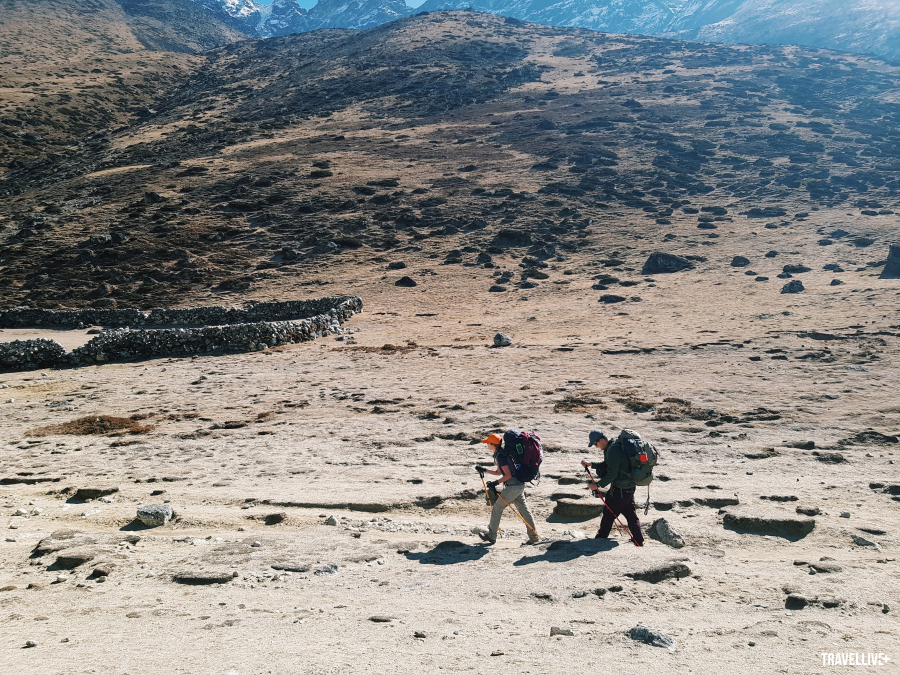
The slopes on the way to Everest Base Camp aren't as challenging compared to the mountains in Vietnam, or perhaps the changes in altitude are somewhat mitigated because the journey takes several days. However, altitude sickness and harsh weather conditions here make the journey seem more difficult.
I've often encountered trekking groups with middle-aged and even elderly people. There were Japanese gentlemen with walking sticks, carefully guiding their tour guides, and the group of 70-year-old Bulgarians we met at the Dingboche tea house, who still hiked during the day and sang and played music at night. However, many people couldn't adapt to the altitude, leading to edema, shortness of breath, or fatigue, forcing them to return by horse or helicopter. To avoid this "altitude sickness," we had to prepare our bodies physically with domestic trekking trips, use preventative medication as instructed by our tour guides, and drink plenty of water.
After eight days of continuous trekking, we finally reached Everest Base Camp, at an altitude of 5,364 meters. A vast campsite stretched before us, filled with large, colorful tents set up for professional mountaineers preparing to conquer the world's highest peak. Standing there all afternoon, before the Khumbu Glacier – the permanent glacier I'd read about repeatedly in the book "Conquering Everest" – I kept thinking about the burning desire of the characters mentioned in the book to conquer Everest. For us, reaching this point was a great achievement, but for many, it was just the beginning… Throughout our journey, we only saw Everest from afar once, but their goal was to set foot on it, to stand at the highest peak in the world. The upcoming journey for these Everest climbers might cost them their lives, but for them, it is undoubtedly the journey of a lifetime, the journey in which they feel the happiest!
ADDITIONAL INFORMATION:
Visa:Vietnamese citizens can enter Nepal with a visa issued directly at the airport, costing $25 for 15 days and $40 for 30 days. A trekking trip to Everest Base Camp typically takes about 11 days, so a 15-day visa is usually sufficient.
Trip:From Vietnam, there are no direct flights to Nepal; you usually have to transit in Bangkok or Kuala Lumpur, then take a Yeti Airlines flight from Kathmandu to Lukla.
Money:Nepal uses the Rupee (NPR), which you can exchange at Kathmandu airport or in the Thahity area. It's advisable to exchange enough money for your needs before arriving in Lukla, as the exchange rate increases with higher altitudes.
Cuisine:In Kathmandu, you can visit Mountain Steak House for its famous beefsteak or Pho99 Thamel for Vietnamese cuisine. You should also try traditional Nepalese dishes made with curry and bean stew.
Skin:
- Prepare thermal clothing for an 11-day trek, especially warm gloves and socks.
- Remember to bring trekking poles, UV-protective sunglasses, and use sunscreen throughout your trekking trip.
Phone:3G SIM cards purchased in Kathmandu only work up to an altitude of approximately 4,000 meters. After that, you'll need to buy 200MB cards for $6 USD to use Wi-Fi at guesthouses. However, unless absolutely necessary, it's not recommended to use this data allowance as it runs out extremely quickly.
Other notes:Prepare plenty of chocolate, energy bars, and drink lots of water. Consult your tour guide about using altitude sickness medication. To save money, you can ask for water at the kitchen and use a water filter or detoxification tablets before drinking. The higher you go, the more expensive water becomes, potentially costing up to $4 per liter.
Cost of the trip:The total cost for a self-guided trip ranges from 1200 to 1500 USD per person. This includes round-trip airfare for two flights: 834 USD; travel insurance: 50 USD per person; tour guide fees: 25 USD per day and porter fees: 20 USD per day per group; food costs: approximately 10-20 USD per day; and other expenses: 200 USD per trip.






.jpg.jpg)
.jpg.jpg)
.jpg.jpg)
.jpg.jpg)


.jpg.jpg)
.jpg.jpg)






