VI
VI


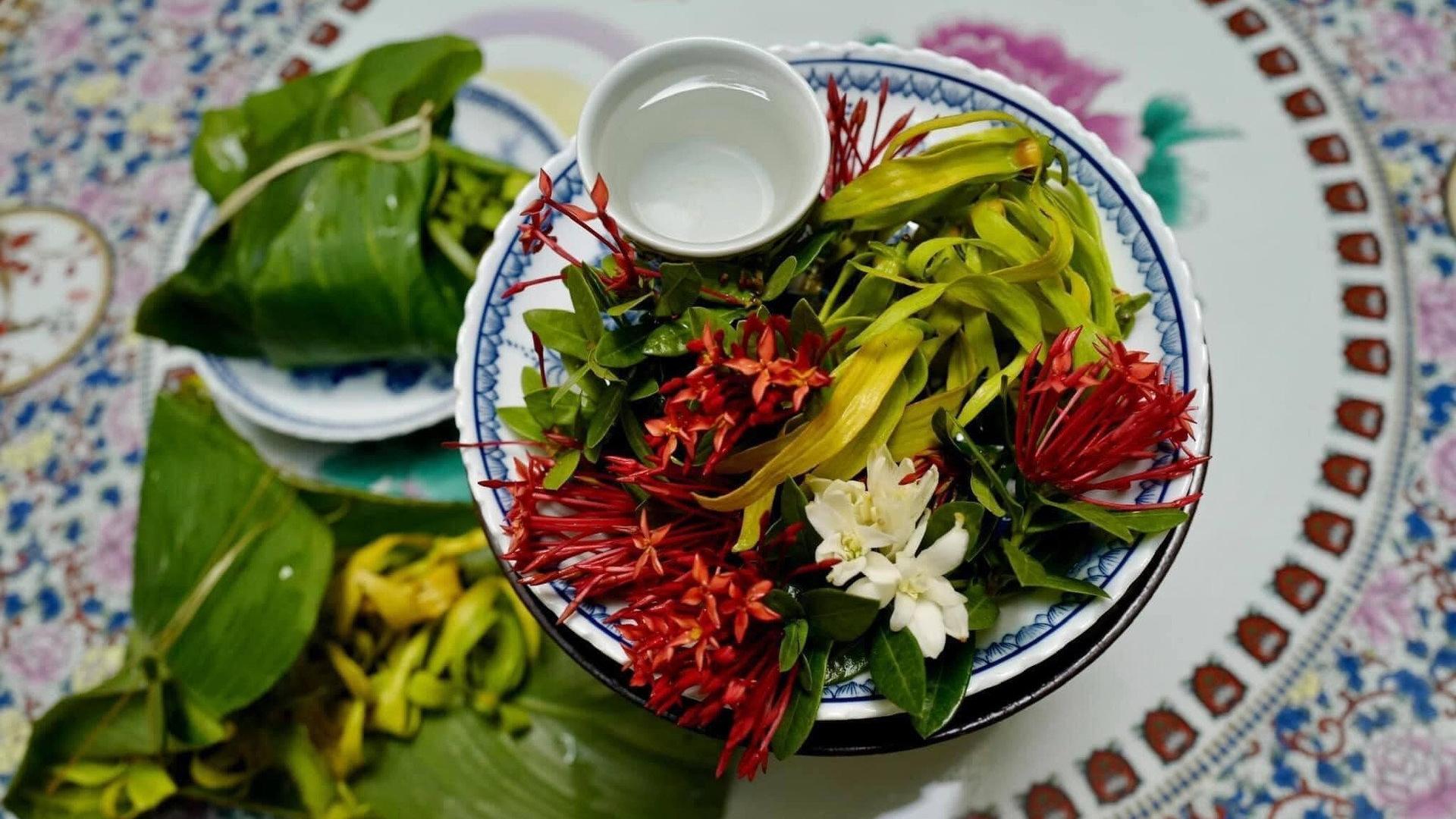
A glimpse into the beauty of old Hanoi.
"On the full moon day, go to the market to buy flowers."
"We have to wait until we get to Ngoc Ha's stall to buy it."
Flower cultivation is not only a refined hobby but also a cultural tradition of the people of Hanoi. They love flowers, cherish them, and consider them an indispensable part of their lives.
On the 15th and 1st days of the lunar month, as well as during festivals and holidays, fresh, fragrant flowers were an indispensable part of the altars in traditional Hanoi families. These flowers were arranged on plates, on trays, or simply wrapped in cool, green banana leaves.
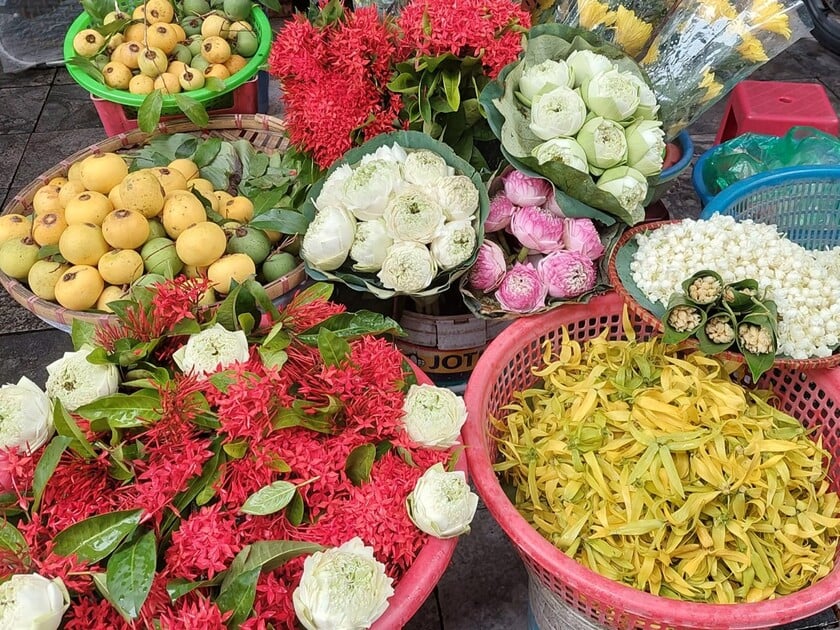
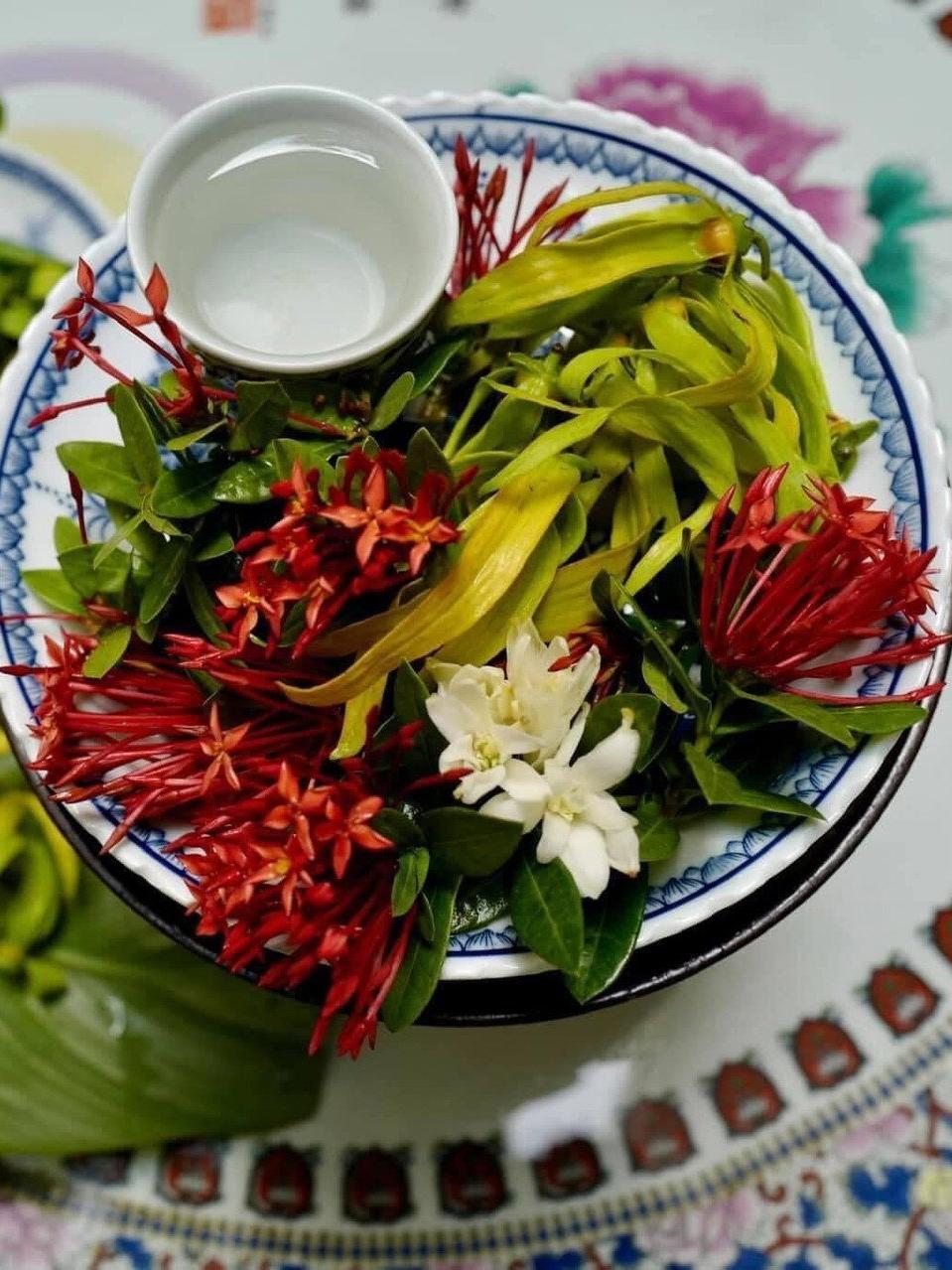
Each flowering season, Hanoians choose flowers that are beautiful both in fragrance and color to offer to their ancestors. (FB: Fragrant Flowers of the Old Quarter)
Each flowering season, Hanoians choose flowers that are beautiful both in fragrance and color to offer to their ancestors. Seasonal flowers, usually 5-7 varieties, are trimmed short, with only the flower heads remaining, and gently wrapped in a banana leaf. Then, a string is tied in a cross shape, and another loop is threaded through to create a handle for carrying. This simple way of wrapping the flowers for offering reflects the respect and reverence of descendants for their ancestors.
In his book "The Pleasures of Hanoi People," writer Bang Son wrote: "The offering plate usually contains many kinds of flowers, loose flowers placed on a small, dry, clean plate. It might be a fragrant, pure white lily, a strong-smelling magnolia, a delicate branch of ylang-ylang with a subtle fragrance. Sometimes there might also be a branch of wolfsbane, a semi-open chrysanthemum, a peony, a stiff, dried branch of zinnia, and sometimes, in seasons with fewer flowers, even a cockscomb flower..."
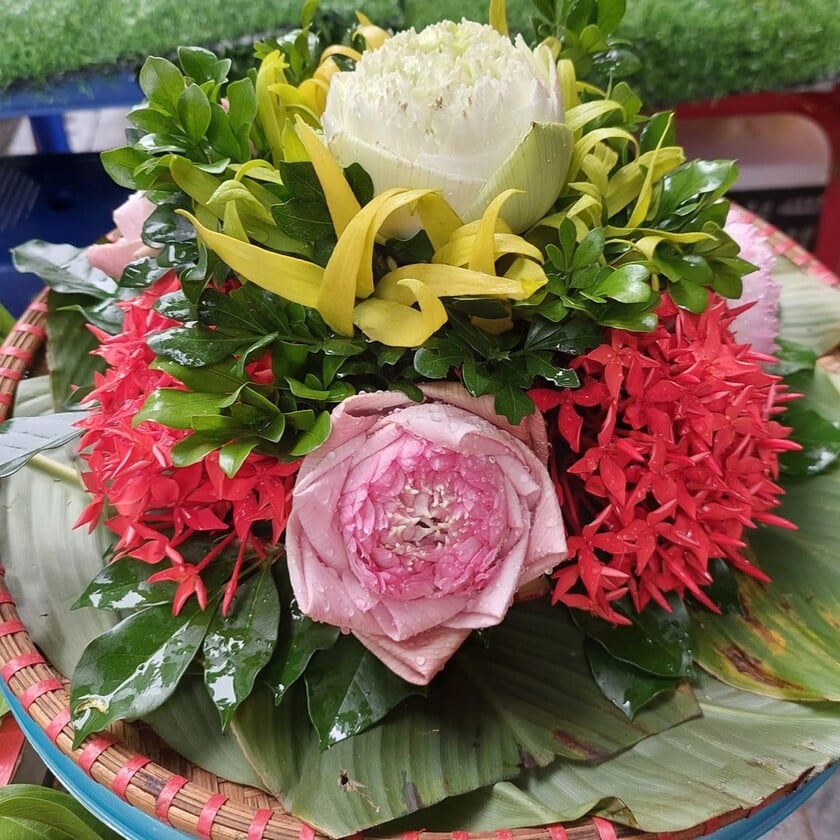
The flower arrangement offered to ancestors is not simply an item presented to them, but also symbolizes the gratitude and respect of descendants for previous generations. (FB: Fragrant Flowers of the Old Quarter)
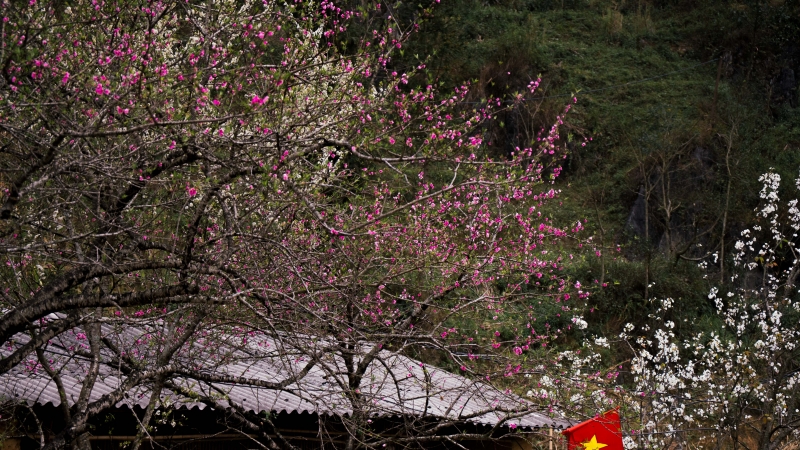
The flower arrangement offered to ancestors is not simply an item presented to them, but also symbolizes the gratitude and respect of descendants for previous generations. It is a beautiful traditional cultural aspect, reflecting the sophistication and elegance in the spiritual life of the people of Hanoi.

Each flower is meticulously selected and harmoniously combined to create a vibrant tapestry. Pure white lilies symbolize purity, deep red roses represent reverence, and elegant lotus flowers symbolize enlightenment. All blend together to create a beautiful offering bouquet carrying meaningful messages.
Despite the many changes in modern life, the traditional flower arrangement for offerings retains its original value and meaning. It serves as a link between the past, present, and future, contributing to the preservation of Hanoi's cultural identity.
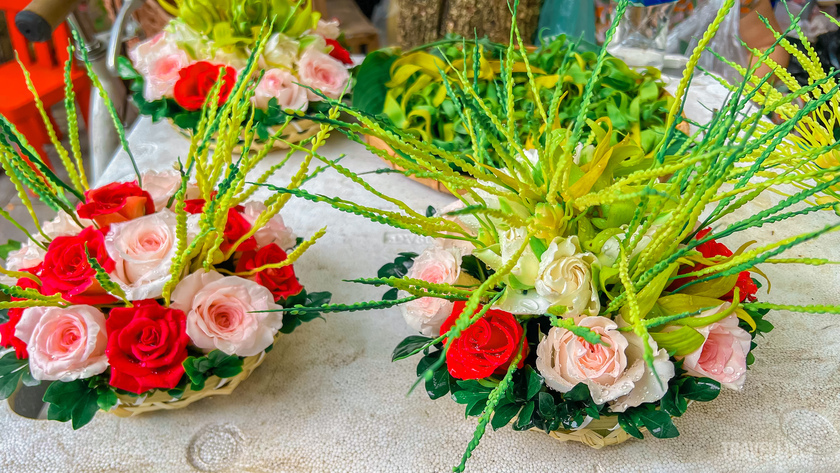
Despite the many changes in modern life, the traditional offering of flowers still retains its original value and meaning.
Flower vendors hold onto memories in the capital city.
The hustle and bustle of modern life seems to have swept away traditional flower arrangements. However, amidst this fast-paced world, there are still those who diligently preserve the elegant beauty of a bygone era.
Amidst the vibrant flower shops, Mrs. Phan Thi Thu's flower stall stands out as a tranquil, unassuming note on a corner of Hang Khoai Street. Her stall is unusually simple, with just a few plastic baskets and familiar spring flowers. Yet, in this humble place, one can rediscover a whole realm of memories from old Hanoi.
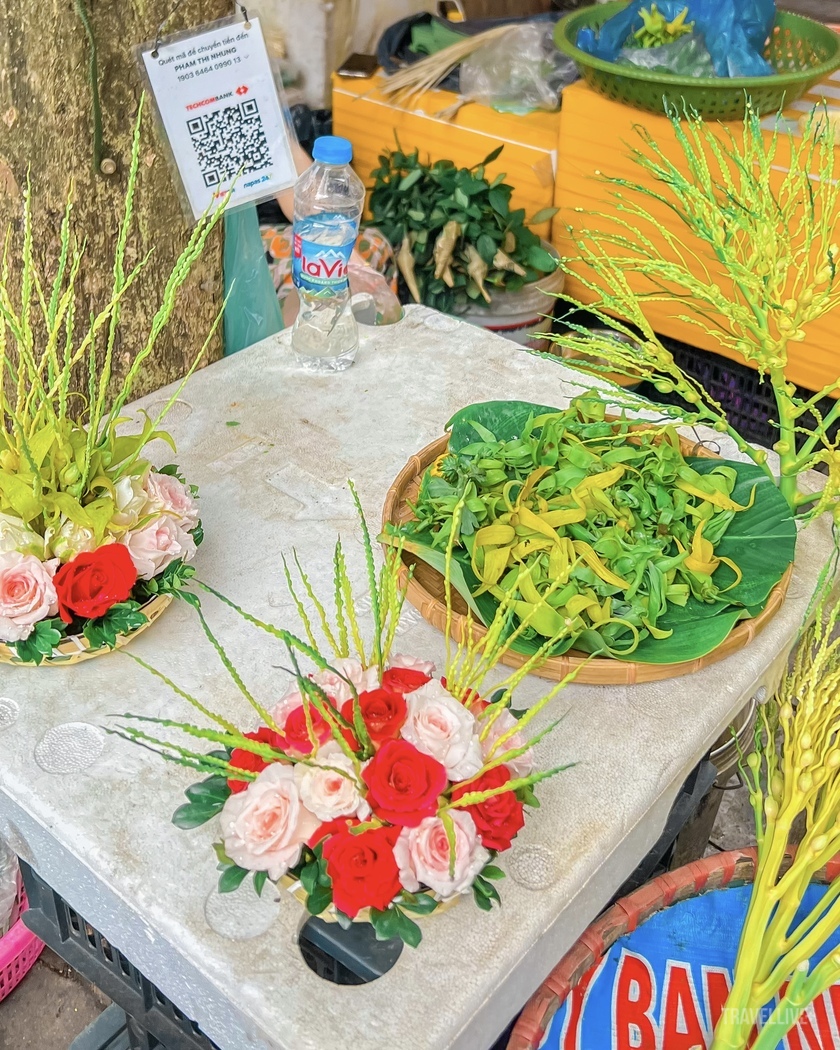
Amidst the vibrant flower shops, Mrs. Phan Thi Thu's flower stall stands out as a quiet, unassuming note on a corner of Hang Khoai street.
Ms. Thu was born and raised in Ngoc Ha flower village, a place famous for its traditional flower cultivation, and she has been connected to flowers since childhood. Therefore, she always cherishes and preserves traditional cultural aspects, including the custom of wrapping flowers for offerings.
However, the corner of Hang Khoai Street, where Mrs. Thu's flower stall once stood – a symbol of the simple beauty of old Hanoi – has been empty for over a year. Instead, the tradition has been continued by her youngest daughter-in-law, Ms. Pham Thi Nhung (born in 1975).
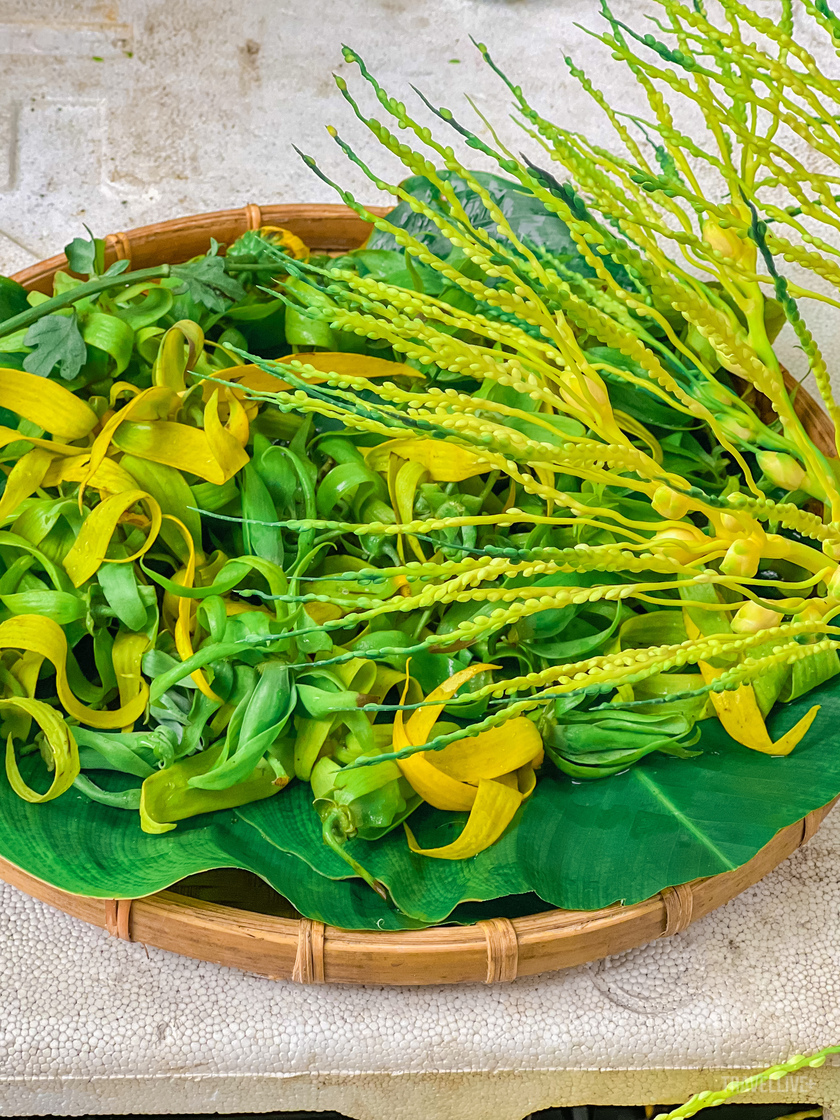
The stall was unusually simple.
Ms. Nhung shared that Ms. Thu has been involved in this profession for over 70 years. Throughout her life, she has traveled the streets of Hanoi, bringing the fragrance and beauty of flowers to every home. Her flower cart is an indispensable part of the lives of Hanoians, especially during holidays.
Although Mrs. Thu is no longer with us, her flower stall is still maintained by Ms. Nhung. She says she will continue to preserve her mother-in-law's tradition, bringing these simple flower arrangements, imbued with a wealth of memories of old Hanoi, to everyone.
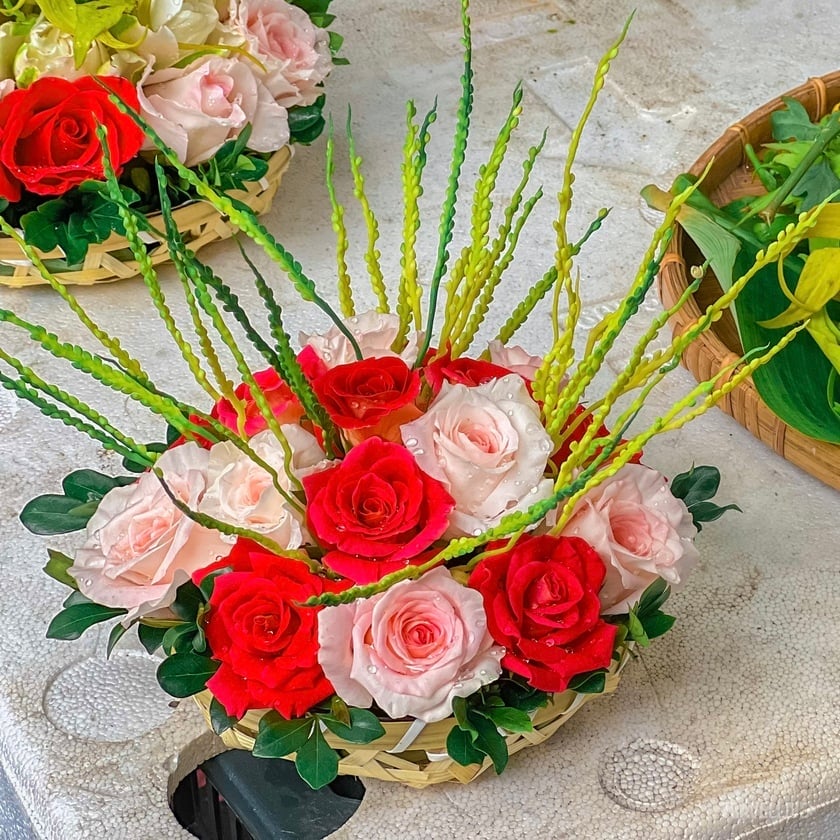
The hustle and bustle of modern life seems to have swept away traditional flower arrangements and platters.
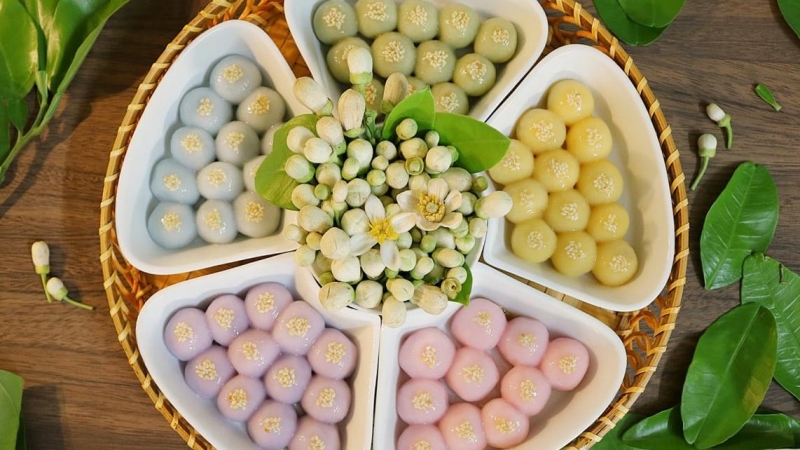
Today, flower arrangements, flower plates, and flower baskets have taken on a new, beautiful, and sophisticated look. Unlike the elaborate and vibrant bouquets of modern times, these offerings use simple, rustic flowers such as roses, lilies, pomelo blossoms, and snapdragons, arranged in the shape of a water chestnut – a symbol of abundance and prosperity.
Floral platters are not simply made up of rows of flowers; they are transformed into works of art with multiple layers, colors, and unique shapes. The flower arrangements are also meticulously crafted, with various flowers harmoniously arranged to create a vibrant picture.
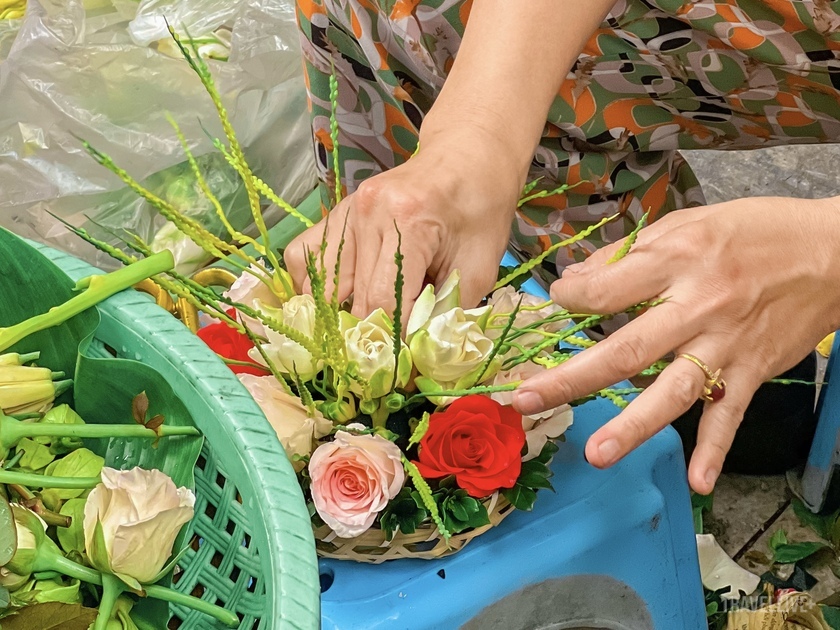
This innovation not only meets the ever-increasing aesthetic demands but also demonstrates the creativity and dedication of the artisan.
This innovation not only meets the ever-increasing aesthetic demands but also reflects the creativity and dedication of the artisans. They have breathed life into the flowers, transforming ordinary objects into works of art that contribute to beautifying life. While retaining the core values of elegance and grace, the new designs offer a feeling that is both familiar and unfamiliar, familiar yet new, for flower lovers.
It seems that each flower arrangement tells a story, a memory of old Hanoi. Looking at these simple flower arrangements for offerings, my heart was filled with indescribable emotions. It was a mix of emotion and pride in traditional cultural values. It was gratitude towards people like Mrs. Thu and Ms. Nhung, who have tirelessly preserved this beauty for future generations. And one could say that the flower stall is like a small, peaceful corner in the heart of the bustling city, where people can reconnect with the beautiful traditional values of old Hanoi.
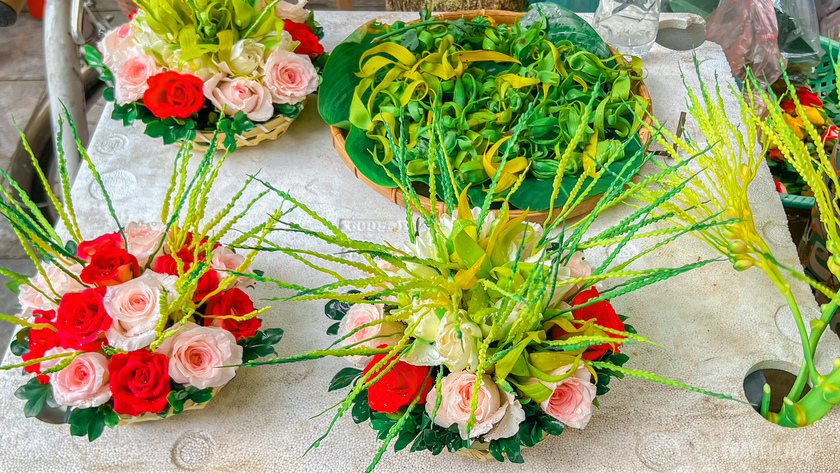
The flower stall is like a small, peaceful corner in the heart of the bustling city, where people can reconnect with the beautiful traditional values of old Hanoi.