VI
VI


Recently, according to statistics, Iceland officially surpassed Switzerland to become the country with the highest cost of living in the world. According to new calculations published by the Viska trade union, based on data analysis from the Eurostat statistical agency and the Central Bank of Iceland, this island nation in the North Atlantic is facing unprecedented economic pressure.

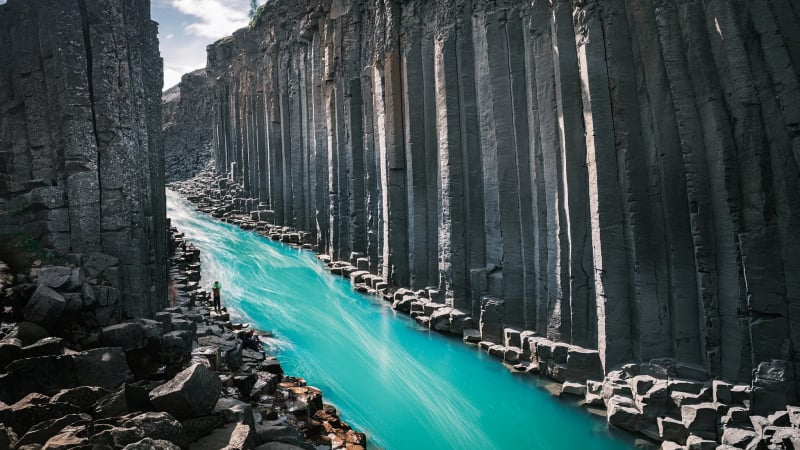
Economist Vilhjalmur Hilmarsson of the Viska Federation stated that the cost of living in Iceland is now about 3% higher than in Switzerland. This marks the first time in many years that the country has returned to the top spot for expensiveness, a significant milestone since the last time the island nation surpassed Switzerland in 2018.
If you're looking for a budget-friendly Iceland travel experience, the reality of prices in this country will certainly make you reconsider your entire budget. The escalating cost of living is clearly and directly present in every aspect of daily life for both locals and international tourists.
Statistics from the federation show that the prices of essential food items in Iceland are currently 44% higher than the average for the Nordic countries. Among these, basic items like milk and eggs are priced approximately 75% higher, while meat prices are also significantly higher, at 71%.
When entering a cafe in Reykjavik, tourists will have to pay around 1,000 kronur for a simple latte. Even a glass of beer can cost up to 1,800 kronur, equivalent to about $14.60 USD.


The post-pandemic tourism boom brought in significant revenue but also plunged Iceland's economy into inflation.
An economic report from Bloomberg indicates that the root cause of this widespread price increase stems from a growth formula that relies too heavily on the tourism industry.
Following the crisis caused by the pandemic, the strong recovery of the tourism industry quickly became the biggest and most important growth driver of the Icelandic economy. However, the downside of this boom is the rapidly rising inflation that the central bank is still struggling to control.
According to Hilmarsson's analysis, the tourism industry is contributing significantly to inflation in the service sector. The pressure from consumer demand and the experiences of the massive influx of tourists to the island has directly driven up workers' wages, creating a chain reaction of price increases that is difficult to stop.
One of the most serious and troubling consequences of this rapid growth is the local housing crisis, directly impacted by tourism-related activities. Currently, the number of international tourists visiting the island nation far exceeds Iceland's official population, which is a sparsely populated country with a total population of just under 375,000.
To maximize profits, a large amount of real estate has been repurposed. International tourists are fiercely competing with locals for accommodation through short-term rental platforms like Airbnb.

Iceland has officially surpassed Switzerland to become the most expensive country in the world.
According to economic experts, the core of the inflation problem lies in Iceland's internal economic structure, a system heavily reliant on labor-intensive industries, while the capacity and ability to expand local production are extremely limited due to its unique geographical and climatic conditions.
When tourist numbers grow too rapidly, price pressures are no longer confined to the accommodation or food service industries but easily spread and permeate all other economic sectors of life. This situation is creating a reverse force for the tourism industry itself.
A recent large-scale survey conducted by the national tourism board revealed that the high cost of living and soaring prices are beginning to create apprehension, causing a significant number of international tourists to seriously reconsider or cancel their future plans to visit Iceland, signaling a major challenge to the sustainable development of this island nation.