VI
VI


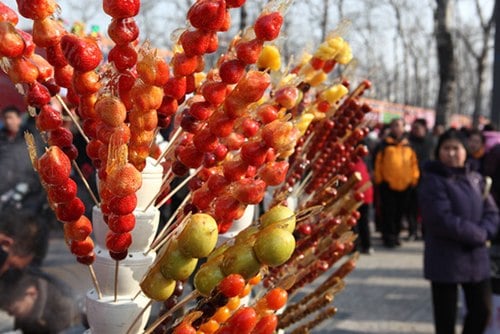
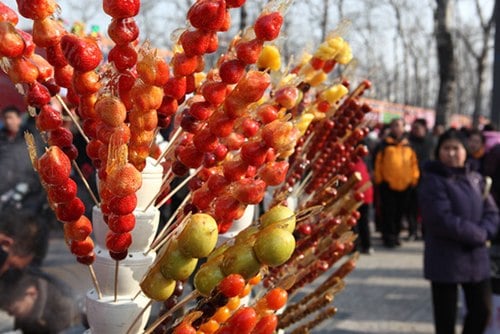
According to legend, the hawthorn skewers date back to the Song Dynasty (960-1279). One of the favored concubines of Emperor Song Guangzong (1147-1200) suffered from a terminal illness. While the imperial physicians were still trying to find a cure, a folk healer approached the emperor and asked for permission to treat her. His remedy was simple: wrap hawthorn berries in hot sugar water and eat 5 to 10 berries before each meal. The concubine would recover after two weeks. This remedy worked, much to the astonishment of the imperial physicians and court officials.
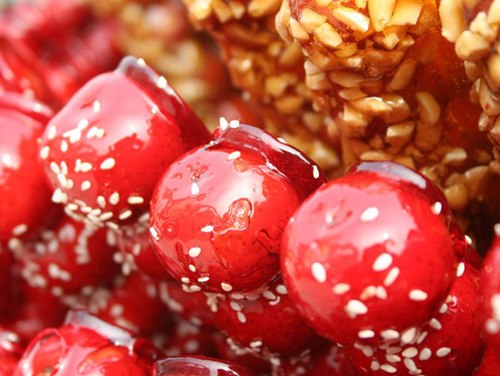
Beijing is remembered not only for its beautiful and historical city but also for its sweet and simple candied hawthorn skewers, which carry a powerful message: Wishing you all good luck and happiness. The first candied hawthorn skewers only had two hawthorn berries, one small on top and one large at the bottom. This made the skewer resemble a gourd, and the name "candied hawthorn" originated from this. Besides hawthorn berries, other ingredients such as kumquats, water chestnuts, or dates are added as fillings. The outer coating also uses various fruits such as kiwi, strawberries, pineapple, raisins, and even chocolate. The color red, symbolizing luck and good fortune, remains the dominant color, but the addition of other fruit colors makes the skewers especially appealing to both adults and children.

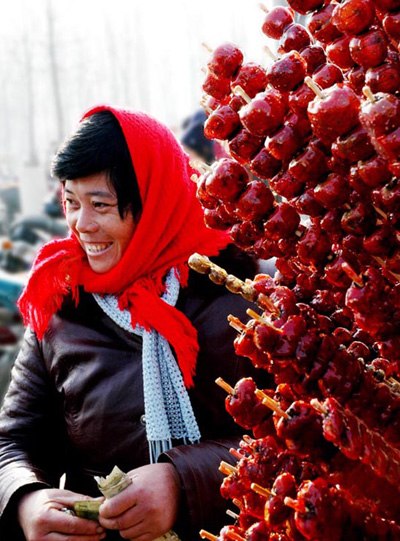
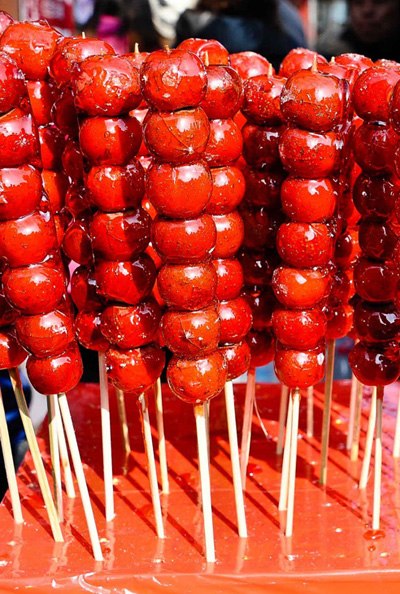
One of the most famous candied hawthorn skewers in Beijing is the Xinyaunzhai factory. This production facility is considered one of the oldest in the industry, with its special candied hawthorn skewers called Tangdun dating back to 1930.
The distinctive sound that sets these candied hawthorn vendors apart from others is their unique call.
For the Chinese people in general, and the people of Beijing in particular, their childhood memories are intertwined with the sweet taste of candied hawthorn skewers. The calls of vendors and the clatter of bicycles in the quiet, narrow alleys of Beijing in the early morning mist, the red skewers of candy swaying with the rhythm of the wheels, have become an unmistakable beauty of this city.
Candied hawthorn berries also feature prominently in art. The Chinese have composed songs about these sweet treats, and there's even a long-running television series starring the famous actress Xu Qin Ge Wa titled "Candied Hawthorn Berries." The fact that the berries appear so frequently in historical dramas further enhances their special place in Chinese tradition. Tourists visiting this historic city also seek to sample this unique and delightful treat.