
 VI
VI


In the reflection of ancient glass panes, history does not lie dormant like a layer of dust, but emerges through colors, lines, and reverse-painted layers created by the hands of artisans. From the art of Hue Imperial glass painting to the folk glass painting of Southern Vietnam, the journey of glass has traversed many different cultural spaces, carrying with it the aesthetic memories of many generations of Vietnamese people.
The "Southern History on Glass" exhibition is not just an art display, but also a journey of research and dialogue with heritage. There, glass painting is re-established within the flow of Vietnamese art as an important element of the "artistic chronicle" of Southern Vietnam, where art, beliefs, and life were once inseparably intertwined. The exhibition runs from May 2nd to May 31st, 2026 at Annam Gallery, open daily from 9:00 AM to 8:00 PM.

The exhibition space for "Southern History on Glass" at Annam Gallery on Hai Ba Trung Street, Ho Chi Minh City.
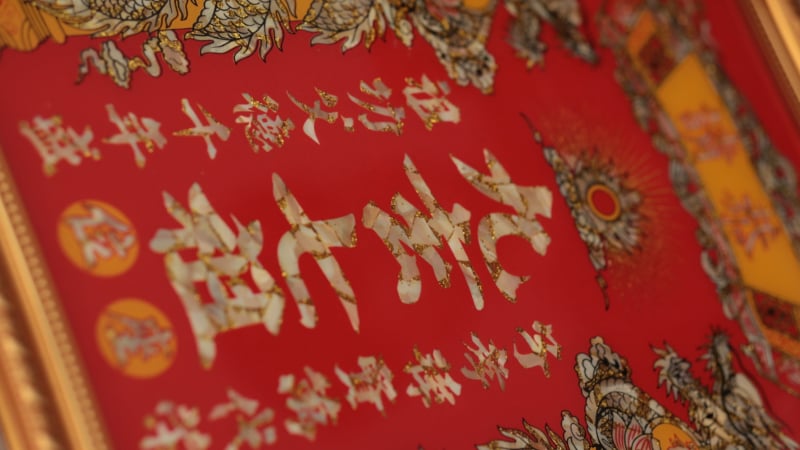
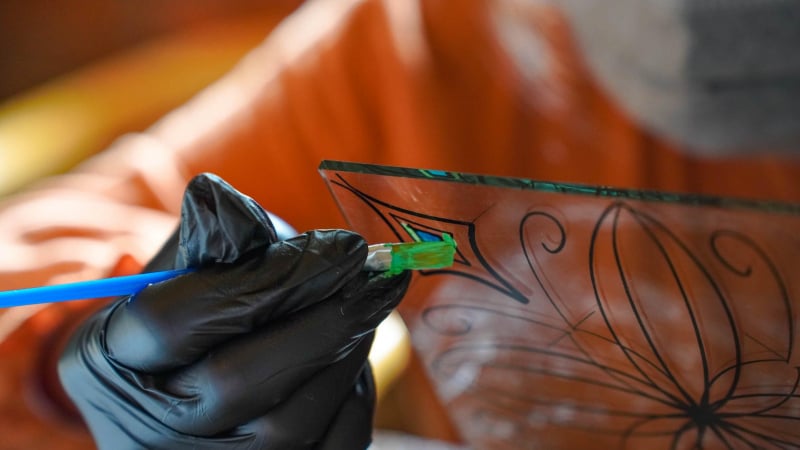
Layers of color that travel back in time.
The unique aspect of glass painting lies in the "backward" technique – that is, painting in reverse on the back of the glass. The artist must first create the smallest details, then apply the background and finish with the final layers of color. When viewed from the front, the image appears clear, sharp, and possesses a distinctive depth that few other forms of painting can offer.
In the history of Vietnamese art, Southern Vietnamese glass paintings were once ubiquitous: from ancestral altars, temples, and Chinese assembly halls to townhouses in the Mekong Delta. More than just decorative objects, glass paintings also preserved spiritual beliefs and aspirations for wealth, peace, and family happiness.
At the exhibition, viewers encountered many familiar painting styles such as altar glass paintings, flower and bird paintings, celebratory paintings, and folk decorative paintings. Each work reflects a distinct layer of Southern Vietnamese culture, where the intermingling of Vietnamese, Chinese, and Khmer cultures has created a unique aesthetic identity.

The stained glass paintings are categorized by region for visitors to learn about.
From folk beliefs to royal beauty
One of the highlights of the exhibition is the restored works of art from the Cho Lon and My Tho glass painting tradition. The "Four Seasons of Flowers and Birds" series depicts the four seasons through images of birds and flowers, symbolizing blessings, prosperity, and abundance. After suffering damage over time, the artwork was restored in 2025 by artisan Tran Van Nhanh using traditional techniques, especially the image of the peacock - a symbol of wealth and nobility.

Meanwhile, the "Ông" series of paintings by artist Trần Văn Đầu shows the transformation of Southern Vietnamese glass painting in the mid-20th century. With a foundation in academic art and influences from Western painting, he transformed glass painting from a folk art form into a type suitable for the modern townhouse architecture of the time.

The work "Four Seasons of Flowers and Birds" (1960)

The work "Ông" (1950)
The exhibition space also dedicates a significant area to devotional paintings – a crucial element of Southern Vietnamese glass painting. From images of Quan Am, Buddha, Quan Cong, Cuu Thien Huyen Nu to Ba Chua Xu or Ong Dia, each work reflects the rich belief system of the Vietnamese and Chinese communities in Southern Vietnam.
In particular, the "Eight Immortals" series of paintings, featuring eight Taoist deities with vibrant colors and symmetrical compositions, is clear evidence of the fusion of East Asian culture in Southern Vietnamese art. There, art not only serves beauty but also acts as a means of conveying beliefs and aspirations for life.

On the left is the work "Three Pure Ones - Taoism" (1950) and on the right is the work "Eight Immortals" (2026)
Alongside Southern Vietnamese folk paintings, the exhibition also opens an interesting dialogue with Hue Imperial Court mirror paintings – an art form that once existed within the Nguyen Dynasty. Reconstructed works such as “Tam Phong Sap Van”, “Thanh Tri Huong Luyen”, “Khuc Chieu Ha Huyen”, and “Sao Chi Miet Tuoc” demonstrate the refinement of court aesthetics through the technique of reverse painting on glass.
While folk glass paintings are closely related to everyday life, court glass paintings are highly formal and symbolic. Each painting is not just a landscape but also a combination of painting, calligraphy, and Confucian-Taoist thought. The clear layers of color, reflective effects, and symmetrical composition create a feeling that is both real and transcendent.


The restoration of these works is not just about recreating images, but also a journey of researching the techniques, materials, and creative thinking of ancient artisans. In a context where many originals have been lost over time, the efforts of artisans and researchers today are like a way of reconnecting the broken threads of memory in Vietnamese art.

Many visitors were attracted by the recreated space of Hue imperial mirror paintings in the exhibition.
When heritage enters contemporary life.
“Southern History on Glass” goes beyond simply preserving or recreating the past. The final section opens up a new approach: bringing glass painting into contemporary applied art.
The work "Ngọc Ảnh Đan Thanh" by designer Đào Minh Đức is a prime example. Inspired by the glass painting "Mai Lan Cúc Trúc" (Plum, Orchid, Chrysanthemum, Bamboo), the piece transforms the spirit of the four noble gentlemen of East Asia onto fashion materials. The shimmering effects, reflective surfaces, and multi-layered structure give the garment the feeling of a glass painting moving with the body.

The glass painting "Plum Blossom, Orchid, Chrysanthemum, and Bamboo"

The applied artwork "Jade Image and Blue Silk"
Meanwhile, works such as "Tố Nữ," "Cô Chín," "Hòa Tấu," and "Phê Bệt" demonstrate the strong adaptability of glass painting language in contemporary life. From the image of young women in Hang Trong paintings, the Four Palaces belief system, to the sidewalk coffee culture of young Saigonese people, all are restructured using reverse painting techniques on glass and contemporary visual thinking.
It is noteworthy that in these works, glass painting is no longer a static display object. It becomes a "living language," capable of reflecting the viewer, drawing them into the space of the artwork and engaging in dialogue with their cultural memories.

The work "Concert" (2026)

The work "Peak High" (2026)

The work Cô Chín (2025)
Through each reflective glass pane, the exhibition unfolds a journey where the past, present, and future coexist. And at the end of that journey, the story of Southern Vietnamese glass painting does not close, but continues to be written by artisans, artists, and young people of today.












