VI
VI


Reviving a fading heritage
On the morning of August 8th, in Ho Chi Minh City, the "Southern Vietnamese Glass Painting Multimedia Art Exhibition" officially opened, carrying the mission of preserving and spreading the value of Southern Vietnamese glass painting in a new form. The event is organized in the spirit of the Ministry of Culture, Sports and Tourism's "Project to Protect Intangible Cultural Heritage at Risk of Disappearance," aiming for the long-term goal of bringing Southern Vietnamese glass painting closer to the criteria for UNESCO recognition as an intangible cultural heritage.
The "Southern Charm Through the Glass" project is supported by Travellive Media Group as the official media sponsor, contributing to spreading the spirit of preserving and promoting the cultural heritage of Southern Vietnam to a wider audience.
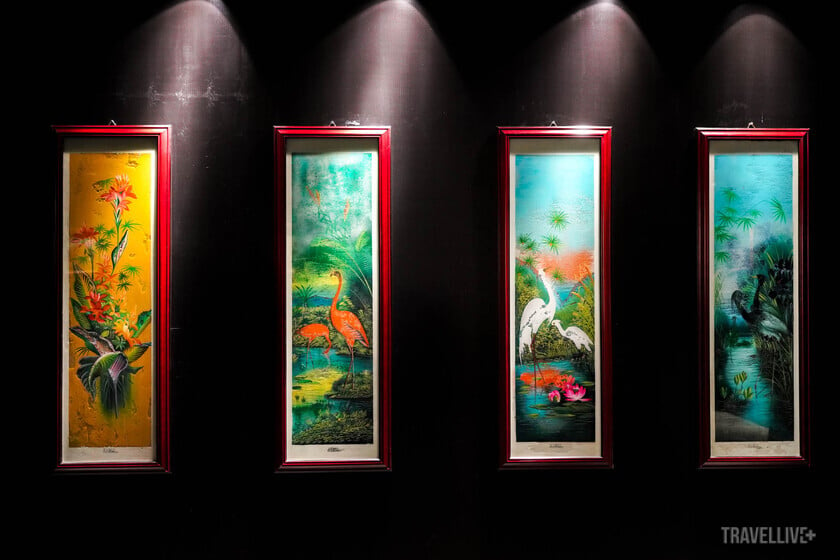

On its first day, the "Beauty Through Glass" exhibition attracted many visitors.
For the first time in Ho Chi Minh City, glass painting, an art form familiar in the religious spaces and home decorations of Southern Vietnamese families, is being retold using contemporary artistic language: installation art, interactive art, digital art, and light projection. These techniques, already familiar to young people, help the heritage reach today's public in a more accessible way while preserving its original spirit.
The exhibition space is designed as a four-step journey: See - Hear - Touch - Feel. Each step is a layer of engagement, where viewers not only observe with their eyes but also listen, touch, and immerse themselves in the stories behind each painting.
When stained glass tells stories through multiple senses.
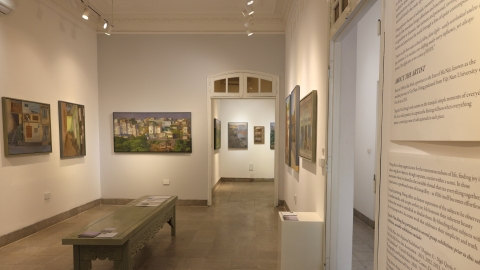
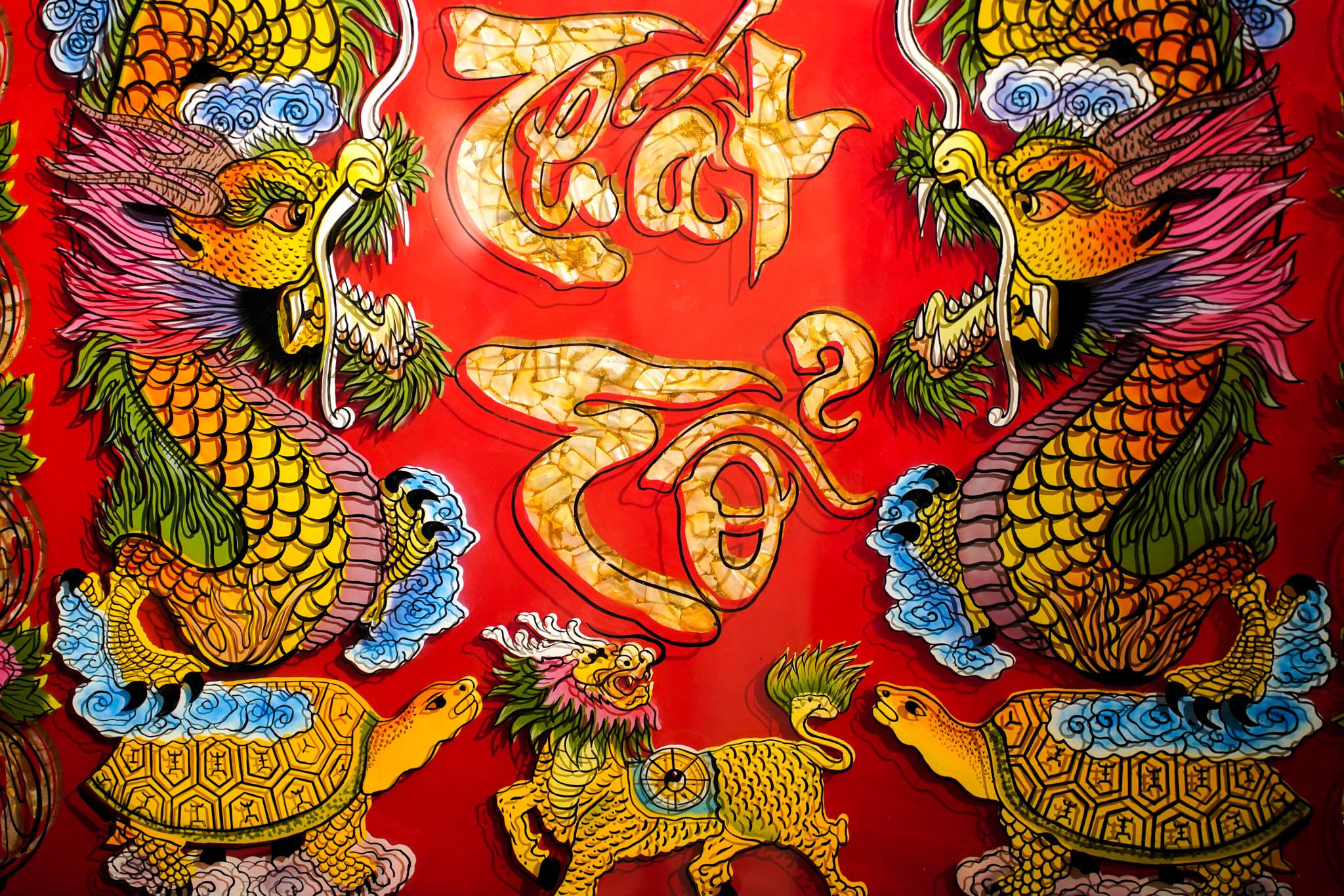
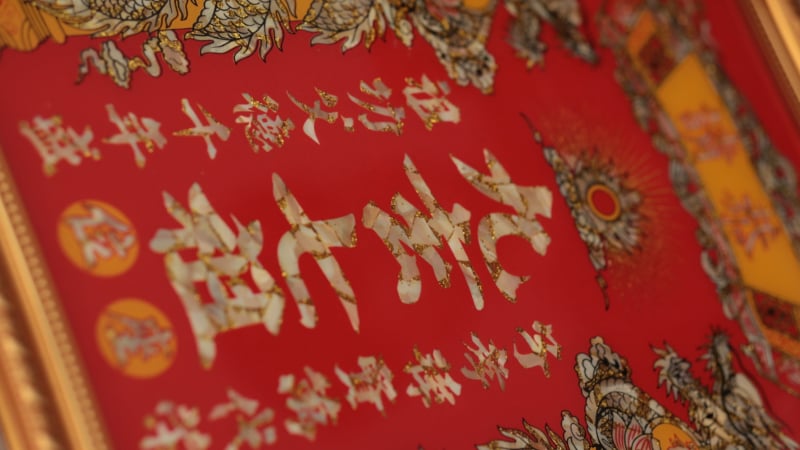
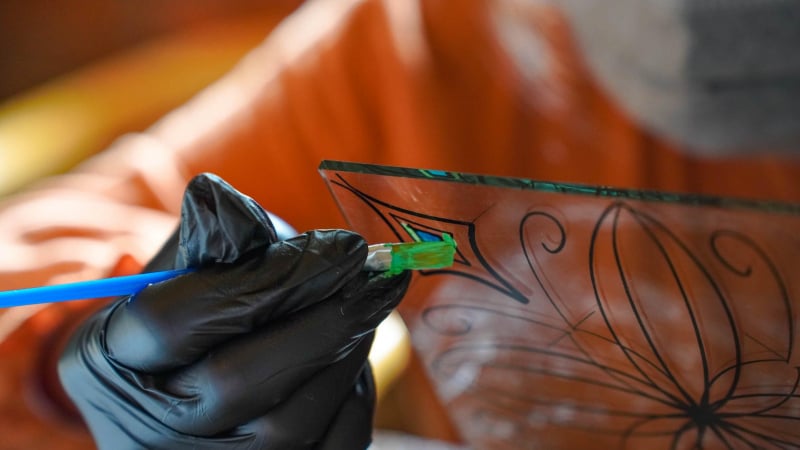
In the "View - Heritage in Glass" area, visitors begin with a collection of traditional glass paintings by contemporary artists such as Nguyen Duy Linh and Tran Xuan Duy. The exquisite and meticulous reverse painting technique on glass is evident in every stroke. Alongside these are creative works where maximalism or art deco styles are incorporated into glass paintings, combined with handcrafted gold leafing to create a dazzling and novel appearance. Another highlight is the layered glass paintings, such as the "Nine Generations of Ancestors" painting, which is divided into many transparent glass panels, allowing viewers to clearly see each step of the reverse painting process.
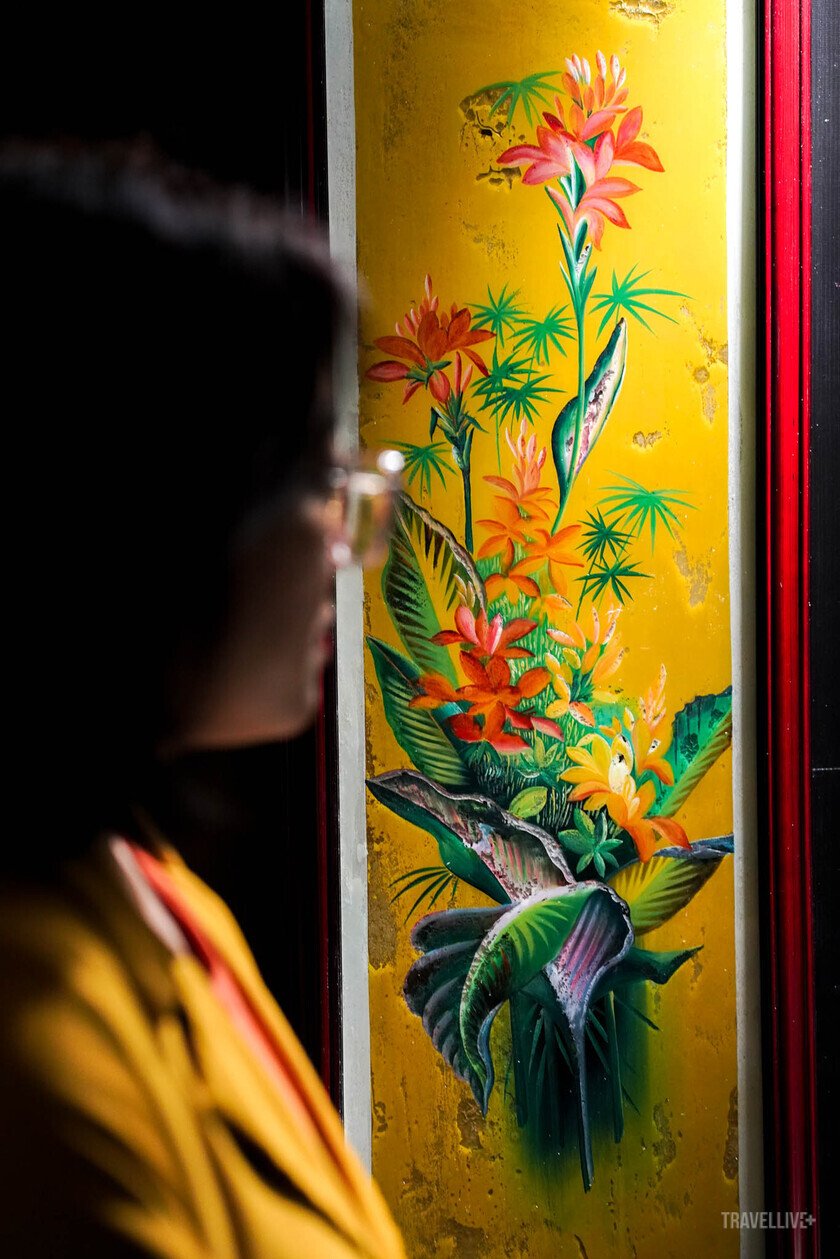
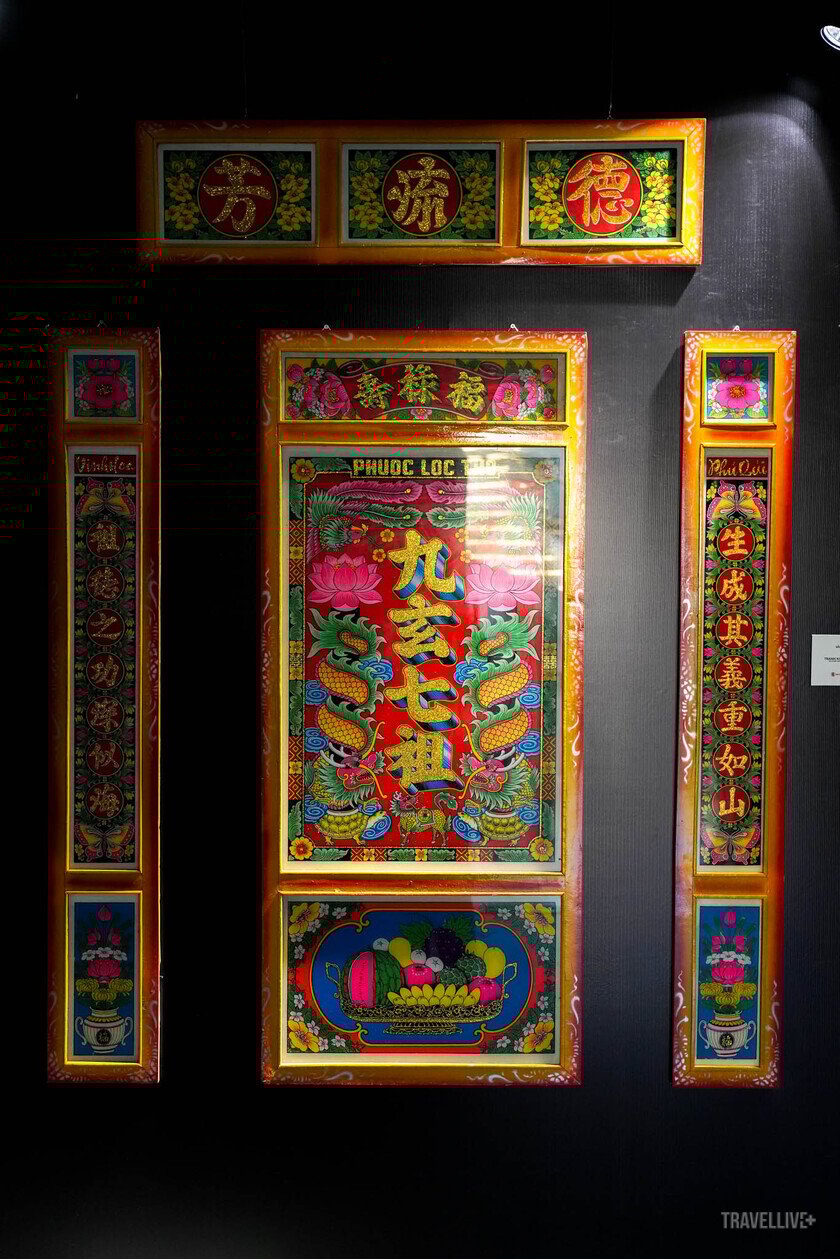
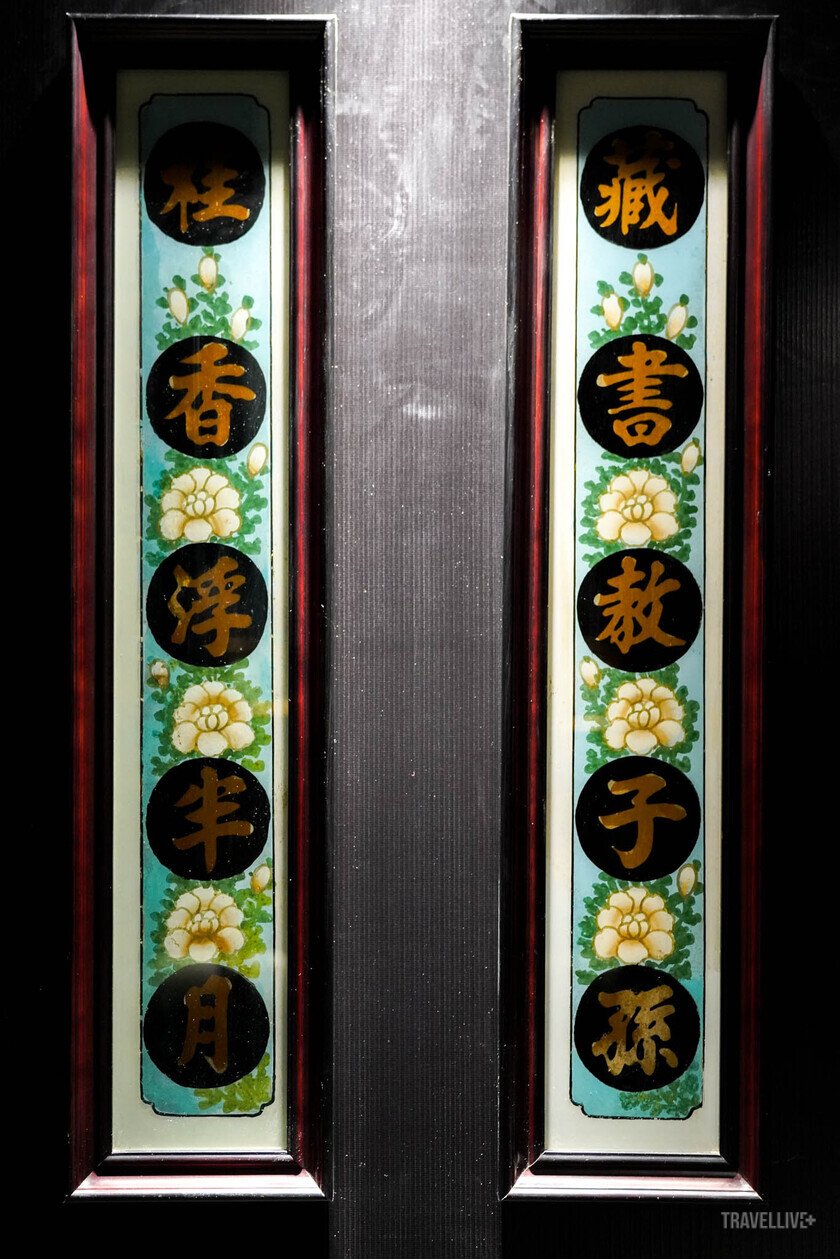
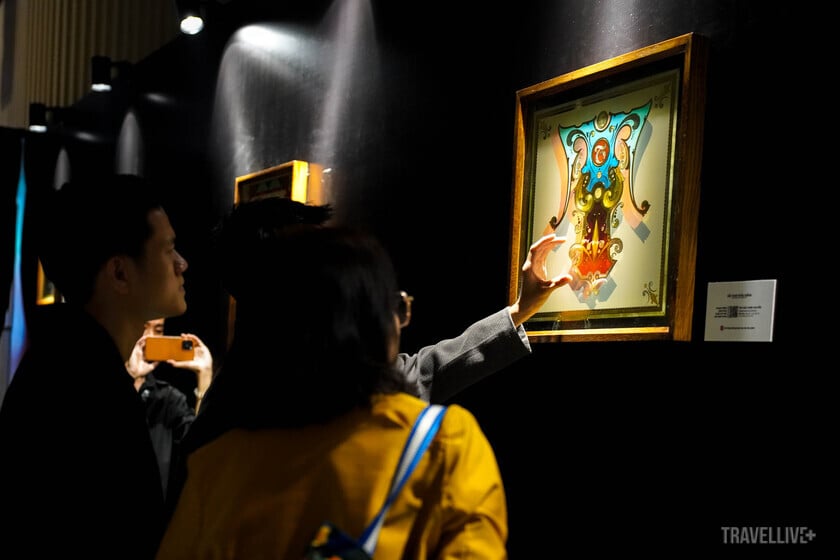
The Viewing Area attracted many visitors with stories about the stained glass windows recounted by members of the Organizing Committee.
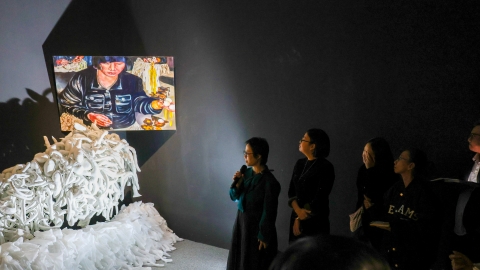
Leaving the visual space, "Listen - Echoes from Glass" transports viewers to the soundscape of Southern Vietnam. Ambient sound combined with lighting effects simulates color bleeding on the glass. Traditional Vietnamese musical instruments such as the two-stringed fiddle, zither, moon lute, and gourd lute are placed alongside the artworks, creating a harmonious blend of sight and sound. In "Sound of a Drop of Light," images of lotus flowers and water droplets – symbols of rebirth – are projected using mapping technology, evoking the renewed vitality of heritage.


The Touch Zone – Where heritage comes alive, allowing viewers to interact directly: glass paintings incorporating sensor-based lighting that reflects the visitor's silhouette, projection mapping that transforms images with hand movements, or acrylic paintings with light dispersion effects that create the sensation of touching a rainbow on the glass.
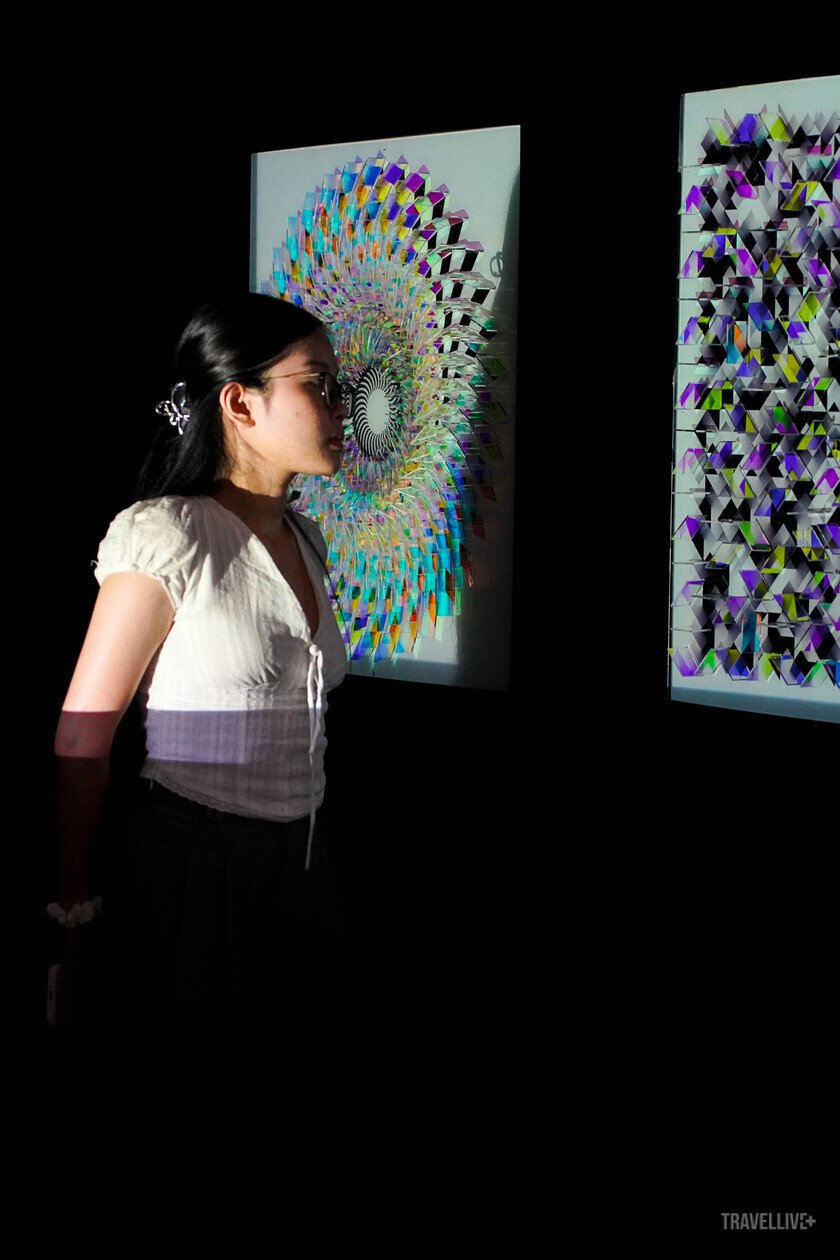
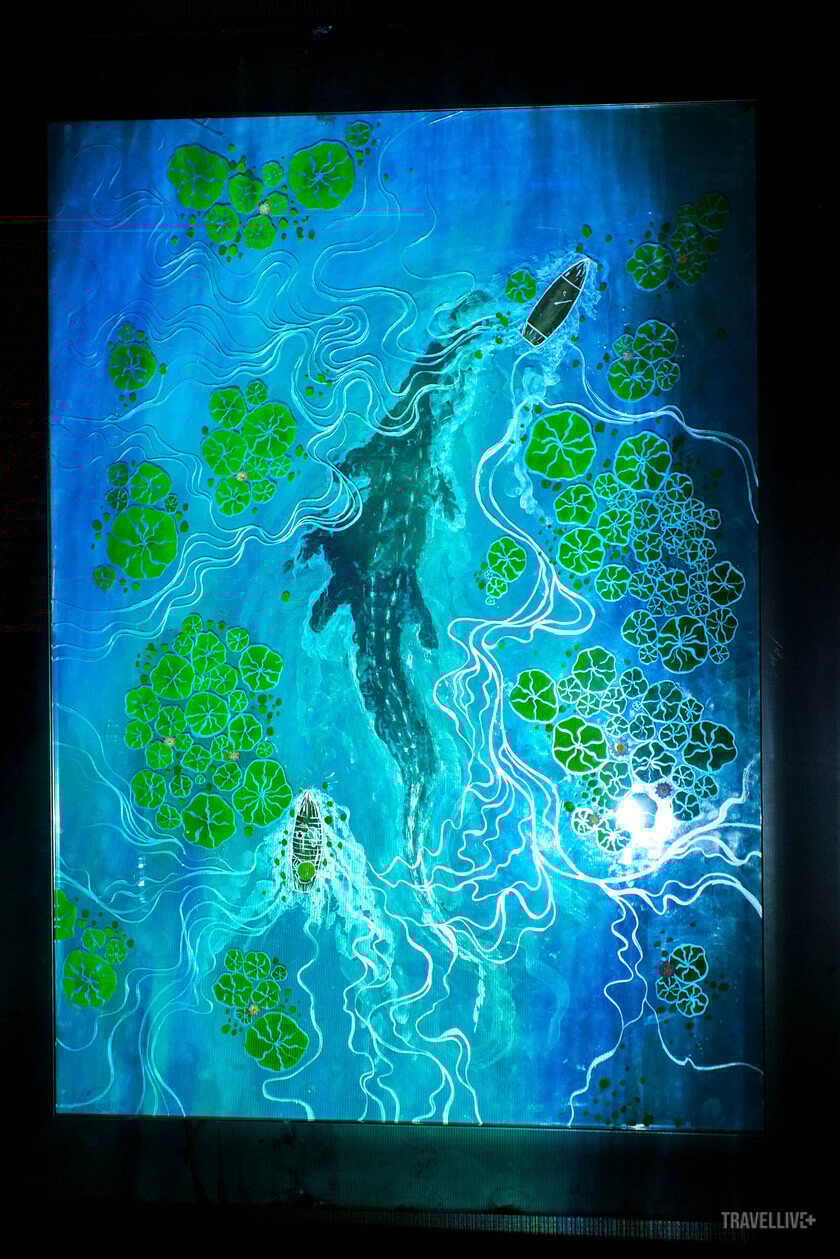
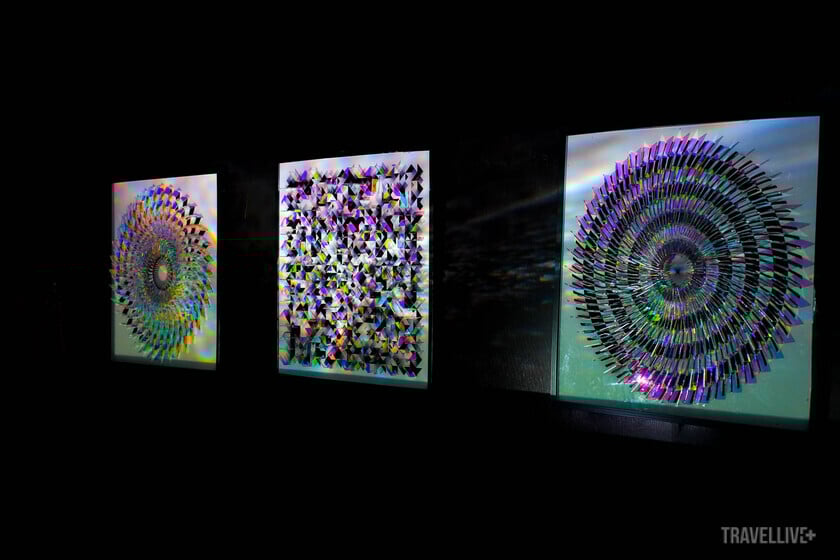
Glass paintings combined with light sensors reflect the silhouettes of visitors in the Touch area.
Finally, "Feeling - A Hundred Strokes, a Glass Dream" is where young people come together to create a collective glass painting. Each person contributes a brushstroke, all blending into a work that reflects the spirit of the times. Interspersed throughout are short documentaries about the journey of preserving glass painting and the cultural memories of Southern Vietnam, helping visitors gain a deeper understanding of the origins of this medium.
Young people behind the spotlight
Bui Thi Ngoc Thoa, Head of the Project Team, shared that this is the brainchild of a group of students from the Mekong Delta. They have repeatedly visited the "cradles" of glass painting (old place names) such as Lai Thieu (Binh Duong), Cho Moi (An Giang), and Long An, meeting with artisans, observing techniques, and listening to the stories of families who still preserve the craft. The group also received support from cultural researchers such as Huynh Ngoc Trang, glass painting researcher Nguyen Duc Huy, and glass painting artist Tran Van Nhanh to gain a more complete understanding of the heritage.
As a result, the exhibition brings together both classic works such as "Pheasant" (Chợ Lớn, 1940-1950) and new creations such as "Plum Blossom, Orchid, Chrysanthemum, Bamboo" by artist Trần Văn Nhanh, created in early 2025 in Long An. This combination demonstrates the continuous flow of glass painting, from the past to the present.
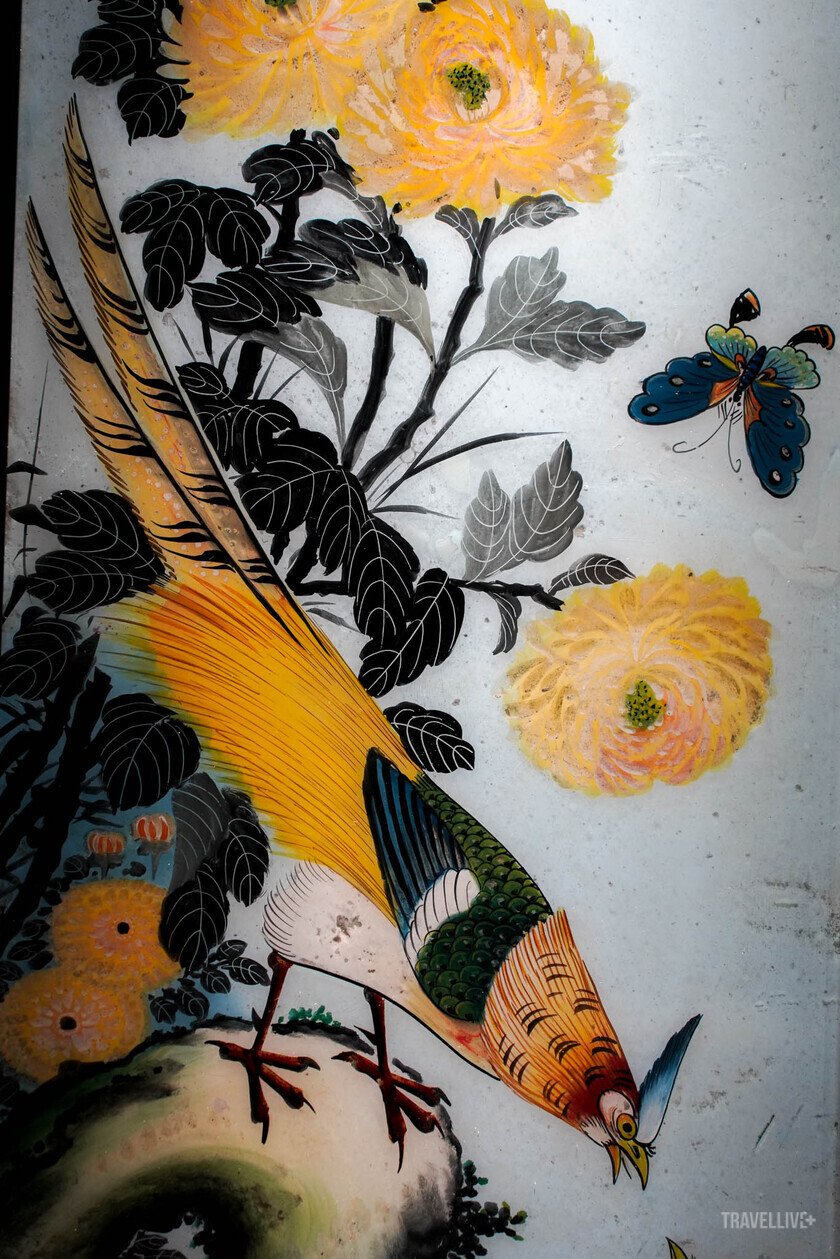
The painting "Pheasants in Cholon" was created during the period 1940-1950.
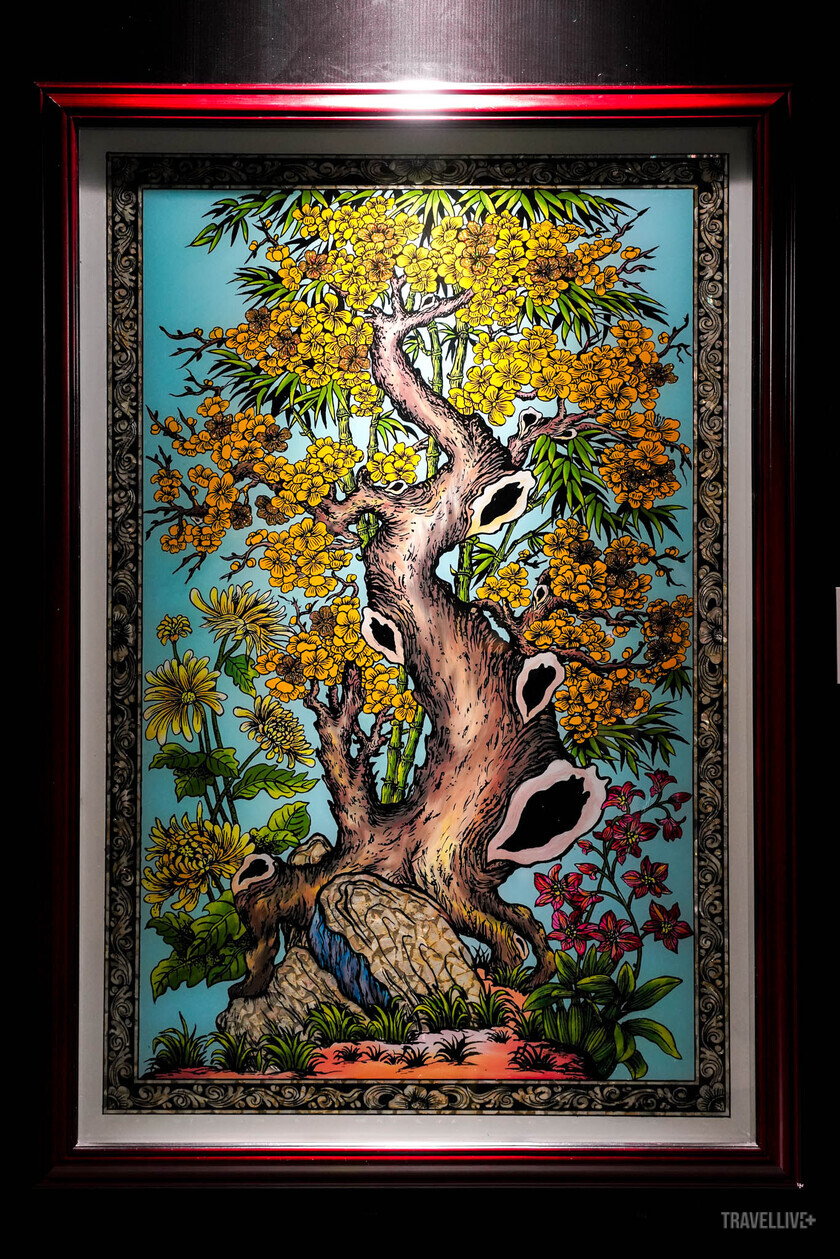
The painting "Plum Blossom, Orchid, Chrysanthemum, and Bamboo" was created in early 2025.
Artisan Nguyen Duc Huy - project advisor - highly praised the young people's approach: "The culture of glass painting is like smoldering embers, and the media is the wind that makes that flame flare up. When modernity and traditional values blend together, the heritage can reach both tech-savvy young people and older people who cherish traditional culture."
Nguyen Phuoc Quy Thanh - the creative artist and media ambassador of the project - also found a "nostalgic charm" while touring the four spaces. He believes that, despite the modern exhibition setting, the core spirit of glass painting remains intact and is fully conveyed.

Glass painting researcher and project advisor Nguyen Duc Huy
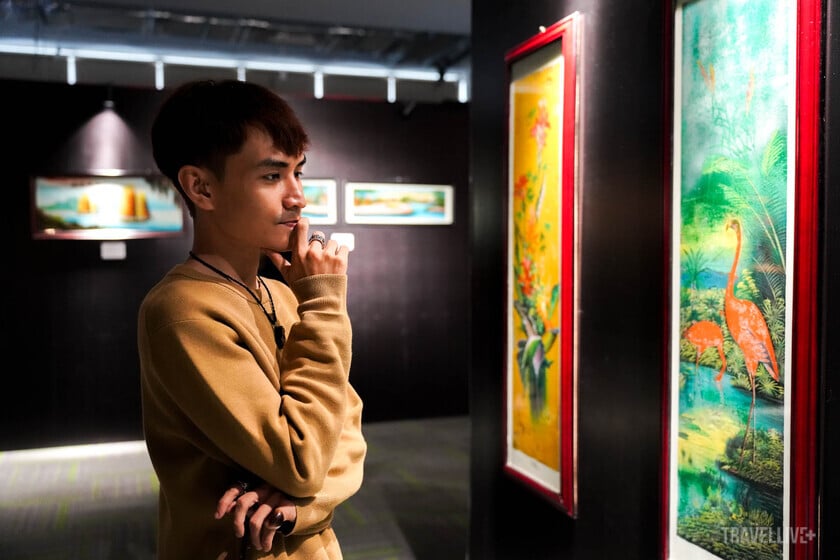
Nguyen Phuoc Quy Thanh, creative artist and media ambassador of the project.
Bui Thien Gia Khang, a project member, acts as a narrator for visitors, recounting the entire transformation process of glass painting, from the time of handcrafted mother-of-pearl inlay, to the stage of using decals to save time, and then adding glitter to enhance prominence and conceal imperfections.
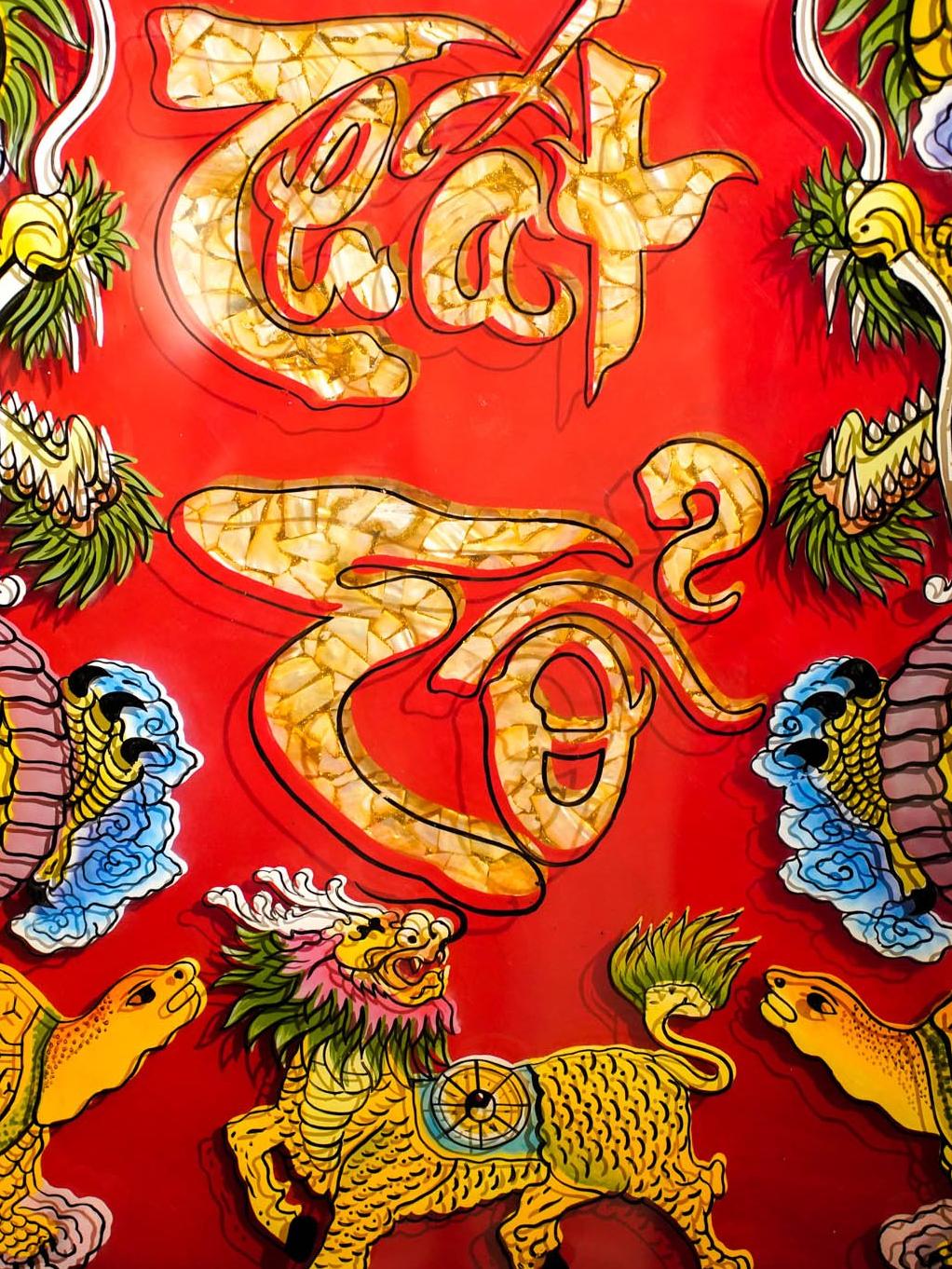
Mai Quang Viet (Viet Mai) is in charge of the painting "Nine Generations of Ancestors" displayed at the end of the "Looking" section. This work, measuring 1.2 meters high and 1.7 meters wide, took over two and a half months to complete and consists of four layers of mica instead of glass to reduce weight. Each layer serves a different purpose: a black border, colored paint, a red background, and mother-of-pearl inlay with lettering. The dragon, unicorn, turtle, and phoenix, along with the couplets on either side, add depth to the painting, reflecting the spirit of the traditional worship paintings of the Western region of Vietnam.

Bui Thien Gia Khang - a member of the project - introduces glass painting to visitors.
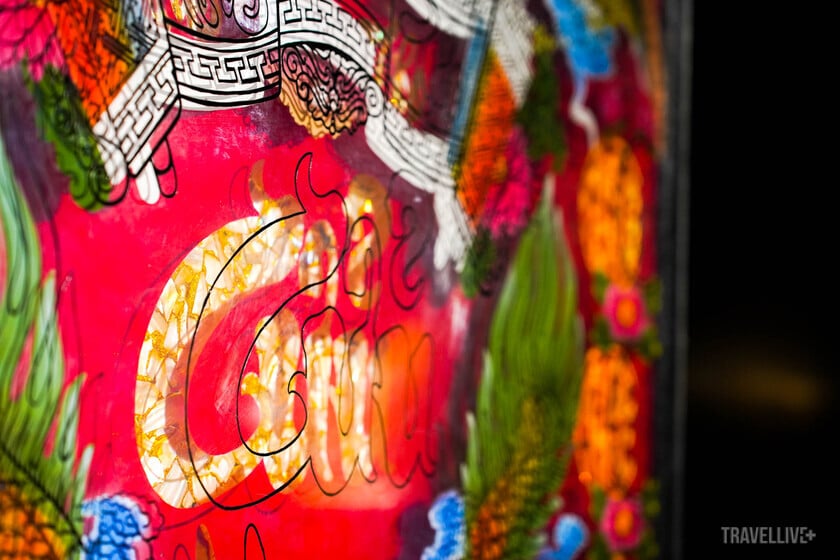


The painting "Nine Generations of Ancestors" was created by Mai Quang Viet, whose artistic name is Viet Mai, with the help of his father, who is also an artist.
“Southern Vietnamese Glass Paintings” is more than just an exhibition. It’s an invitation to enter the world of Southern Vietnamese glass paintings with all your senses, to see that heritage doesn’t stand still but can come alive in modern life. Amidst the urban rhythm, the reflective glass panes bring both the past and the present, reminding us that culture only truly endures when it is touched, felt, and retold by today’s generation.
The exhibition is open free of charge from 9 am to 8 pm on August 8, 9, and 10, 2025, at the 5th floor of Parcmall, 547-549 Ta Quang Buu Street, Ho Chi Minh City, awaiting those who wish to discover the colors of memory through a new lens.