VI
VI


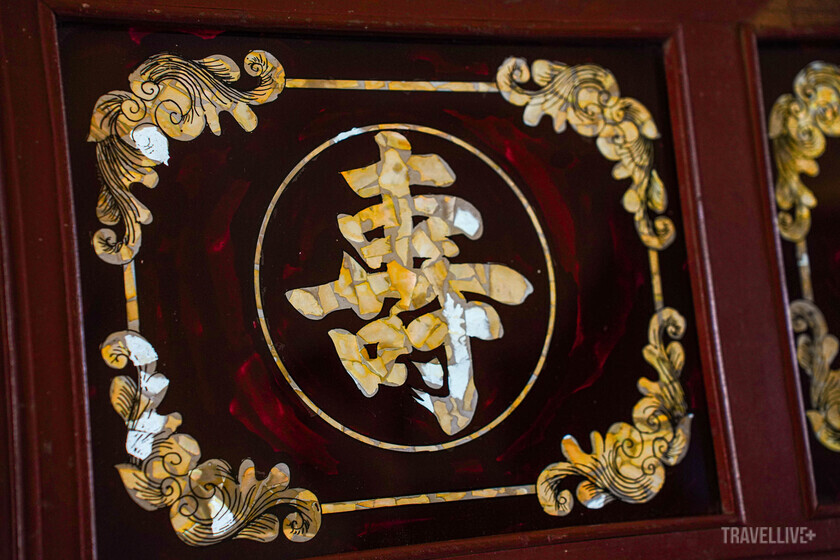
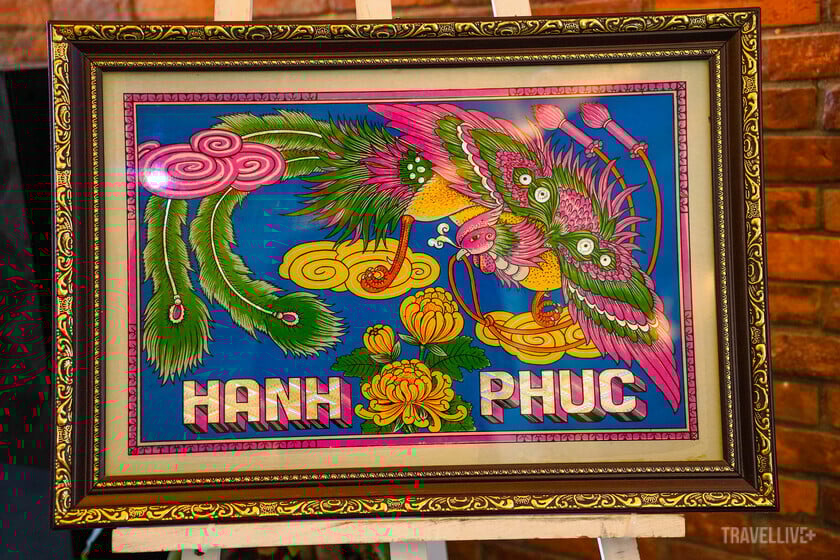
On July 5th and 6th, 2025, the "Southern Colors" Workshop was held at 152 Nam Ky Khoi Nghia Street, Saigon Ward, Ho Chi Minh City. Upon entering the workshop space, visitors could admire decades-old glass paintings that had become an integral part of the lives of people in Southern Vietnam. These paintings captured a range of moments, from landscapes and flowers to scenes of daily life, classrooms, romantic relationships, and even mother-of-pearl inlaid glass paintings shimmering in the sunlight.
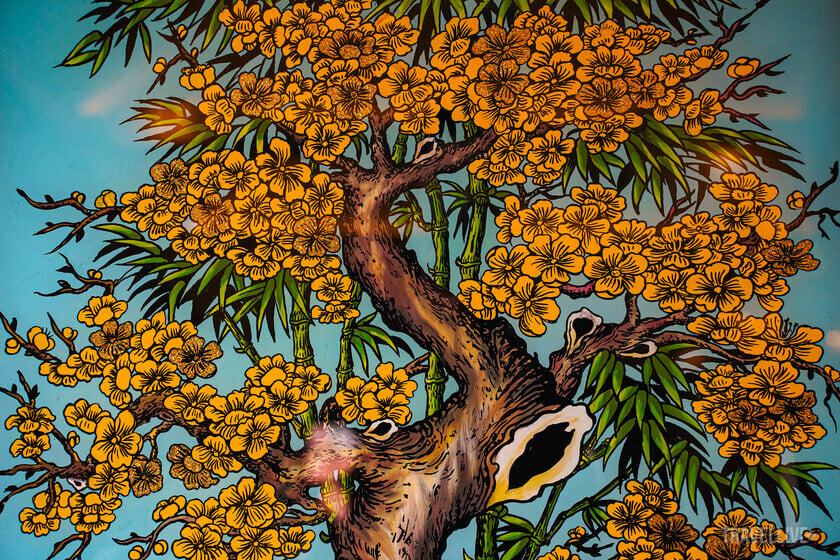
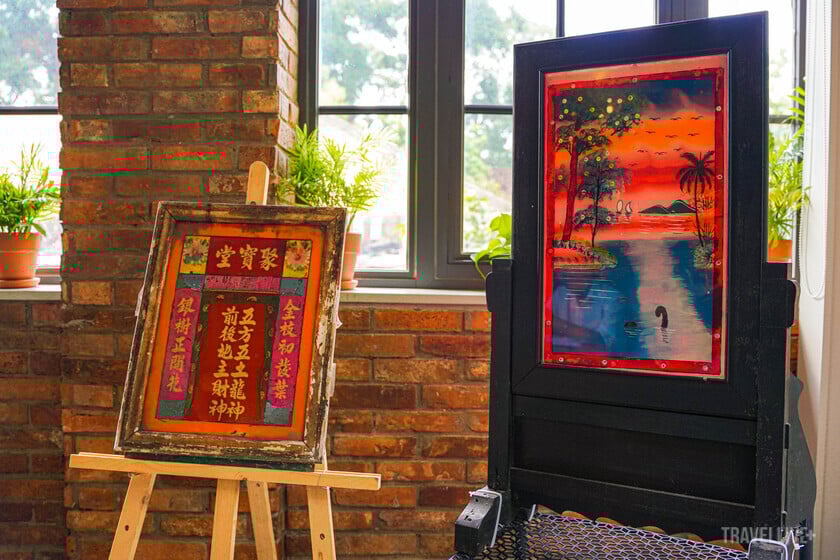
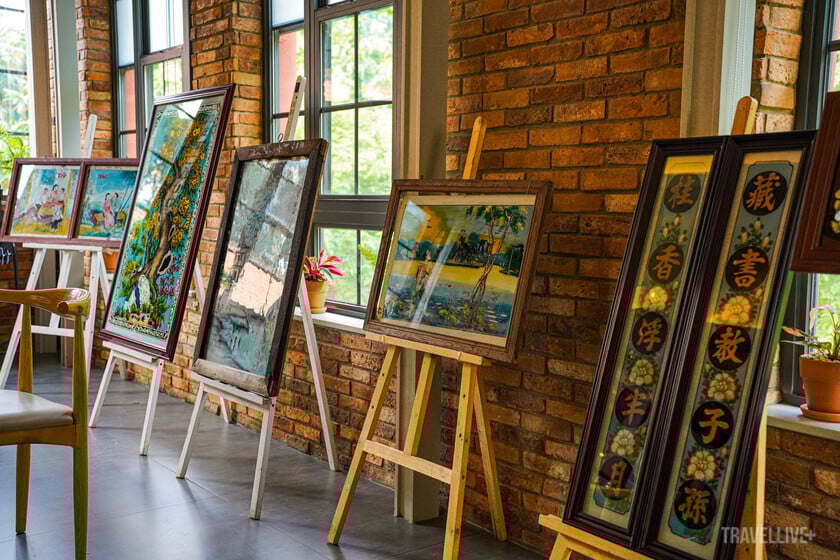
Ancient stained glass artworks are displayed in the workshop space.
From courtly splendor to folk life
Glass paintings appeared during the Nguyen Dynasty, especially during the reigns of Emperors Minh Mang and Thieu Tri. Initially, all glass paintings were ordered from Guangdong, China, to decorate the palace. The architecture of the Nguyen Dynasty palaces was generally low and dark; thanks to the light-refracting ability of glass paintings, the space became brighter and more vibrant, according to glass painting artist Nguyen Duc Huy, who has spent over six years researching, collecting, and spreading the value of this Southern Vietnamese folk art.
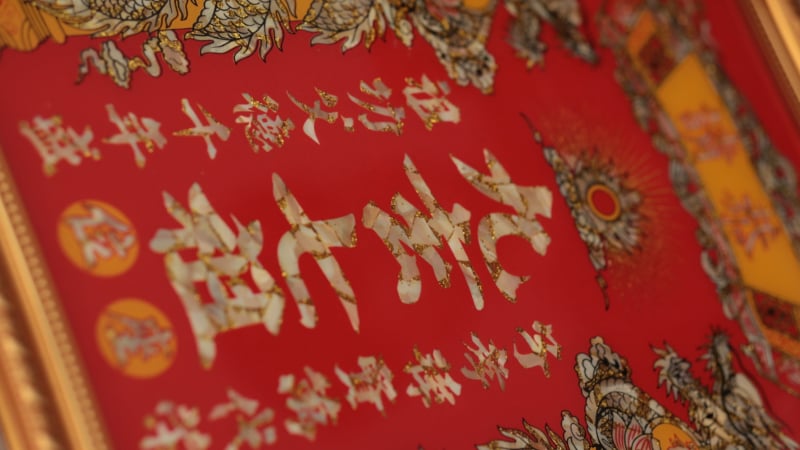
Over 150 years ago, glass began to be imported into Saigon at a low cost, and the Chinese were the first to supply glass paintings to the market. Initially, glass paintings were used to decorate furniture, then spread to tea houses, restaurants, or became gifts for celebratory occasions. Gradually, glass paintings also replaced paper offerings on ancestral altars, especially in the Southern climate with its two distinct seasons, which caused paper to easily stain and fade over time. This was the natural adaptation of glass paintings, spreading from court life to folk life.
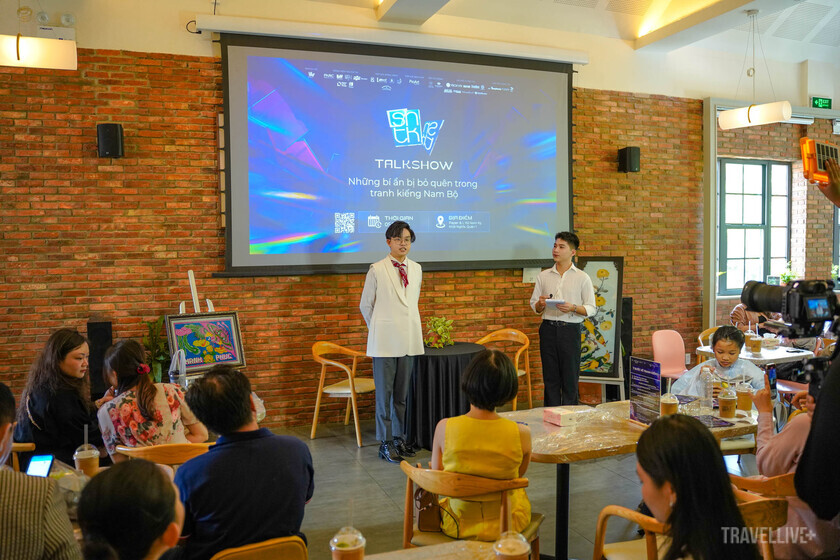
Artisan Nguyen Duc Huy in a talk show at the "Southern Colors" workshop.
According to artist Nguyen Duc Huy, glass paintings have three layers: the visual layer, the symbolic layer, and the layer of belief. The visual layer is the surface, where viewers can easily see familiar images such as landscapes, flowers, everyday life scenes, classrooms, or romantic relationships. The symbolic layer is the meaning hidden behind those images, like how people in the past wished each other success through the image of "success upon arrival." Glass paintings have endured through many generations, passed down as a part of the spiritual and religious connection within families—this is the symbolic layer of belief, artist Huy explains.
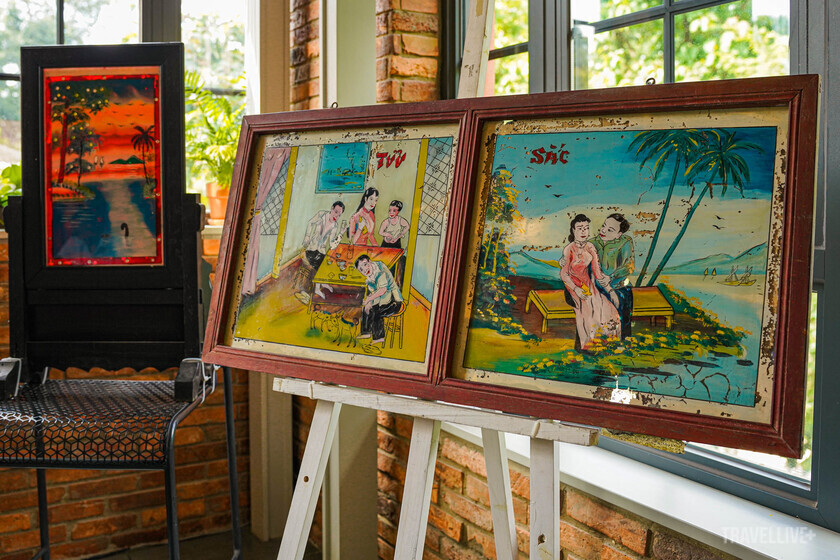
Beyond their decorative purpose, glass paintings also hold layers of meaning behind the images and beliefs passed down through generations.
A colorful afternoon of crafts.
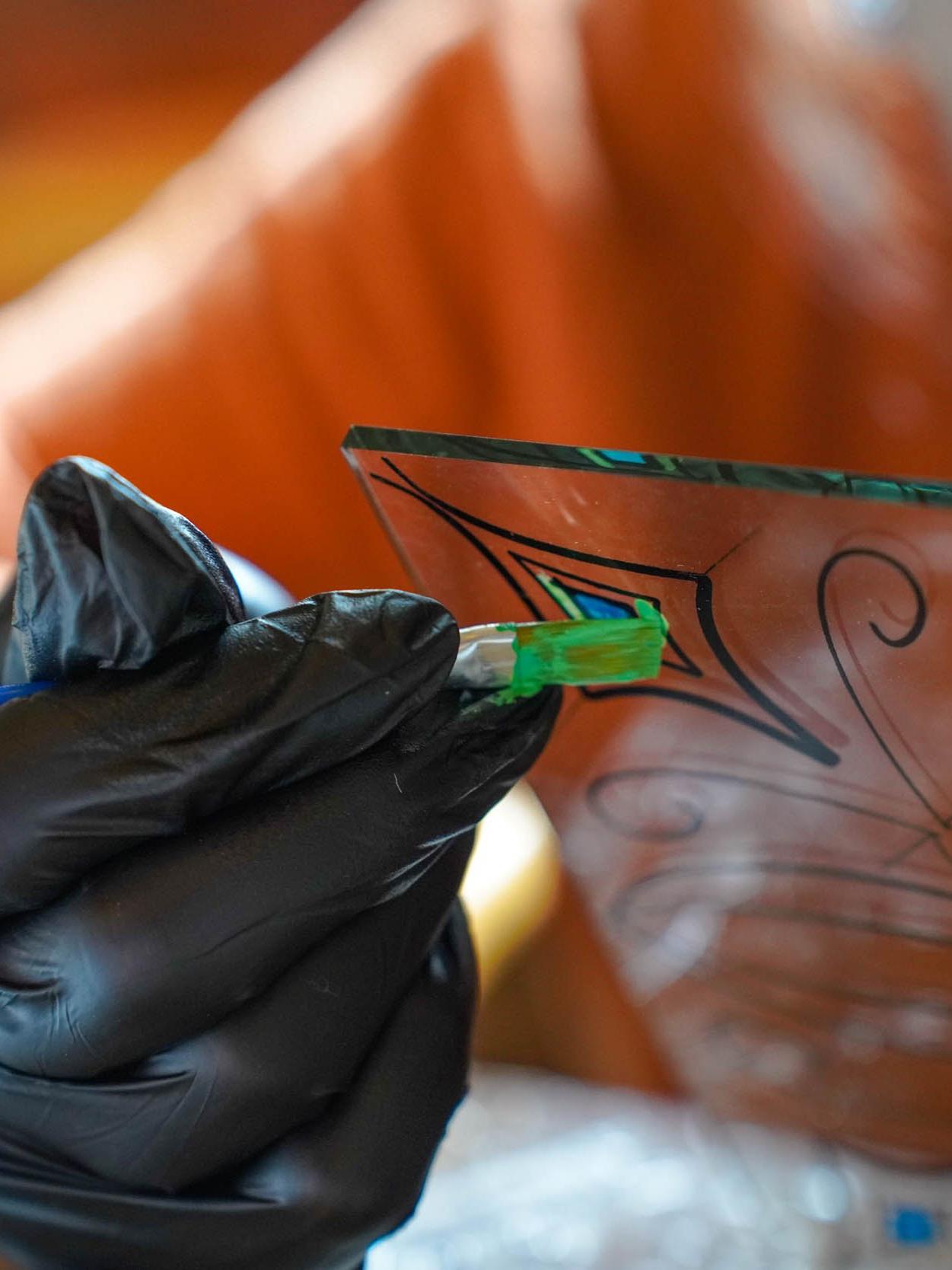
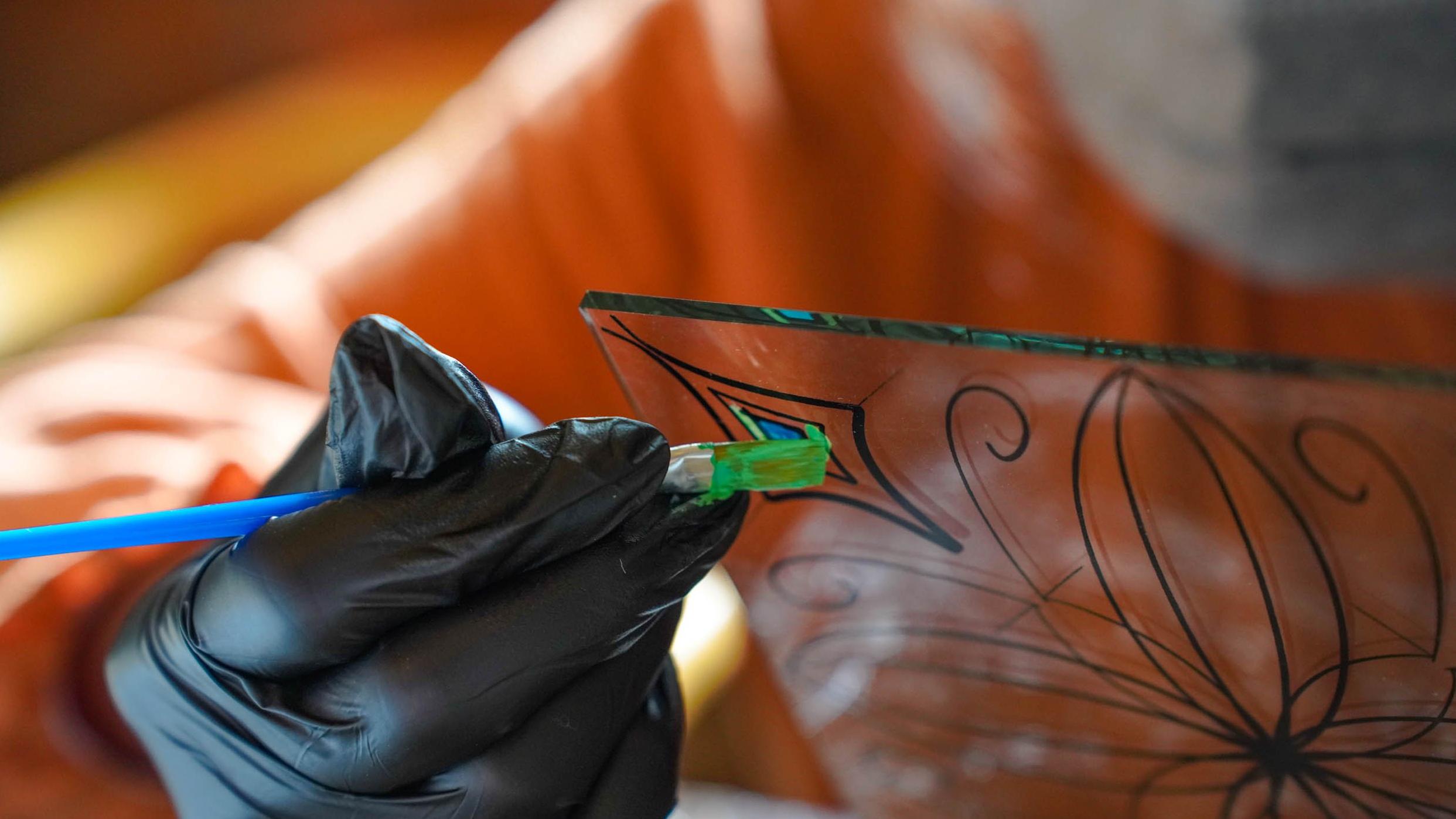
After the introductory presentation, all attendees moved on to the main experience: painting on 15x15 cm square glass frames. With black outlines already drawn on the glass, participants received a box of basic paints, brushes, paper, and cleaning solution, then put on gloves and created their own glass paintings according to their abilities and preferences.

The unique aspect of glass painting is the reverse painting technique: the artist must complete the outline first, then move on to the color sections. When the painting is finished, the displayed side is the glass surface in reverse of the painted side. Therefore, even a slight smudging or deviation from the black outline will reveal the color, making it impossible to hide and difficult to correct. Participants need to concentrate and have a clear visualization before each coloring step.
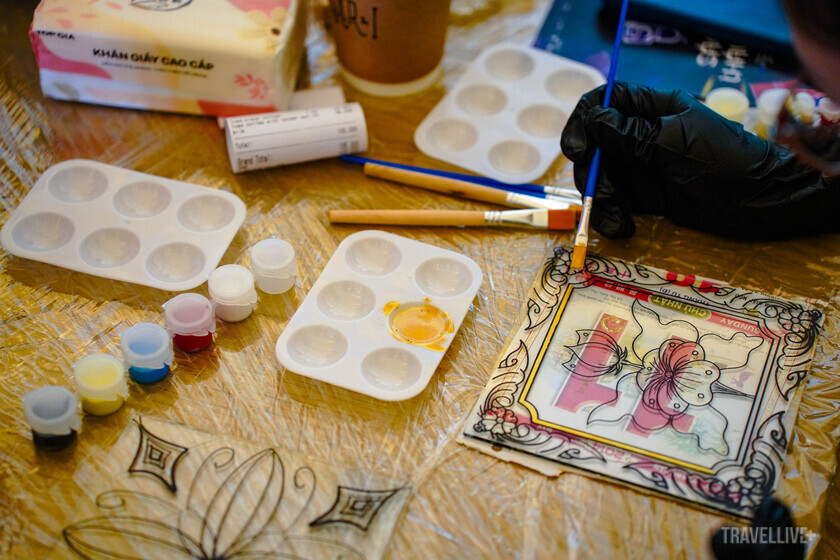
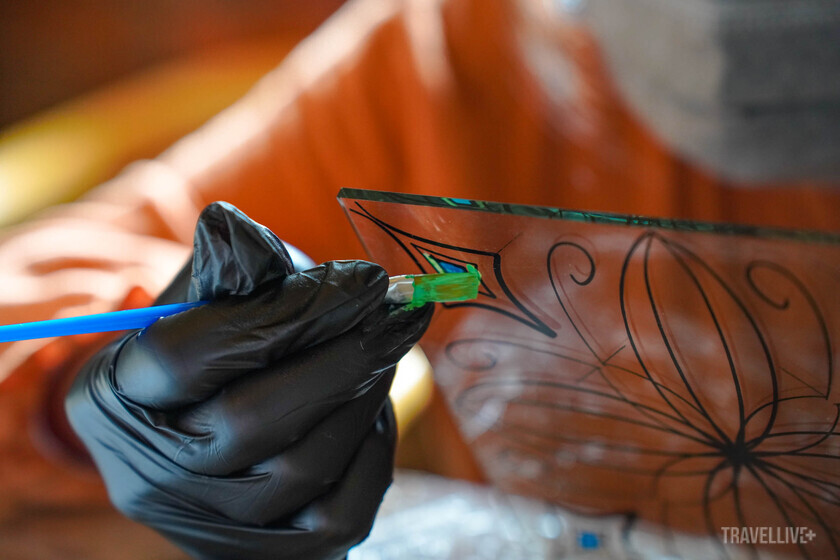
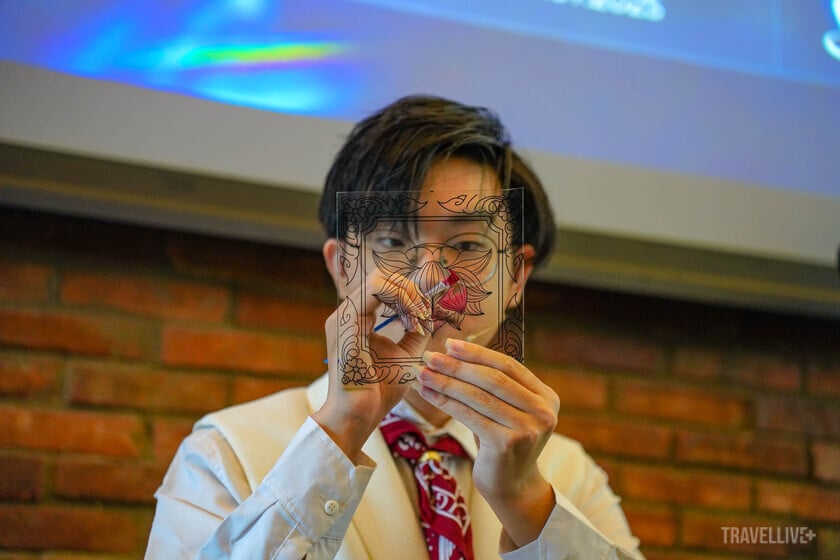
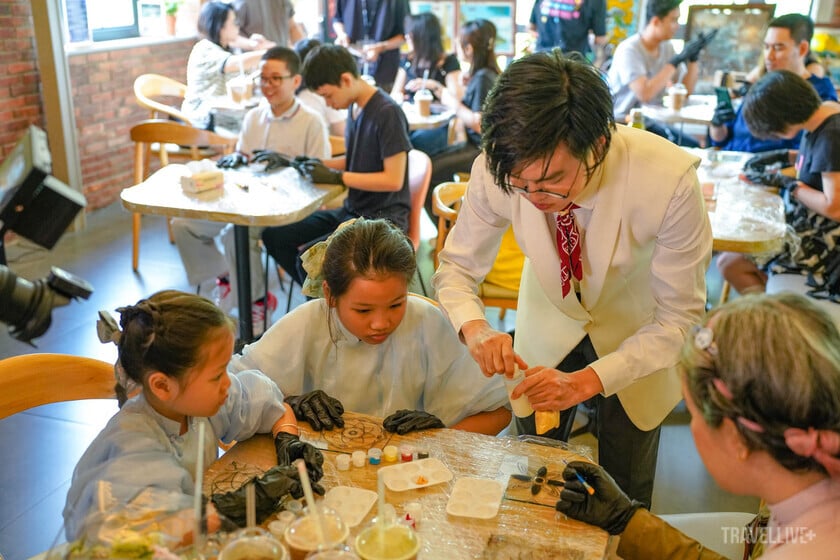
Artist Nguyen Duc Huy demonstrates techniques for reverse painting and color blending.
Artist Nguyen Duc Huy went to each table, personally guiding participants on how to create color blending, how to add mother-of-pearl effects – details that give the paintings depth and distinctive light – while also reminding them of subtle yet effective tips to perfect their artwork. From there, participants not only simply "painted" but truly touched upon a long-standing cultural beauty through the most authentic experience.
The workshop atmosphere became lively with a variety of expressions: some people quietly and attentively painted each small corner, others smiled and showed off their creations to friends, and even young children enthusiastically tried their hand at painting with vibrant colors. Each person had their own ideas and color palette, creating diverse and highly individual glass paintings.
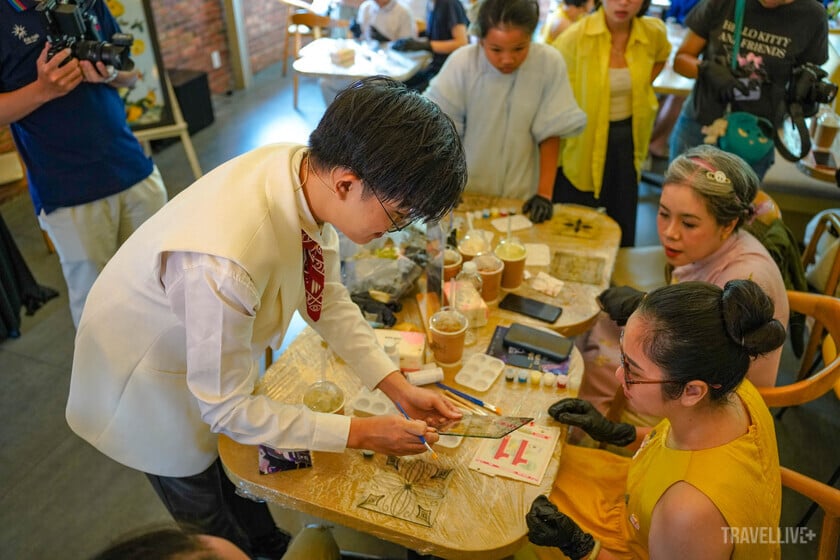
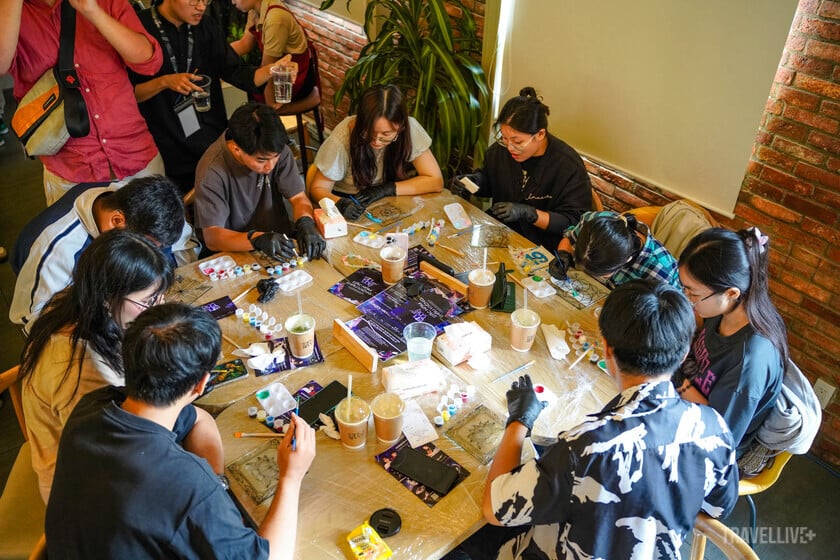
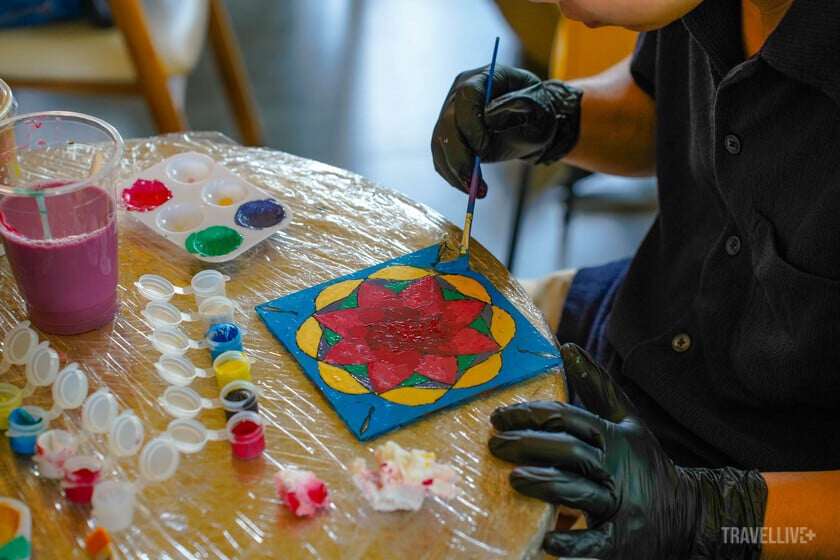
Each stained glass painting reflects the personal style of the participant.
At the end of the workshop, each participant left with a framed glass painting, meticulously prepared by the organizers, as a memento of this special afternoon of art.
Spreading the spirit of folk art through youthful brushstrokes.
The "Southern Colors" workshop is part of the "Southern Colors Through Glass" project – a digital art communication project undertaken by the interdisciplinary student group 7Night (from FPT University Ho Chi Minh City). The project aims to explore Southern Vietnamese glass painting in a creative way, bringing this art form closer to young people through direct experience.
Following this event, the project will continue with the "Through the Lens" workshop on July 12-13, 2025 at Bay Artspace 600, 262/3 Tran Nao Street, An Khanh Ward, and the multi-sensory interactive art exhibition "Through the Lens" on August 8-10, 2025 at Parc Mall, 547-549 Ta Quang Buu Street, Chanh Hung Ward, Ho Chi Minh City.
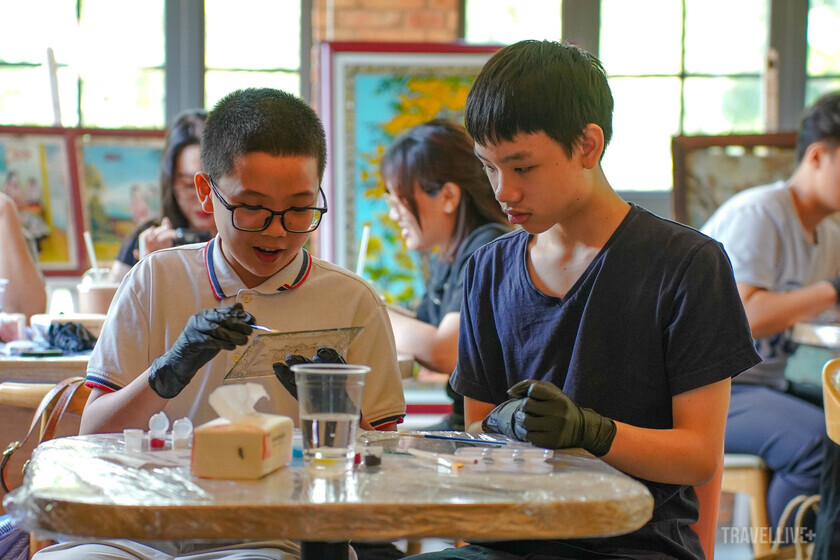
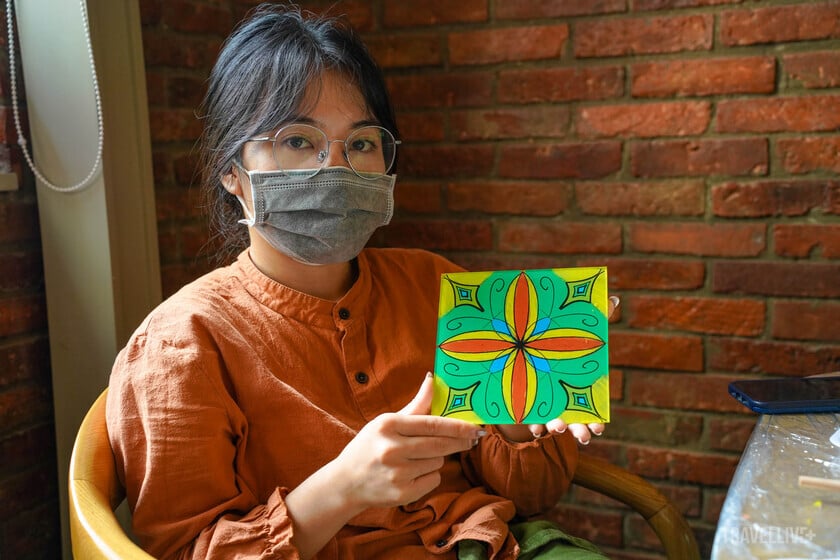
At the end of the workshop, participants take home the glass paintings they created themselves as souvenirs.
A small picture frame, an afternoon of coloring, a low-key crafting experience – that's what participants took home from the glass painting workshop. The workshop provided knowledge, a comprehensive and insightful perspective on glass painting from an artist's point of view, and innovative ways to revive a long-standing, dormant cultural tradition of Southern Vietnam, allowing the younger generation to see, touch, and feel it.