VI
VI


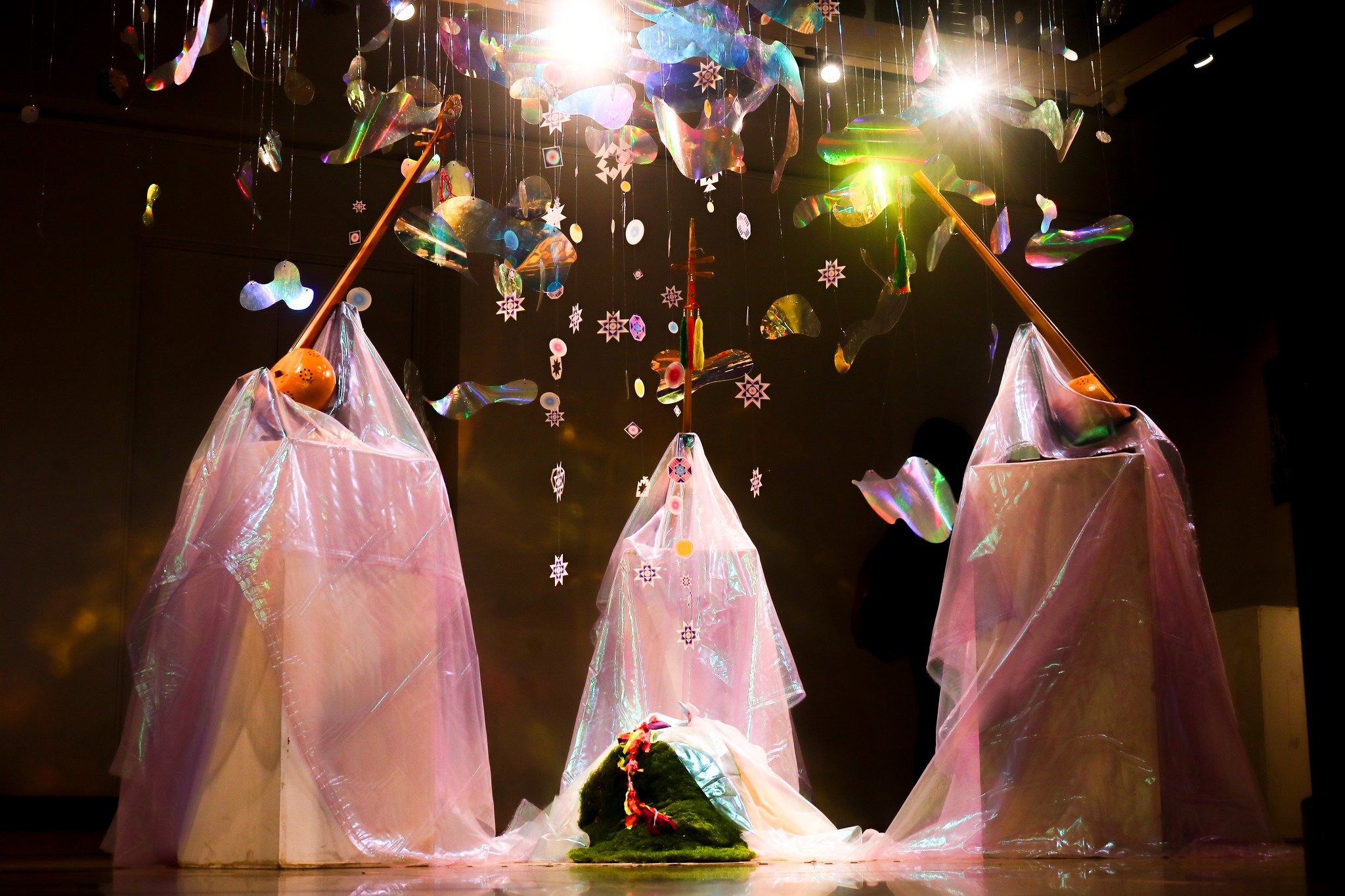
A meeting of tradition and innovation
From its very name, "Cham Then Cham Tinh" evokes cultural elements deeply rooted in tradition: the indigo dye used to color fabrics, the melodious chanting of Then songs accompanied by the Tinh lute. The exhibition space is designed as a journey, where every detail and every corner is arranged to tell the story of the beauty of Tay ethnic culture – a beauty that is both rustic, quiet, and strangely captivating.
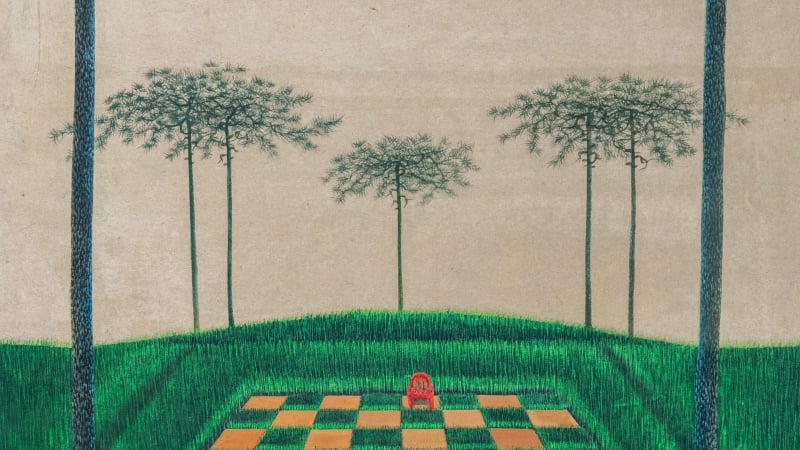
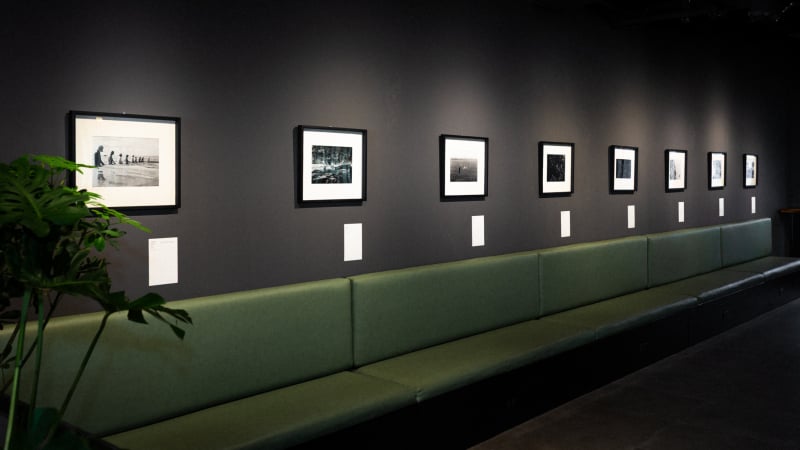
The Then songs transport the audience into the exhibition space.
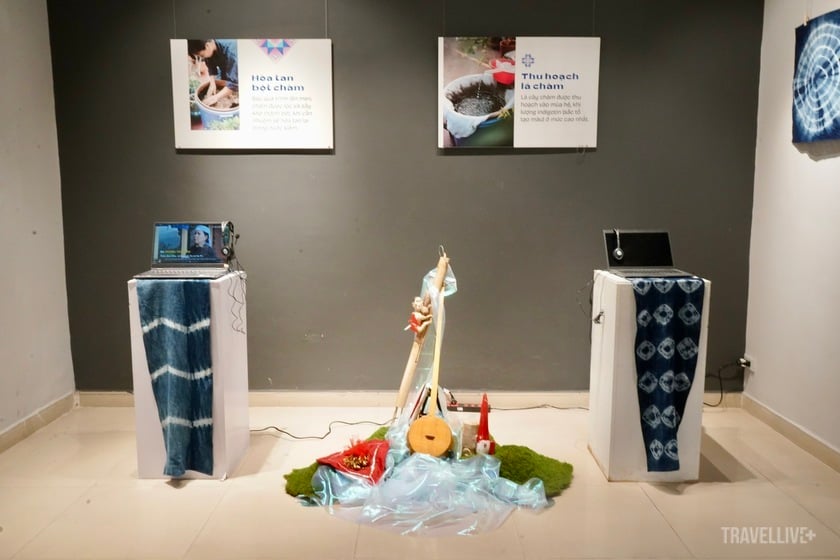
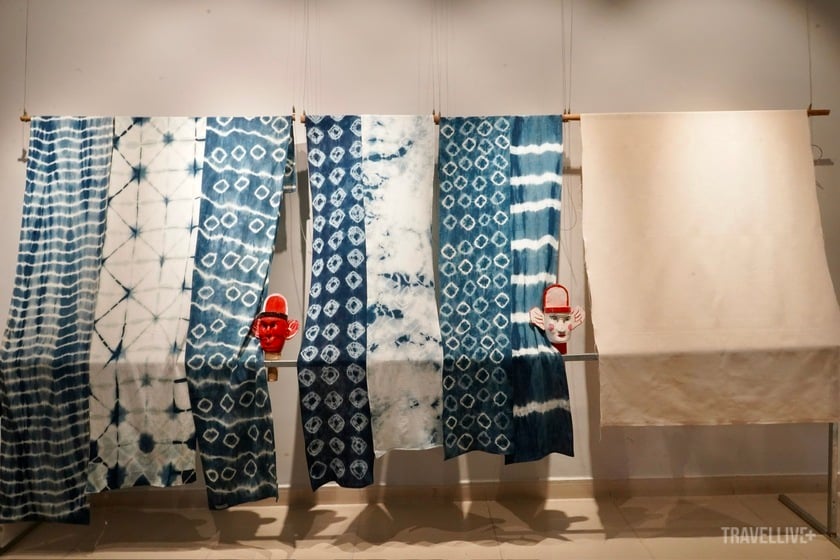
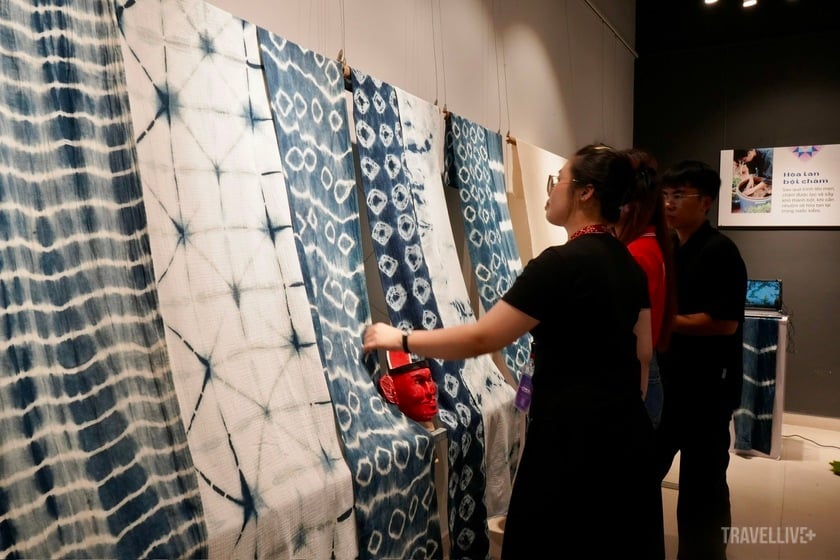
In the first area, visitors can touch indigo fabrics from Saigon Indigo – where the indigo dyeing process is subtly recreated, like a slow ritual of the mountains and forests. Each deep shade of blue is a piece of cultural memory preserved through generations.
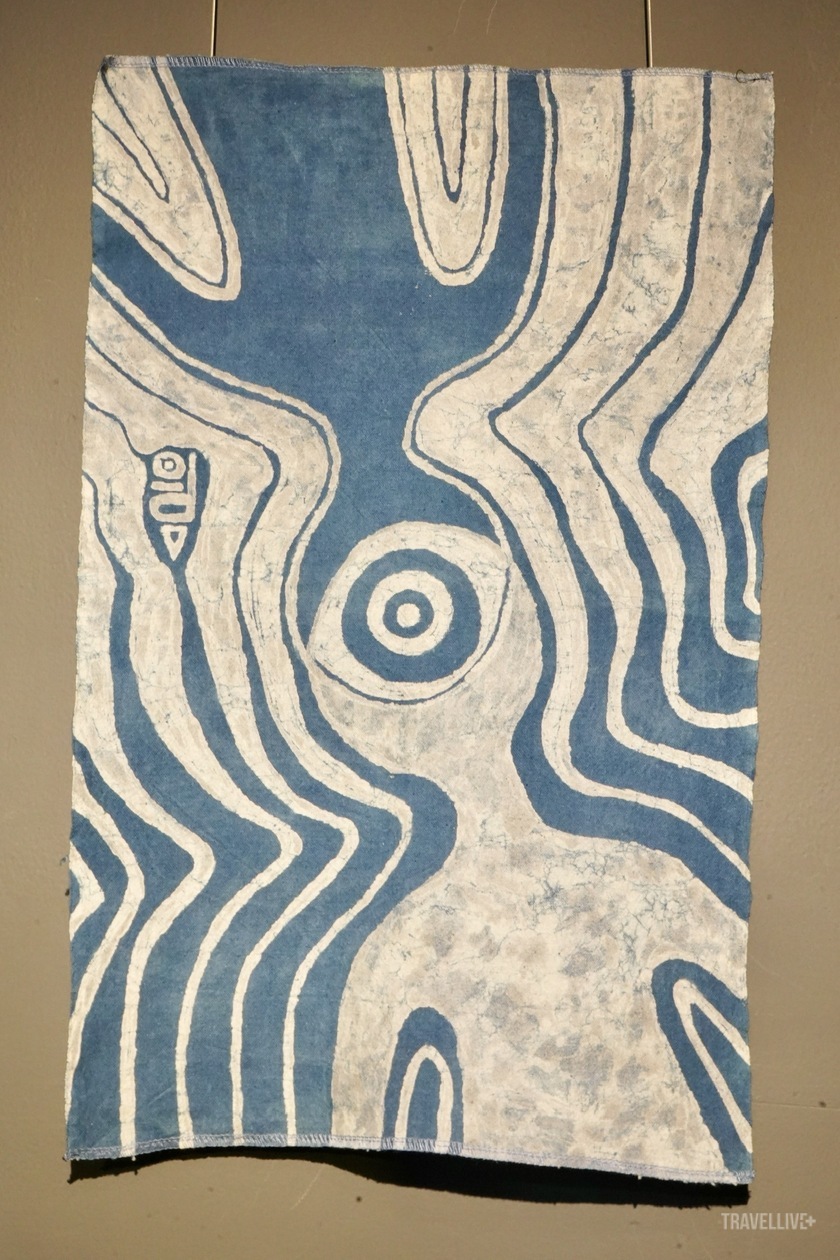
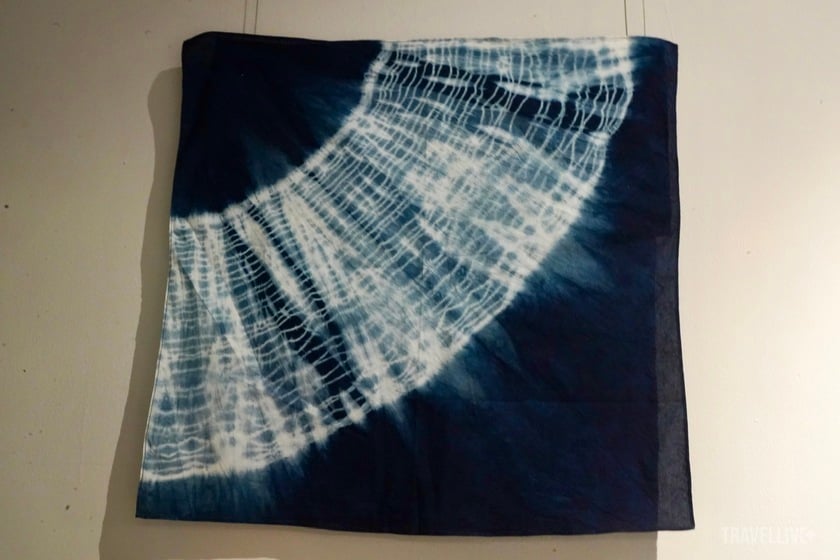
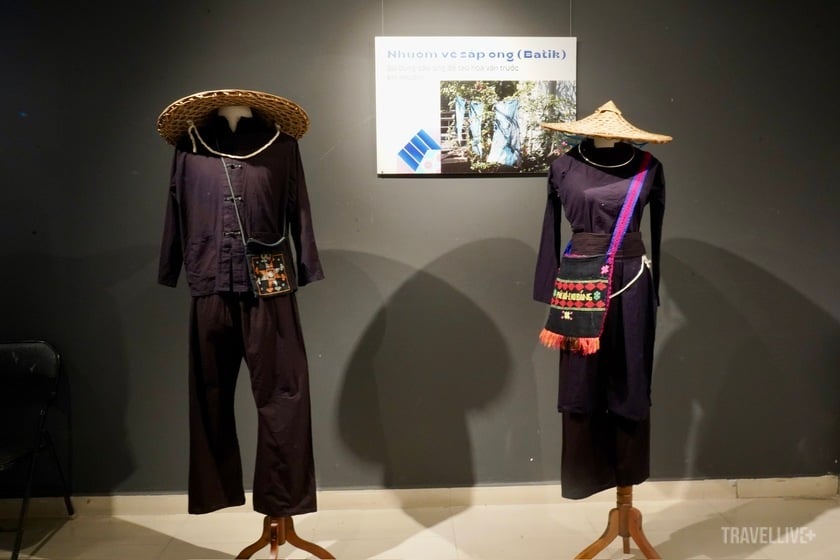
The exhibition area features indigo-dyed fabrics from Saigon Indigo, showcasing the distinctive blue hues of the mountainous region.
Beyond the visual aspect, the exhibition also awakens the auditory senses with a new arrangement of the song "Come to the Northwest" performed by singer Sam Minh Hieu. In that space, the sound of the zither resonates amidst the city streets, both unfamiliar and familiar, both traditional and contemporary. This is also the way the group of young people chose to bring heritage to touch the emotions of young people – through music, images, visual art, and technology.
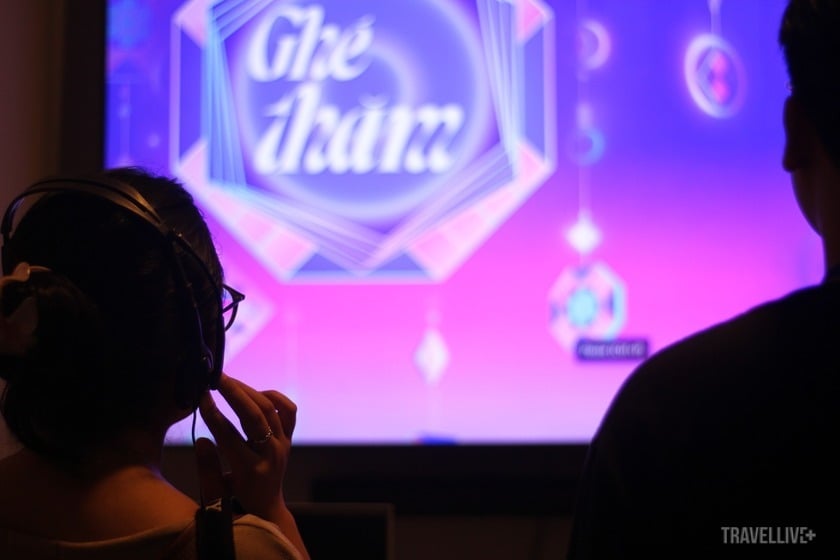
The new arrangement of the song "Come to the Northwest" combines folk and modern elements.
Culture is the material, inspiration is the driving force.
One of the most striking visual highlights is Hapuu Chaotic Pattern's "Harmony" collection, where indigo cotton fabric is painted with wax to create complex yet poetic patterns. Equally captivating is "Identity" by Tay artist Vi Viet Nga, featuring woodblock prints and hand-painted ao dai (traditional Vietnamese dress) that depict the life and beliefs of her people.

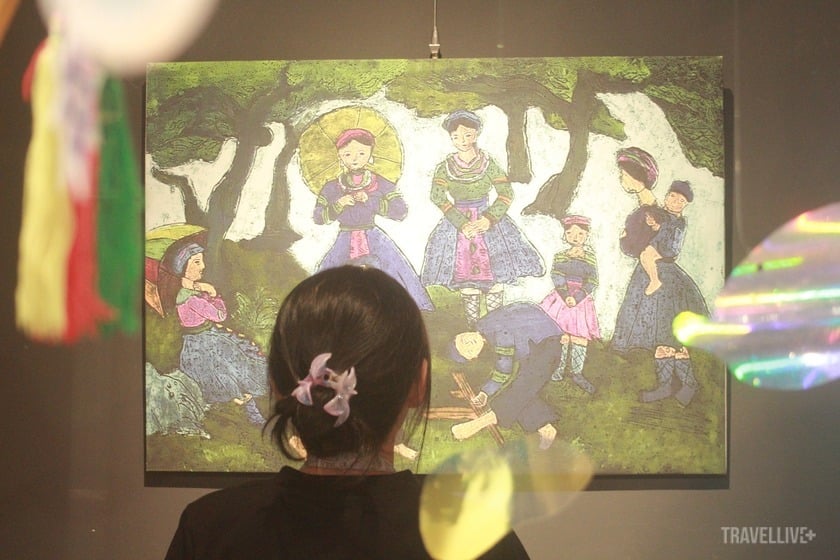
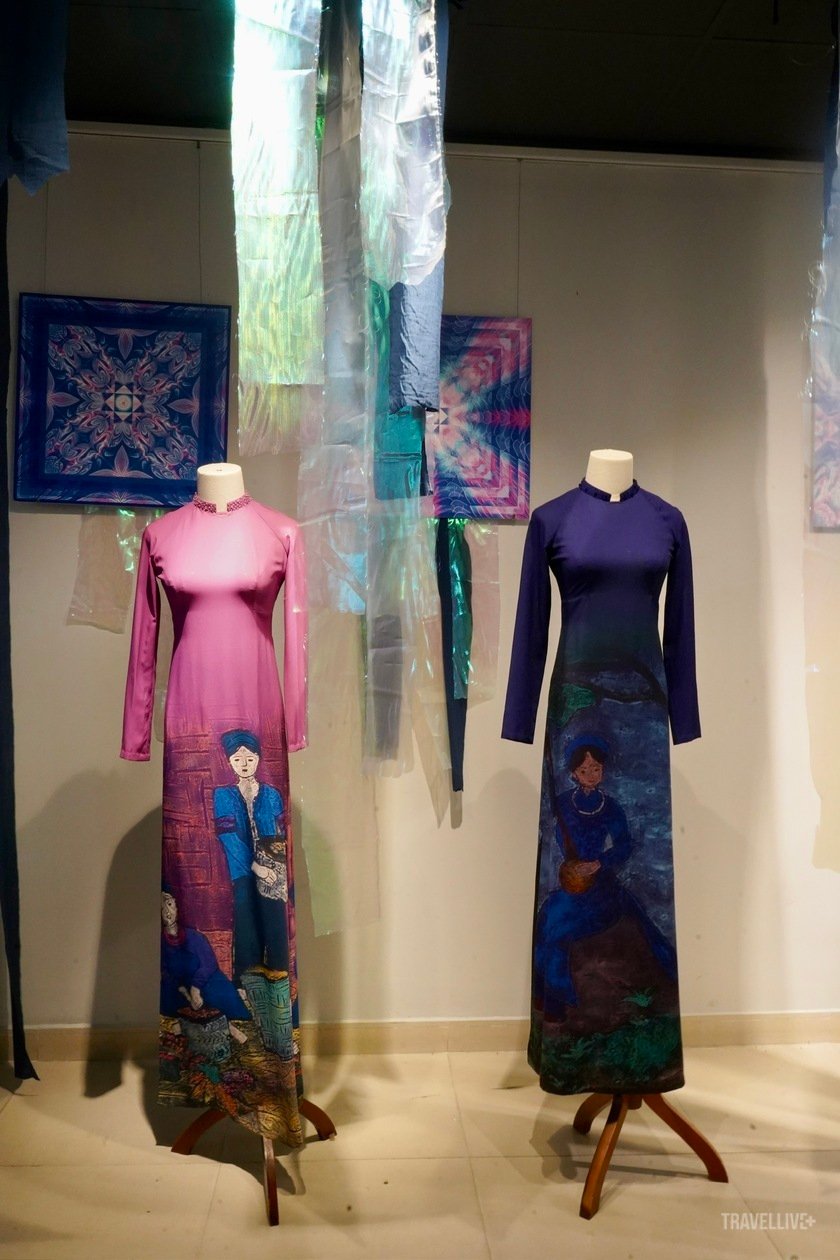
Woodblock prints and hand-painted ao dai (traditional Vietnamese dress) in the "Identity" collection by artist Vi Viet Nga.
To bring heritage to life, the group of students also applied AI to stylize Northwest Vietnamese motifs, based on photographic documentation from their research. Traditional patterns, viewed through the lens of technology, appear novel while still retaining their authentic local spirit.
Ngo Bao Hung, representing the student group that initiated the project, shared: “When we started our thesis, we realized that although Then singing and Tinh playing are recognized by UNESCO as intangible cultural heritage, they are rarely mentioned in daily life, especially in urban areas. We didn't want to just write a research paper, but wanted to tell that story through experience, so that everyone would see that Then singing is not unfamiliar at all.”
Bao Hung and three friends spent months researching and connecting with artisans and the community, which sparked their desire to build a community of young people who love Then singing right here in Ho Chi Minh City. For them, this project doesn't end after the exhibition – this is just the beginning.
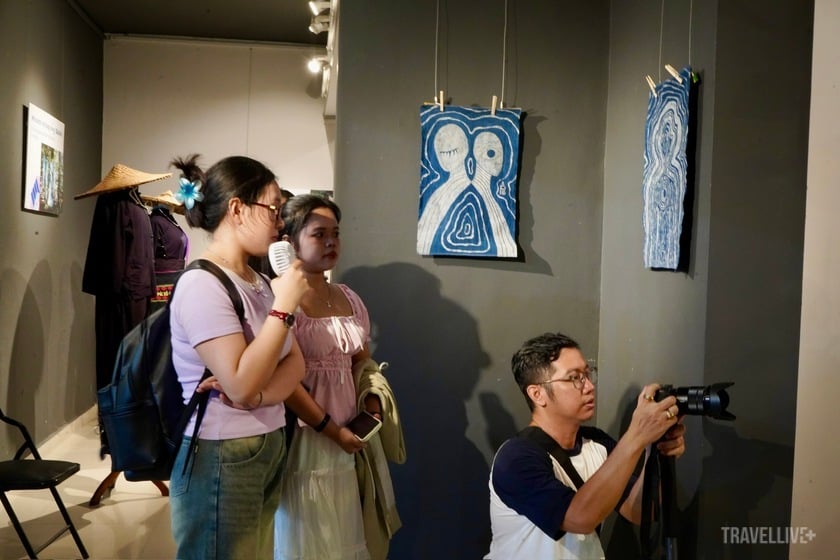
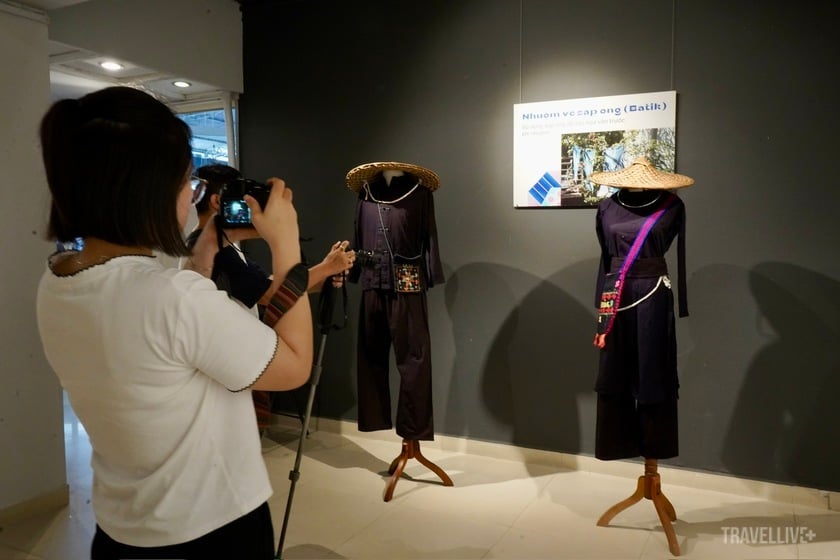
Young people enthusiastically explore the national cultural space at the exhibition.
The hands that silently keep the flame burning.
Behind the project's success is the support of Then singing artisan, Master Xuân Bách, lecturer at the Việt Bắc College of Culture and Arts. Not only does he teach techniques, but artisan Xuân Bách also inspires and helps the group gain a deeper understanding of the lifeblood of the heritage, enabling them to retell it in the language of the modern era.
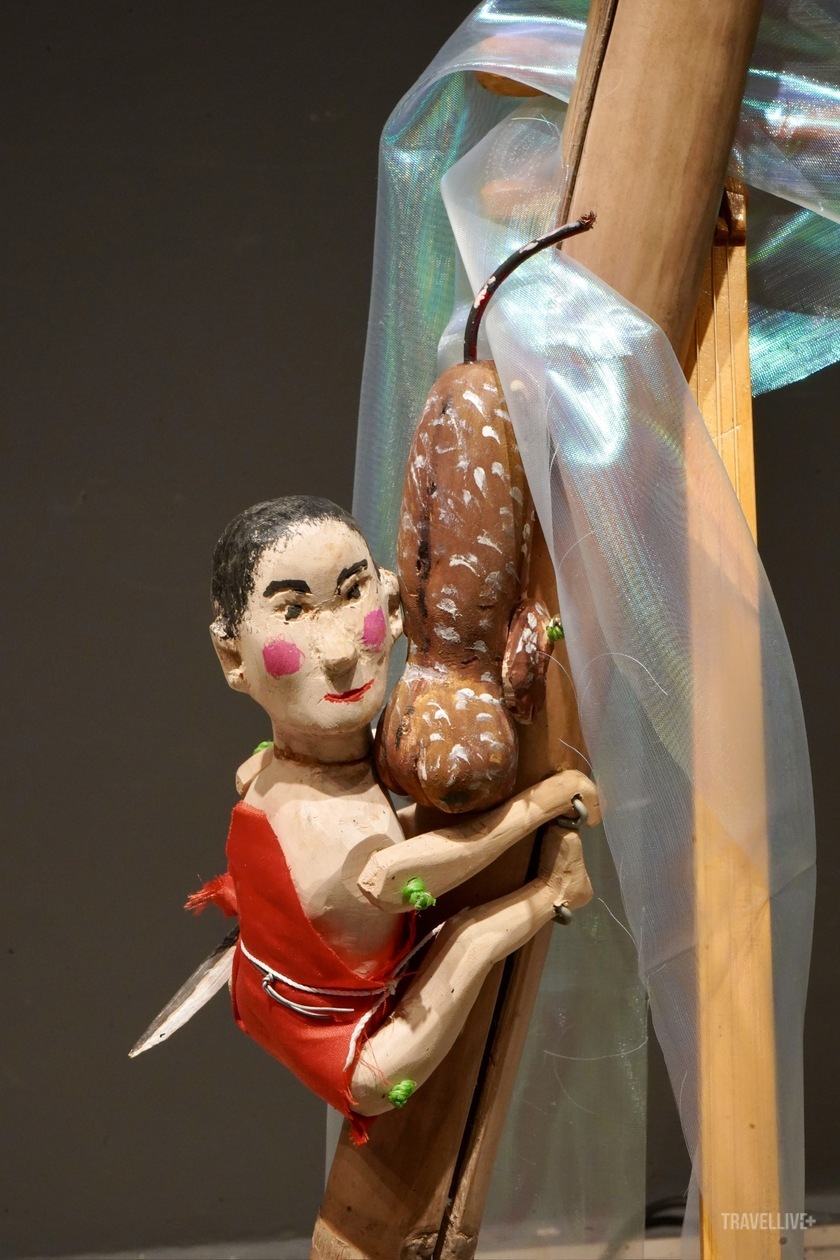
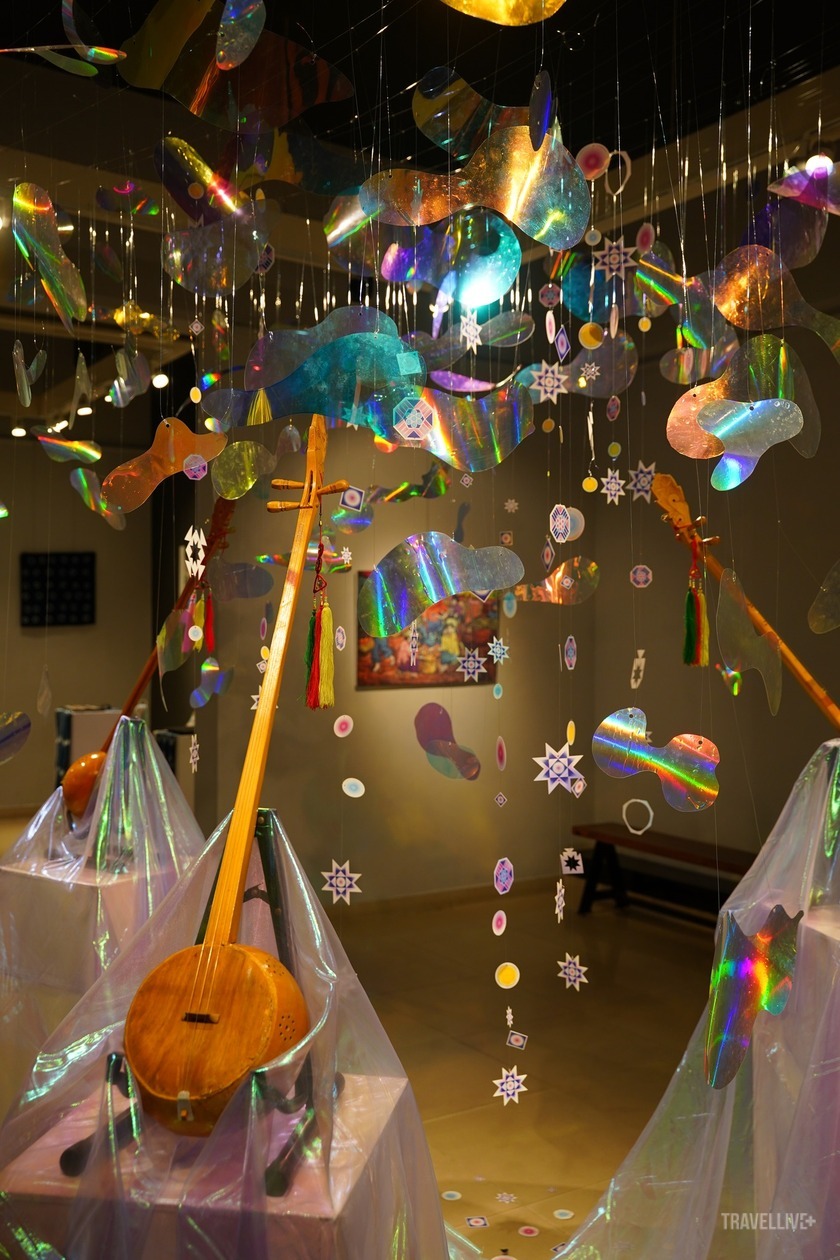
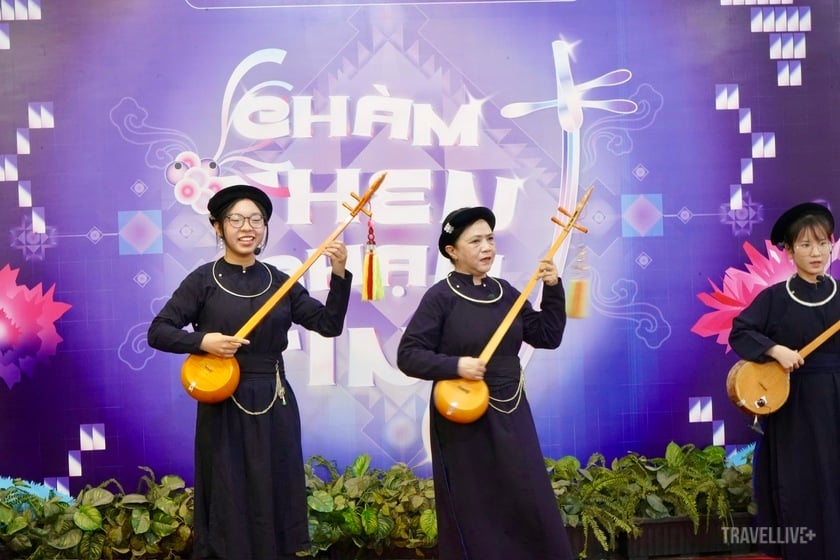
The đàn tính – an indispensable musical instrument in the Then singing performances of the Tay people.
Ms. Nguyen Thi Bich Lien, head of the Dan Tinh and Then Singing Club for elderly journalists in Ho Chi Minh City, commented: "The exhibition is a true cultural bridge. Young people have their own way of doing things, but the important thing is that they truly appreciate and understand the value of what they are preserving."
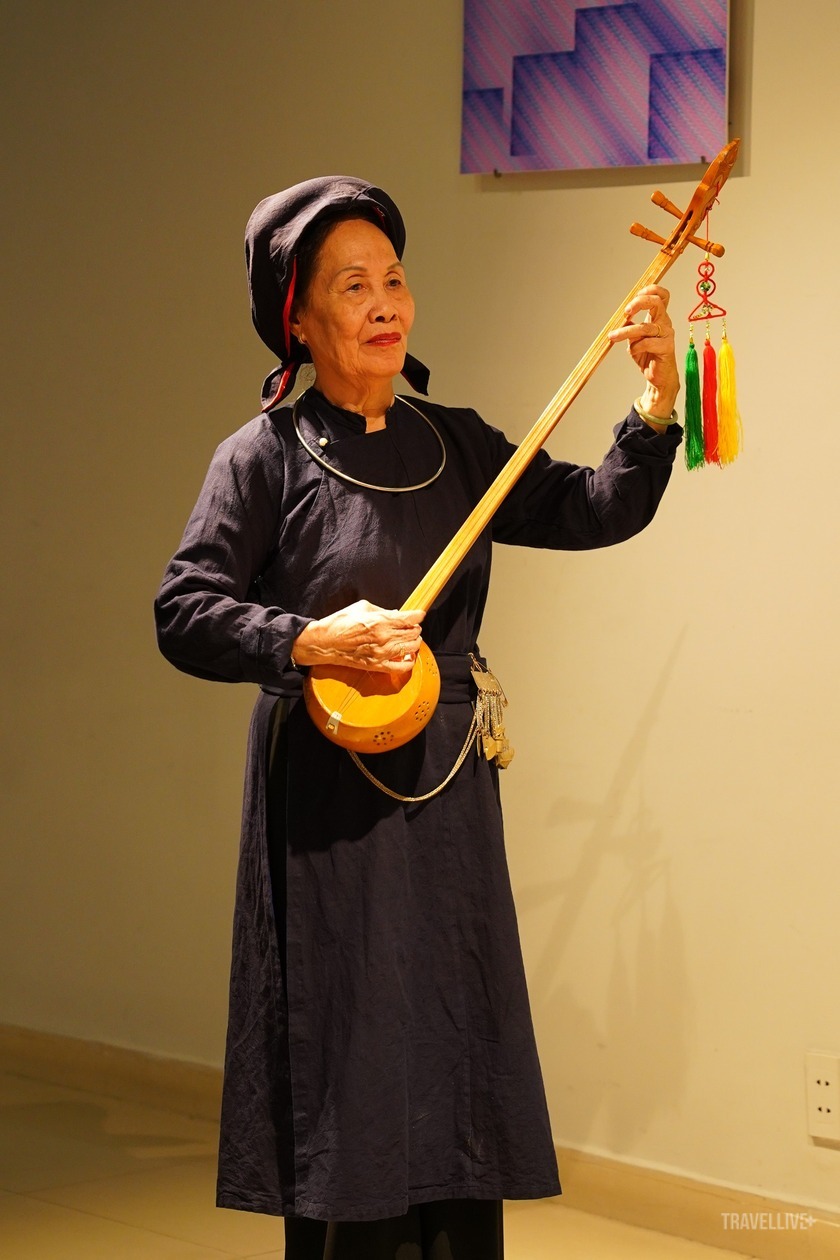
Ms. Nguyen Thi Bich Lien – head of the Dan Tinh and Then Singing Club for elderly journalists in Ho Chi Minh City – performed at the exhibition.
Cham Then Cham Tinh is a gentle yet powerful invitation for young people to step into the world of long-standing cultural values. Without dogma or clichés, the exhibition proves that when young people truly love something, they will always find a way to tell the story – fresh, captivating, and inspiring.