VI
VI


For many years, the notion that "you have to be rich to get a US visa" has deterred many Vietnamese people from the outset. How much money do you need in your savings account? Do you own enough property? How much is the monthly salary to meet the requirements? These questions have become psychological barriers before even filling out the application form.


However, according to official guidance from the U.S. Department of State and the U.S. Embassy in Vietnam, consular officers do not apply any fixed financial thresholds when reviewing B1/B2 tourist visa applications. The core factor they look for is only one: whether the applicant has sufficient reason to return to Vietnam after their trip.
Even with a lot of assets, you still fail; even with a low salary, you still get accepted.
The reality, according to professionals, completely refutes the old notion. Many experts assert that finances and assets only play a supporting role, not the deciding factor in the outcome of an application. There is no shortage of real-world evidence. Many business owners with billions of dong in savings accounts and numerous properties have still been rejected because of blank passports or inability to explain the reason for their trip.
Conversely, young people who have only been working for a few years, earning between 30-40 million VND per month, without significant assets but with a good travel history, having visited Southeast Asia, South Korea, Japan, and China, are granted visas thanks to their logical applications and confident attitude during interviews.
In other words, having a lot of money without a compelling reason to return will still result in rejection. However, those with clear ties to Vietnam, even with modest assets, have a better chance of getting approved.
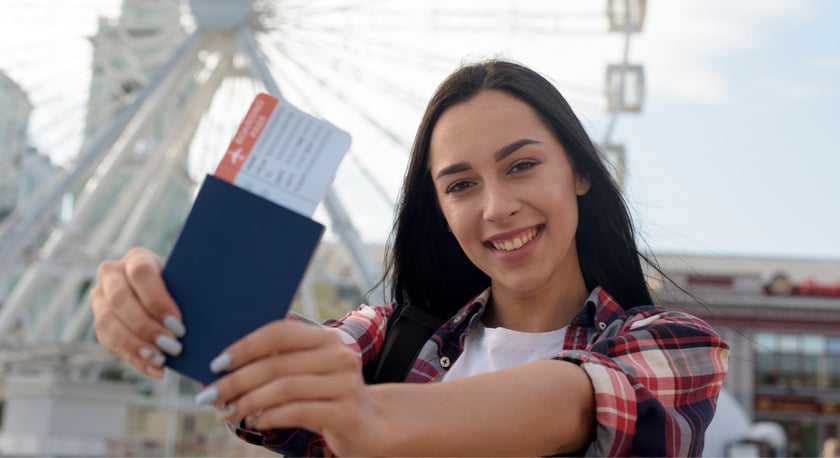
The notion that applying for a US tourist, business, or family visit visa (B1/B2 category) requires strong financial resources and ownership of multiple properties is only partially true.
Unlike European Schengen visas or Australian visas, where paper documents account for a large proportion of the application, US tourist visas rely heavily on the online DS-160 application form and an in-person interview. Consular officers carefully review this form before the applicant enters the interview room, and any discrepancies between the documents and the applicant's statements are noted immediately.

The U.S. diplomatic agency mandates three core information groups in the DS-160: purpose of travel, work and income in Vietnam, and family and personal ties. These three groups are not independent but complement each other to create a consistent and credible profile.
Filling out the DS-160 carelessly, superficially, or inaccurately is the most common mistake noted by filing professionals. A well-filled, truthful, and logical form is sometimes more important than a bank account balance.
An interesting aspect of the US visa assessment process is that consular officers don't apply the same criteria to everyone. They evaluate each applicant's individual circumstances and look for ties that fit that group. For young, single individuals, the strongest ties are often employment. A long-term employment contract, a stable income, and a clear career progression path at a domestic company are indicators that the applicant has a genuine reason to return after their vacation.
For business owners, the question the consular officer really wants answered is: if this person is absent, will the company continue to operate? Stable revenue, a sufficient number of employees, and a management team capable of operating independently are the evidence that needs to be presented, not just bank statements.
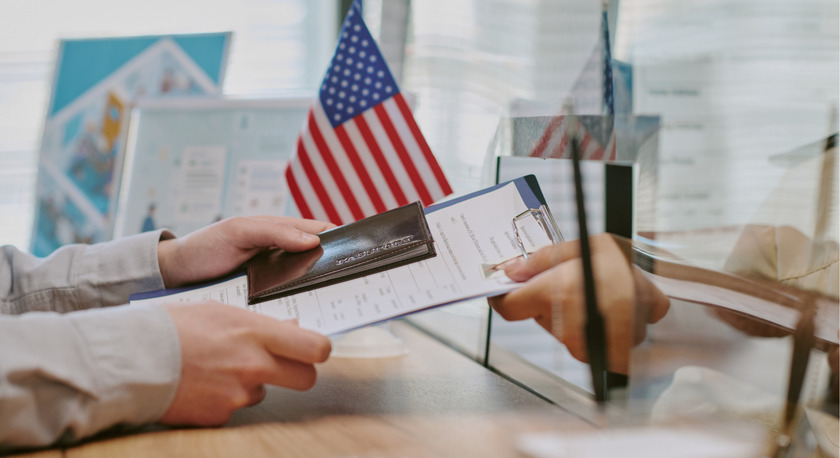
A US tourist visa largely depends on the online DS-160 application and the in-person interview.
Married couples have a natural advantage. The responsibility of caring for a spouse and young children is a bond that consular officers highly value, especially when other family members are not traveling with them.
For older, retired people, the conversation revolves around their stable lives, accumulated assets in Vietnam, and previous international travel history. Someone who has traveled to 5-6 countries and always returned on time will be perceived completely differently from someone traveling abroad for the first time.
Interview: 2 to 5 minutes decide everything.
The interview typically lasts only 2 to 5 minutes, and in some cases, even less than 1 minute. During that short time, the consular officer not only listens to the content but also observes the applicant's demeanor, confidence, and consistency between their words and the DS-160 application form.
There are three most common mistakes that lead to visa rejection even with seemingly flawless paperwork. First, answers that don't match what was stated in the DS-160 form; even minor discrepancies can raise suspicion. Second, answers that are evasive, lengthy, or mechanical, like reciting from memory, due to anxiety. Third, unclear or dishonest statements about the purpose of the trip regarding work, finances, and relationships with relatives in the U.S.
Consular officers will consider the binding factors flexibly depending on the individual circumstances of each applicant.
The U.S. Embassy emphasizes that any fraudulent documentation can lead to a permanent entry ban. Honesty is not only a moral requirement but also the most practical strategy to increase your chances of visa approval.
Applying for a US tourist visa isn't a race to see how much money you have in your bank account. It's a test of consistency: consistency between your application and reality, consistency between your statements and your declarations, and consistency between your reasons for travel and your individual circumstances. The current US B1/B2 tourist visa requires a non-refundable interview fee of $185 USD, regardless of the outcome. Processing times range from a few days to several weeks, depending on the time of year.