VI
VI


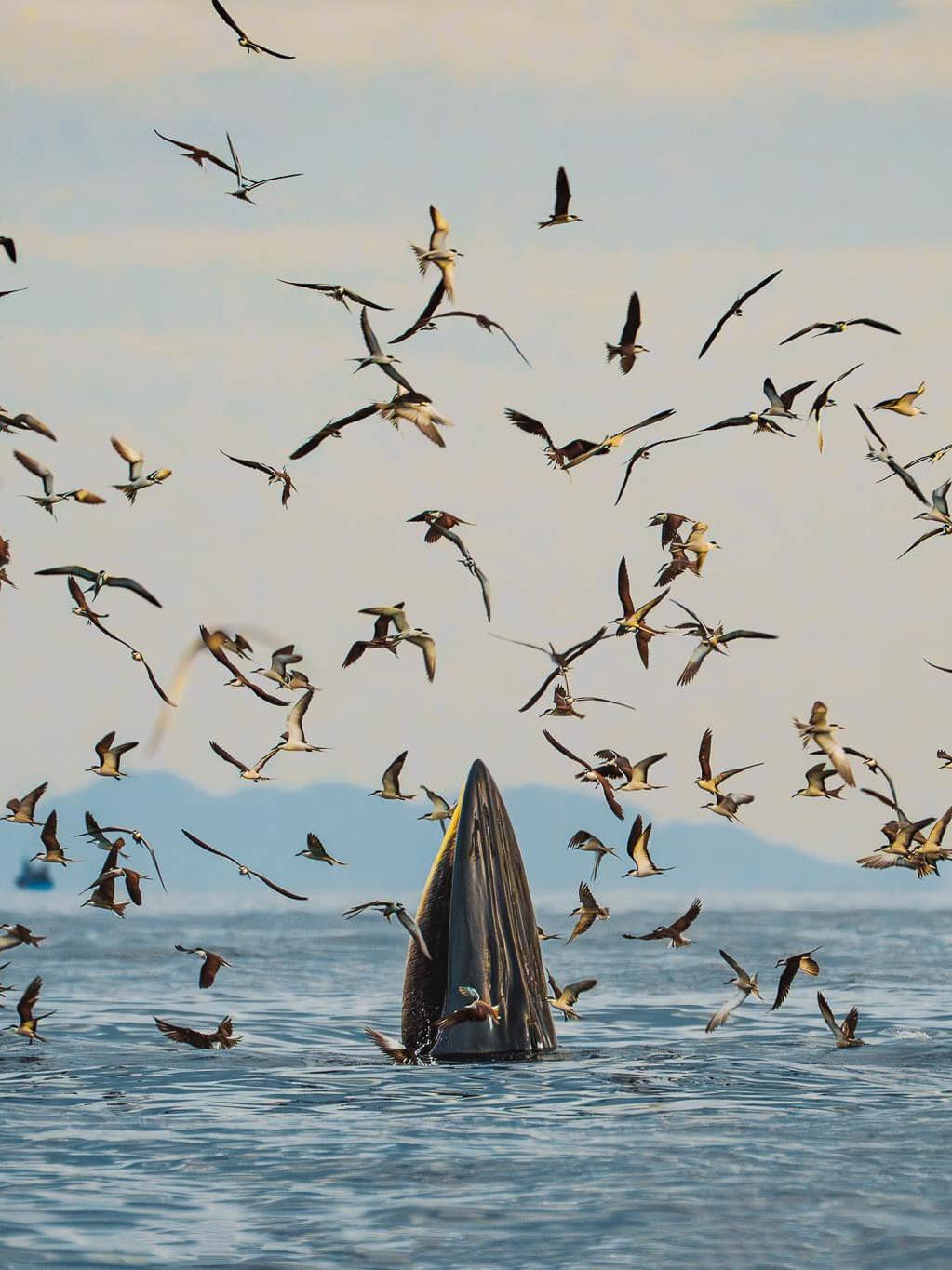
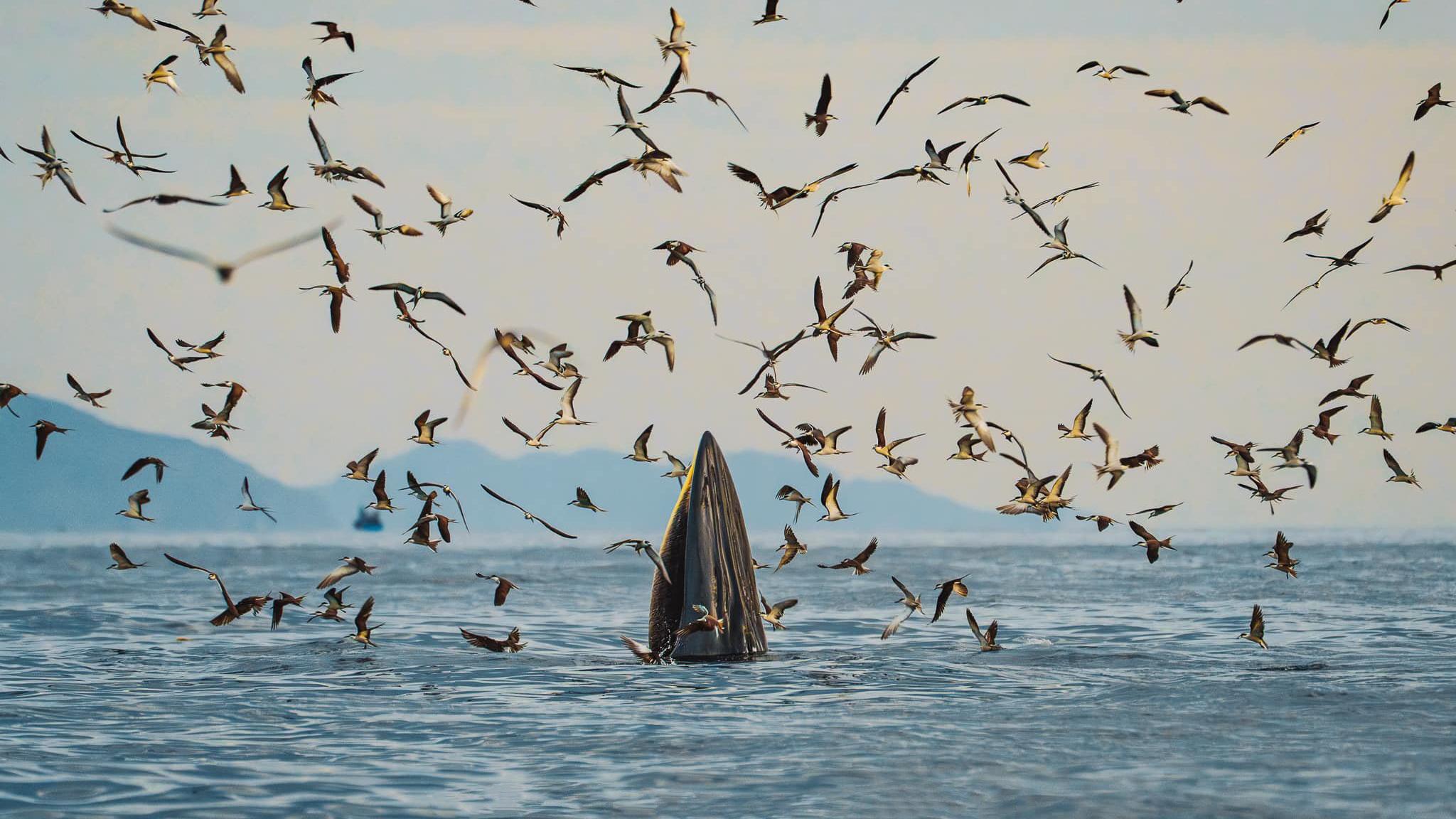
Since July 1st, whales have been frequently seen in the waters off Nhon Ly, Gia Lai province (formerly Binh Dinh province). Images capturing these giant ocean creatures surfacing to hunt have spread on social media, attracting the attention of locals and photographers alike who enjoy capturing these dramatic moments.
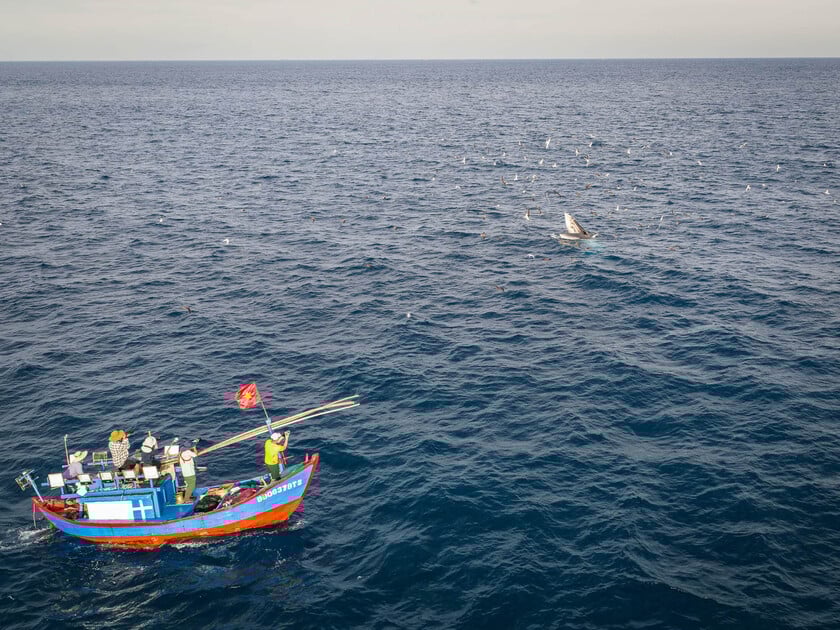
The frequent whale sightings since the beginning of July have turned the Gia Lai sea area into a popular spot for many photographers.
Returning to the waters of his homeland, Nguyen Ngoc Thien, a renowned photographer from Ho Chi Minh City, captured the moment a whale appeared in the waters off Nhon Ly, Quy Nhon. Thien is the winner of the Ocean Photographer of the Year 2024 award, organized by Oceanographic magazine.
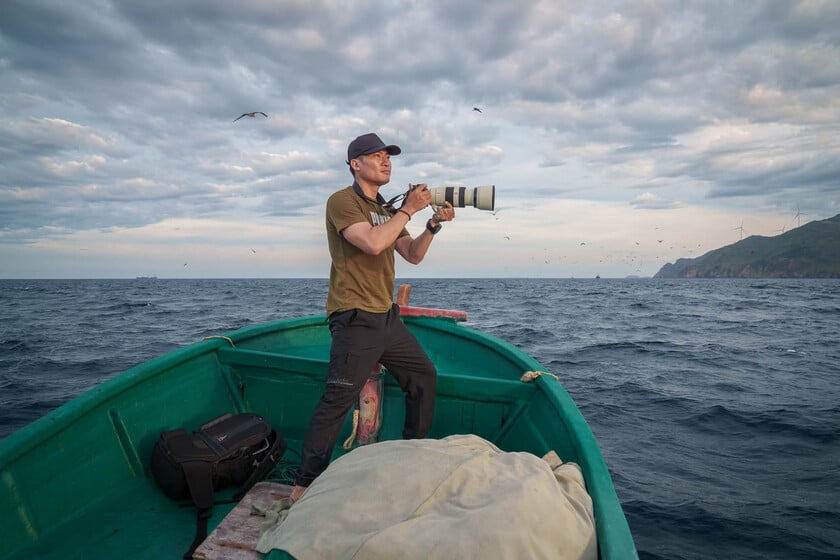
Photographer Nguyen Ngoc Thien on a fisherman's boat out at sea "hunting" for whale photos.
A journey to track the "giant of the ocean"
From dawn, Mr. Thien and his group of photographers followed the fishermen's boats out of the shore, heading towards the sea off Nhon Ly. The sea area in front of the Nam Hai Ancestral Temple and the statue of the Goddess of Mercy at Phuoc Sa Pagoda, a place associated with the sacred beliefs of fishermen, is where whales frequently surface to hunt for prey.
Around 5:30 a.m., flocks of swallows filled the eastern sky, circling like the first signs of something miraculous about to happen. According to experienced fishermen, swallows appear in large numbers when there are large schools of fish on the sea surface, and whales will soon appear to hunt this "big catch."
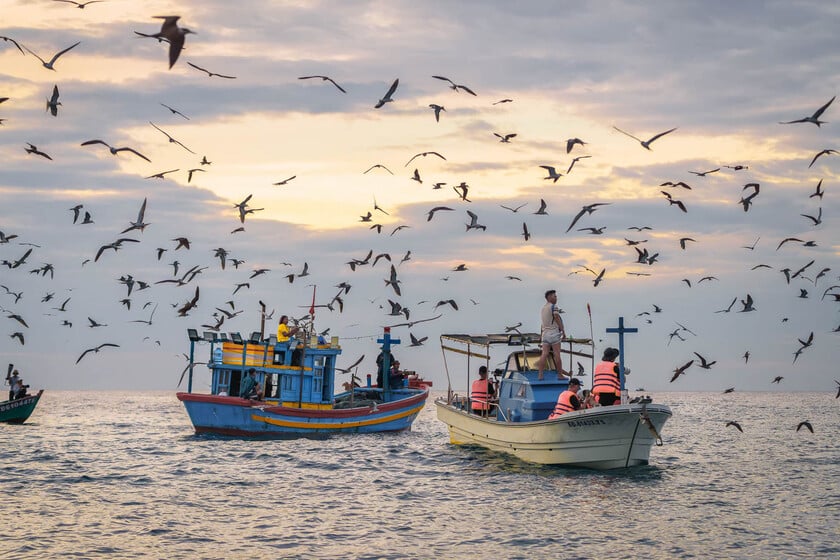
A flock of swallows flying overhead is a signal that whales are nearby.
Suddenly, from afar, a column of white water erupted from the calm sea, accompanied by a resounding hissing sound. Having dived and photographed many species of fish in the ocean before, Thien recognized this familiar sound and immediately captured the moment he had long awaited.

For a brief moment, the whale surfaced, its smooth, shiny skin glistening in the sun. It circled and then opened its mouth to devour the small fish that had gathered near the shore. However, seemingly still wary of the presence of boats, after only about 15-20 minutes, the whale dived deep and disappeared into the blue water.
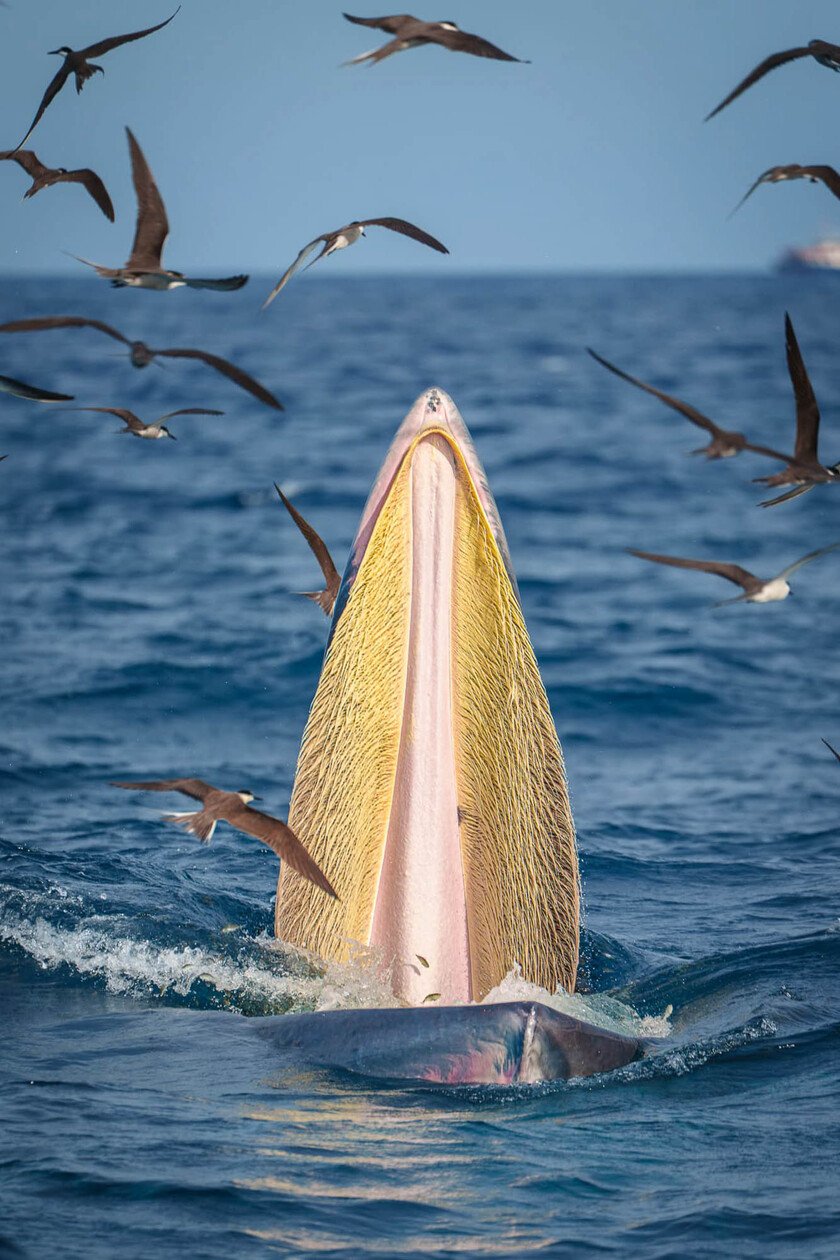
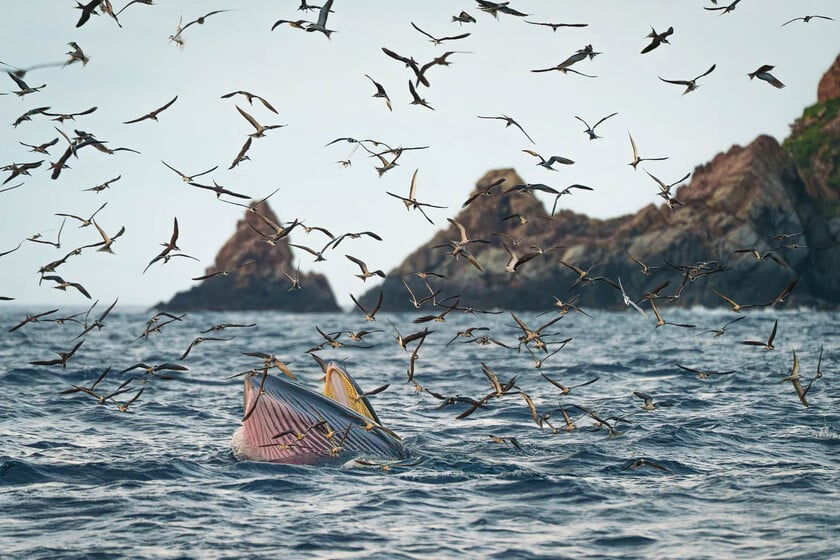
The whales first appeared quite cautiously and kept their distance from boats and rafts.
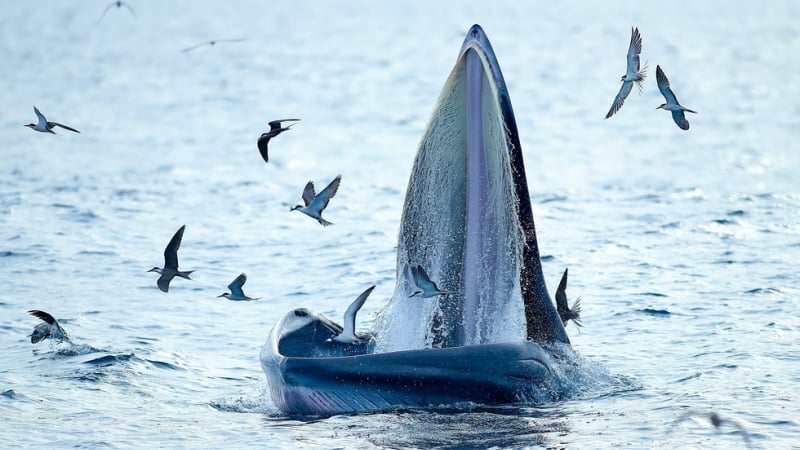
Just when it seemed the trip was over, unexpectedly, around 3 PM that same day, the whale reappeared, still right in front of the Nam Hai Ancestral Temple. This time, it surfaced more frequently, swimming and hunting for prey for many hours, no longer as hesitant as in the morning. The head of a Bryde's whale accounts for about a quarter of its entire body length, so its powerful bites against the golden afternoon light made the Nhon Ly seascape more magnificent and vibrant than ever before.
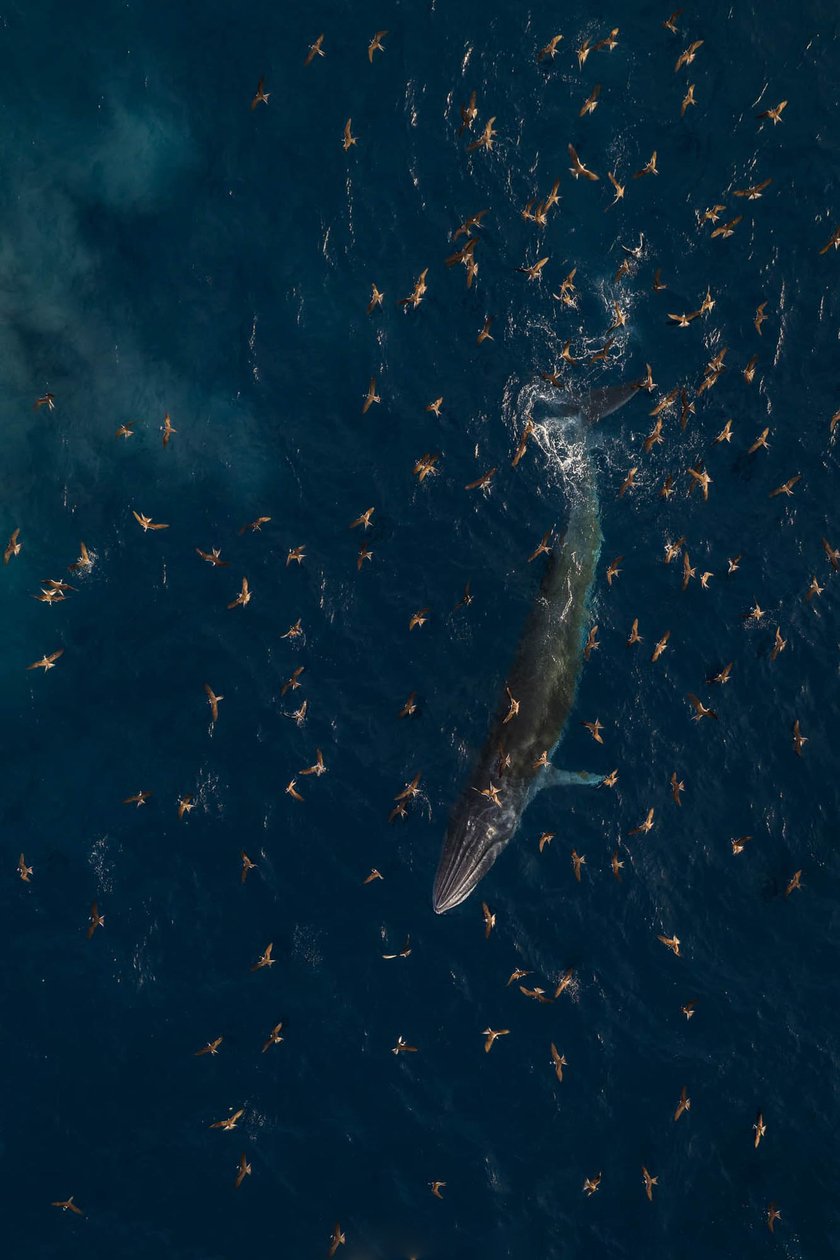
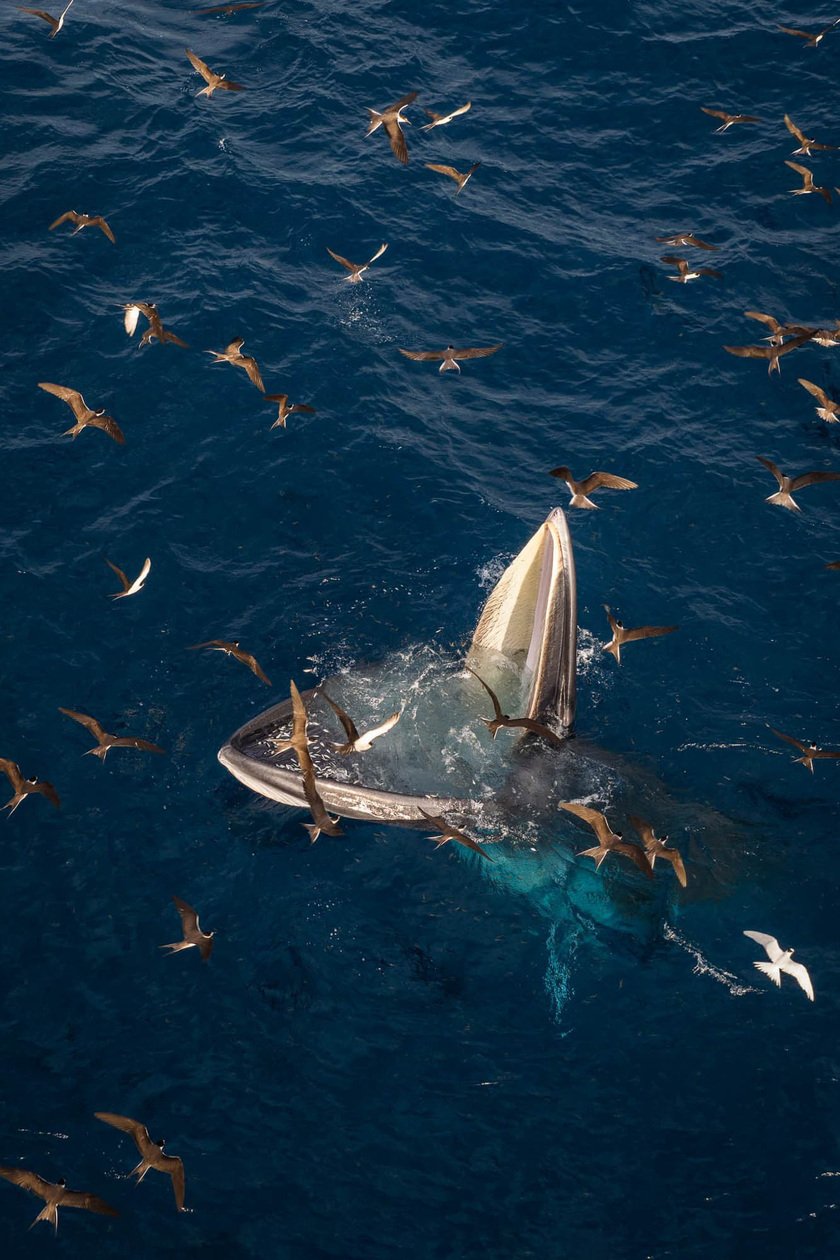
The powerful bites of the fish against the golden afternoon light make the Nhon Ly seascape more magnificent and vibrant than ever before.
A promising comeback
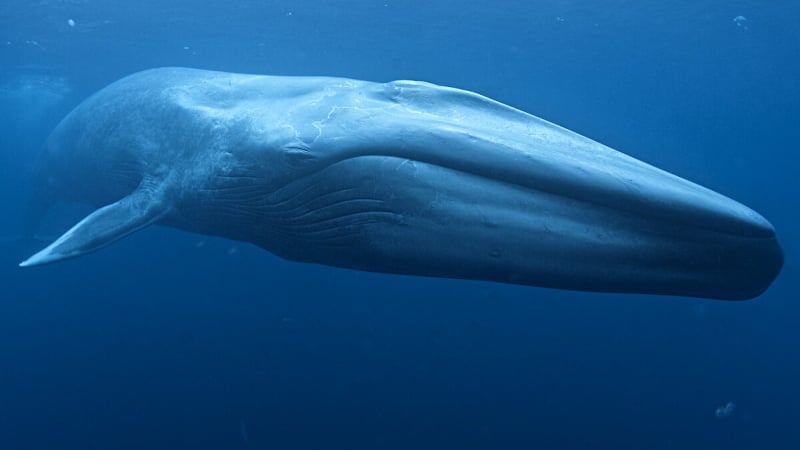
According to the Centre for Conservation of Biodiversity and Endangered Species (CBES), the whales found in this area belong to the Bryde family (Balaenoptera edeni) - one of the rare marine animals. Bryde whales are members of the baleen whale family, commonly found in warm, temperate oceans including the Atlantic, Indian, and Pacific Oceans.
Unlike other whale species that have only a single ridge on their snout, Bryde's whales have three prominent ridges in front of their blowholes. The whales have a broad caudal fin, and a pointed, hook-like dorsal fin located about two-thirds of the way back on their bodies. Bryde's whales have 40 to 70 pharyngeal grooves on the underside that expand while feeding and 250 to 410 rough, gray baleen plates on each side of their mouths that act as filters while they eat. Male Bryde's whales are typically slightly smaller than females.
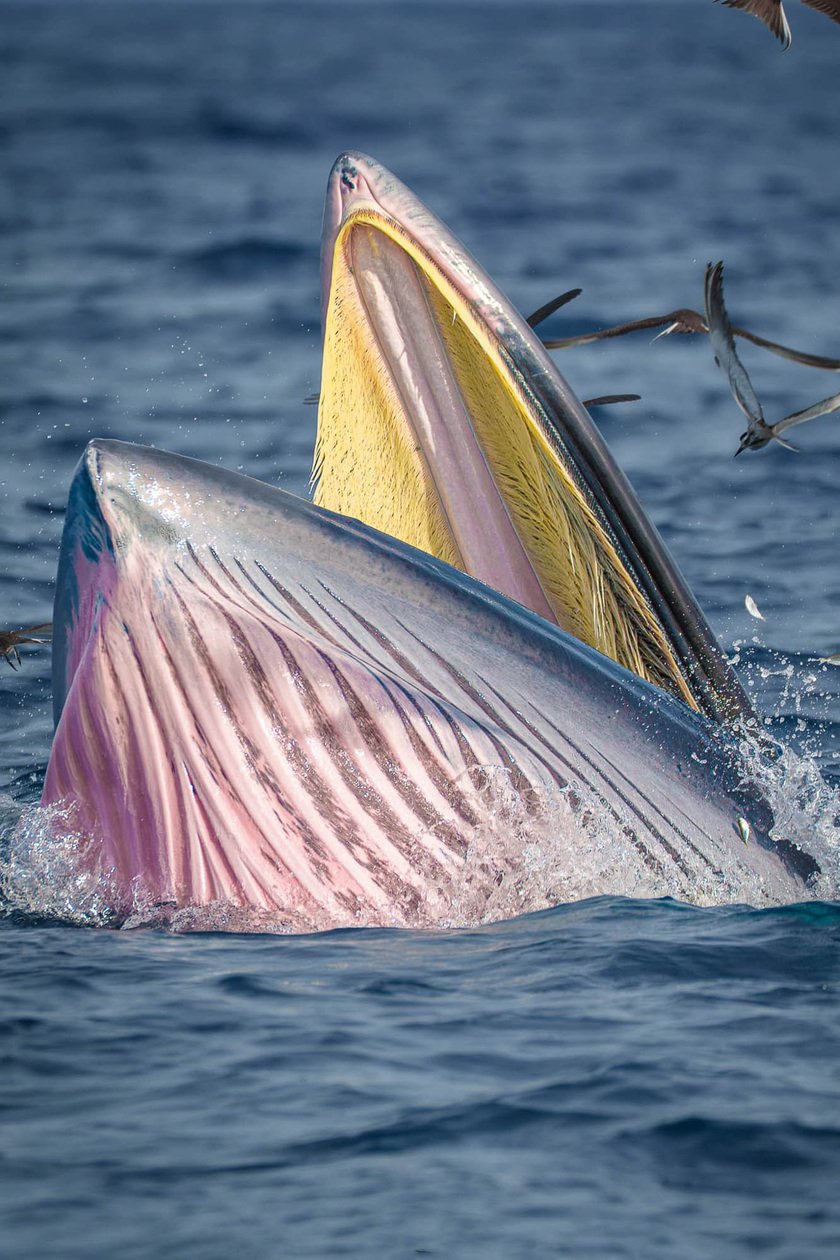
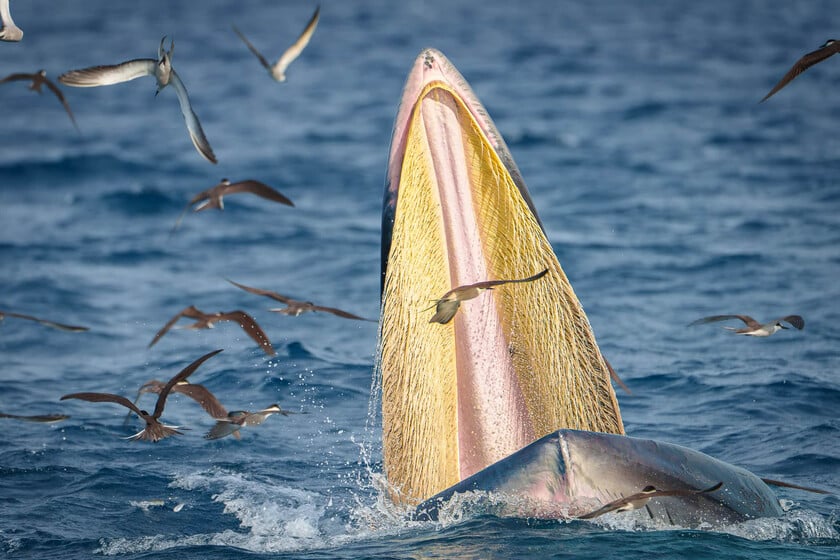
A close-up view of a whale's mouth as it bites its prey.
Unlike many whale species that typically live in pods, Bryde's whales hunt alone or in small groups within their families. Some Bryde's whale populations migrate for short periods seasonally, while others do not migrate at all, making them unique compared to other migratory baleen whale species.
Since 2022, Bryde's whales have regularly swum along the coastal waters of the former Binh Dinh province, such as Vung Boi (Phu My), De Gi (Phu Cat), Hon Seo (Quy Nhon City), and Mui Ganh (Hoai Nhon town). Since June of this year, the whales have returned and continuously hunted in Phu My and Nhon Hai.
The frequent appearances and longer stays of whale pods in the waters of Gia Lai demonstrate the effectiveness of environmental conservation and control of overfishing. This is also a positive sign for the potential development of ecotourism, attracting tourists who love nature and marine ecosystems.
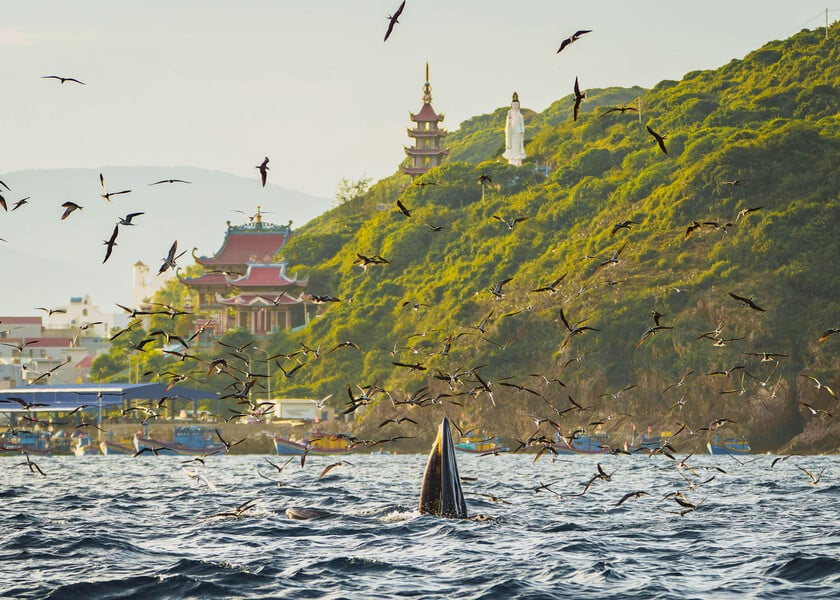
A powerful whale-like strike against its prey under the sunset over the Nam Hai Mausoleum area.
For the people here, whales (also known as "Ông" whales) are not only sacred animals but also symbols of good fortune and a sacred connection between humans and the ocean. And for Thiện, tracking down these "giants of the ocean" is not just a photo-hunting trip, but a journey to capture the magical moments of nature right in his homeland.






.jpg.jpg)


.jpg.jpg)