VI
VI


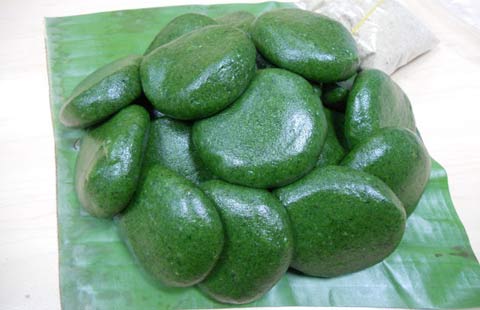
Mugwort is both a valuable medicine and a precious food. However, only the people of Lang Son can transform mugwort into a truly unique dish: mugwort cake with sesame filling.
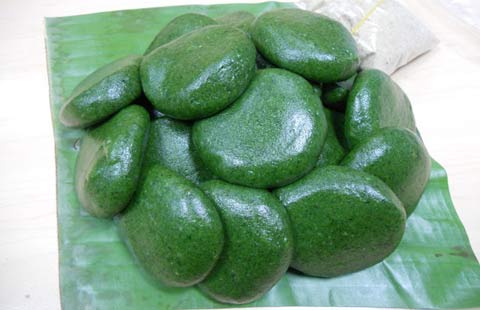
Mugwort cake is a traditional dish of the Tay and Nung people of Lang Son province.
Mugwort cakes are usually made in large quantities during the Qingming Festival and other celebrations of the new rice harvest. On ordinary days, mugwort cakes are sold at rural markets for 2000 dong each.
The rice used for making mugwort cakes is not just any type of rice. For a fragrant and chewy cake, you must choose mountain-grown glutinous rice and ensure it's not mixed with regular rice. The sugar used for dipping must also be yellow, sweet, and free of impurities. The mugwort leaves must be young and fresh.
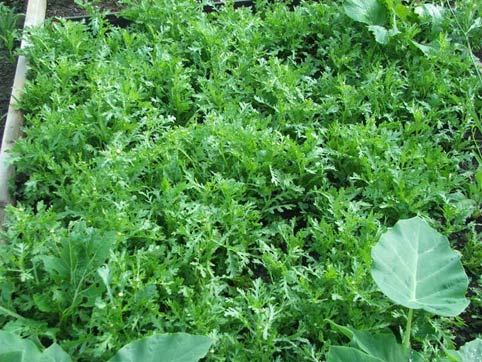
To make mugwort cakeFor a delicious dish, you must choose young and fresh mugwort leaves.

The mugwort leaves are washed clean and placed in a pot with ash water. To obtain good ash water, the Tay and Nung people choose clean ash, preferably from bamboo or mung bean husks. The clean ash is packed into a sieve. Water is slowly poured onto the ash, allowing it to soak in and drain into a basin. The mugwort leaves soften very quickly when boiled in ash water. After softening, the leaves are poured into a sieve, rinsed several times to remove the ash water, the fibers are removed, the water is squeezed out, and then they are formed into fist-sized balls. Finally, they are pounded in a mortar until finely ground.
The rice for making the cake is washed and soaked in warm water for about 6-8 hours, then drained and steamed until cooked. During the steaming process, when steam rises, more water (boiling water) is often added to make the cake more pliable when pounded. Once the sticky rice is cooked, it is pounded evenly in a stone or wooden mortar along with pre-ground mugwort leaves. The rice must be pounded while still hot for the cake to be soft, smooth, and pliable.
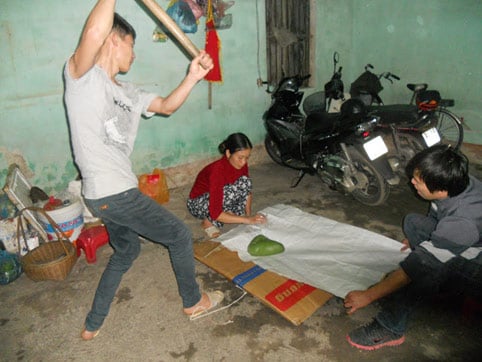
The most strenuous step is pounding the rice flour, so it requires the strong men of the household. They have to pound continuously and evenly for about 15-20 minutes.
The filling is the secret to the cake's delicious flavor. It's made from roasted black sesame seeds, ground into a powder, and mixed with brown sugar that has been melted over a hot stove and allowed to solidify.
After the glutinous rice is pounded until smooth, the women quickly scoop it onto trays to shape the cakes. The hot cakes are then coated with a layer of wax (beeswax) to maintain their shine, elasticity, aroma, and to prevent them from sticking together.
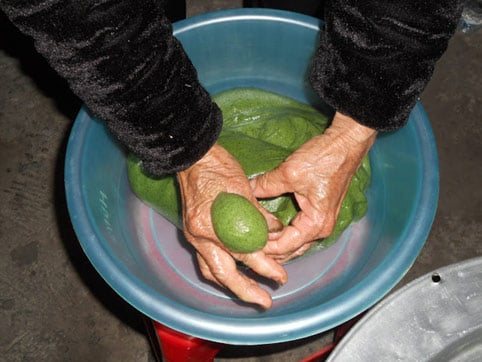
The woman's skillful hands molded the dough into soft, smooth cakes.
Mugwort cake is a vegetarian cake that, although made from glutinous rice, is very easy to eat, refreshing, and not greasy. The cake has the fragrant, chewy texture of glutinous rice, the flavor of mugwort leaves, the sweetness of sugar, and the aromatic scent of sesame seeds all blended together. Anyone who has ever tasted it will never forget the flavor of this rustic cake.
In addition, mugwort cakes can also cure some diseases because mugwort leaves (also known as wormwood) have a bitter, spicy taste and a slightly warm nature, which helps regulate blood circulation, eliminate cold and dampness, promote a healthy pregnancy, and stop bleeding...
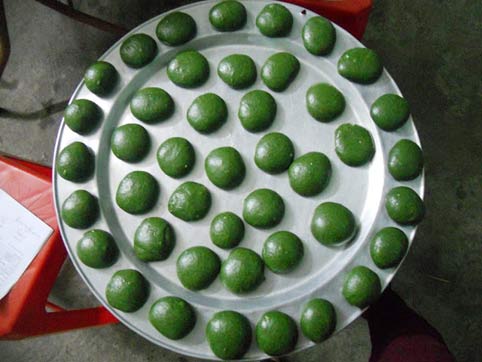
Cake"ải," a traditional dish of the Tay and Nung ethnic groups in Lang Son, is often made during the Qingming Festival and celebrations of the new rice harvest.
In Lang Son, every Tay and Nung woman knows how to make mugwort leaf cake. Therefore, mugwort leaf cake has become a traditional dish passed down from generation to generation and is an indispensable part of Tay and Nung people's festivals and holidays.