Luang Prabang, a serene morning in the land of Buddha.
14/01/2019
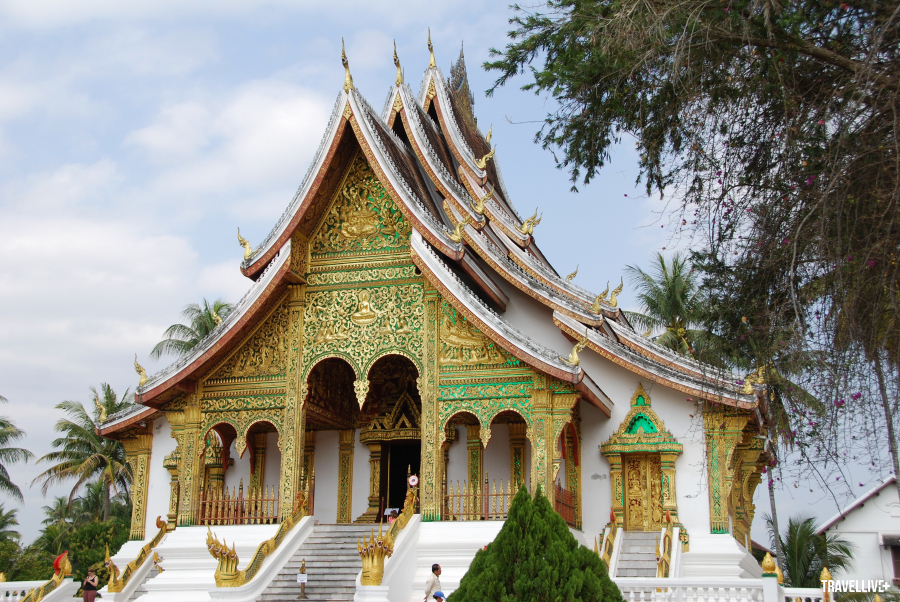
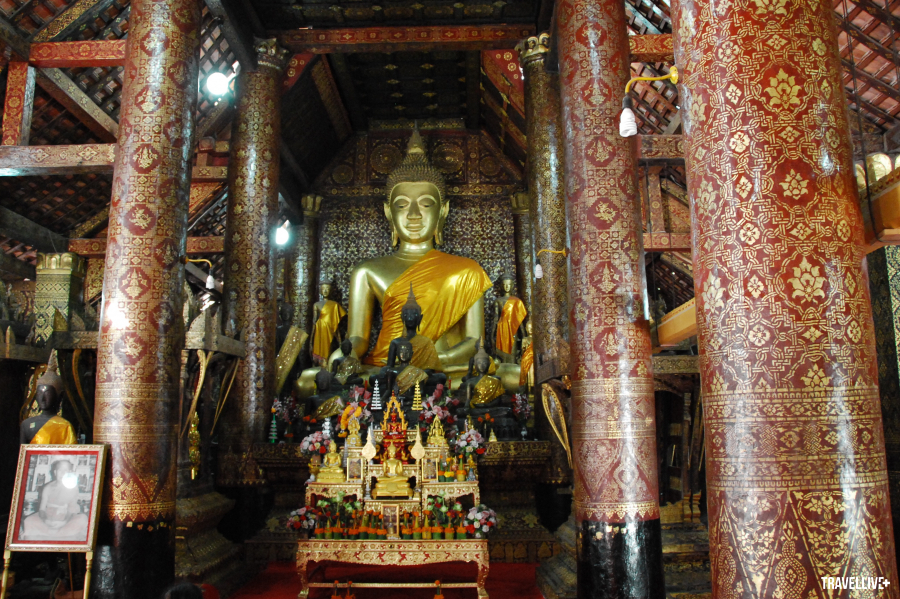
I sat for a long time on the steps, gazing at the golden, curved arches shimmering in the sunlight, at the mango tree swaying with countless clusters of fruit hanging heavily on its branches, and at the young monks chanting scriptures in the main hall with their bright, clear eyes. Meditating in the main hall, gently closing my eyes and relaxing my whole body, I felt as if I could hear my own heart beating steadily, the soft rustling of the dry leaves in the wind, the shuffling of someone's footsteps, the clearing of the throats of the old monk—the sounds of life slowly drifting by.
Luang Prabang, me and my decade-long love
In late February, I took a long bus ride, traversing countless mountain passes in northern Vietnam to northern Laos, arriving at the beautiful ancient capital of neighboring Laos, Luang Prabang, nestled on the tranquil Mekong River.
I fell in love with this place the first time I set foot here 10 years ago. I fell in love with the tranquil atmosphere, the beautiful temples nestled peacefully beside the emerald green river. I fell in love with the monks' regular morning alms-gathering steps. I fell in love with the colorful, glittering night market and the tempting grilled food. I fell in love with even the smallest things, like the creaking wooden fence when it's opened and the chirping of birds on the frangipani trellis every morning. Therefore, even though I've traveled everywhere, I'm always willing to return to Luang Prabang whenever I have the chance.
As if by fate, I chose to return to Luang Prabang this spring, hoping that this tranquil land would usher in a peaceful new year. So I booked my car, reserved my accommodation, took a few extra days off after the Lunar New Year, and set off. I wanted to dedicate my time to this beautiful place, which I'm sure will not disappoint anyone.
The day of returning to old friends.
The car swayed rhythmically as it climbed the mountain pass. The slope wasn't too steep, but it was quite winding, enough to make those dozing off sway back and forth. Nearly 24 hours in a car is certainly not a journey for the fittest, so most tourists would choose to fly, even though it's more expensive, because it's much less strenuous. I chose to travel by road, not just because I'm young and healthy, but because after such a strenuous journey, the feeling of finally reaching my long-awaited destination is infinitely more wonderful.
At dawn, the driver announced that they had finally arrived.
A light mist enveloped me as I left the cramped, dusty car. Reaching out to the sky, the damp, cool morning air sent a slight shiver down my spine, shaking off the fatigue of the long journey. Hopping onto a nearby tuk-tuk, I headed towards the hotel. The sun peeked out from behind the clouds like a curtain, dancing and bobbing up and down beneath the low rooftops in rhythm with the passing vehicle. The tuk-tuk sped through the streets, turning into an alley adorned with pink and purple bougainvillea hedges, and stopping before a wooden gate. Leaving the vehicle, my heavy backpack slung over my shoulder, I lingered for a moment before the flower-covered gate before gently pushing it open and stepping inside.
My room was located on the second floor with a balcony overlooking a quiet, lush garden. The room also contained a rustic wooden table and a few books, perfect for afternoon tea. The hosts were a Lao couple in their 40s; their English was basic, though not essential. They had a 15-year-old daughter with better English skills who often helped them welcome guests. They greeted me with the kind faces of gentle, Buddhist people, their warm, peaceful smiles foreshadowing the tranquil days of my upcoming travels.
The ancient capital of barefoot beggars.
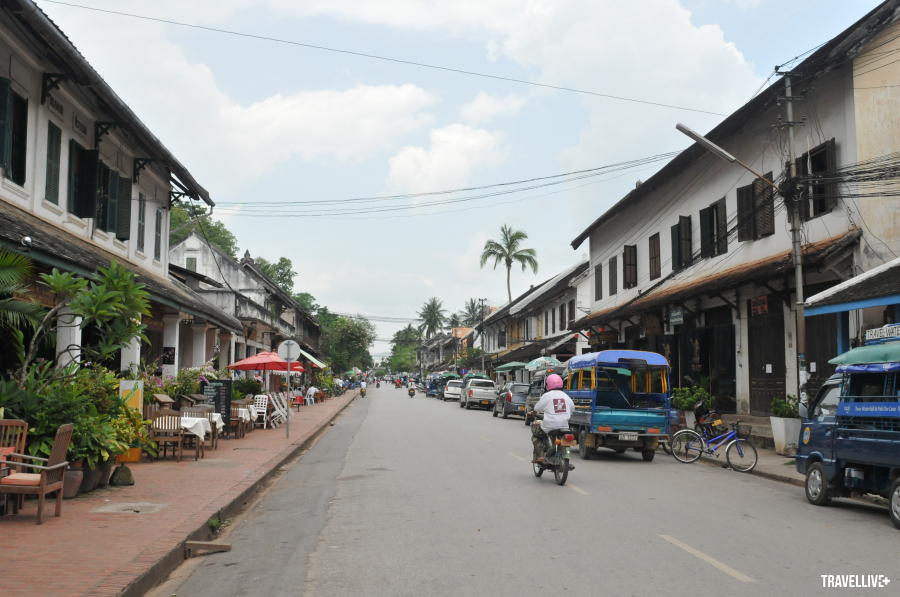
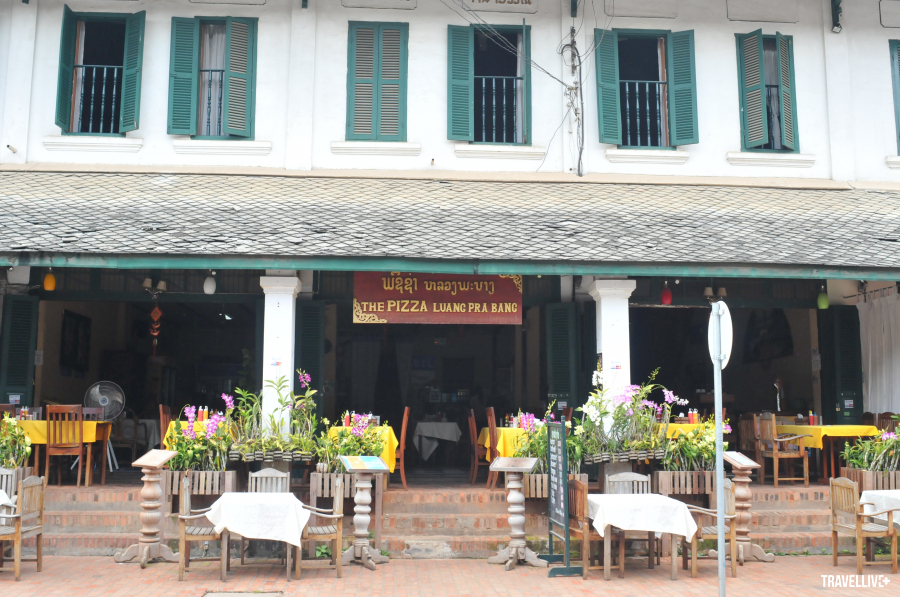
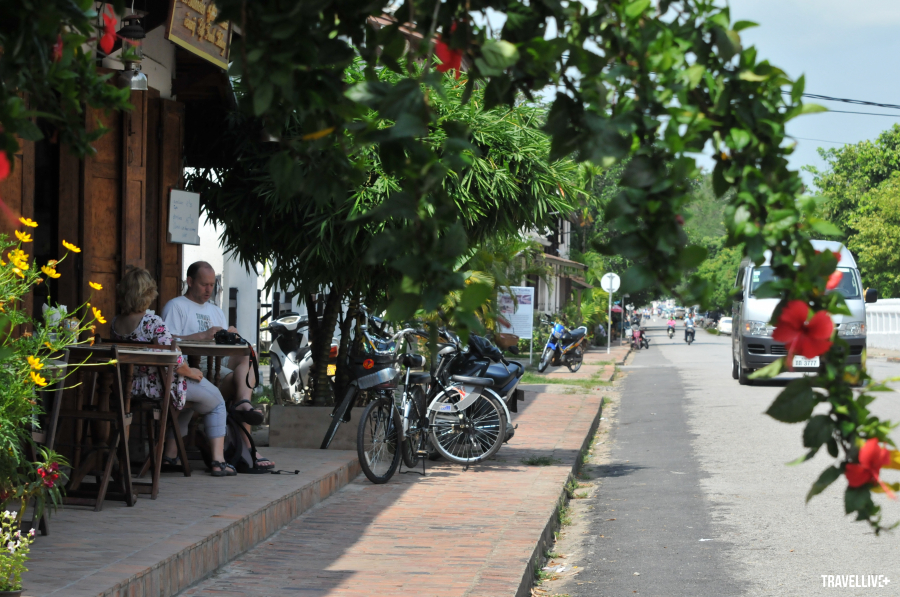
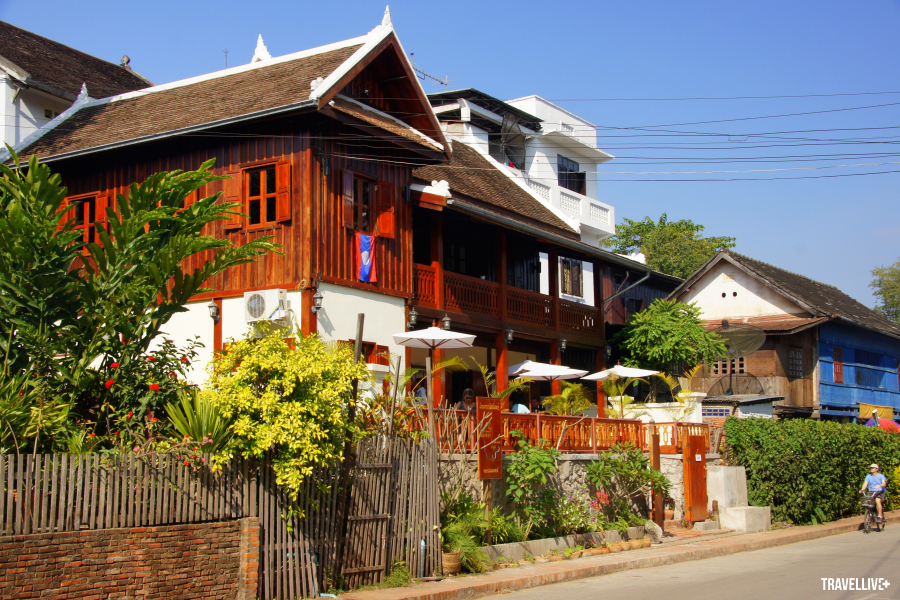
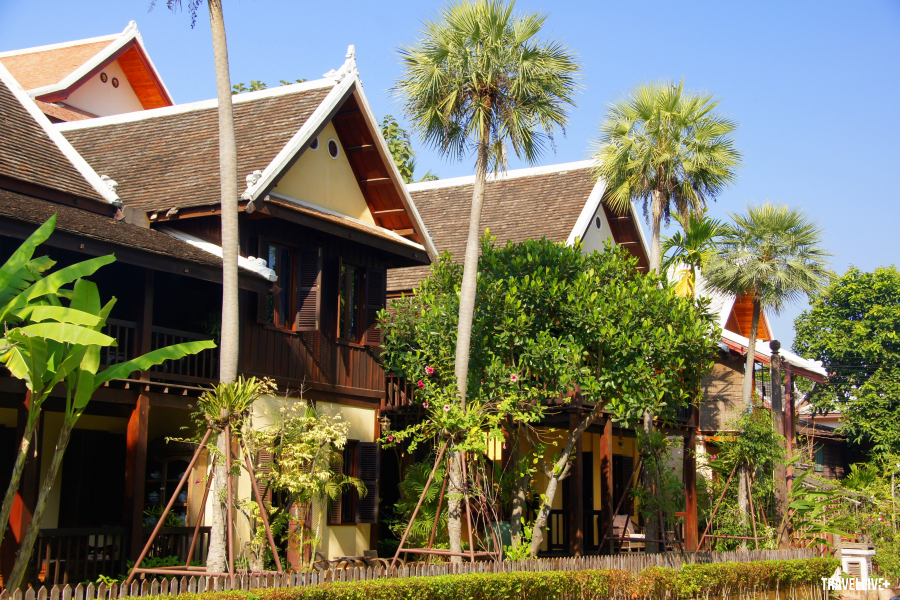
In Luang Prabang, every alley, big or small, leads to the main street, and on the other end, to the two beautiful rivers, the Mekong and the Nam Khan. These streets run parallel to each other, connected by charming little alleys overflowing with flowers, leading to peaceful cafes that gently awaken in the early morning sun. Unable to remember the names written in Lao, I made up my own names for the cafes I passed: Champa Flower Cafe, Bougainvillea Cafe, Orchid Cafe, Magpie Cafe, Wind Cafe… Lingeringly passing by these charming little cafes, I found myself lost in the space of wooden fences covered in flowers, the faint fragrance in the air, and houses embraced by lush green gardens. The atmosphere was so peaceful! I could clearly hear my own footsteps and the chirping of sparrows on the branches.
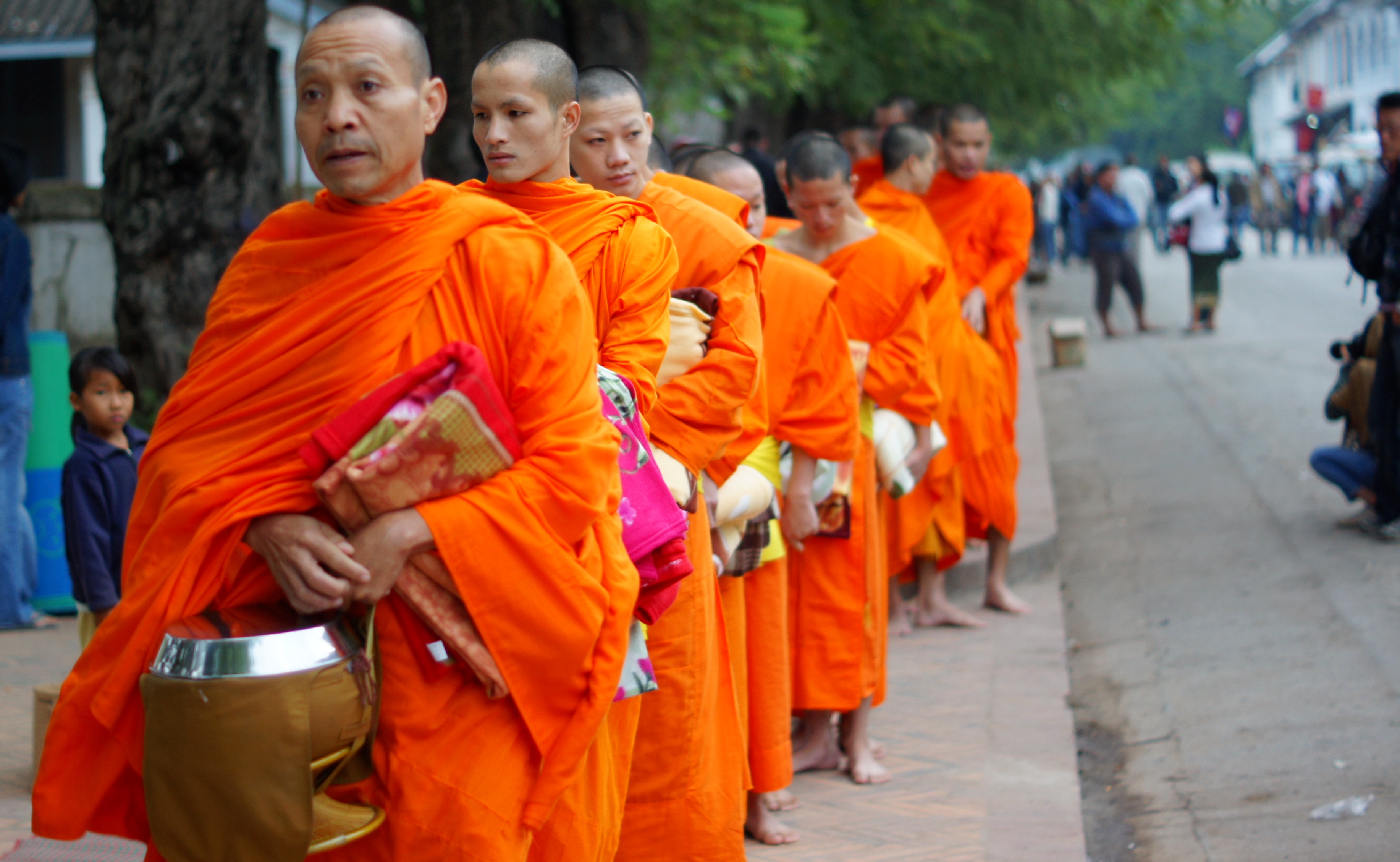
The busiest street in the main district still had many shops that hadn't opened yet. It was still too early to start a workday, but already late for the monks who were going on their morning alms rounds along the street. I sat down with a few locals, opened my bag, took out some things, and respectfully offered them to the monks. Gentle faces passed me by on bare feet. The simple items—sticky rice, fruit, and pastries—that I had just received were then passed on by the monks to other poor people on their way back to the temple. This familiar morning alms-gathering scene has become a beautiful and sacred aspect of this place. And so, another day in Luang Prabang begins!
Jade Waterfall and Sacred Temple
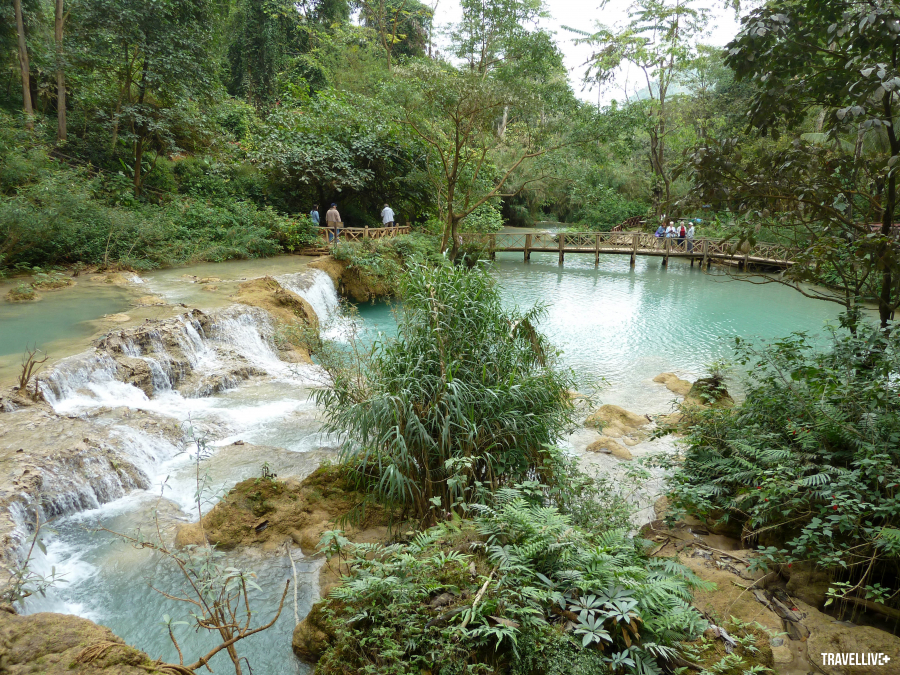
During my days in Luang Prabang, I rented a bicycle to get around the city. There's no need to rush here. On my first day, I cycled all the way to Kuang Si Waterfall, about 30 km from the city. The distance was a bit far by bicycle, but it was well worth it because the journey to Kuang Si was incredibly enjoyable. As the most beautiful waterfall in Luang Prabang, Kuang Si attracts visitors with its emerald green water forming natural pools, especially with its cascading waterfalls and abundant vegetation. The rich scenery is perfect for swimming or slightly adventurous activities like climbing ancient tree roots and plunging into the cool water. After hours of fun in the water, visitors can have a light snack before cycling back to the city, enjoying a delicious meal of grilled river fish and ice-cold Lao beer by the Mekong River, under the red sunset.
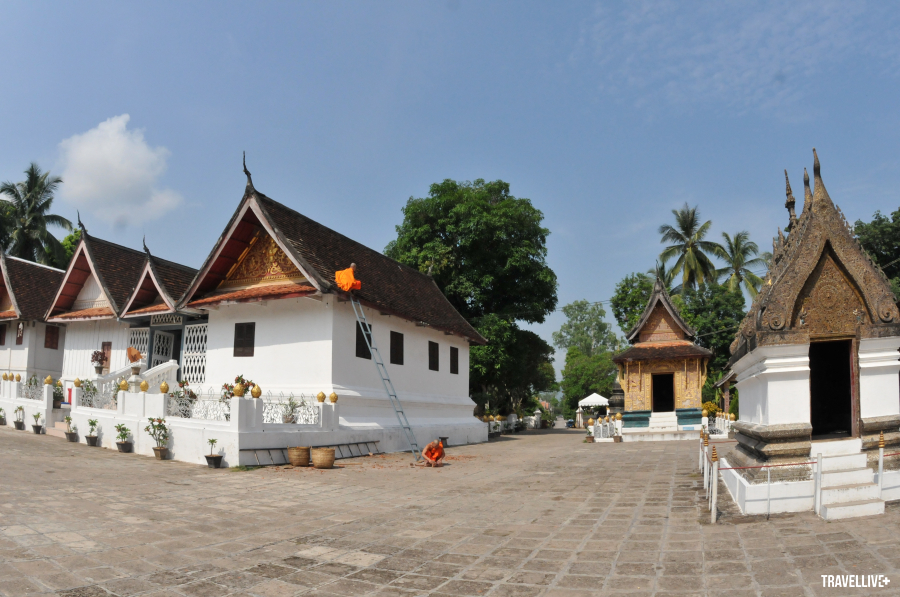
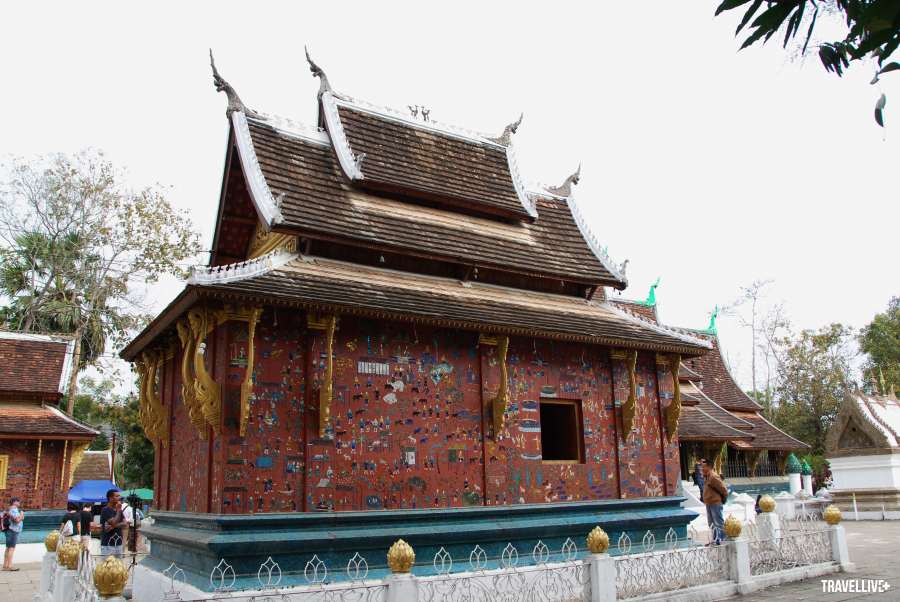
On the second day, I spent the entire afternoon visiting the countless beautiful temples lining the banks of the Nam Khan and Mekong rivers. Laos is a Buddhist country with the highest ratio of temples to population in the world, boasting many beautiful, well-preserved ancient temples. Luang Prabang, in particular, has the most temples in the country. There are currently 40 ancient temples in Luang Prabang, most of which date back to the 14th century, along with many magnificent palaces from the feudal era, dating back over a thousand years. The temples and palaces here are preserved almost intact, or have been restored but still retain their unique features. The most famous is Wat Xieng Thong. Leaning my bike against the wall, I leisurely walked into each temple. As always, every time I visited a temple, I went into the main hall and asked for a string to tie around my wrist for peace and good fortune. Amidst the scent of incense mingled with the fragrance of flowers, I took a moment to sit on the steps, watching the young monks chanting scriptures in the temple with their bright, innocent eyes, listening to the monks' prayers echoing steadily in the ancient and tranquil space.
A glorious sunset over the summit of Phousi
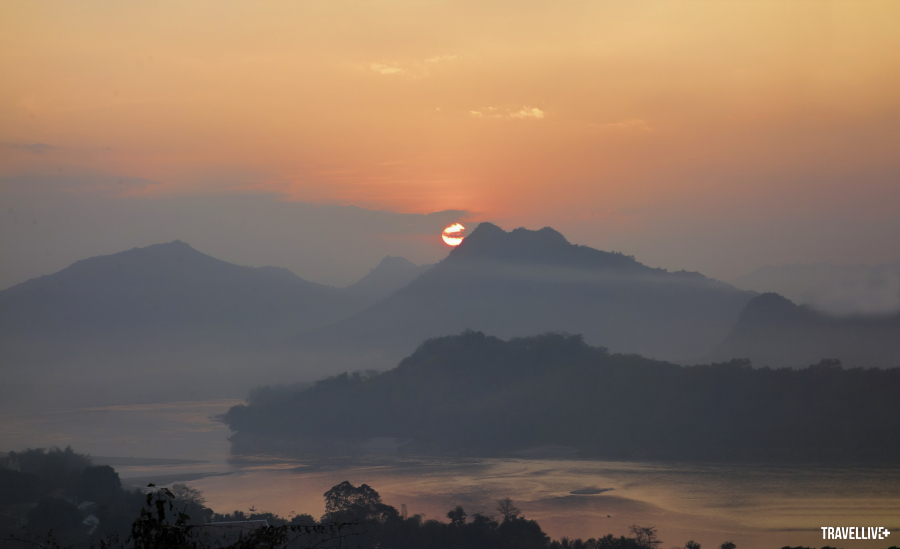
On the last day of my trip, I spent time climbing to the summit of Phousi, considered the most beautiful and panoramic sunset viewing spot in Luang Prabang. In Lao, "Phou" means "mountain" and "si" means "color." This small mountain, only about 80 meters high, with over 300 red brick steps, is called the "Colorful Mountain." Perhaps it's because each season, the mountain takes on a different vibrant color. In spring, it's pristine white with clusters of Champa flowers and bright yellow with cassia blossoms; in summer, it's crimson red with clusters of flamboyant trees interspersed with the cool green of grass and foliage, the ancient mossy color of the temple roofs, the sparkling yellow of the Chomsi tower on the mountaintop, or the deep red of the sunset. This stunning sunset is also the reason why tourists are drawn here, making this usually quiet mountain bustling every evening. And remember to hurry, or you won't find a spot to watch the sunset!
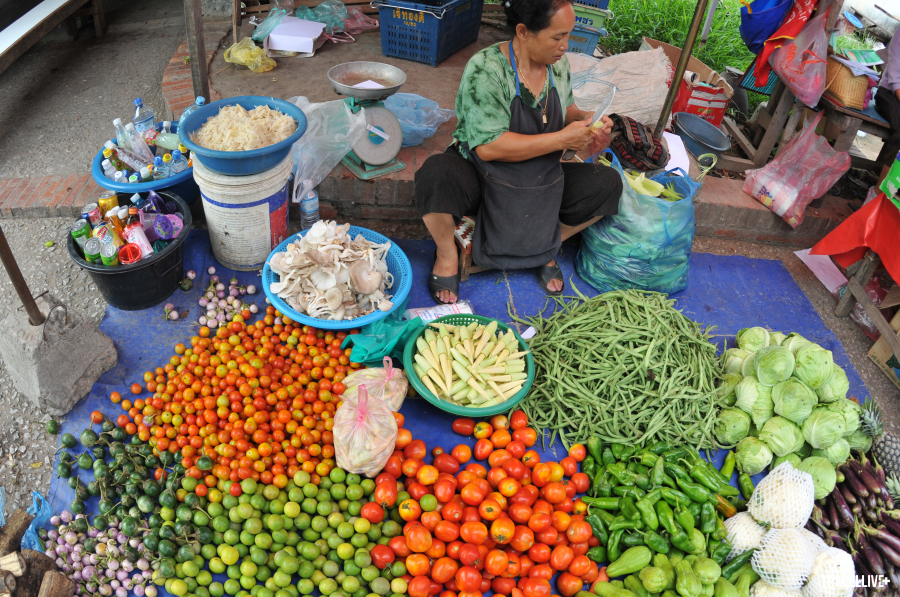
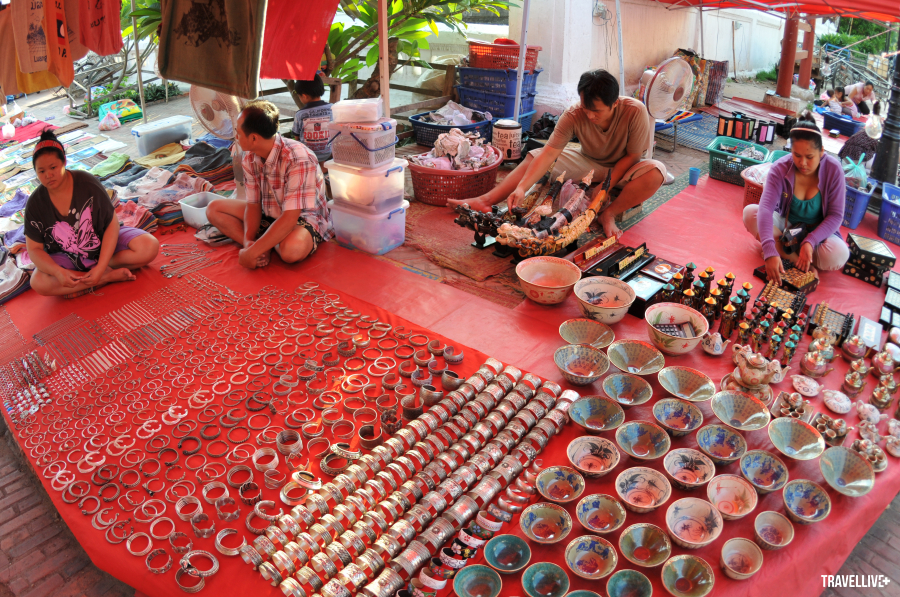
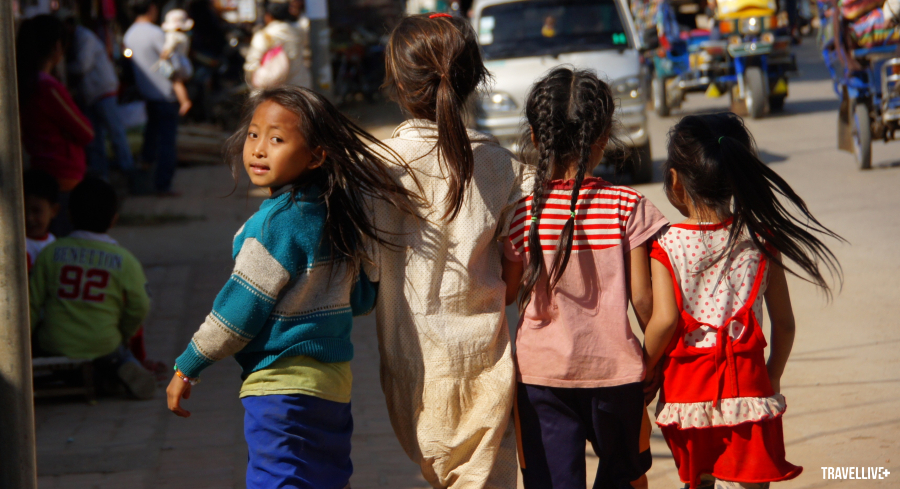
As the sun set and night fell, the weather grew colder, and I found myself immersed in the colorful night market at the foot of the mountain. The Luang Prabang night market opens quite early. Around 6 pm, stalls are set up and lights illuminate the main street, stretching several hundred meters from the Royal Palace Museum to near Wat Xieng Thong temple. Along this long street, you can find all sorts of souvenirs bearing the mark of Buddhism: silver bracelets, Buddha arm ornaments, lamps with Bodhi leaves or paintings, and various kinds of scarves… Even if you don't buy anything while strolling through the market, you still feel a sense of joy and excitement hearing the charming voices of young women in their twenties offering beautiful scarves, the toothless old women pointing out interesting items, and the cheerful chatter of children accompanying their mothers to the market to sell their wares.
During your time in Luang Prabang, take your time and let your mind wander in the quiet, peaceful moments.
ADDITIONAL INFORMATION
VisaVietnamese tourists are exempt from visa requirements, needing only a passport valid for more than 6 months. The exit fee at Vietnamese customs is 10,000 VND. The entry fee into Laos is approximately $5.
Trip:By air: From Hanoi, there are now direct flights to Luang Prabang operated by Vietnam Airlines and Lao Airlines, with a flight time of about one hour and a round-trip ticket price of approximately 7 million VND. By road: Buses from Hanoi to Luang Prabang depart in the late afternoon from Nuoc Ngam bus station. The journey is quite long and arduous, taking about 20 hours, and involves crossing the Cau Treo or Nam Can border crossings (Nghe An province).
MoneyThe currency used in Laos is the Kip, but you can also pay with small amounts of USD and Thai Baht.
Cuisine:Grilled fish, grilled chicken, and laap (rare beef) at the eateries along the Mekong River are incredibly tempting.
Skin:Dress respectfully when visiting spiritual sites, such as wearing shirts with sleeves and trousers that reach the knees.
Weather:Luang Prabang is cool and warm during the day, and chilly in the evenings and early mornings. A light jacket is recommended to stay warm.
Time:From February to June is springtime in Laos, including the traditional Water Festival which takes place on April 13th, 14th, 15th, and 16th every year, making it the most beautiful time to visit Luang Prabang.
Other notes:The monks' morning alms-gathering time is around 6 AM, so please be polite and avoid making noise when taking photos; when buying at the night market, remember to bargain down to about one-third of the asking price; when shopping, remember to bargain down to 1/3 of the asking price.
Estimated cost:Approximately 10 million VND for a 5-7 day trip (excluding airfare).

 VI
VI













.jpg.jpg)
.jpg.jpg)


.jpg.jpg)
.jpg.jpg)






