VI
VI


Chinese tourists during the Lunar New Year season must consider many factors related to geography, policies, and prices. In this respect, some popular tourist markets such as Australia cannot compete with Southeast Asia, according to travel sources and Reuters data.
Australia used to be a magnet for Chinese tourists. But visa requirements have somewhat diminished that advantage.
Conversely, some Southeast Asian countries such as Singapore, Thailand, and Malaysia have taken advantage of lower prices and relaxed visa policies to attract large numbers of tourists from China.

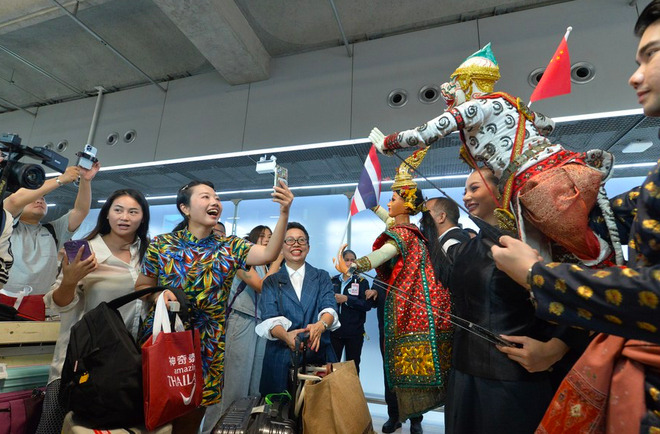
Chinese tourists are flocking to Southeast Asia.
Johnny Nee, director of Easy Going travel company (Perth, Western Australia), acknowledged Australia's declining position compared to Southeast Asia.
He stated that during the recent Lunar New Year season, his business only recovered to 40% of its pre-COVID-19 levels. In contrast, Singapore, Thailand, and Malaysia saw tourist numbers and spending surpass even pre-pandemic levels.
"The economic situation in China is not very certain, and Chinese tourists are considering prices, which means they will prefer to go to places that are easier to access and offer more enjoyable travel experiences," he said.
According to him, the cost for tourists, including airfare and accommodation, has increased by 20% compared to the pre-pandemic period. "The visa-free policies from Thailand and Singapore are quite attractive, and I personally think that has helped draw Chinese tourists away from Australia," he added.
The data also suggests that the economic situation may have reduced Chinese tourists' spending on popular, traditional destinations like Australia. During this year's Lunar New Year, Chinese tourists accounted for 26% of visitors to Australia. This is a modest figure compared to over 50% before the 2019 pandemic. Domestic tour companies in Australia have recorded revenue that is more than 50% lower than in 2019.