VI
VI


Summer was at its peak; it was just past 9 a.m., but after driving for a while, when I opened the car door to take pictures of the lotus and water lily ponds blooming along the roadside, my glasses immediately fogged up due to the extreme temperature difference.
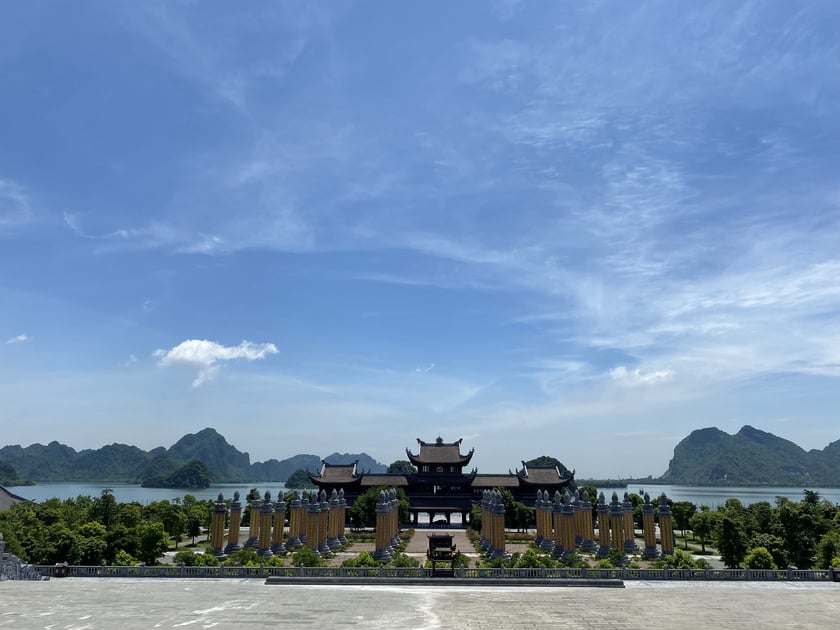
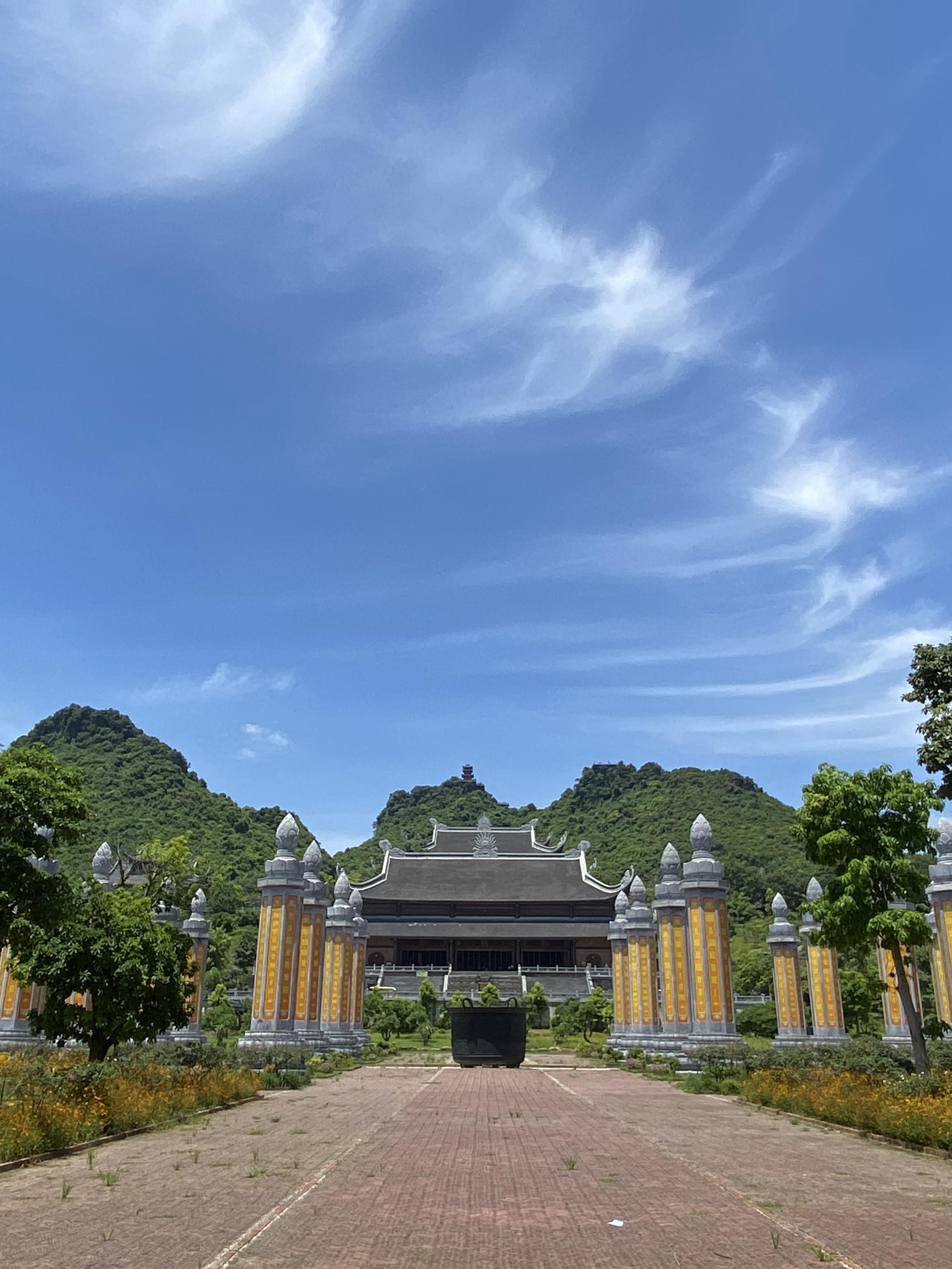
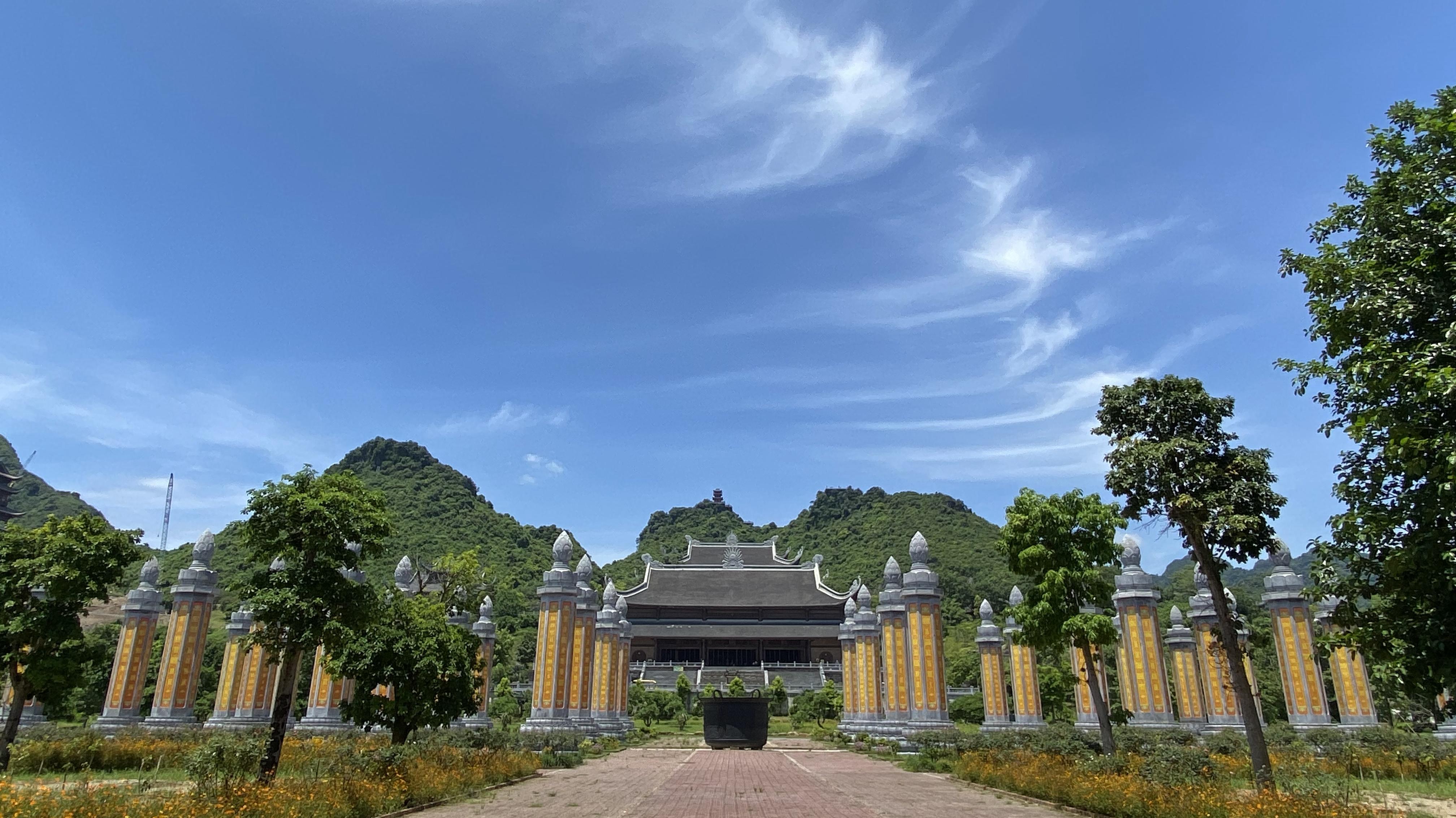
The Tam Chuc Pagoda complex makes a strong impression on visitors.
Tam Chuc Pagoda is located in Ba Sao town, Kim Bang district.
Our first destination was Tam Chuc Pagoda, located in Ba Sao town, Kim Bang district. Being somewhat averse to spiritual tourism, I hesitated for a long time before finally visiting Tam Chuc Pagoda, just going "to see what it was like." But upon arrival, I was truly captivated. From a small pagoda surrounded by lakes and swamps, everything has been invested in and improved significantly, becoming much more beautiful. The scenery is like a miniature Ha Long Bay on land. The pagodas are arranged harmoniously, and from afar, they appear faintly visible amidst the clouds, water, mountains, and hills, creating a rather mystical atmosphere.
We only managed a short tour from 10:00 to 11:40 before having to leave. On the way out, we took a ride on the tram to admire the surroundings. The scenery was peaceful, beautiful, clean, and pristine. Mountains, water, trees, clouds, flowers, and grass blended together in the shimmering midday sun, with the wind whistling in our ears. It felt truly worthwhile braving the sun and wind for these few dozen minutes of pure bliss.
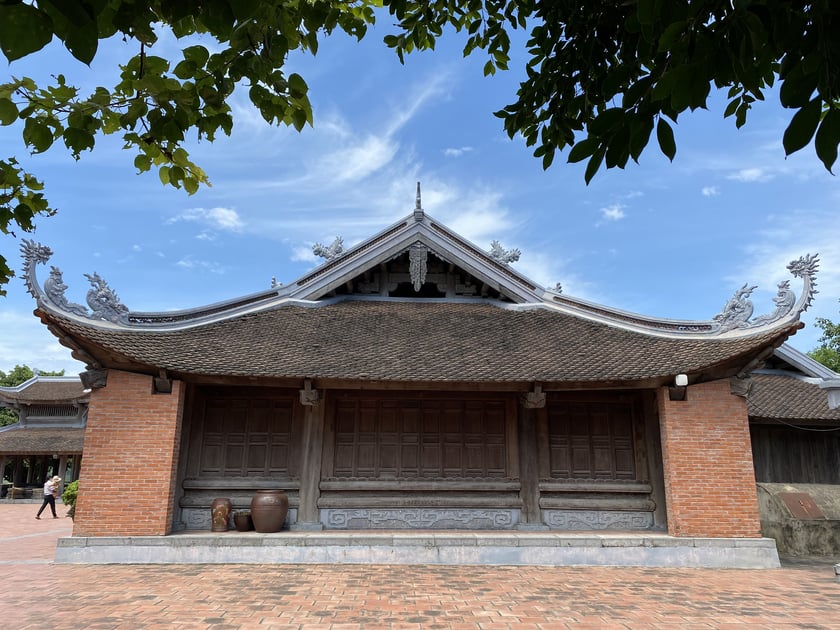
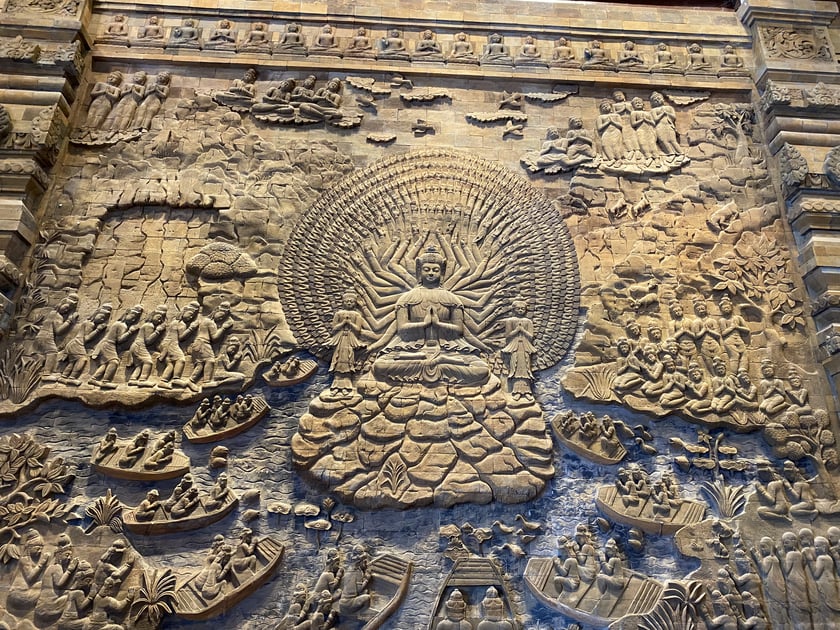
The patterns and designs are incredibly impressive and intricate.
Tam Chuc Pagoda is truly a rare example of man-made structures enhancing the beauty, scale, rationality, and grandeur of nature. I heard that the investor behind Tam Chuc Pagoda is also the main company that "transported stones to build the Spratly Islands." I truly admire and respect entrepreneurs like that.
Địa Tạng Phi Lai Temple - a temple located in Liêm Sơn commune, Thanh Liêm district.
After lunch, we visited Địa Tạng Phi Lai Temple – a temple in Liêm Sơn commune, Thanh Liêm district. We were truly surprised by this temple. Its prime location, far from the main road to maintain the tranquility of a place of worship, with its entrance passing through rice fields and its back against a hill covered in evergreen pine forests, is truly remarkable. The scenery is beautiful and well-maintained, a stark contrast to the bustling and crowded temples of the North. The peaceful and elegant architecture, meticulously preserved, gives visitors a feeling of ease, relaxation, nostalgia, and... a touch of surrealism as they stroll through the temple.

What impressed me most were the layers of fine gravel scattered under the stone paths leading to the main gate and on either side of the temple. Even under the scorching sun, the nuns, wearing their hats, diligently swept the surface with brooms, leveling the gravel whenever a visitor accidentally stepped on it.
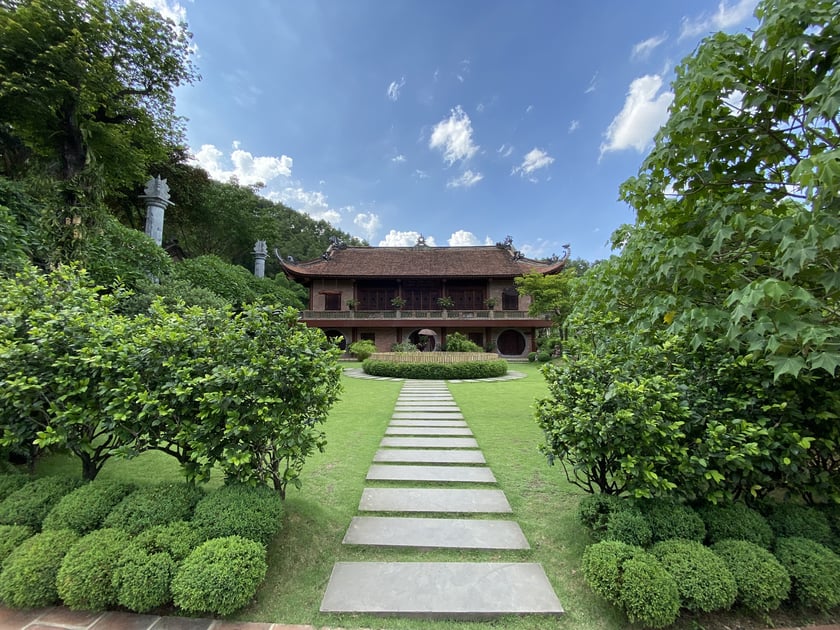
The grounds of Địa Tạng Phi Lai Pagoda are lush and green.
Perhaps there are not many temples left that truly embody Buddhist principles, offering such peace and tranquility. I hope the temple will forever retain its serene scenery and tranquil atmosphere, so that each time I have the chance to visit, I can walk barefoot throughout the temple grounds, admiring the beautiful shrines nestled amidst ponds covered with floating water hyacinths and the sound of splashing fish, with the faint sound of prayers echoing in the distance...
While driving from Tam Chuc Pagoda back to Phu Ly City, I saw a sign on the side of the road that read: Ba Danh Pagoda – 1 km. I considered going in, but it was just past noon – the time when, according to traditional beliefs, one shouldn't visit temples and shrines – so I decided against it. Besides, I was hungry and tired, and the sun was scorching hot. My shirt kept getting soaked with sweat, then drying, then getting wet again, I don't know how many times.
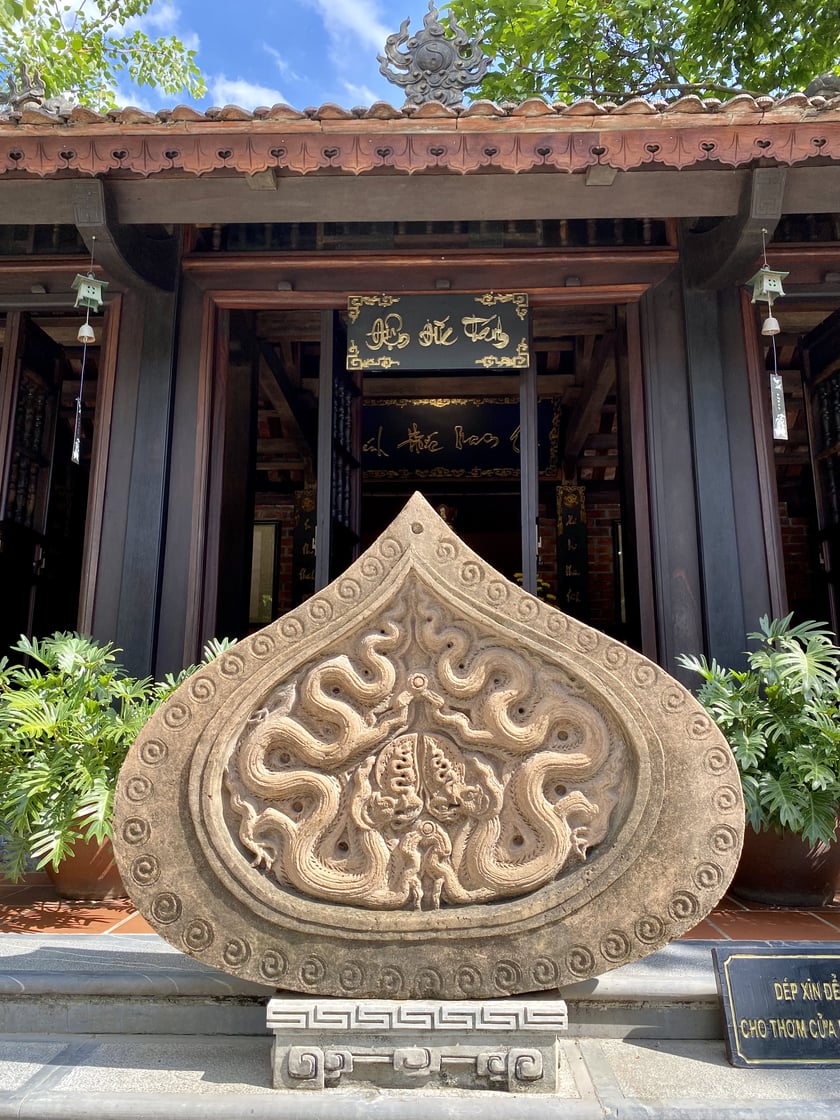
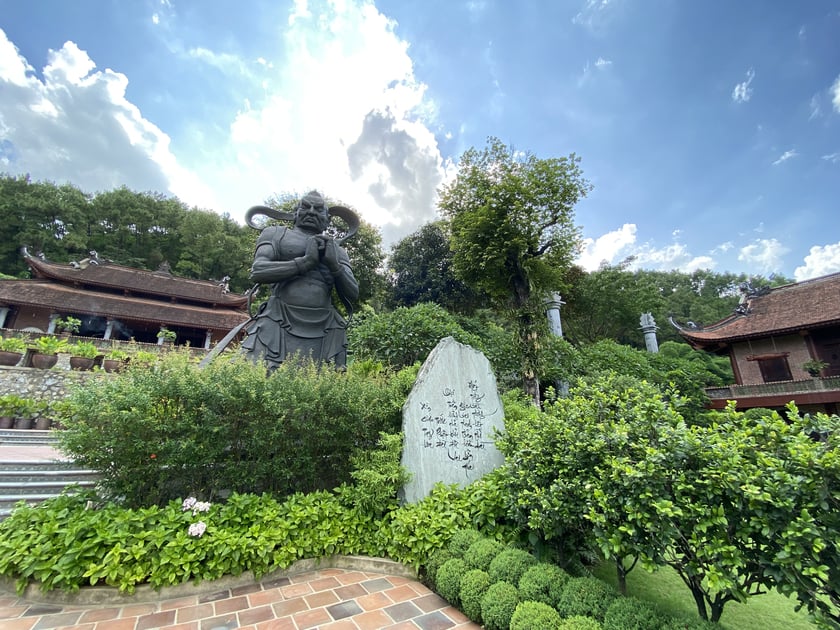
The temple boasts many beautiful statues and decorative objects.
Ba Danh Pagoda - located in Danh village, Ngoc Son commune, Kim Bang district
Returning from Dia Tang Phi Lai Pagoda as dusk was falling, we arrived at Ba Danh Pagoda – located in Danh village, Ngoc Son commune, Kim Bang district – situated beside the famous Day River. What particularly fascinated me was that the exterior of the main hall of the pagoda was covered with woven bamboo screens – a characteristic style of old Northern Vietnamese houses – to protect against the harsh sun and rain.
I've probably visited hundreds of temples, but this stone bell in Ba Danh Temple is the first I've ever seen. Bells (part of the set of bells/drums found in every temple) are usually cast in bronze; carving them from stone is very difficult. Choosing a large, thin stone like this is a painstaking task, and carving it so that it doesn't break and is still as intricately carved as this is truly admirable! The sound of a stone bell when struck will surely not be like that of a bronze bell, but rather clear and resonant, like the sound of the stone xylophones of the Central Highlands.
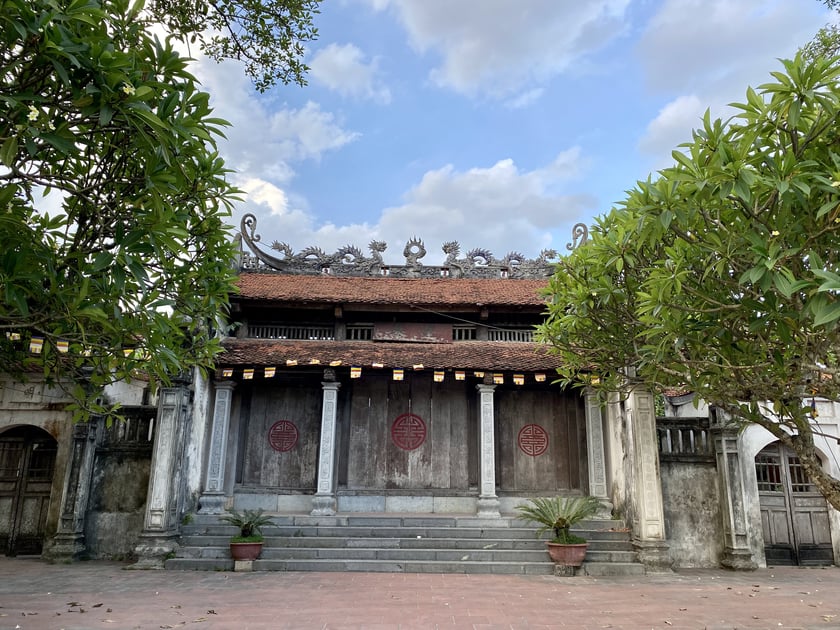
Finally, I got to see the place mentioned in the famous folk proverb: "As deserted as Ba Danh Pagoda".
Finally, I got to see the place mentioned in the famous folk proverb: "As deserted as Ba Danh Pagoda," and I have to admit it was truly deserted. Walking around the spacious pagoda, I didn't encounter a single person except for a group of young people looking for a spot to... take photos, along with the rustling of leaves from the nearby Ngoc Mountain.
The capital of Ha Nam province is Phu Ly City, and although I've passed through it many times, this is my first time visiting. My impression of Phu Ly is that it's a fairly clean city. Cities near the sea or rivers are usually quite clean, but they are also small. Located in the second smallest province in the country (Ha Nam is only larger than Bac Ninh), Phu Ly's modest size is understandable. Ha Nam has only one city, one town, and four districts with a population of less than one million people, but it can be proud of its peaceful scenery, prosperous villages, rivers carrying rich alluvial soil that have inspired poetry and music, ancient and tranquil temples, and magnificent and beautiful spiritual and cultural heritage.