VI
VI


.jpg.jpg)
Text and photos: Duong Thuy
Delicious flavors of steamed banana cake, fried bananas, and grilled sticky rice bananas.
These three snacks all originated in the southwestern region of Vietnam during the land reclamation period. Long ago, the fertile alluvial soil of the western region was so abundant that banana trees grew in lush green thickets. People would paddle boats on the rivers and canals, catching shrimp and fish, and whenever they saw a bunch of ripening bananas, they would cut them and hang them in the kitchen rafters. At each meal, people would break off bananas and put them in their rice bowls, eating them with grilled dried fish or fish stewed with pepper as a convenient substitute for vegetables.
When bananas ripen completely, besides pressing them and drying them for later consumption, people in the Mekong Delta also simmer and mix ripe bananas with coconut milk, ginger, and finely ground roasted peanuts to create huge, overflowing trays of banana candy. When guests arrive, the host cuts a whole plateful with a knife and offers it to them to enjoy. Gradually, clever housewives creatively invented steamed banana cake.
.jpg_2.jpg "Banhchuoihap(5).jpg_2.jpg")
With basic ingredients like ripe bananas, rice flour, tapioca flour, shredded coconut, and coconut milk, on a summer afternoon in the countryside of yesteryear, the girls of the Mekong Delta would simply stand across the pond and call out, "Let's make banana cake together later!" And so, the girl would quietly go into the kitchen, pick about twenty ripe bananas from the counter, slice them thinly, and mix them with the aforementioned flours and coconut milk until smooth, carefully seasoning with a little salt and sugar. She would then add the thinly shredded coconut pieces to the light yellow, fragrant batter. And just like that, the ingredients for the cake were complete.
Gradually, people in the Mekong Delta created fried bananas and grilled sticky rice-wrapped bananas. The best part is that the bananas used for these dishes must be Siamese bananas to create delicious, healthy, and nutritious snacks. On rainy, slightly chilly days, enjoying a hot, crispy fried banana is simply incomparable. To make fried bananas, vendors select slightly soft, ripe bananas and place them on a clean cutting board lined with plastic. Next, they use another cutting board to flatten the banana; using a wooden ladle, they lift the banana off the board, place it on the ladle, and dip it into a pre-mixed batter consisting of rice flour, wheat flour, tapioca starch, crispy powder, sugar, and salt according to specific measurements. After dipping the banana evenly, they gently drop the battered banana into a pan of boiling oil over a fire. They carefully adjust the heat so that the batter coating the banana turns golden brown. Quickly, the vendor removes the banana and places it on a rack to drain the oil. At this time, she waits for regular customers who are addicted to the food to come to her stall and enjoy it.
.jpg_4.jpg "Chuoichien(8).jpg_4.jpg")

Besides fried bananas, Saigonese people are also fond of grilled sticky rice-wrapped bananas. Compared to steamed or fried bananas, sticky rice-wrapped bananas seem more elaborate because the sticky rice must be steamed until cooked along with shredded coconut. Then, the vendor mixes the sticky rice with a little coconut milk until it's well combined; ripe bananas are peeled, soaked in a bowl of slightly warm water with a little salt, then drained. Skillfully, the vendor pinchs a ball of sticky rice into a suitable size, rolls the banana into the sticky rice mixture, making it round and beautiful. Wrapping the banana in banana leaves, the vendor fans a charcoal grill, but not too hot to prevent the banana from overcooking and losing its flavor. The vendor then turns the bananas on the grill to ensure even cooking… When a customer orders, the vendor cuts the banana into quarters and pours a cup of coconut milk over it. The rich, creamy taste of coconut, the chewy aroma of sticky rice, and the distinctive sweetness of the banana will captivate every diner.
Simple orange cake, swallow's nest cake, beef cake
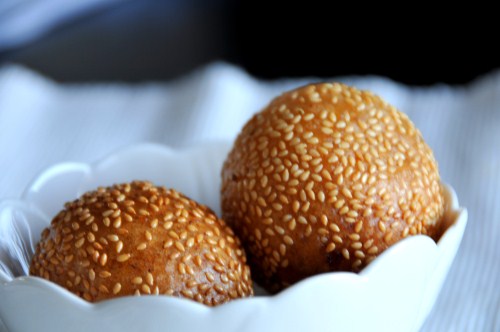
With their simple nature, when creating the orange cake, people in the Mekong Delta immediately named the round cake after an orange in their garden. Thus, the cake is called "orange cake," but it doesn't actually contain any fruit.
At first glance, orange-flavored cakes look quite similar to fried cakes from Northern Vietnam. In fact, the ingredients for orange-flavored cakes are glutinous rice flour mixed with regular rice flour according to a recipe that ensures the cake is always crispy when fried. Fried cakes, on the other hand, are made entirely of glutinous rice flour, making them very soft and soggy. The filling is usually mashed mung beans, and the surface is covered with a layer of golden-brown caramelized sugar syrup, sprinkled with fragrant roasted sesame seeds. Orange-flavored cakes have a crispy, slightly sweet taste that is very appealing.
The swallow's nest cake also originated in the Mekong Delta and was brought to Saigon by people from the countryside. The ingredients for making swallow's nest cake are simple: rice flour, a little tapioca flour, coconut milk, and sugar are mixed together until thick and then fried until golden brown. The most difficult part of making swallow's nest cake is frying it so that it expands into the most even and beautiful swallow's nest shapes. To fry this cake, vendors pour cooking oil into a small cast-iron pan. When the oil is hot, they carefully pour the batter into the pan, pouring quickly and decisively so that the batter sticks together to form a round shape without spilling. When the center of the batter puffs up, the edges curl and turn golden brown, forming an inverted cone shape. The cake is then removed from the pan, placed on paper towels to absorb excess oil, and served on a plate.
.jpg_3.jpg "taiyen(1).jpg_3.jpg")
As for rice cakes (bánh bò), there's more variety. People in the Mekong Delta have many ways to make them, such as steamed rice cakes, bamboo root rice cakes, steamed rice cakes in a pan, and baked rice cakes... It's said that rice cakes came to the Mekong Delta with the Teochew people from China. Over time, this dish has been greatly improved, suitable for snacking and also for savory feasts (rice cakes with roasted pork).
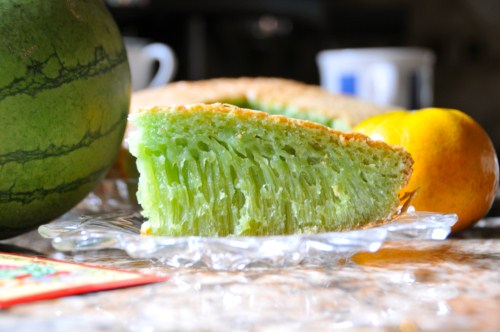
The ingredients for making banh bo (rice flour cake) are simple, including rice flour, sugar, coconut, and yeast. However, whether a cake is delicious or not depends on the skill of the dough fermentation. Initially, there was only steamed banh bo served with banh tieu (a type of Vietnamese pancake), but gradually, people in the Mekong Delta invented baked banh bo (some places even add milk, so it's called baked milk banh bo). Very quickly, this dish became a favorite snack, especially for children and students.
When it rains, sitting in a small, cramped office, a bag of fragrant steamed rice cakes is enough to tempt you. At this time, these simple, rustic steamed rice cakes, swallow's nest cakes, or orange cakes all possess a strange allure as you let your mind wander and savor a delicious, fragrant piece, reminiscing about your hometown in the Mekong Delta during your school days.
Enjoy the food at:
Delicious Restaurant
160, Pasteur, Ben Nghe Ward, District 1, Ho Chi Minh City. Tel:(08)38277136
26 Tran Hung Dao, Hanoi. Tel: (04) 3933 6133
http://www.quananngon.com.vn
quananngon@hcm.vnn.vn