VI
VI


The tomb of Sister Sáu commemorates the heroic female hero of the People's Armed Forces, Võ Thị Sáu. This tomb is associated with the historical story of a great girl who lived indomitably and sacrificed herself for the independence and freedom of the nation at the young age of 18. In 1950, the French colonialists held a trial and sentenced her to death even though she was not yet a minor. On January 23, 1952, the youngest death row prisoner on Côn Đảo Island refused to be blindfolded by the enemy and sang the "Marching Song" loudly. When the enemy opened fire, Võ Thị Sáu shouted: "Down with French colonialism! Long live independent Vietnam! Long live President Ho Chi Minh!" That was at 7:00 AM on January 23, 1952, when she was not yet twenty years old.
Her grave lies beneath a bare-trunked poplar tree, its branches pointing north. The grave once lacked a headstone, only a rusty sheet of metal inscribed with her prisoner number. As time passed and more people visited, a name was added to the headstone. Vo Thi Sau's grave in Section B of the Hang Duong Cemetery has been rebuilt with solemnity, ensuring that international tourists visiting Con Dao will no longer be surprised if they wish to learn about her.
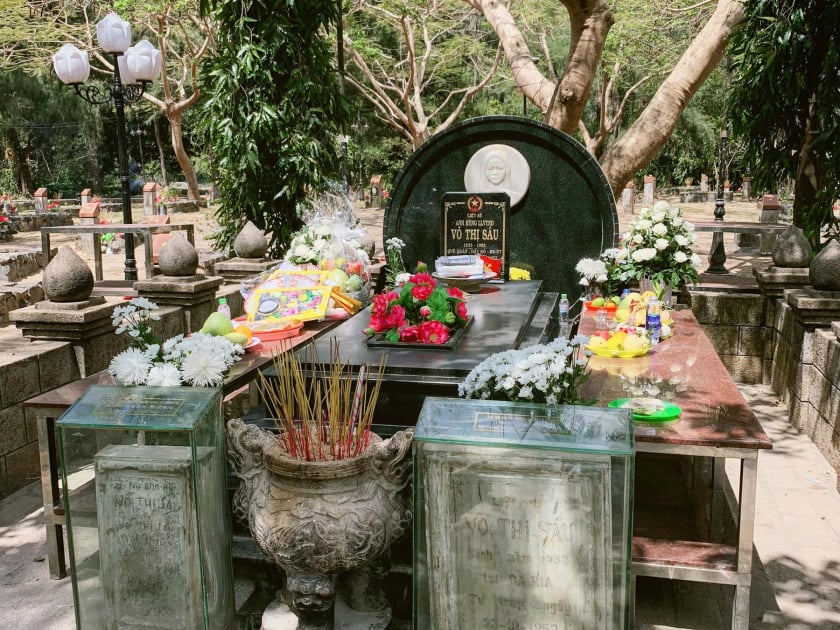
The tomb of Vo Thi Sau in section B of Hang Duong Cemetery has been rebuilt with great solemnity.
The deity of the people of Con Dao
Unlike other cemeteries, Hang Duong Cemetery is allowed to open at night. From morning till night, regardless of weekdays or holidays, the cemetery is always crowded with pilgrims. And the tomb of martyr Vo Thi Sau is the most popular spot for people to pay their respects at Hang Duong Cemetery. The cemetery is bustling, sparkling with lights, filled with incense smoke, and combined with the cool sea breeze and mist, creates a mystical atmosphere that leaves a special and unforgettable feeling.
In Con Dao, visitors will hear legends about Vo Thi Sau. These sacred and mysterious stories, imbued with the admiration and reverence of East Asian traditions for national heroes who have been immortalized as deities, resonate deeply. Locals call her "Miss Sau" or "Mrs. Sau." Whenever they face difficulties or significant life events, they visit her grave to offer incense and prayers. Those who travel for work often pray for a safe and fortunate journey. People from the mainland frequently visit to pray for unfulfilled wishes, and each year they return to offer thanks after their prayers have been answered.
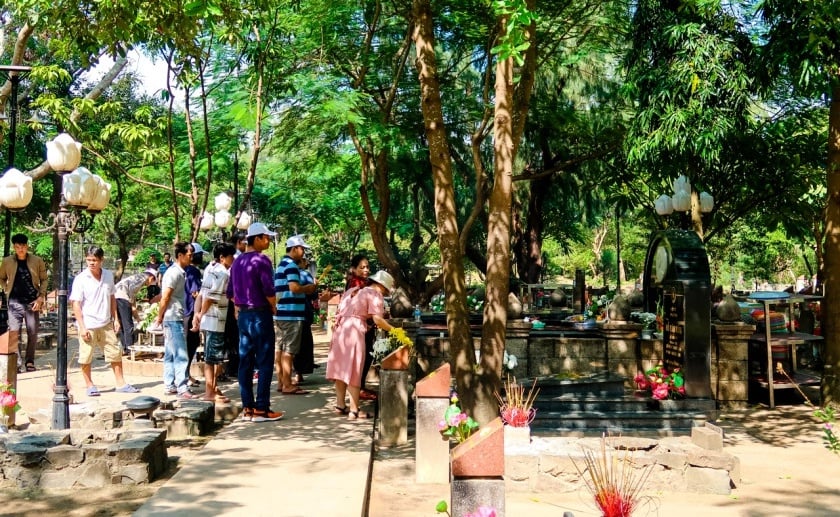
Whenever the people of Con Dao face difficulties or experience important events in their lives, they go to her grave to light incense and offer prayers.
Time to visit Co Sau temple
In Con Dao, on the 23rd day of the first lunar month every year, the anniversary of Co Sau's death is jointly organized by the State and the local people. Ms. Bui Thi Ngoc Huyen, Marketing & Communication Manager of The Secret Con Dao Hotel, said: "This is also the time that attracts the most tourists to Con Dao. Many tourists also choose the seventh lunar month to make a pilgrimage to Con Dao to perform the ceremony of atonement for sins and the Vu Lan festival of filial piety. And the end of the year, from the tenth to the twelfth lunar month, is the time many people choose to go to thank Co Sau. However, as long as you are sincere and have a heart directed towards this sacred place, tourists can go to worship here at any time of the year."
Like other sacred sites, visitors to the tomb of Co Sau need to be aware of the regulations set by the cemetery management. Ms. Tran Nguyen Quynh My (32 years old), currently residing in Ho Chi Minh City, is a visitor who has visited Co Sau many times. She has learned from the people of Con Dao and long-time pilgrims about the unwritten rules that anyone visiting Co Sau should know.

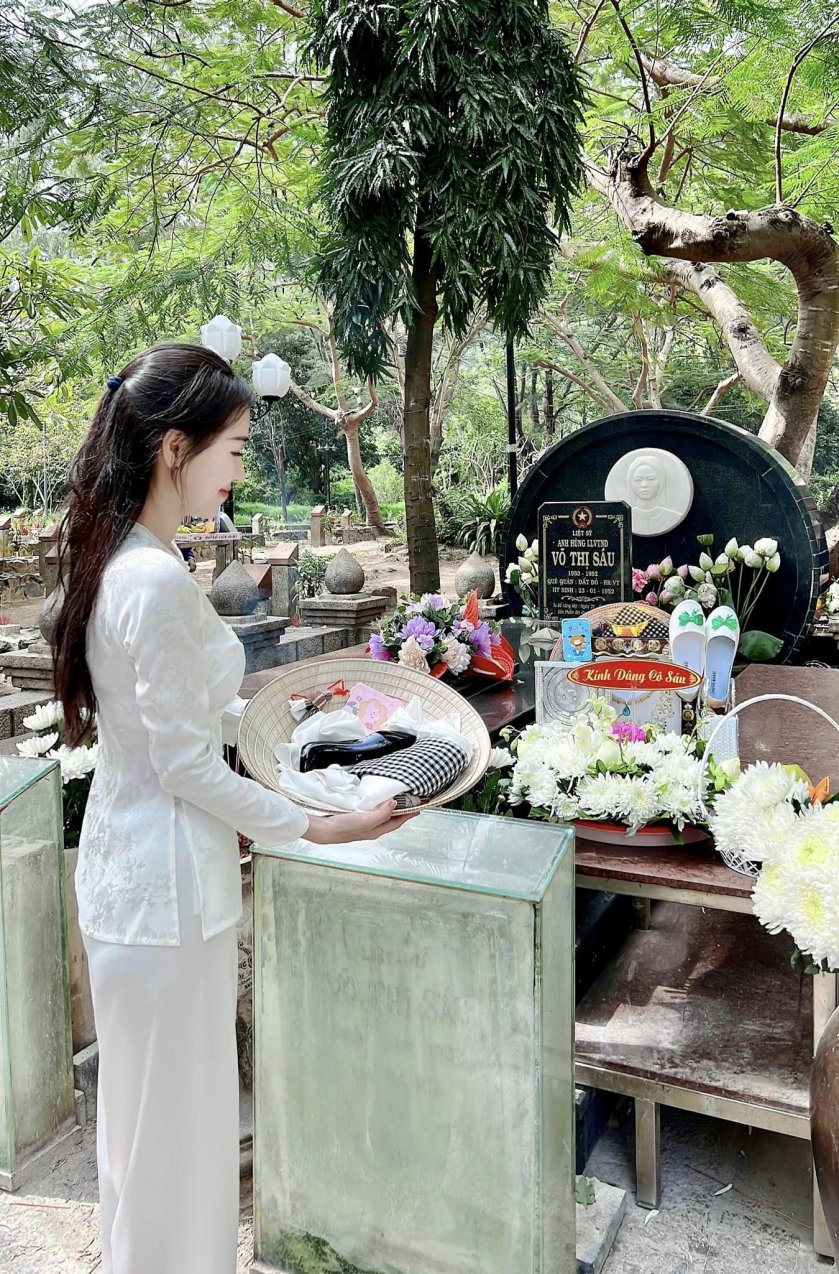
Ms. Tran Nguyen Quynh My (32 years old), currently residing in Ho Chi Minh City, is a tourist who has experienced visiting Co Sau temple many times.
Rules to follow when visiting the shrine of Co Sau.
According to Ms. My, to begin your pilgrimage, choose polite, clean, and modest clothing to avoid detracting from the sacred atmosphere. She also shared a note that many first-time visitors to Hang Duong Cemetery often overlook: "Before going to the tomb of Ms. Sau, you need to pay respects and light incense for the revolutionary soldiers at the memorial monument in Hang Duong Cemetery. The offerings at the memorial monument include fruits, candles, incense sticks, and paper soldier uniforms. This is a mandatory note for every pilgrim visiting here."
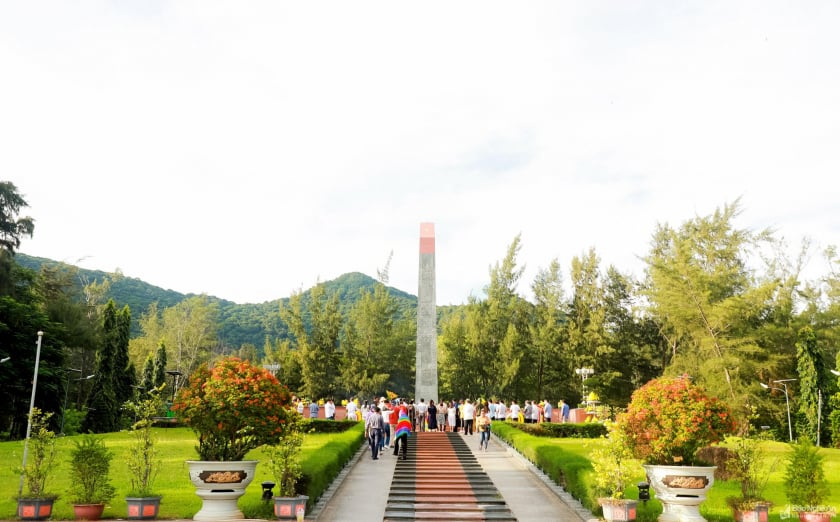
Before visiting the tomb of Co Sau, you need to pay respects and light incense for the revolutionary soldiers at the memorial monument in Hang Duong cemetery.
You can visit the tomb of Vo Thi Sau any day of the week because Hang Duong Cemetery is always open, including weekends. Visitors usually visit the tomb in the evening from 7 PM to 10 PM because, for the people of Con Dao, this is a sacred time. Ms. My also suggested: "Evenings are very crowded, so you can choose daytime hours to offer prayers, make offerings, and talk to her. If visitors go in the evening, please be mindful to avoid crowding and maintain the solemn atmosphere of the cemetery."
Ms. My also noted: "Absolutely do not place offerings on the tomb where Ms. Sau is buried, as this would be disrespectful. Many first-time visitors also place offerings on the surrounding tombs. There are long tables on either side of Ms. Sau's tomb and a tray behind the tomb for visitors to place their offerings, so you need to be mindful of your actions, otherwise you will be considered disrespectful and lacking sincerity."
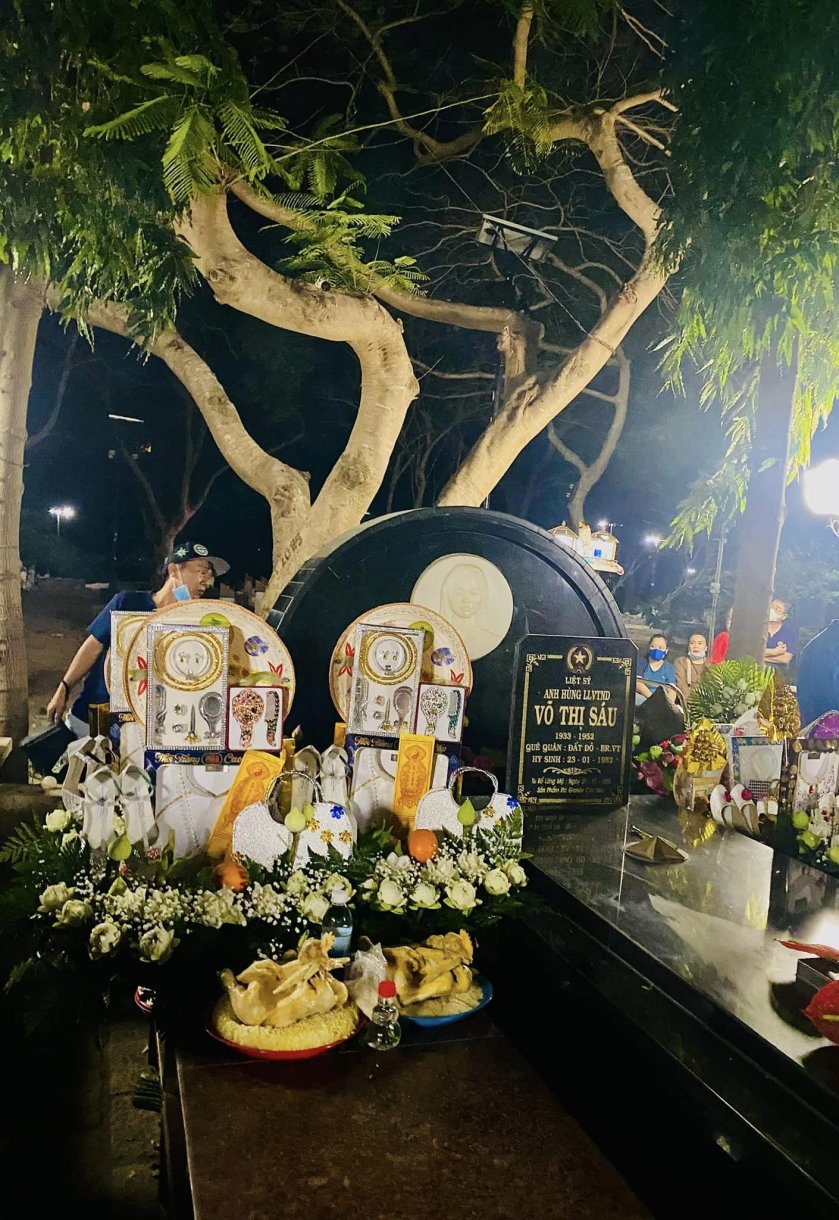
Visitors usually visit the graves in the evening, from 7 PM to 10 PM, because for the people of Con Dao, this is a sacred time.
For each person, the offerings to Co Sau can vary. You can prepare them yourself or buy them at shops in Con Dao. The elaborateness of the offerings also depends on the experience of the worshipper and their financial ability. Visitors only need to ensure they include the following items: a conical hat, a stack of gold and silver coins, a set of mirror and comb, a stack of gold bars, bottled water, a bundle of incense sticks, and a pair of candle holders. In addition, Ms. Tran Mai Sen (49 years old), a local resident who specializes in selling offerings, said: "Co Sau really likes white flowers and sapodilla, also known as egg fruit. This is a fruit that Co Sau loved to eat when she was a child. Therefore, the offerings here cannot be without white chrysanthemums, white roses, white lotus, and sapodilla."
Ms. Sen also mentioned that many more elaborate visitors will offer real offerings, including a white ao dai (traditional Vietnamese dress) or a traditional Vietnamese outfit, or even real gold jewelry. Some tourists even wish to offer additional offerings of meat and fruit; however, these real offerings are not burned and will be stored at the memorial house. Therefore, you need to consult with the cemetery management.
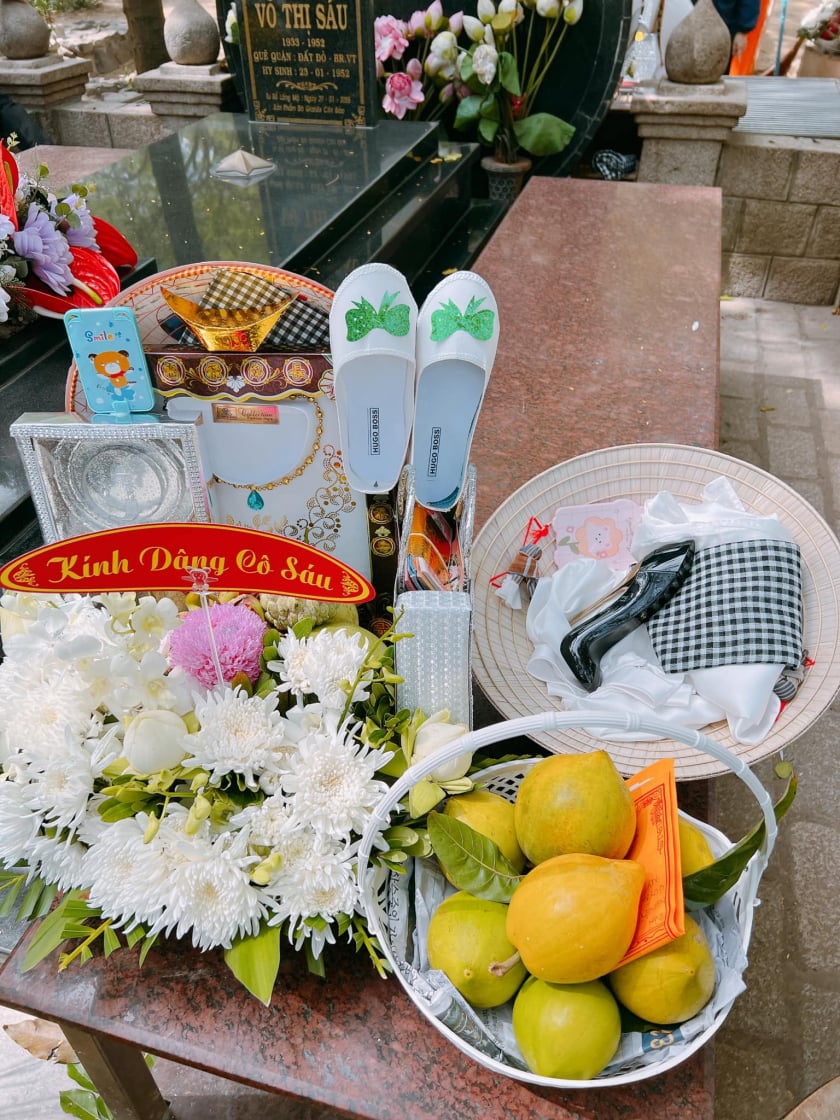
Many more elaborate visitors will offer real gifts, which may include a white ao dai (traditional Vietnamese dress) or a traditional Vietnamese outfit, or even jewelry made of real gold.
Visitors to the tomb will turn their conical hats upside down and place their prepared offerings inside before putting them on the tomb. Long-time pilgrims also note that when praying to Sister Vo Thi Sau, it's important to be concise and to the point, only praying for peace, health, and success in work, and avoiding prayers for wealth or love. If you don't know the prayer text, you can sincerely pray, stating your full name and accurate address. After lighting incense and praying, you will lower the offerings so that those behind you can offer their own offerings to Sister Vo Thi Sau.
Only the paper offerings (gold and silver) that visitors need to take to be burned. Candles and flowers are allowed to be left around the grave. Many pilgrims will ask for a few flower petals to take home and burn in their bathwater as a ritual to wash away bad luck. Mirrors and combs, after the offerings are made, are taken home; according to local belief, combing hair with a comb obtained from the offerings to Co Sau will bring good luck, and the mirror will be used for self-reflection when feeling anxious or troubled. After offering their prayers, pilgrims will light incense at the surrounding martyrs' graves.
Ms. Quynh My also said: "Usually, after visiting Ms. Sau, if your prayers are answered 70-80%, you should arrange to give thanks as soon as possible. And you must ask in a reasonable way and not be greedy."
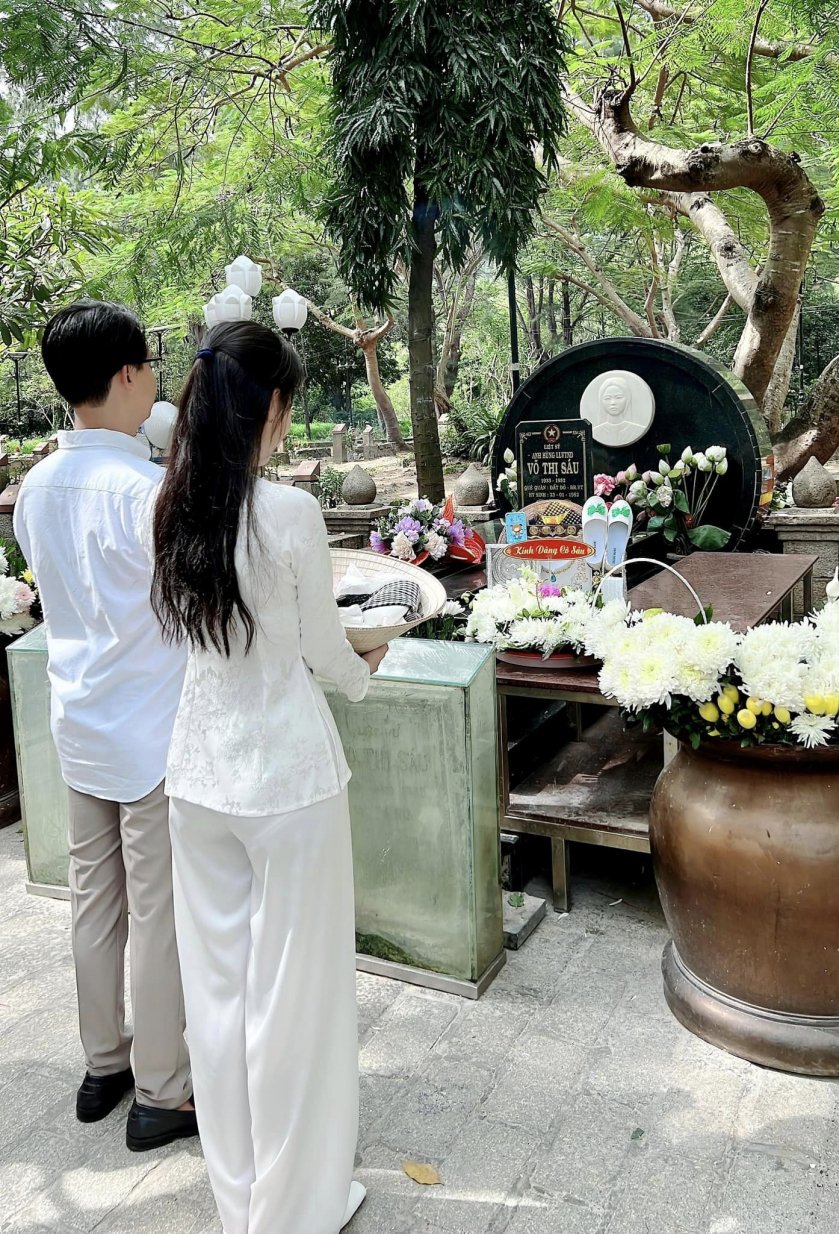
Long-time pilgrims also note that when praying to Sister Six for blessings, one should be concise and to the point, only praying for peace, health, and work, and avoiding prayers for wealth or love.
Things to note when visiting Con Dao
One of the taboos when visiting Co Sau's shrine is littering, especially in pilgrimage tourist destinations like Con Dao.
Furthermore, when visiting the tomb of Ms. Sau, visitors should absolutely refrain from using foul language, swearing, speaking loudly, laughing, or engaging in any disrespectful behavior. This is a sacred place, where revolutionary soldiers who bravely fought for the peace of the nation and made glorious sacrifices are laid to rest. Therefore, if there are many people, visitors should queue, avoid pushing and shoving, walk softly, speak quietly, and act gently to show respect and gratitude to the deceased and to create a beautiful cultural atmosphere in this sacred place.