VI
VI


The report, compiled by the Institute for Economics & Peace, assesses based on 23 indicators across three groups: social security, domestic and international conflict, and the level of militarization. While not a travel ranking, it provides useful reference data for those planning to travel abroad.


Among Asian countries, Singapore ranks 8th globally. Japan is 10th, Malaysia 12th. Bhutan is 16th, Mongolia 34th. Vietnam is 41st, South Korea 57th, Laos 58th, Sri Lanka 67th, and Indonesia 69th.
When considering the broader Asia-Pacific region, New Zealand remains the most peaceful country in the region, ranking second globally, only behind Iceland.
According to the report, Singapore's score remained virtually unchanged from last year, dropping only slightly by 0.001 points. The island nation continues to be cited as a benchmark for safety and stability in the region, thanks to its low crime rate and robust public security system.

Singapore ranks 8th globally in the Global Peace Index 2026, leading the Asian region.
Maintaining its position as a world-leading safe destination for decades is no accident. Singapore has built a solid security "fortress" based on a harmonious combination that creates an environment and travel experience of absolute peace of mind for anyone who sets foot on this island nation.

With violent crime rates remaining below 0.5 per 100,000 people, Singapore is currently one of the safest countries on the planet. To achieve this, the nation has consistently pursued a "zero tolerance" approach to all wrongdoing. Its legal system is considered one of the strictest in the world, particularly for drug-related and weapons-related offenses, where the highest penalties can include the death penalty.
Interestingly, discipline isn't limited to serious offenses; minor behaviors like littering, chewing gum in public, or crossing the street improperly all face appropriate fines. This consistency in law enforcement has fostered a culture of compliance, where citizens' self-awareness is paramount.

Besides strict penalties, Singapore has built a comprehensive security network, combining modern surveillance technology with the strength of the community. The Singapore police force is not only well-trained and professional but also enjoys the absolute trust of the people.
In particular, the success of the "Community Watch Scheme"—a collaborative initiative between the police and the National Crime Prevention Council launched in 1999—has mobilized thousands of volunteers to patrol residential areas. This network creates a network of "eyes and ears" everywhere, helping to prevent potential threats from afar.
Singapore's crime reporting culture is also among the highest in the region, demonstrating the strong bonds and shared sense of responsibility within the community in building a safe society.
Political stability and transparency in national governance are the third factors contributing to the sustainable prosperity of the island nation of Singapore.

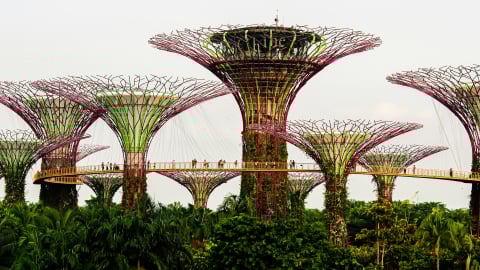
Thanks to its tight security surveillance system and low crime rate, this island nation consistently maintains its position as one of the world's safest destinations.
For international tourists, the aforementioned factors have transformed into an ideal travel environment. When choosing Singapore as a destination, tourists can fully enjoy nighttime strolls at Marina Bay or explore the food markets without worrying about pickpocketing or other forms of scams common in other tourist hotspots.
Singapore's public transportation system is not only modern and conveniently connected but also maintains a high level of safety 24 hours a day. For first-time international travelers, this peace of mind is crucial, allowing them to confidently explore and fully enjoy the local culture. Singapore doesn't just "sell" beautiful scenery; it "sells" peace – a luxury commodity in a modern world facing numerous uncertainties.