VI
VI


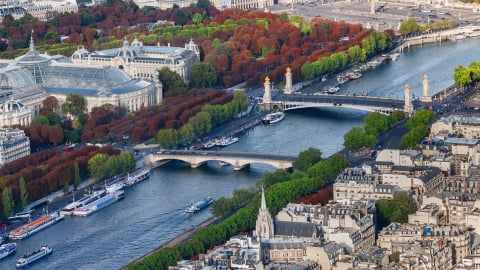
The three swimming areas on the Seine River – Bercy, Bras Marie, and Grenelle – officially reopened on July 4th, just as Paris was preparing for its third heatwave of the summer. At the end of June, the city recorded its hottest day on record, with temperatures exceeding 40 degrees Celsius. This marks the second consecutive summer that residents and tourists have been allowed to swim in the river, which had been closed to swimming for over a century.


All swimming activities are free, no reservations required, and open daily until August 30th. Bercy Beach in District 12 has the largest capacity, accommodating 600 people at a time, with 300 allowed in the water. It consists of two pools, measuring 35x12.5 m and 67x11 m, located under the Simone-de-Beauvoir pedestrian bridge, and is open from 11 am to 9 pm.
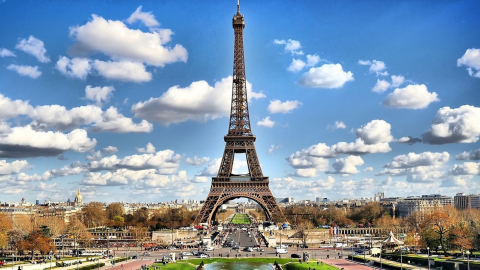
Bras Marie Beach, located at the foot of the Louis-Philippe Bridge in the heart of historic Paris, opposite Saint-Louis Island, is open from 8 am to 6 pm and accommodates a maximum of 150 people. Grenelle Beach, in the 15th arrondissement, opposite Swan Island and the Eiffel Tower, has a shallow pool (40-60 cm deep) specifically for families with young children and can accommodate 200 people; its opening hours vary depending on the day of the week to allow for boat traffic.

Three swimming pools on the Seine River have reopened for the second consecutive summer.
Before entering the water, visitors are required to shower using the showers provided at the beach. Lockers are available at all three locations; however, Bras Marie beach does not have separate changing rooms, so swimmers should bring their own swimwear from home; the lockers require a 1 euro coin. All three beaches have accessibility for people with disabilities, along with access chairs and lifts to assist with entry into the water at Grenelle and Bras Marie.
Over 300 years of connection with the river, then parting ways.
Swimming in the Seine is not a new idea. Since the 17th century, Parisians have been accustomed to swimming directly from the river's natural banks, even naked, leading the authorities to issue the first ban in 1716 for reasons of public decency. In the 18th century, floating swimming pools appeared: flat-bottomed boats covered with tarpaulins, with ladders allowing people to enter and swim in a designated, safe area in the middle of the river.
By the 19th century, swimming in the river had become a fashionable pastime. Many riverside establishments opened restaurants, cafes, and swimming lessons, most notably Piscine Deligny, which hosted swimming events at the 1900 Paris Olympics.


Since the 17th century, Parisians have made it a habit to bathe in the river directly from its natural slopes.
But pollution wiped out that tradition. In the mid-20th century, the water quality of the Seine River deteriorated drastically. By the 1970s, more than half of the region's wastewater was discharged directly into the river without treatment, turning the Seine into a "giant sewer" flowing through the city. In 1970, scientists classified the Seine as "biologically dead," with only three fish species able to survive.
In 1988, when running for re-election as Mayor of Paris, Jacques Chirac pledged to swim in the Seine River for three years to prove it was clean. This promise was reiterated on television in 1990 but never materialized, becoming a source of amusement in France. In 2013, the Paris triathlon was canceled because the river water did not meet safety standards for athletes.
The project costs over 1 billion euros and its "heart is a giant underground reservoir".
Chirac's unfulfilled promise was only "revived" in 2016, when Mayor Anne Hidalgo included the goal of cleaning up the Seine River in the campaign to host the 2024 Paris Olympics. The city spent more than 1 billion euros on one of the largest environmental remediation projects in Paris' history: thousands of riverside homes were connected to the modern sewer system for the first time, and wastewater treatment plants were comprehensively upgraded.
At the heart of the project is a cylindrical concrete reservoir near Austerlitz station, 50 meters in diameter and 30 meters deep, with a capacity of 50,000 cubic meters of rainwater – equivalent to about 20 Olympic swimming pools.

The Seine River was once considered an open sewer, too dangerous for swimming.

The major river flowing through Paris will become a highlight of the 2024 Olympics.
The old sewer system, built in the 19th century under Baron Haussmann, collected rainwater and wastewater in the same pipe, so whenever there was heavy rain, excess water would overflow directly into the river. Now, this water is channeled into the Austerlitz reservoir, stored underground until the weather stabilizes, and then gradually pumped to treatment plants outside the city.
According to Parisian authorities, the number of times sewage overflows into the river has decreased from around 15 times a year to about twice a year.
The project was completed just in time for the triathlon and marathon events at the 2024 Paris Olympics. In its first summer opening to the public in 2025, approximately 100,000 people came to experience it after a 36-year swimming ban.
Water quality is checked daily, especially for E. coli levels, and swimming areas employ a flag system similar to that at the beach: a green flag indicates safety, a yellow flag warns of strong currents or bad weather, and a red flag prohibits swimming altogether. If test results are unsatisfactory, the swimming area is closed for one or two days to allow the river to clean itself; last July, green flags were only displayed on 18 out of 31 days.

After the recent record-breaking heatwaves, this could even become the most appealing "cooling remedy".
Visitors shouldn't expect the river water to be turquoise like in the Côte d'Azur; the Seine's water remains a murky brown and sometimes has an odor, but in return, it offers a rare swimming experience right in the heart of a major capital city.
From August 4th to 8th, 2026, Grenelle Beach will temporarily close to regular swimmers to host the open water swimming and diving events at the European Swimming Championships – the first time Paris has hosted this event since 1931.
The decision to spend over 1 billion euros to revive the Seine River remains a subject of debate in French public opinion. But as heatwaves return each summer, the answer to the question of "is it worth it?" will likely become clearer, as more and more people decide to immerse themselves in the river once considered unsuitable for swimming.