VI
VI


To reach Na Hang, you can take a bus or private car from Hanoi to Thuy - Lam Binh wharf. The distance is 261 km, which is equivalent to a 6-hour drive.
If traveling by private car to Ben Thuy, you can pass through Thai Nguyen and Bac Kan to enjoy the scenery. The route from Bac Kan to Ben Thuy is mostly mountain passes, with beautiful views on both sides, featuring lush greenery and wild, unspoiled mountains. However, because it's a mountain pass, it can be quite tiring for those unaccustomed to long-distance driving. Alternatively, you can choose a direct route from Hanoi to Tuyen Quang via passenger buses to save time.
After arriving at Thuy Wharf, you can immediately explore Na Hang Lake. The lake's emerald green waters stretch out, impressing first-time visitors.
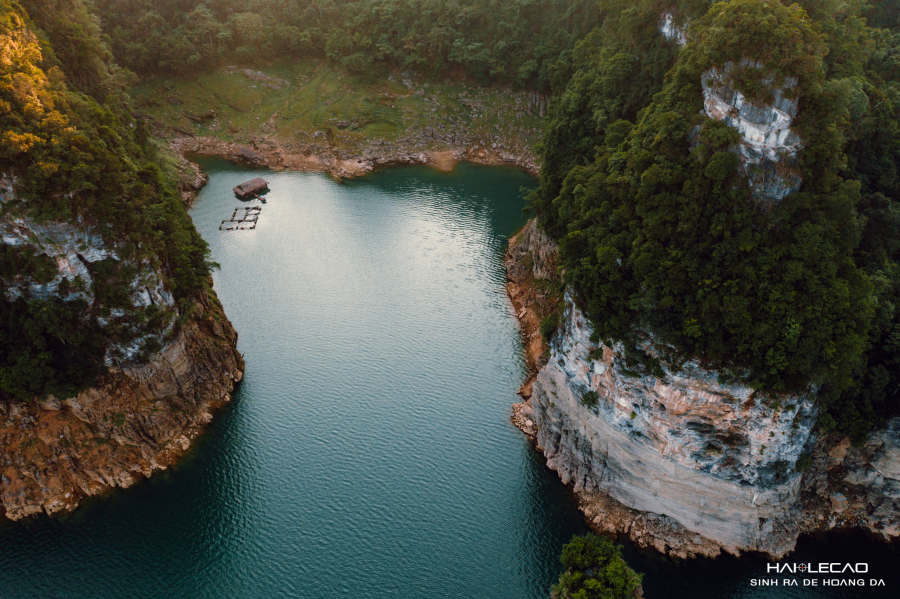
Na Hang Lake (photo: Hailecao).
Along the journey exploring the lake and its surrounding areas, there are many interesting sights, including: Pac Ta Mountain; Khuoi Nhi Waterfall; Phia Vai Cave and Hon Coc Vai Island.
The first notable attraction is Pac Ta Mountain, also known as Elephant Mountain. Locals liken this place to "the milk of heaven." The mountain is located to the left of Thuy Wharf, visible from the wharf. However, Pac Ta Mountain can only be observed from a distance; approaching or climbing it is prohibited.
Pac Ta Mountain (photo: Hailecao).
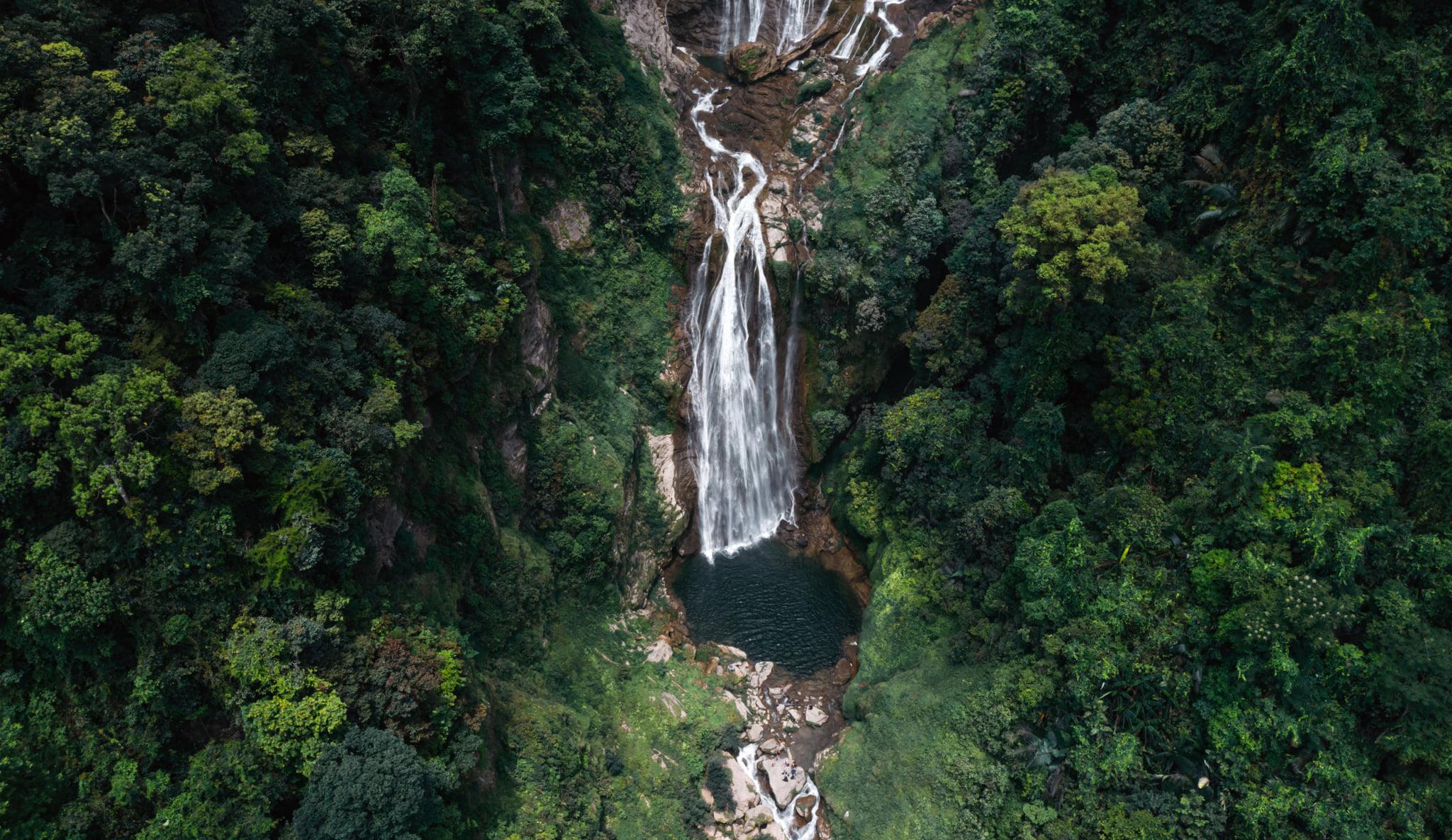
The next place worth experiencing after sightseeing by boat is Khuoi Nhi Waterfall. The waterfall has two tiers; the first tier can be reached by climbing about 100 meters from the lake. This tier has a smaller waterfall with a wide, clear blue water basin about 30-50 meters wide.2Deep enough for swimming and playing in the water.
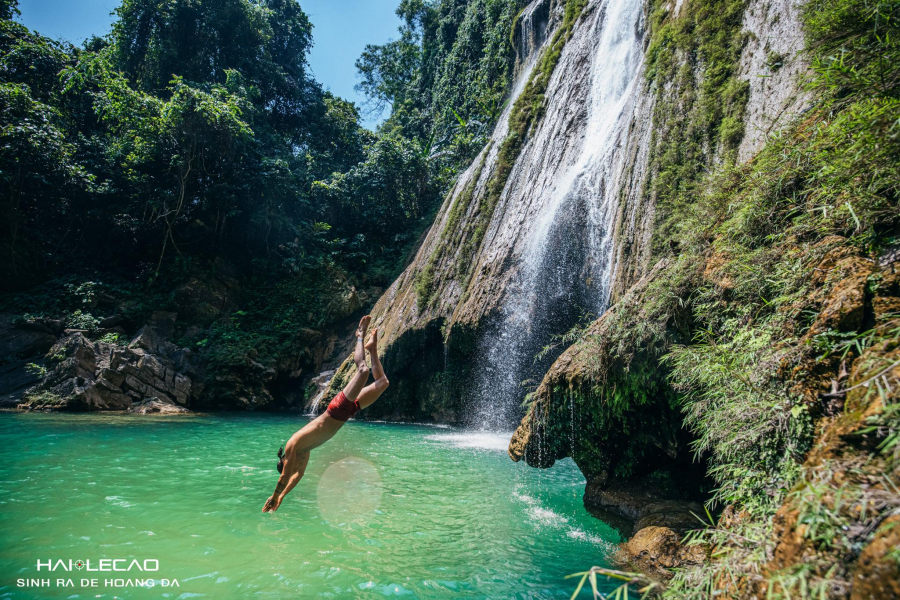
Khuoi Nhi Waterfall (photo: Hailecao).
At the waterfall, you'll get to experience a "massage service" with tiny stream fish as "staff." These fish, about the size of a little finger, will quickly swarm around your feet and nibble away at dead skin cells. When asked, the locals don't know what kind of fish they are, so they just call them "massage fish."

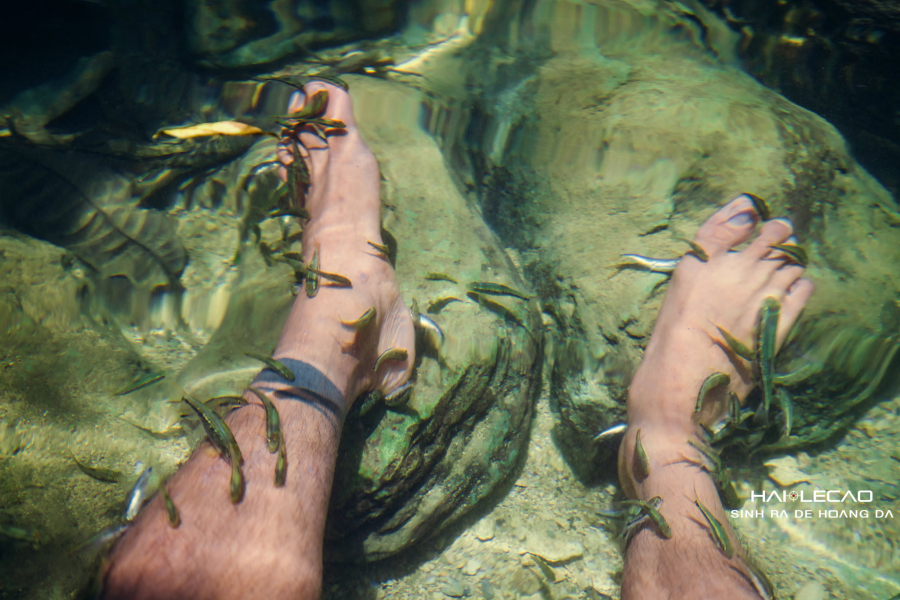
Tiny fish nibble away at dead skin cells on people's legs (photo: Hailecao).
Leaving the first level to ascend to the second, the main level of the waterfall, is larger, more majestic, and ideal for swimming and taking photos. At this time of year, green moss appears, making the stream even more beautiful.
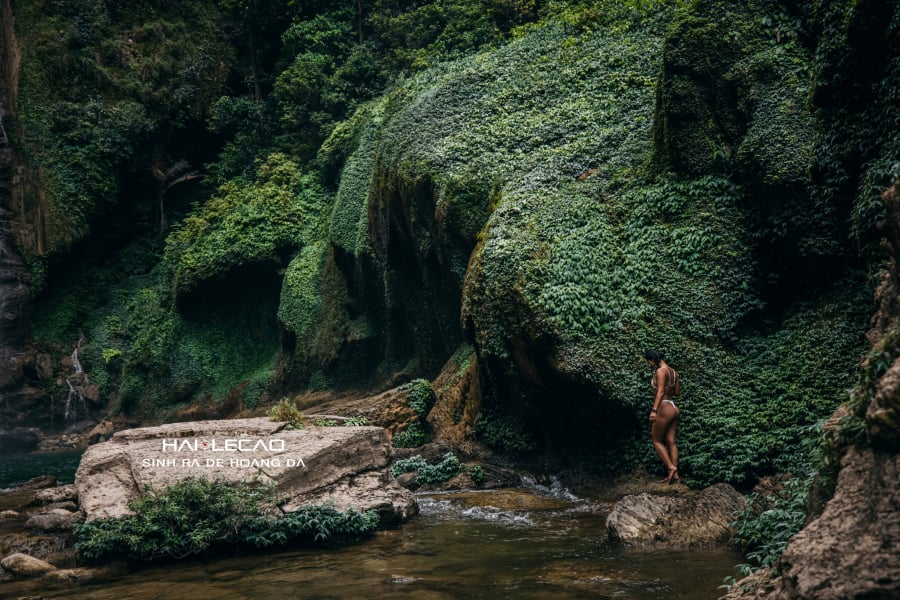
The green moss makes the landscape look incredibly wild and majestic (photo: Hailecao).
From Khuoi Nhi waterfall, it takes about 20 minutes to reach Phia Vai cave. This cave is quite small, partly because the tide rises in the afternoon, so boats can't go inside and can only dock precariously outside. This could be a suitable place for lunch after a long day of traveling by car.
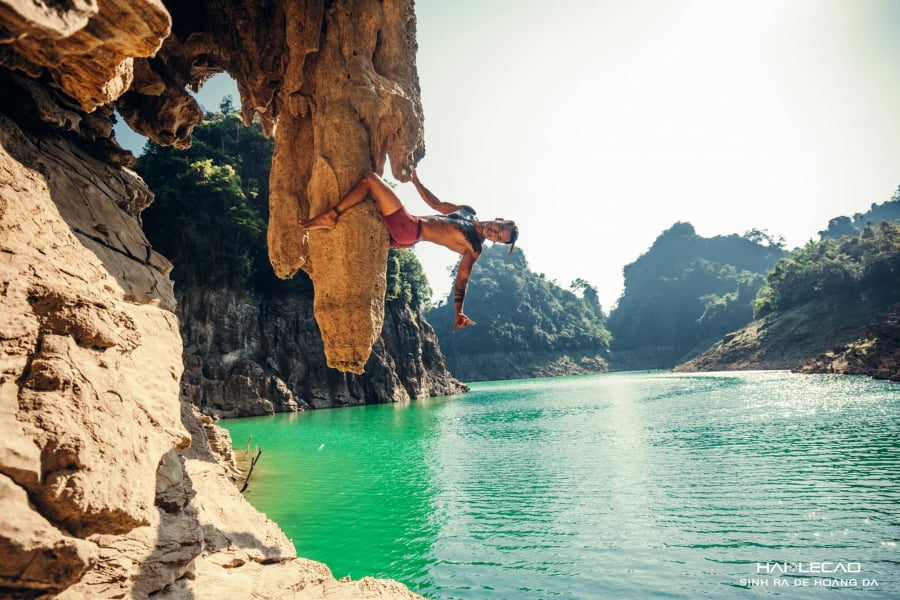
Photo: Hailecao.
After lunch, you can swim into the cave or wander around taking pictures. A very interesting feature of this cave is the presence of underground currents, so when swimming, the water above is warm but the water below is cool. Because these two opposing currents meet, steam will rise when you swim inside the cave, which is extremely unusual. Swim about 15-20 meters deep until you reach a small underground stream flowing down from the mountain, and that's the end of the cave.
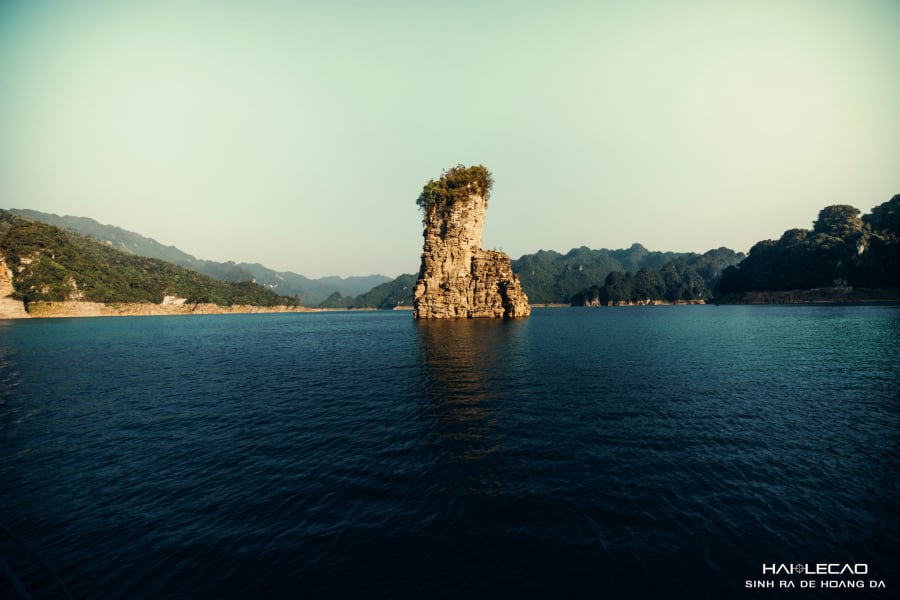
One must-see spot at Na Hang Lake is Hon Coc Vai. This is a rock formation dating back thousands of years, standing majestically in the middle of the lake. This place is mainly for people to admire and take photos.
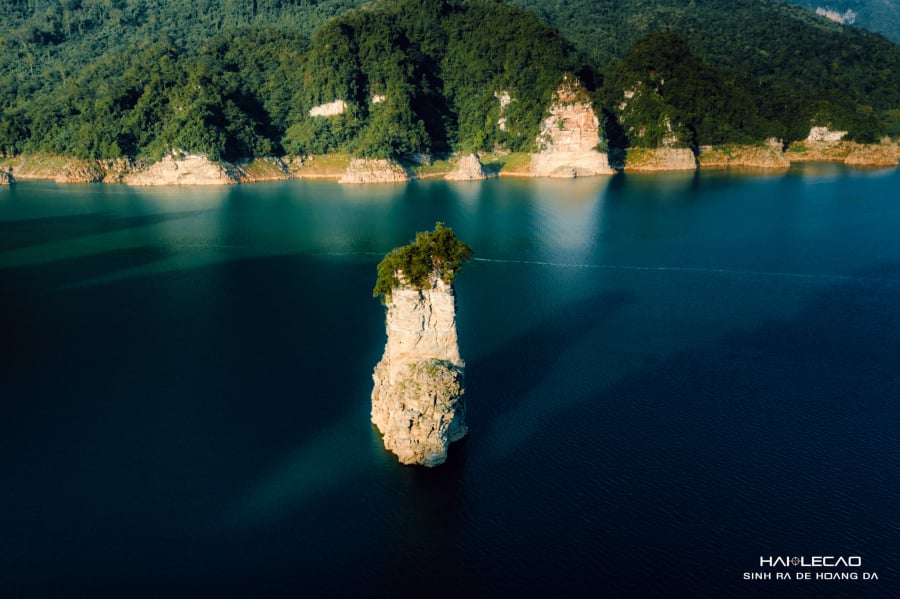
Hon Coc Vai (photo: Hailecao).
As darkness falls, we'll head to Bai Coc Chay (Burning Palm Stake Beach) to camp. Bai Coc Chay is an abandoned palm forest left behind by the local people who migrated to other areas. Due to rising water levels from the hydroelectric dam, the palm forest here has been flooded and is gradually dying, leaving only bare, withered palm trunks. This scene is incredibly impressive and captivating, similar to the Bach Dang Stake Beach in Hai Phong.
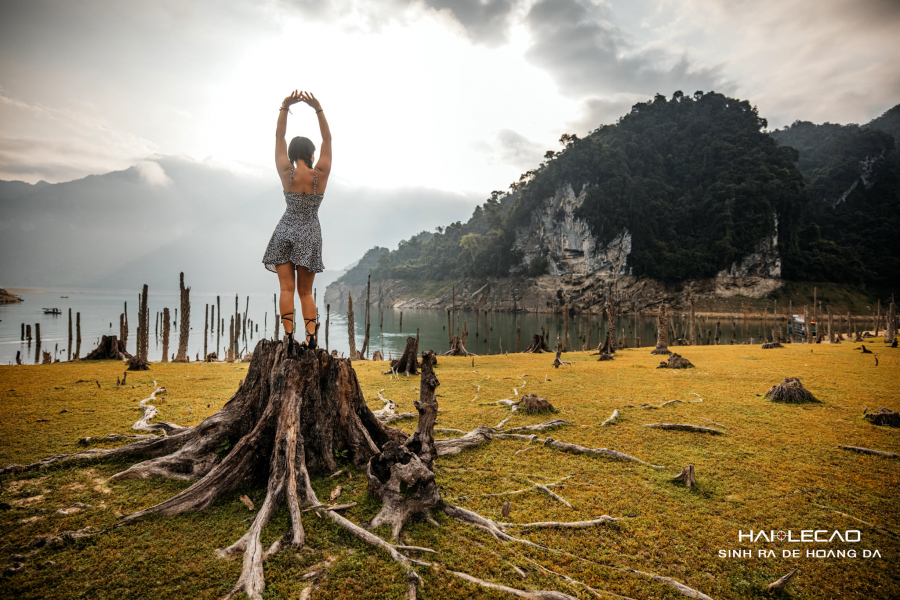
Burnt Stake Beach (photo: Hailecao).
In the evening, tourists can set up camp, eat, chat, have fun, and rest to recharge, preparing for the next day because the following destinations will be much more challenging.
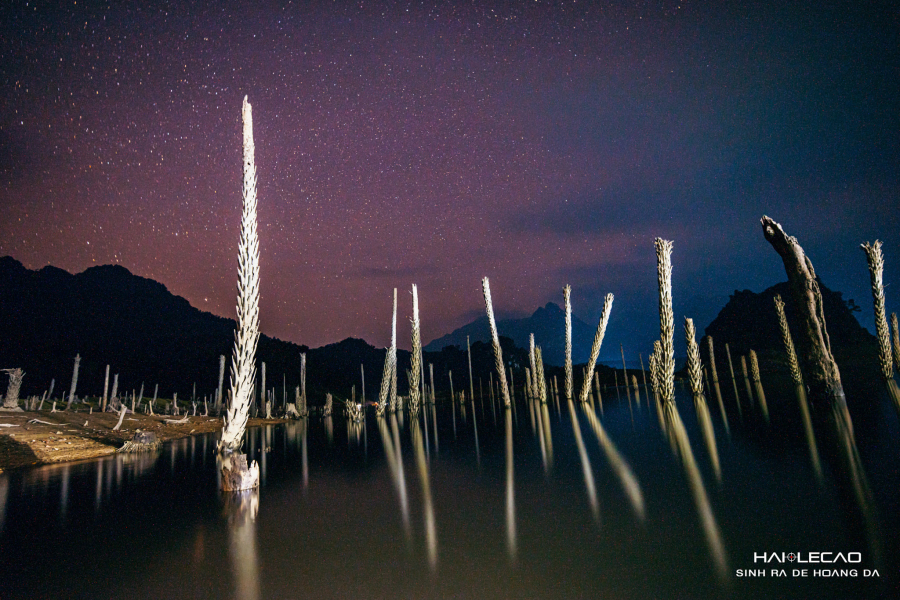
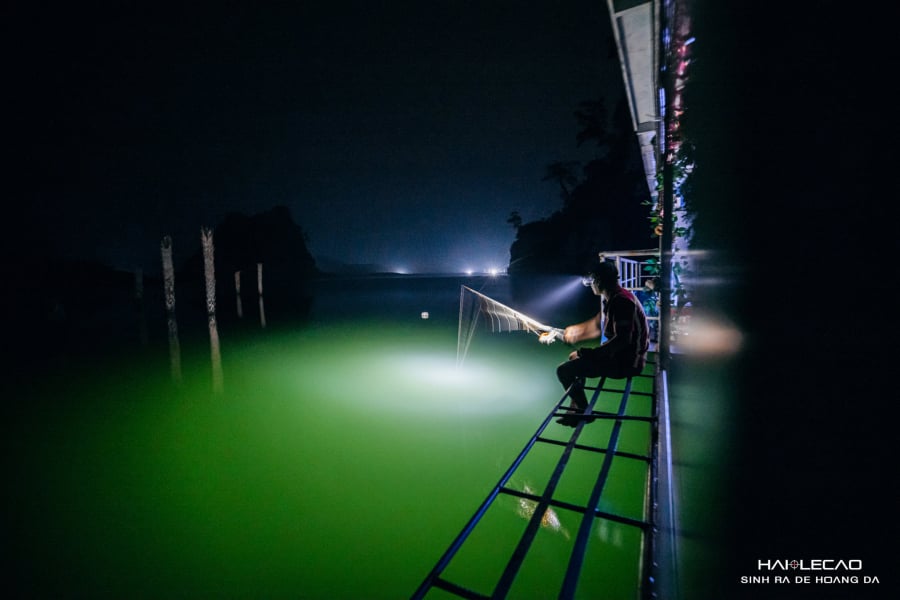
Fishing at night (photo: Hailecao).
Early in the morning, you will take a boat from the campsite to Nam Me Waterfall. Before you leave, your guide will advise you to leave your belongings behind because the climb to the waterfall is quite difficult.
There are two ways to reach the waterfall. The first is to follow a forest trail, however, this path is long, far, and full of leeches. The second is to climb directly up the stream with the guidance of a local. Often, tourists who enjoy a challenge will choose to climb the waterfall.
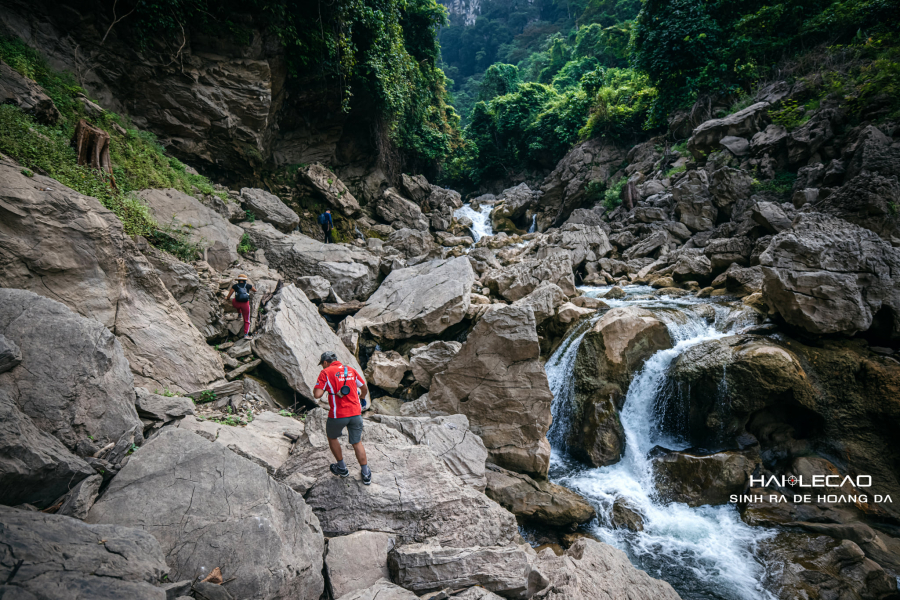
Right from the first few sections of the climb, there were only tough boulders.
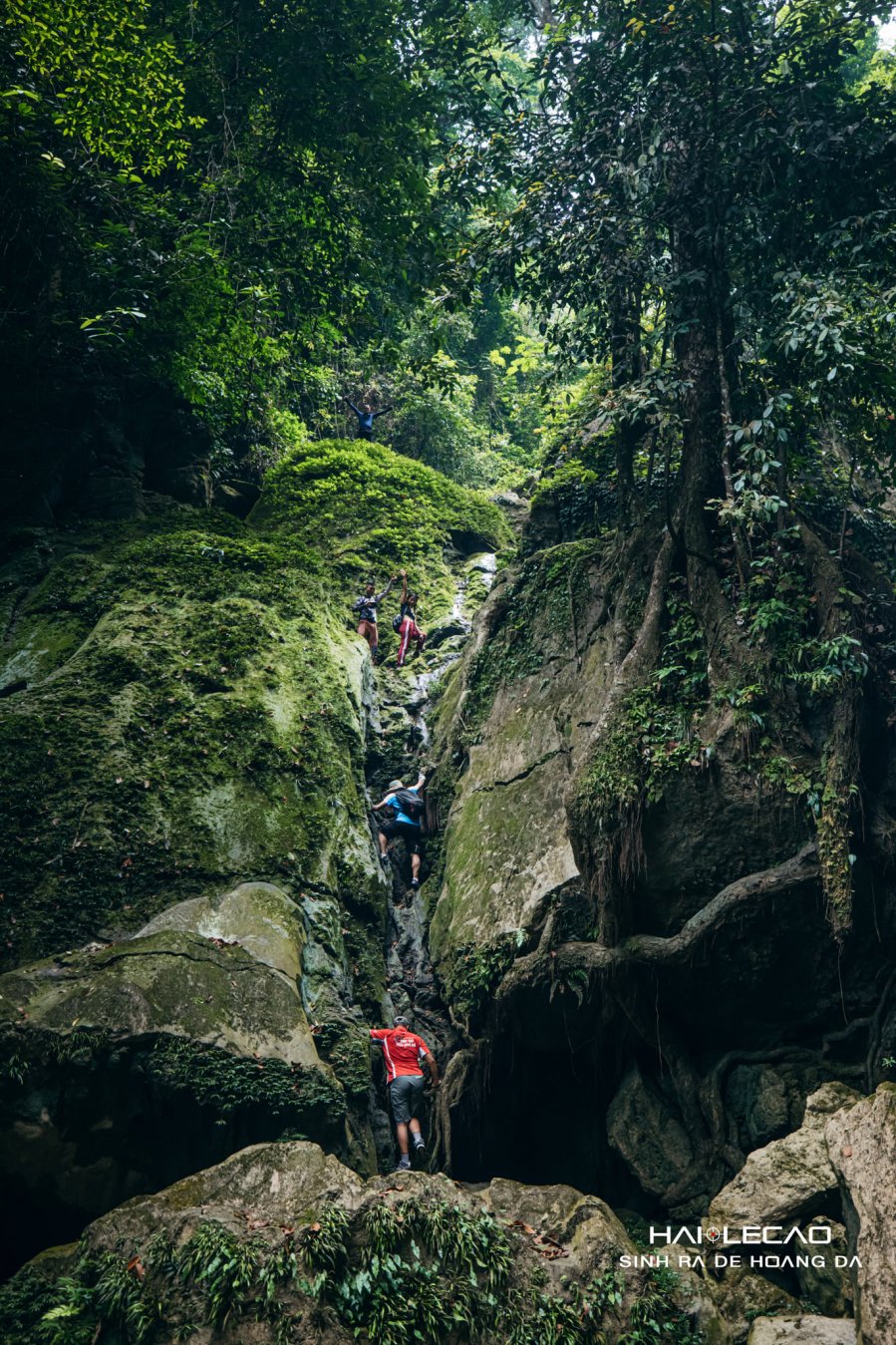
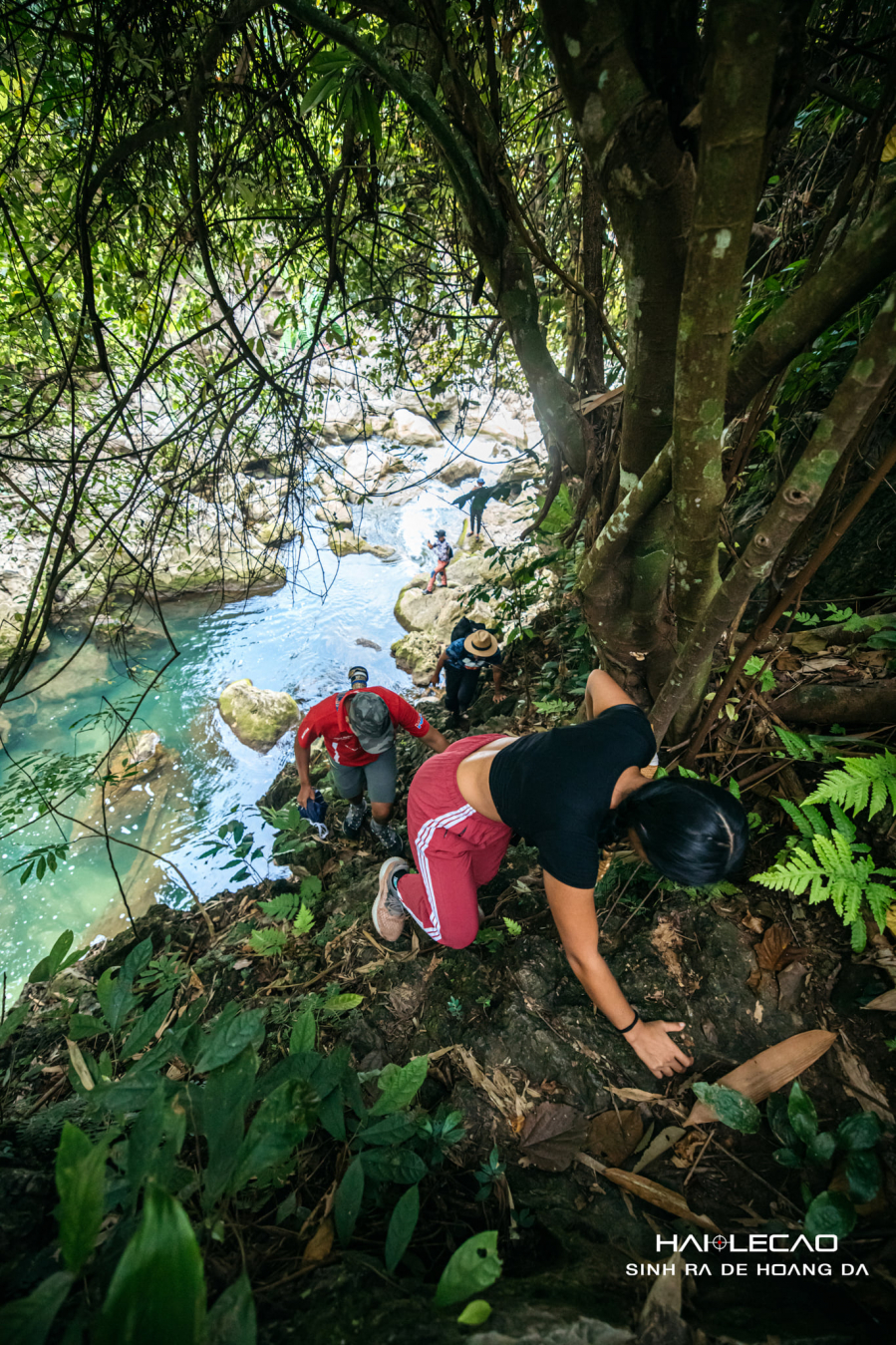
The total distance to climb the waterfall is about 6 km, with continuous rocky streams and 3-4 extremely difficult sections with vertical cliffs, about 10-15 m high, plus no secure handholds and slippery moss. Therefore, those who do not have sufficient skills and physical fitness should not attempt to conquer this waterfall.
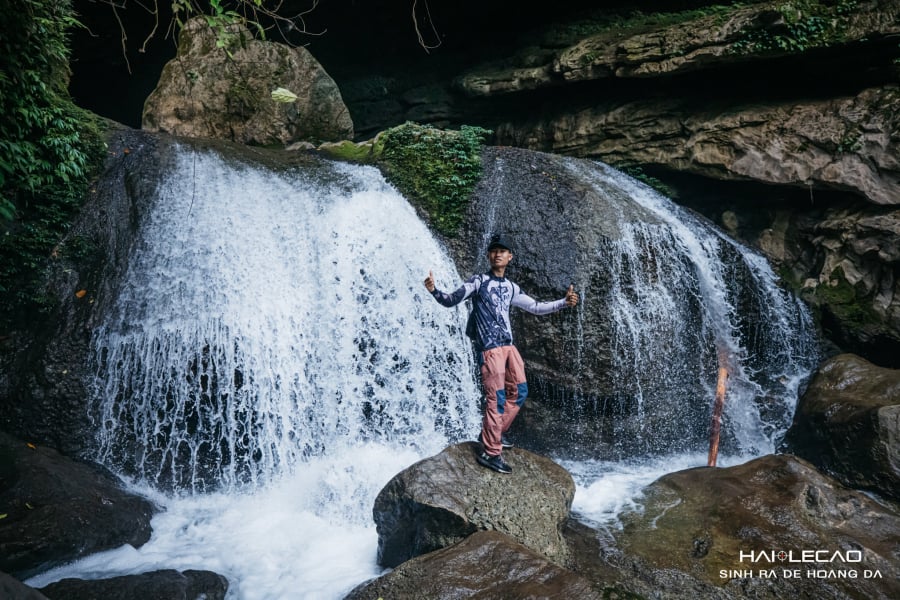
Climbing up the waterfall is tiring and strenuous, but climbing down is even more difficult and dangerous. Beginners in waterfall climbing need to listen carefully and follow the instructions of experienced people to ensure a safe return.
Please note that this waterfall should only be climbed when the weather is good. If it rains a few days before the climb, you should postpone your plan to ensure safety.
This marks the end of the journey. If you intend to conquer this waterfall, please prepare yourself physically and skillfully.