VI
VI


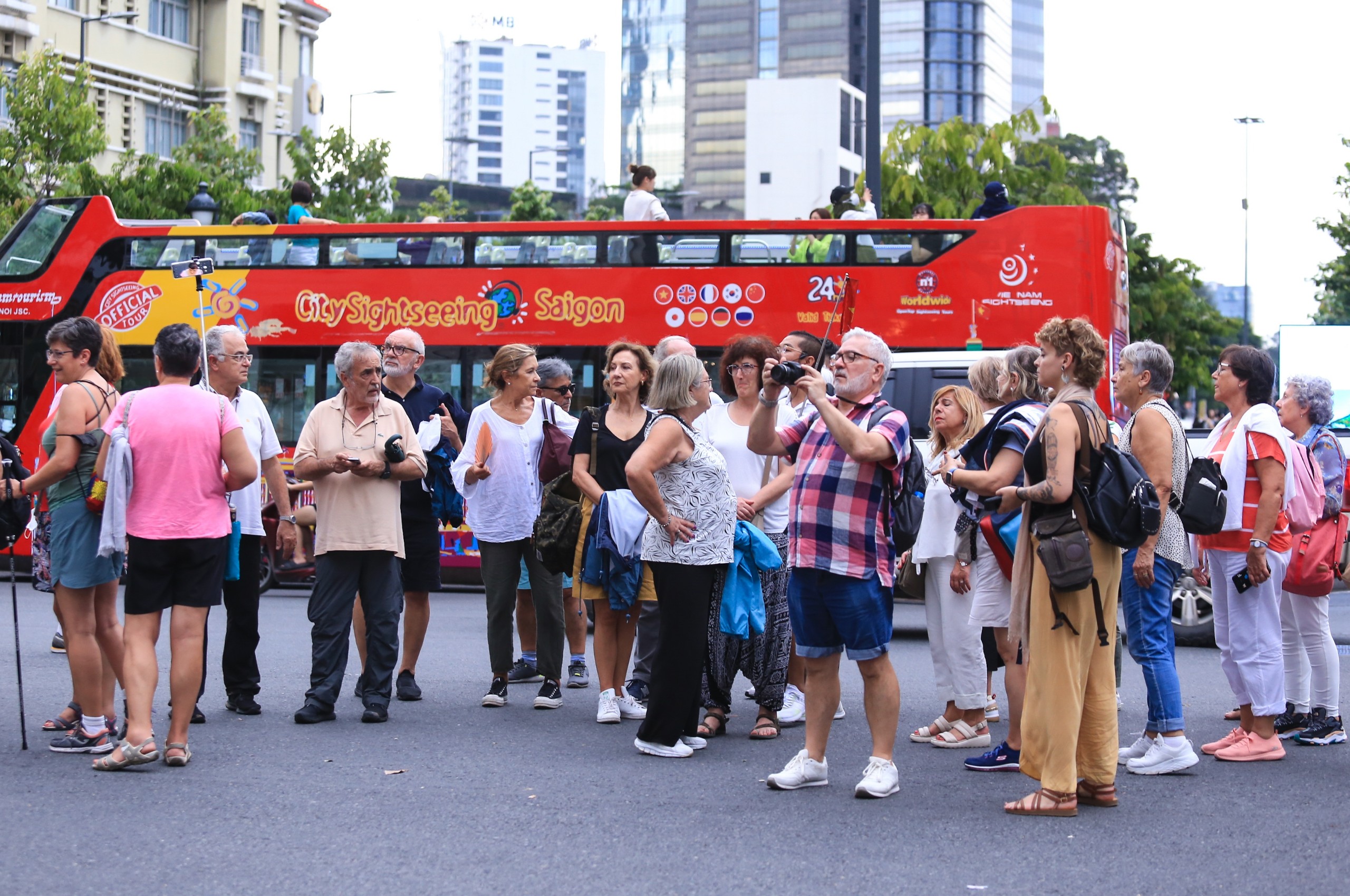
Tourism development has become a key economic sector, thriving and enhancing Vietnam's image and position; however, the Prime Minister acknowledged that there are still shortcomings and limitations.
Despite improvements in mechanisms and policies, the number of international visitors in 2023 only reached 70% of pre-pandemic levels; shopping spending remained low; and tourism linkages and promotion were limited...
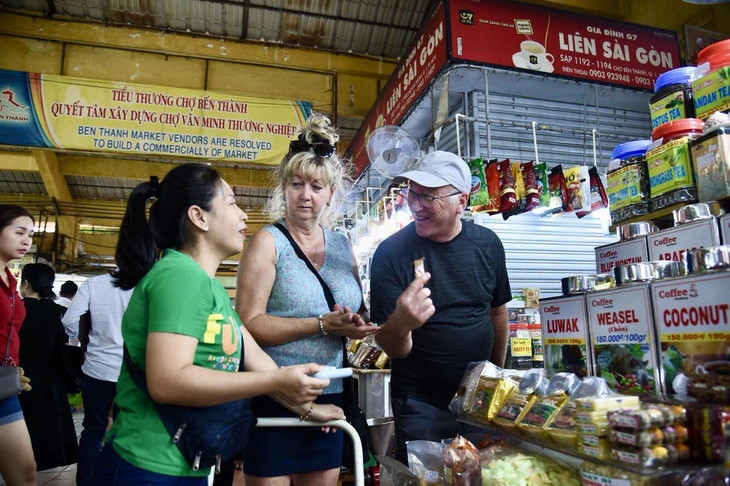
International tourists shop for souvenirs and food in Ho Chi Minh City - Photo: TU TRUNG
Enhancing the accountability of leaders in the tourism sector.
Tourism also faces challenges from the trends of globalization, newly established values, natural values, creative values, and the adverse impacts of political instability and conflict; increasingly fierce international competition, along with climate change and extreme weather events... all of which require the tourism industry to truly innovate its thinking, approach, and methods.
Accordingly, the Prime Minister requested a further enhancement of awareness regarding the position, role, importance, value, effectiveness, and ripple effect of the tourism industry. He urged seizing opportunities to develop the tourism ecosystem.
Emphasize the responsibility of leaders in tourism development, linking decentralization and delegation of authority, and resource allocation. Simplify procedures to create the most favorable conditions for people and businesses to participate in the input supply chain of the tourism industry, forming tourism value chains, and linking national and global tourism...
Local authorities are enhancing their role, removing obstacles to tourism development, encouraging innovation and creative entrepreneurship, developing the business sector, and forming many tourism businesses with strong brands; supporting small and medium-sized enterprises and tourism business households in applying science and technology...

Effectively implement governance models and public-private partnerships in tourism development, and promptly issue preferential mechanisms and policies to effectively mobilize resources from businesses, especially large enterprises.
Preserving and promoting the unique local cultural values and distinctive natural landscapes for sustainable tourism development. Ensuring security and safety for tourists, with a focus on environmental hygiene and food safety...
The head of government requested the implementation of the National Green Tourism Action Program. This includes proactively and strongly innovating the content and methods of tourism promotion and marketing; strengthening the connection of service infrastructure, supporting and enhancing experiences, and retaining tourists; and focusing on developing and exploiting market segments based on specialized products...
Implementing online immigration procedures and expanding visa exemptions.
Develop a plan to establish tourism promotion offices abroad; enhance the role of Vietnamese cultural centers overseas in promoting and showcasing the image of Vietnam, its culture, people, and tourism.
Notably, the Prime Minister instructed the Ministry of Public Security to accelerate administrative procedure reforms, apply science and technology, and implement automation solutions in handling procedures for foreigners entering, residing, and traveling safely in Vietnam.
The lead researcher proposed and implemented online exit and entry procedures using facial recognition (FaceID) and electronic passports (E-Passport) to create convenience and speed for tourists.
Consider piloting the issuance of visas on arrival based on on-site personnel vetting for international tourists; report to the Prime Minister in Q2 2024.
Propose preferential policies: conditional exit and entry regulations for certain traditional and potential international markets with high levels of development, high tourism spending, and long stays.
Expand the list of unilateral visa exemptions; pilot short-term visa exemptions (from 6 to 12 months) for tourists from certain large-scale, high-spending markets.
A pilot program is being implemented to issue long-term, multiple-entry visas (12 to 36 months) to attract high-end tourist segments and high-spending retirees from target markets such as Europe, Northeast Asia, North America, India, and some countries in the Middle East.