VI
VI


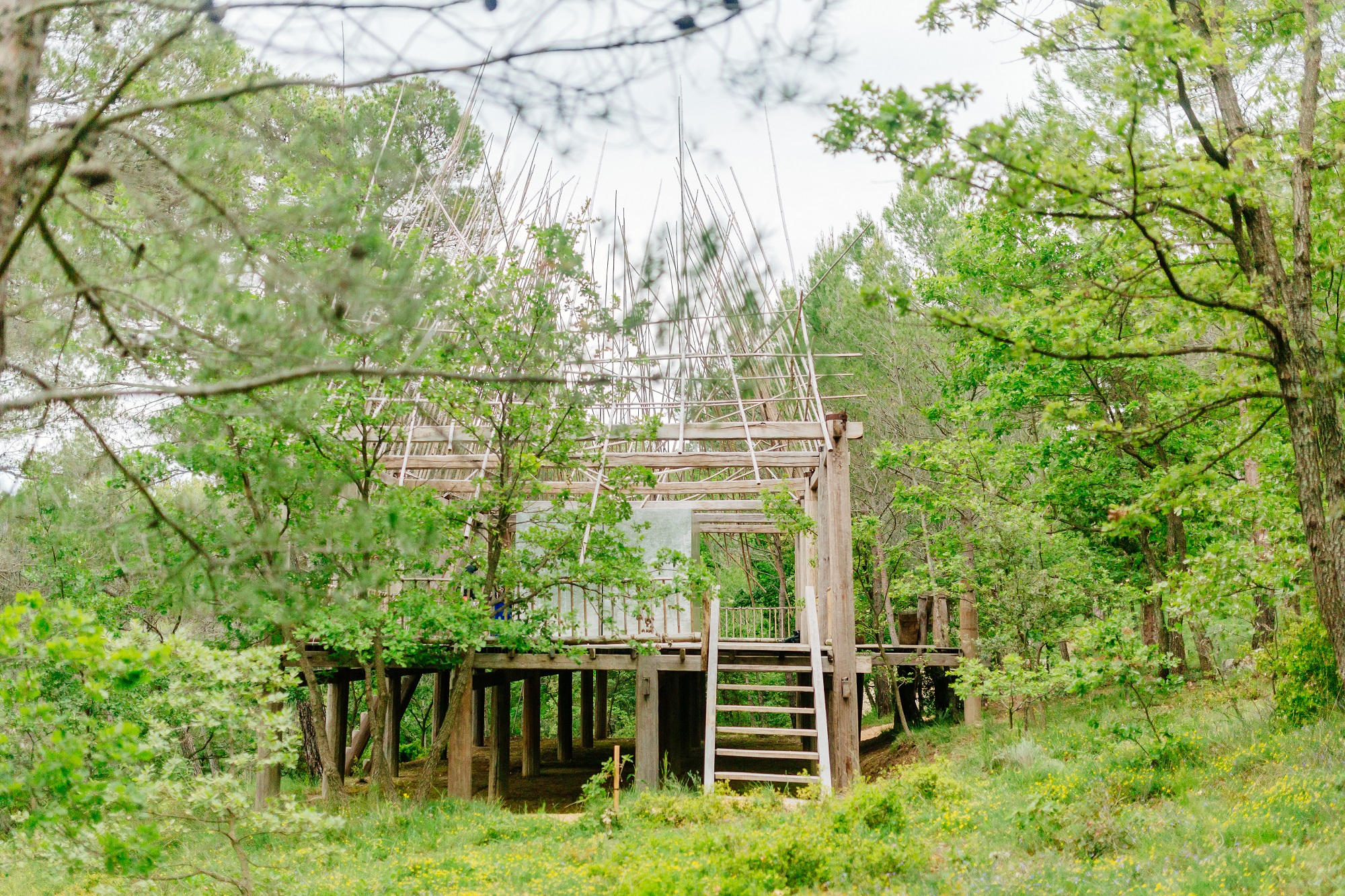
With this ambitious work, Tia has opened another door for the West to enter the world of contemporary Vietnamese art, exploring the boundaries between epics, Central Highlands architecture, Buddhist rituals, and Vietnamese art and craft practices.
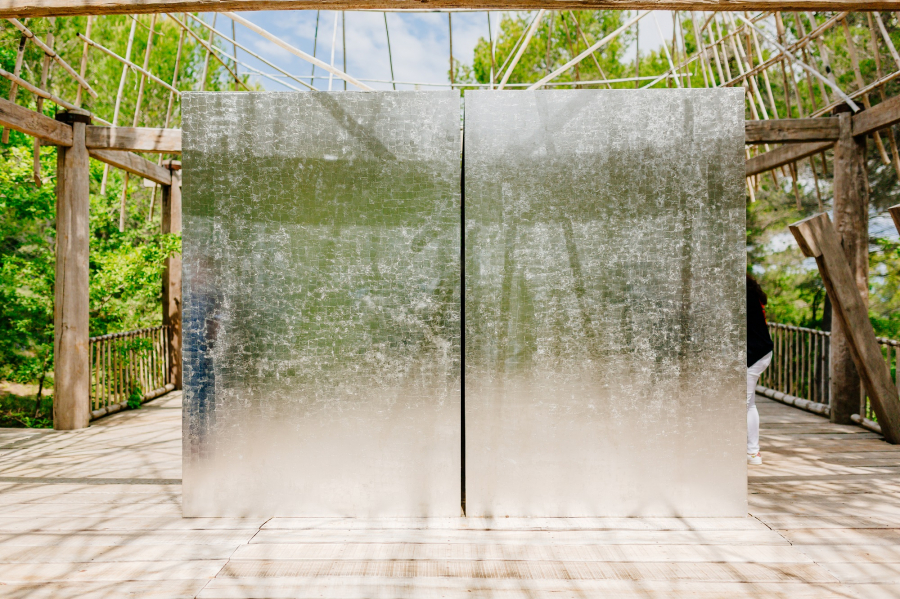
The Silver Room sculpture is made from two large monolithic slabs of stone, covered in a shimmering layer of silver leaf.
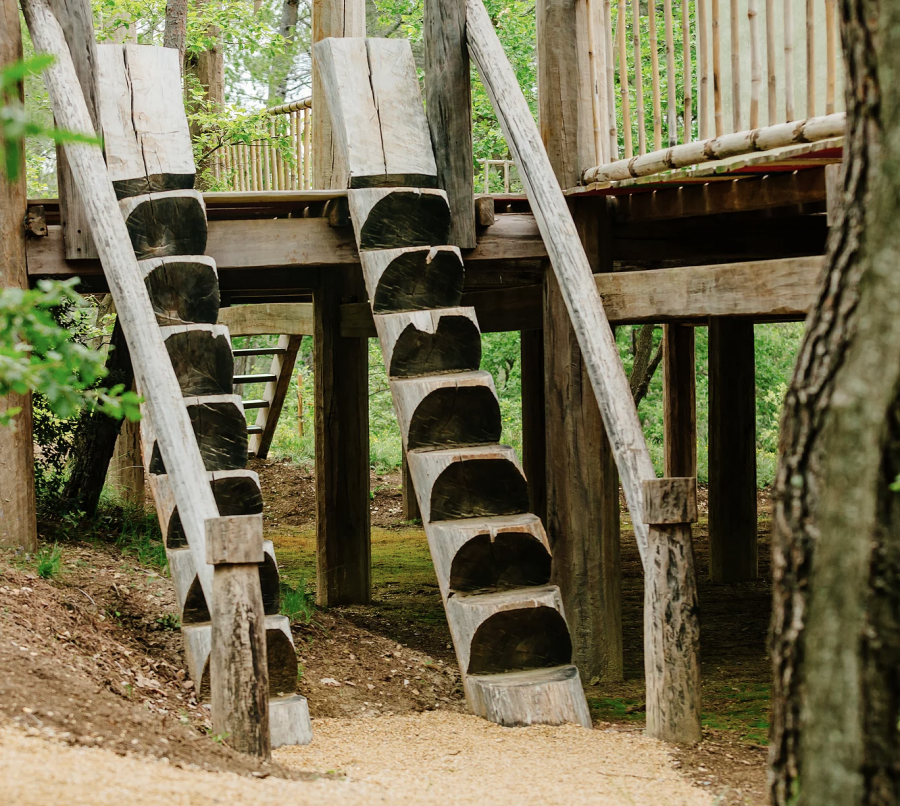
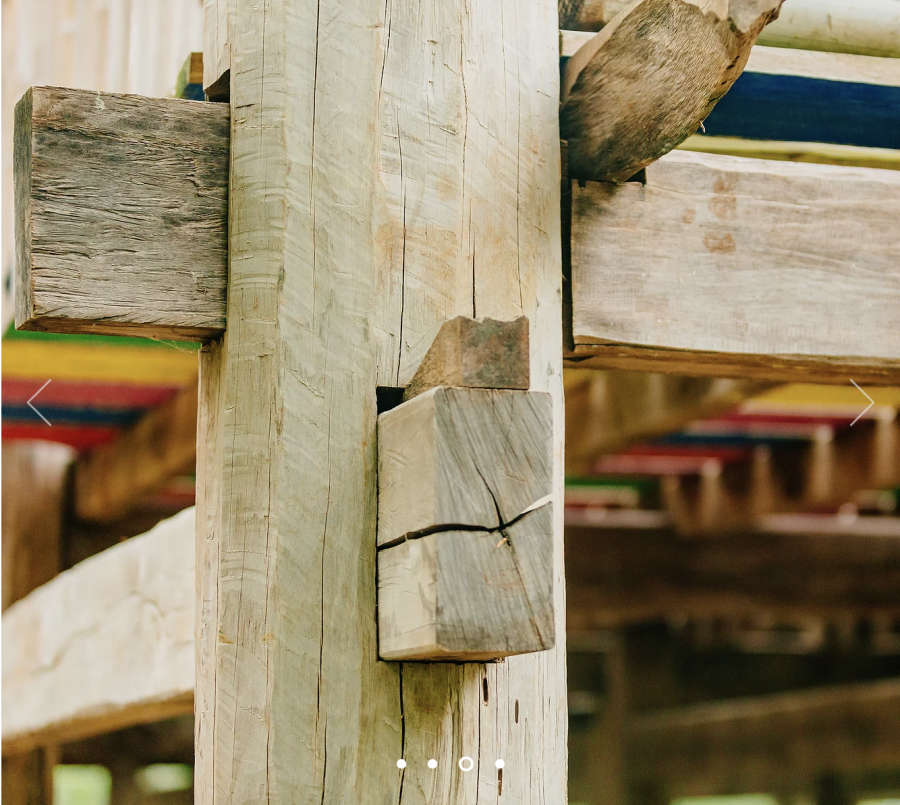
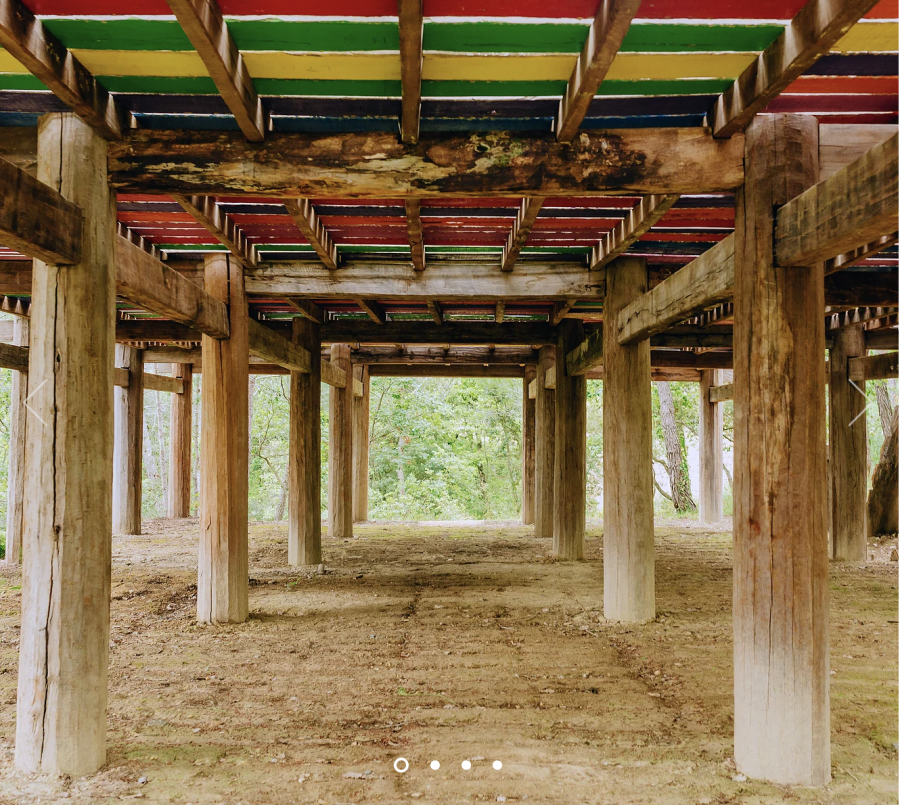
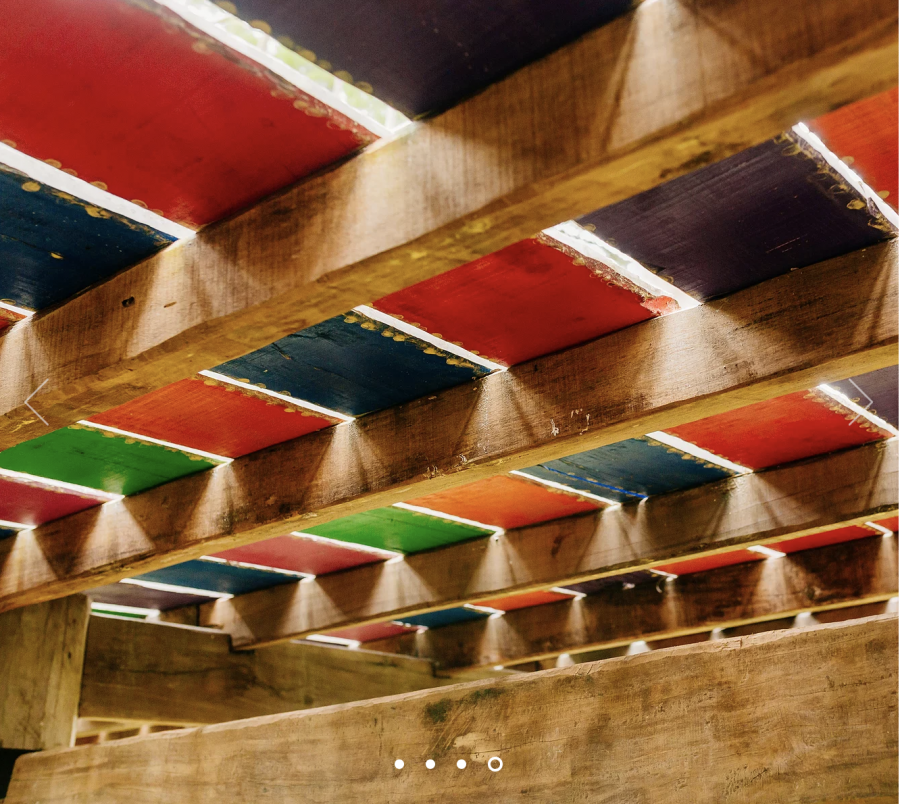
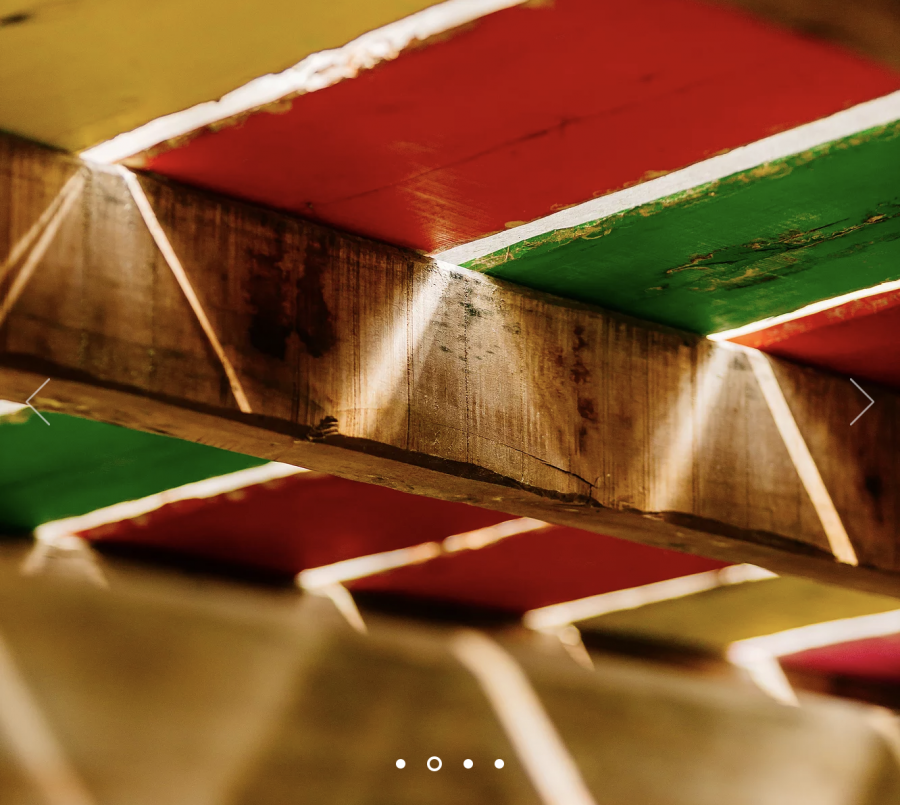
Inspired by the architecture of the Rông houses of the ethnic minorities in the Northern Central Highlands, which Tia was familiar with during her student years of fieldwork, "Silver Room" is the size of a real house, with a total height of 16.2 meters, a width of 6 meters, and a length of 14.9 meters. To realize the work "Silver Room" in France, the artist had to calculate all the changes in humidity and climate affecting the wood. It took 10 months for village elder Ynut to find suitable wood materials and meticulously process the wood before assembling the artwork. The entire system of 26 house pillars and floor is made from approximately 1,300 cubic meters of red sandalwood, and the open roof structure is constructed from mature bamboo stalks ranging from 4 to 12 meters in height. All joints of the Rông house are tied with rope, not nails. Only village elder and artisan Ynut knows how to construct the roof, tie the bamboo, and guide the younger generation in doing so. “Building a roof is truly a sublime art, passed down through generations. No amount of rain, wind, or storms on the high floors can overcome the strength, intelligence, and profound experience of the people who have witnessed it or participated in its construction. It's hard to imagine for those who haven't seen it or tried their hand at it,” Tia shared about one of the challenges in creating the work. This architecture stands tall but seems to blend into the mountainous landscape of Aix-en-Provence, making the work not just a large-scale sculpture, but a site-specific installation. The gaps between the bamboo and wood create patterns of light and shadow, causing the work itself to constantly change with time and weather, never repeating itself.
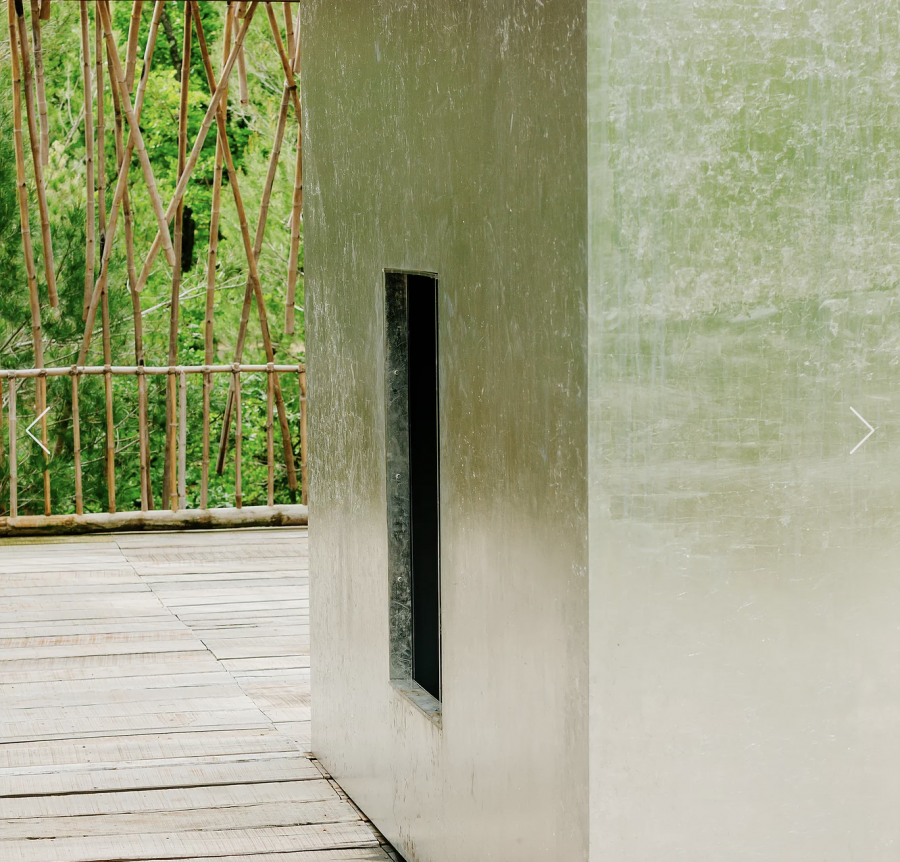
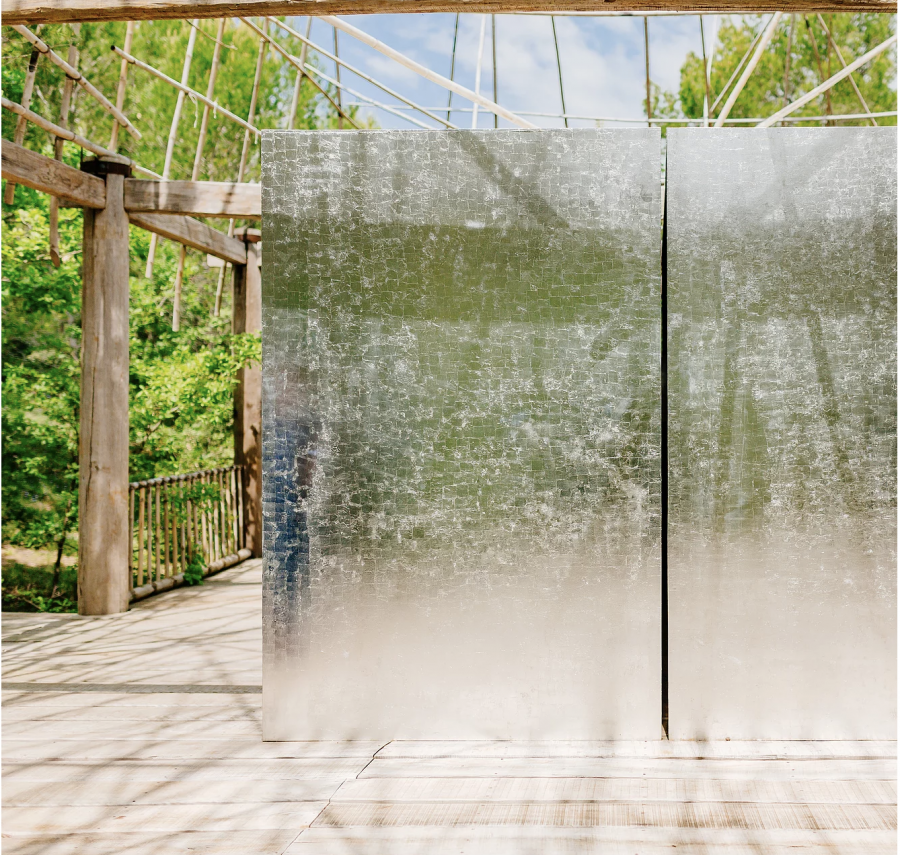
Climbing the stairs, you'll find a square room with a single entrance, its structure inspired by the Buddhist concept of "Three Lives Stone." The room's dimensions are measured using the Lu Ban ruler according to East Asian feng shui, aiming to select a lucky number for the homeowner (3012 x 2092 x 2320 mm). The room is constructed from two monolithic stone slabs weighing over 2 tons each, inspired by the "two stone pillars of Thuc Phan" on Nghia Linh mountain. This represents brotherhood and the Vietnamese people's will to protect their homeland. The two slabs are joined together, leaving a gap for light to enter, alluding to the presence of the "Sun God" in the famous epic "Dam San"—the brave warrior who sought light for his village.

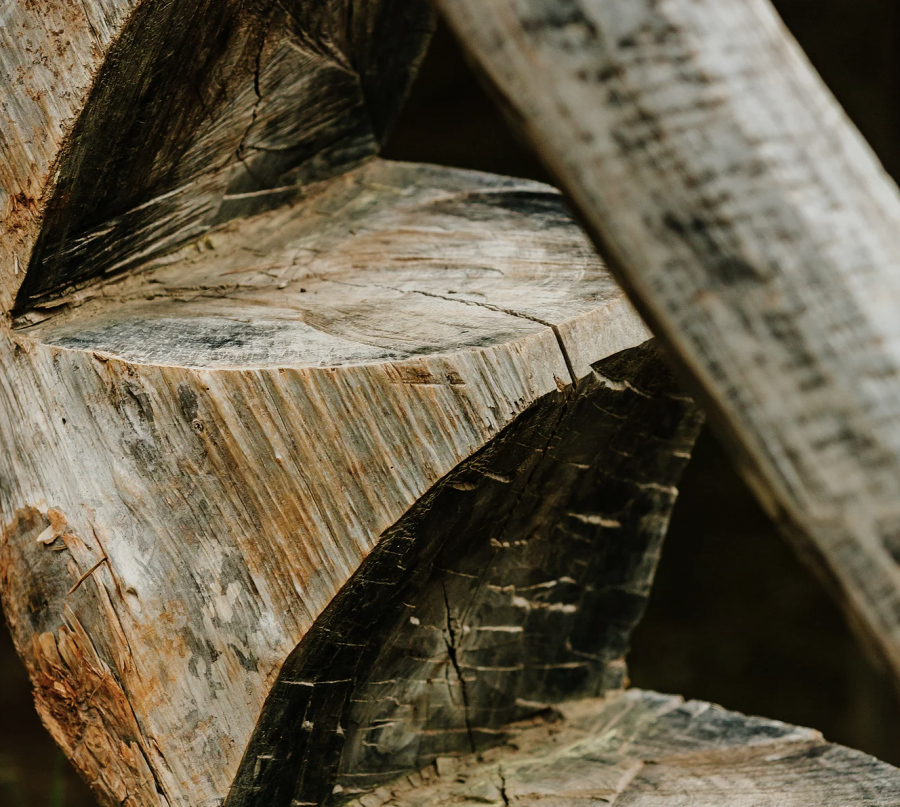
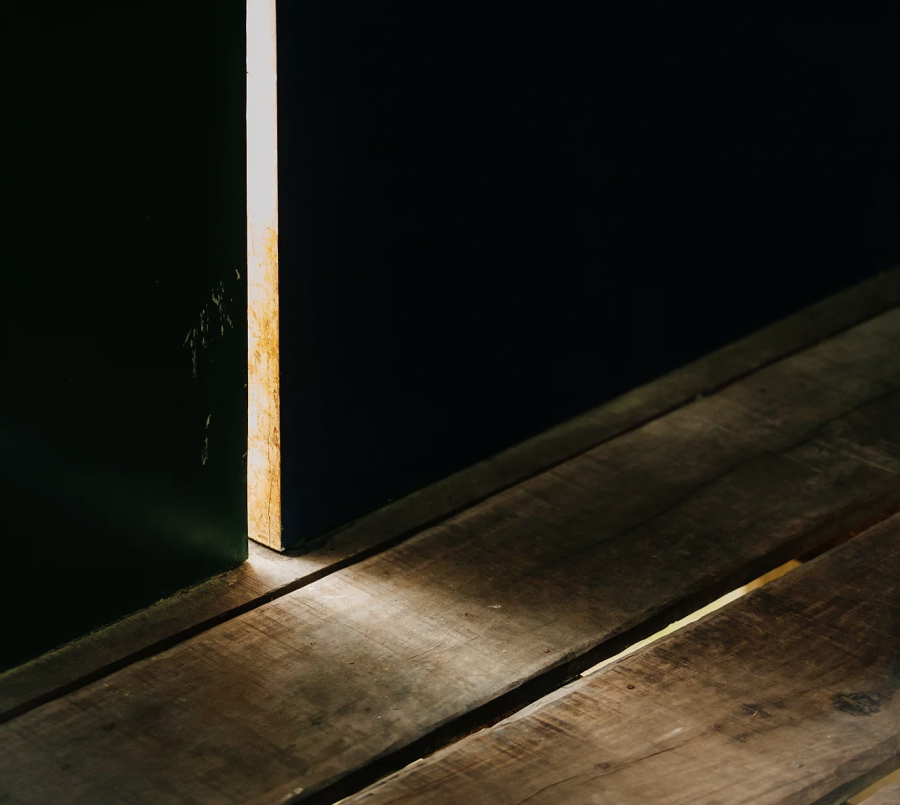
The exterior of the room is covered with a layer of silver leaf from Kieu Ky village, with a tradition of over 300 years of gold and silver leaf making, undergoing more than 40 extremely complex steps to make the "Silver Room" sparkle and reflect sunlight like a mirror. The small entrance with a high threshold forces viewers to lift their feet and bow their heads when entering the "Silver Room." Unintentionally, they perform a ritual of reverence to the Buddha inside, momentarily becoming part of the artwork. If lucky, viewers may witness the magic when sunlight shines through the gap in the door, illuminating the white quartz Buddha statue, creating an ethereal halo. This unique "momentary" aspect also emphasizes the Buddhist concept of "destiny"—the right person, at the right time, cannot be forced. The artwork reflects the artist's lifestyle and belief in a state of inner peace amidst the conflicts between past, present, and future. Between longing and letting go; between the identity of one's homeland and integration with the world.
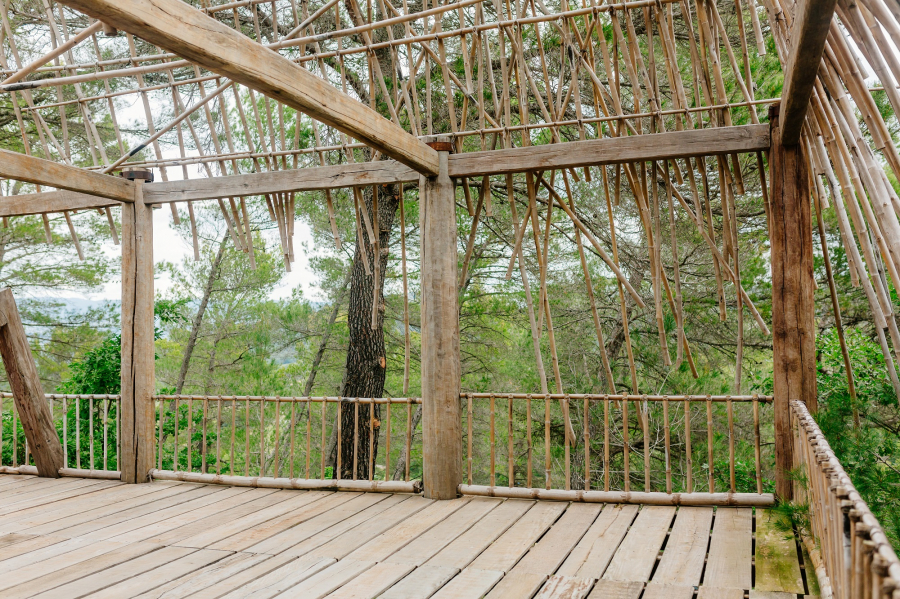
The architecture of the Rông house is inspired by the stilt houses of the Northern Central Highlands of Vietnam.
The more places she travels and the more borders she crosses, the more Tia Thuy Nguyen understands the sacredness of identity and tradition. It is an invisible thread connecting her to her homeland, regardless of geographical boundaries. For her, art has never been a destination, but a journey carrying a part of Vietnamese culture and soul to the world. Silver Room, with its multi-technical interaction, integrates various art forms, closely connected in terms of form, space, color, light, and materials, creating a unique visual-spiritual effect. This bold and creative installation leads us into a sacred, emotionally charged space of a vast anthropological mosaic, interwoven with many cultures. Whether real or virtual, expressive or deeply profound, everything bears the mark of her passion and creativity in the subtle art of Truth, Goodness, and Beauty.
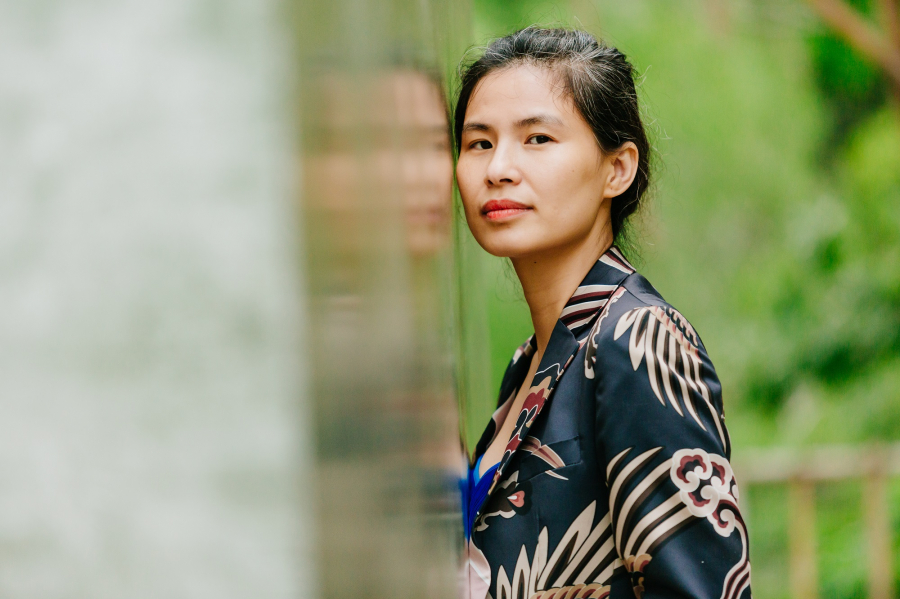
Artist Tia Thuy Nguyen next to her artwork.
Tia Thuy Nguyen's work "Silver Room" is the first by a Vietnamese artist to be included in the prestigious contemporary art collection of Château La Coste, alongside contemporary works by renowned artists such as Ai Weiwei, Louise Bourgeois, Tracy Emin, Sophie Calle, Franz West, and others. "Silver Room" is currently on display at the estate located at 2750 Route De La Cride, 13610 Le Puy-Sainte-Réparade, Aix-en-Provence, France.
Additional information:
Tia-Thuy Nguyen (born in 1981) was born and raised in Hanoi. After graduating from the Vietnam Fine Arts University (2006), she received a scholarship at the Kyiv National Academy of Arts and Architecture, Ukraine, where she pursued a Master's degree and earned a PhD in art in 2014. Tia-Thuy Nguyen has nearly 20 years of experience practicing painting in a variety of mediums. Her works often focus on projecting her observations of the world around her, expressing the chaotic yet colorful emotions of modern women. In 2016, Tia founded The Factory Contemporary Art Center, the first space in Vietnam built exclusively for contemporary art, aiming to connect the community of artists, designers, and creators, and to build an educational and critical platform. Most recently, Forbes magazine honored her as one of the "50 Most Influential Women in Vietnam in 2019".
Château La Coste is a complex comprising vineyards, a winery, an art museum, a resort, and restaurants, construction of which began in 2012 with the help of Patrick McKillen. Since 2017, Château La Coste has officially showcased its collection of modern and contemporary art featuring prominent artists from around the world such as Louise Bourgeois, Andy Goldworthy, Tracey Emin, Alexander Calder, Richard Serra, and Ai Weiwei, among others. Learn more about Château La Coste at:www.chateau-la-coste.com