VI
VI


1. Rice paper rolls with pork
Although not the birthplace of this dish, in both of the two largest cities, Hanoi and Saigon, the number of restaurants selling pork rice paper rolls is countless. A thin sheet of rice paper is placed on top of a rice noodle sheet, then topped with fresh vegetables, pork belly or pork leg, rolled up, and dipped in a spicy, flavorful fish sauce with a distinctive aroma. This simple yet captivating dish attracts countless diners, so no restaurant displaying a Da Nang food sign is without pork rice paper rolls.
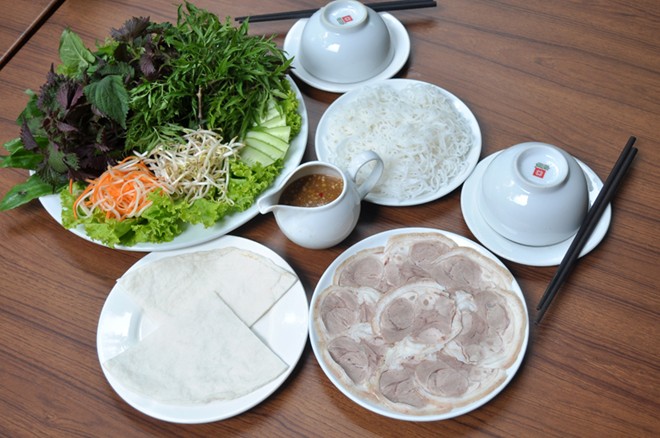
Pork rice paper rolls are usually sold in portions, with prices ranging from 60,000 to 100,000 VND depending on the location, and are often chosen as the perfect appetizer for a lavish party.
2. Beef jerky
Dried beef is a familiar and delicious Vietnamese dish, and each region has its own unique recipe. However, the most famous dried beef probably comes from Da Nang. Therefore, it's rare for tourists to visit Da Nang without a kilogram of dried beef in their suitcase to buy as a gift for their loved ones.

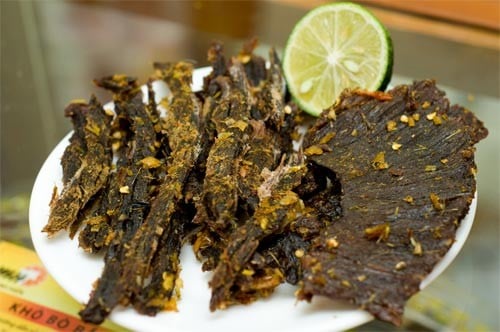
Da Nang-style dried beef is quite spicy and sweet, often with a distinctive licorice flavor, and when eaten with lime, it creates an irresistible aroma. Da Nang residents often enjoy dried beef as a snack with alcoholic drinks. Additionally, it's used as a main ingredient, combined with shredded green papaya and roasted peanuts, to make a dried beef salad. High-quality Da Nang dried beef typically sells for over 500,000 VND per kilogram.
3. Quang Noodles
Quang noodles are a popular dish among the people of Hoi An, and globally, they are recognized as one of the 12 Vietnamese dishes with significant Asian culinary value. The classic shrimp and pork Quang noodles have been further enriched with variations such as chicken, fish, jellyfish, and beef noodles.

Quang noodles are made from fragrant, finely ground glutinous rice flour without any added ingredients. The broth isn't overflowing like other noodle dishes, but just enough to cover the noodles, yet it's fragrant, spicy, and flavorful thanks to a special blend and seasoning recipe. Eating Quang noodles is incomplete without fresh vegetables like baby cabbage and thinly sliced banana blossoms... and a plate of green chilies, roasted peanuts, rice crackers, a slice of lime, and a bowl of pure fish sauce. Perhaps the street food stalls in Hoi An are where you'll find the most authentic bowls of Quang noodles.
4. Cao Lau
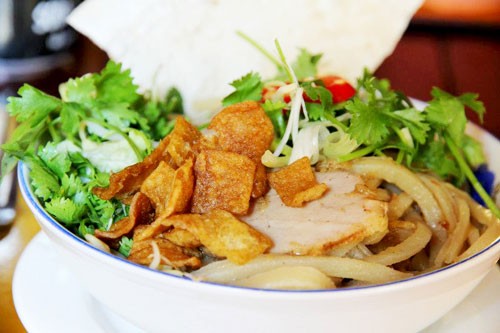
Some say the name "Cao Lau" comes from the fact that in the past, wealthy people liked to go to restaurants, sit on the upper floor overlooking the street, and order this delicacy, gradually shortening the name to "Cao Lau." Others believe the dish's origin is related to the Chinese, but in reality, the Chinese community here doesn't acknowledge it. It's difficult to determine definitively, but it's known that Cao Lau has been around in Hoi An for a very long time and is a must-try dish when visiting this peaceful little city.
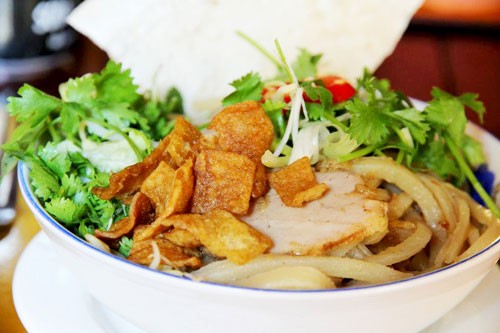
The essence of Cao Lau lies in its meticulously prepared noodles, made from fragrant rice soaked in ash water, ground into flour, then cut into strands, steamed multiple times, and dried. Cao Lau is served with crispy fried pork cracklings, braised pork, blanched bean sprouts, and fresh vegetables. When eaten, Cao Lau offers a delightful combination of the chewy texture of the noodles, the sour, spicy, bitter, astringent, and sweet flavors of the fresh vegetables, and the crispy pork cracklings melting in your mouth. Thanks to these unique features, Cao Lau has become a signature dish of Hoi An's ancient town cuisine and is recognized as one of the top 10 dishes of Asian culinary value.