VI
VI


Each region has its own unique beauty during a particular time of year. While the North captivates tourists with autumn, and the Central region is always a suitable destination in summer, the flood season is the perfect time to visit the Southwestern Mekong Delta. This is the time when water from the upstream flows down, bringing silt and fish and shrimp to the Mekong Delta. Therefore, the already rich and diverse cuisine of the Mekong Delta becomes even more delicious and distinctive from August to November. Below are some specialties that tourists should try if they have the chance to visit the countryside of the Mekong Delta.
Linh fish
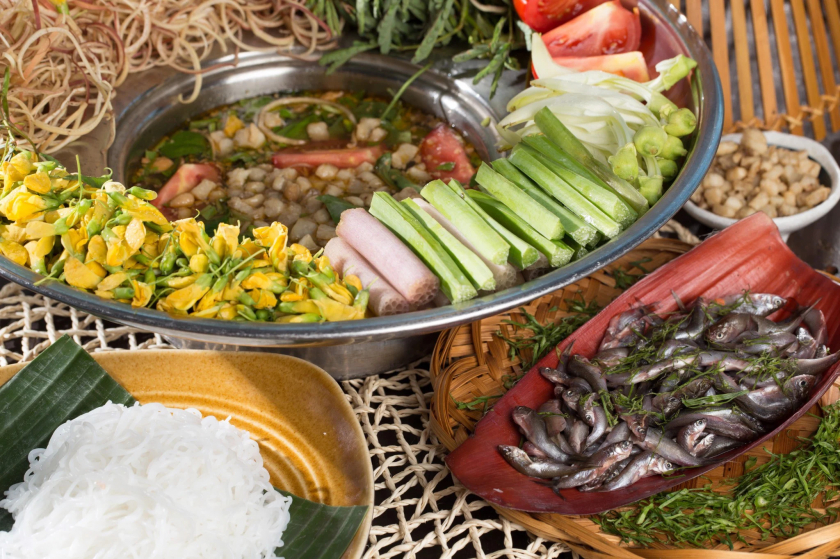
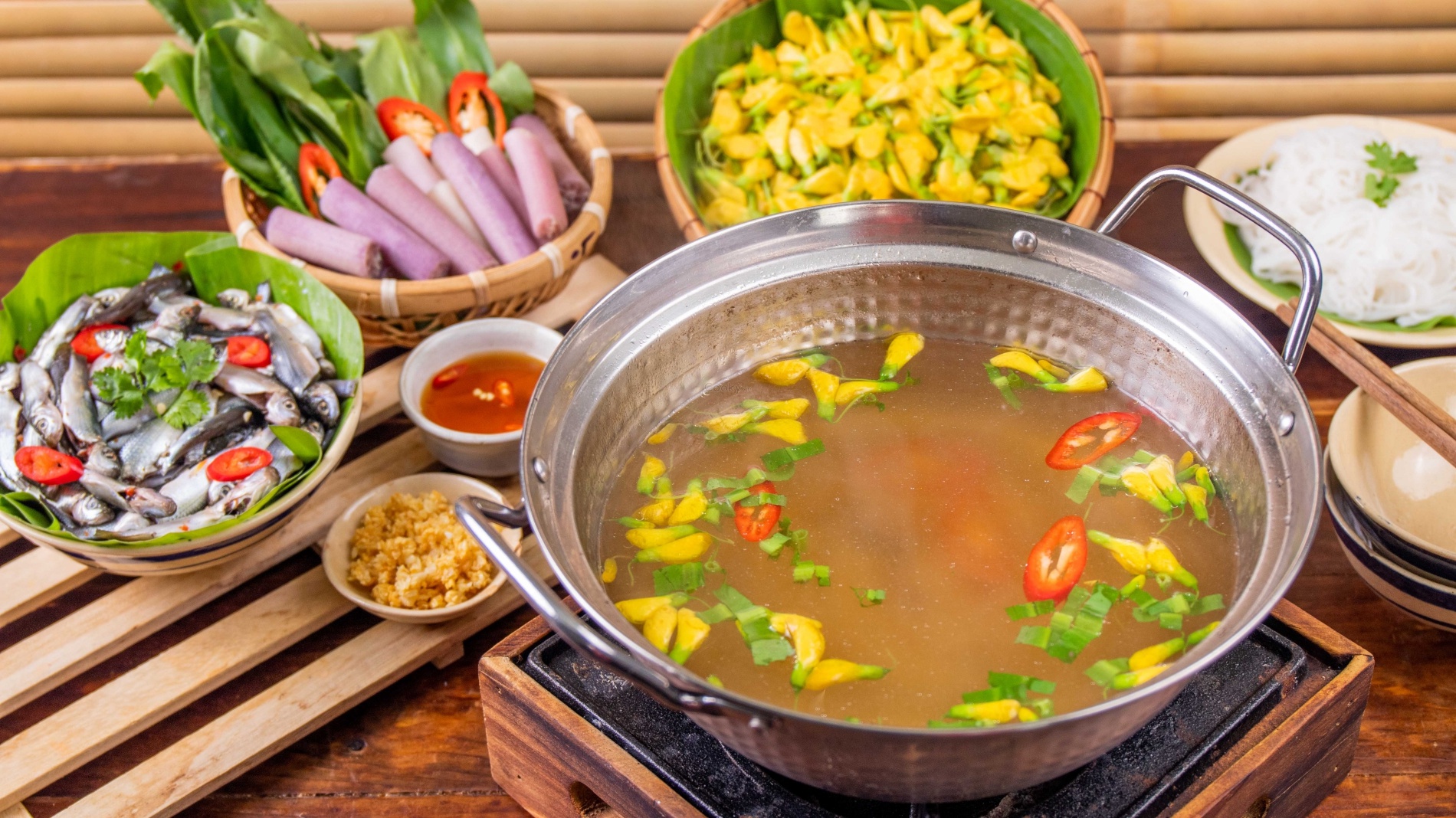
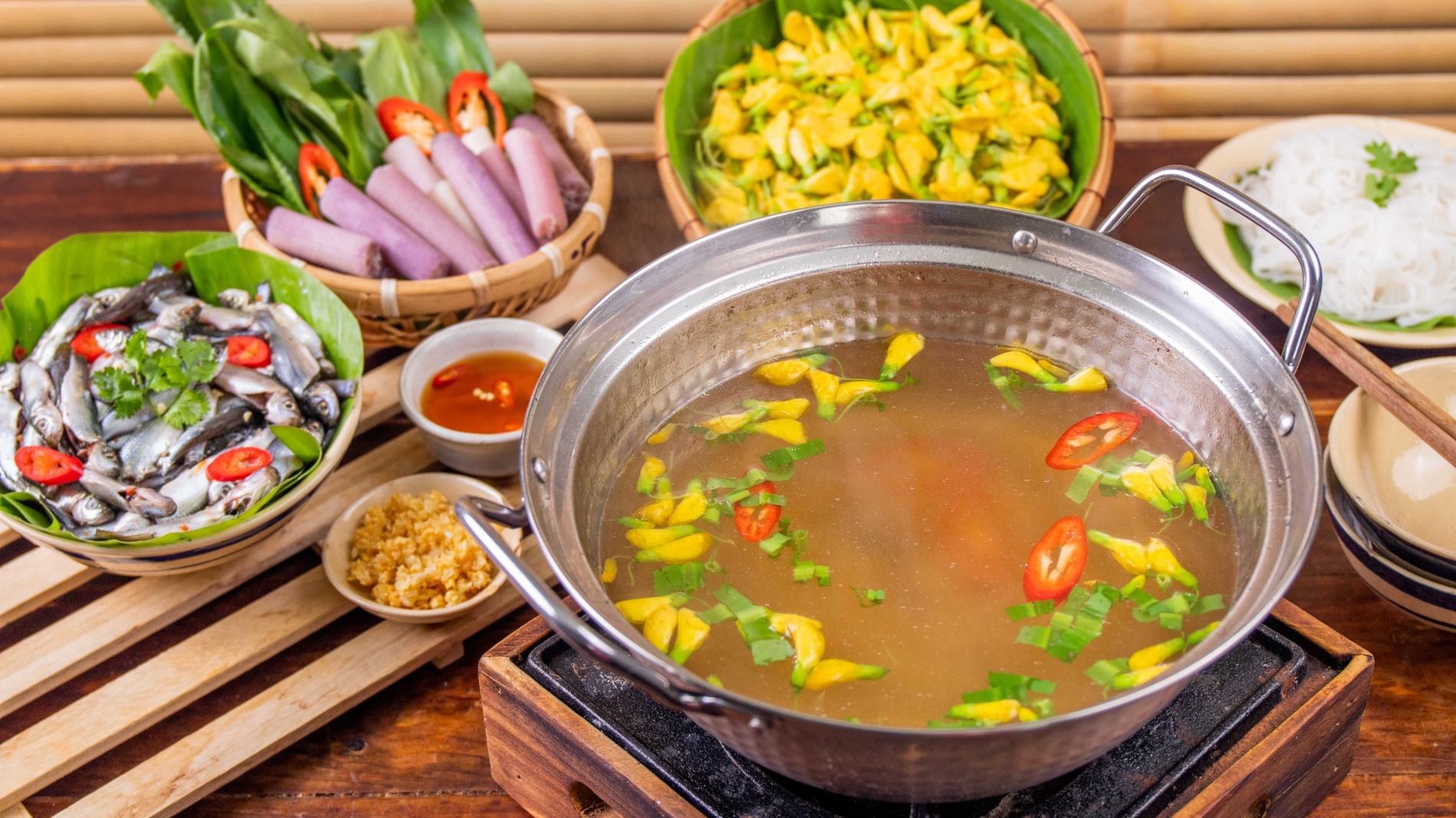
Hot pot with snakehead fish and water hyacinth flowers.
Around the ninth lunar month, the linh fish begins its breeding season. Therefore, when people see linh fish appearing in large numbers in fishing nets, they know that the flood season has truly arrived in the Mekong Delta. From the upper reaches of the Mekong River, this species of fish follows the alluvial deposits to the Mekong Delta as a generous gift from nature. This is also the season for many families who make a living from fishing with nets, traps, and hooks. Linh fish are usually quite small, about the size of a little finger; if lucky, they might catch some that are about two fingers long.
Small fish, about the size of a finger, can be used to make sour soup with Sesbania grandiflora, water spinach, water lily, or deep-fried until crispy, battered and fried, or braised in fish sauce. The dish of small fish dipped in vinegar with Sesbania grandiflora is definitely worth trying. The fish doesn't need scaling; just put it in a bamboo basket and gently rub it, then remove the guts and marinate with a little salt, sugar, MSG, pepper, and minced garlic. The vinegar must be homemade vinegar with a uniquely refreshing sour taste.
The best way to enjoy delicious snakehead fish is in the middle of a thatched hut by the river, listening to the gentle breeze and the haunting melodies of traditional Mekong Delta folk songs – that's the true essence of the Mekong Delta. Sharing a pot of freshly cooked rice with the locals, eating snakehead fish sour soup with water hyacinth flowers, savoring a crispy piece of fish, and toasting with a glass of rice wine will be an unforgettable experience for anyone visiting this region.
Wildflower
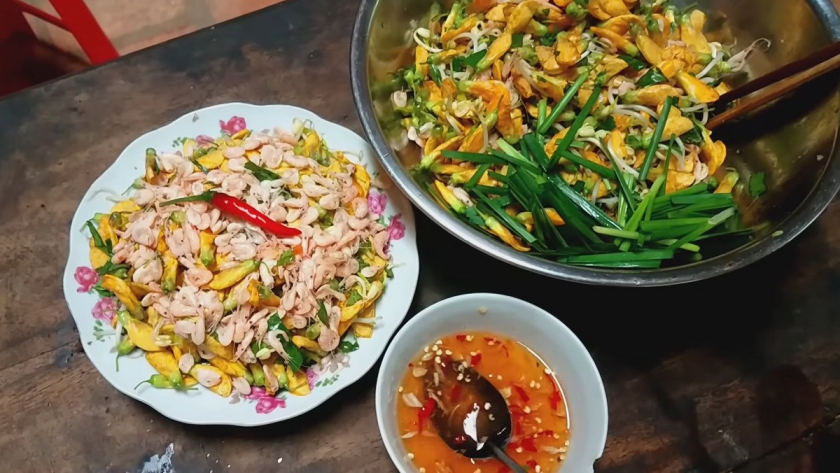
Sesbania flowers can be used to prepare many dishes, from simple to elaborate.
Although it's just a wild plant growing on the embankments, when the flood season arrives, this plant bursts into vibrant yellow blossoms, adding a touch of rustic charm. For as long as anyone can remember, the people of the Mekong Delta have come to regard the water hyacinth as a special, once-a-year delicacy.

Water hyacinth flowers are not always available. To find this product, people have to wait until the flood season. The peak blooming season for water hyacinths is around September-October, which is also when the floodwaters are at their highest in the Mekong Delta. In the Western region, water hyacinths are abundant in An Giang, Dong Thap, Long An, and Can Tho provinces.
Sesbania flowers can be prepared in many ways, from simple to elaborate. On days when you're too lazy to go to the market, just pick some and stir-fry them with garlic – it's enough to fill you up. Even more appealing is a sour fish soup with the added touch of yellow. Sesbania flowers are crunchy, with a slightly bitter taste that lingers in the throat. Besides that, people in the Mekong Delta also use sesbania flowers in stir-fried shrimp, fish noodle soup, and as a dipping vegetable for braised dishes…
Water lily stems stewed in fish sauce
Every flood season, water lilies grow rapidly and bloom in a vibrant purple hue across the fields. From around the eighth lunar month, the water lilies bloom profusely, covering the surface of the lakes and creating a breathtaking scene in the countryside. Despite their simple beauty, these water lily fields during the flood season have inspired many photographers, resulting in impressive works of art.
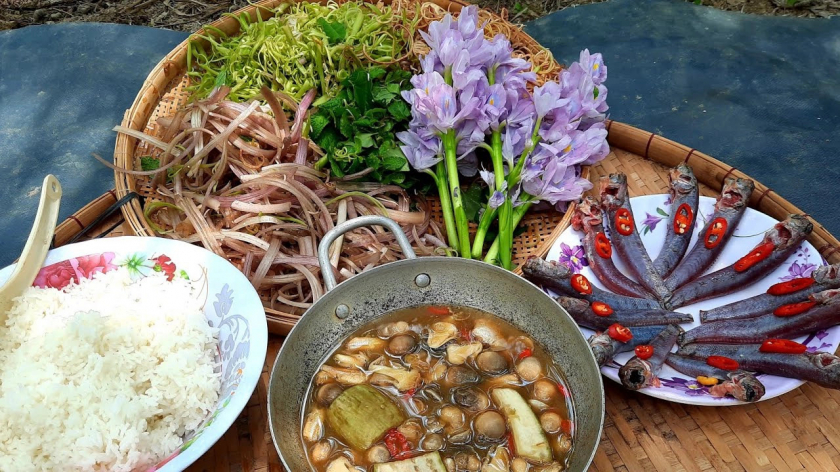
Water lilies are a special vegetable dish of the western region of Vietnam.
Water lilies add a unique touch to Western Vietnamese cuisine, as they can be combined with many delicious dishes. Their slightly bitter taste, crisp texture, and juicy texture contribute to a more appetizing meal. In Western Vietnamese hot pot dishes, water lilies are an indispensable ingredient. From snakehead fish hot pot, freshwater crab hot pot, fermented fish sauce hot pot, etc., water lilies are always present.
Among these dishes, the most famous is undoubtedly braised water lily stems with fermented fish sauce. After harvesting, the water lilies are washed, broken into small stems, and drained. Braised water lily stems with fermented fish sauce is a wonderful combination of this wild vegetable that grows in low-lying, muddy areas and the finest fermented fish sauces. After removing all the bones, minced lemongrass, shrimp, snakehead fish, pork belly, etc., are added and seasoned to taste before being removed from the heat. The spiciness of the chili, the aroma of lemongrass, the sweetness of the shrimp, and the crispness of the water lily stems make it an unforgettable dish for diners.
Fish sauce
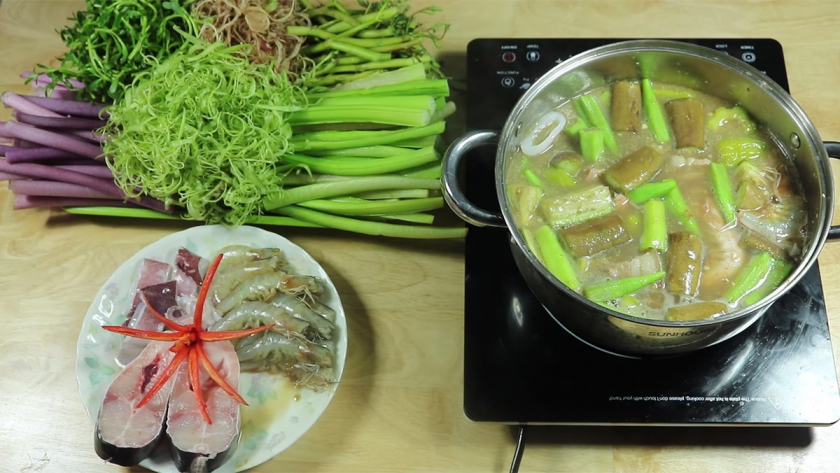
Fish sauce made from snakehead fish is a seasoning for many dishes in the Mekong Delta.
Fish sauce made from snakehead fish is often chosen as a souvenir by tourists. It is fermented from fresh, pure snakehead fish for 3-6 months. The sauce is thick, reddish-pink in color, with a rich, savory flavor and a sweet aftertaste from the fresh fish over a long period. Just dip a piece of fish or meat in the sauce and savor the full flavor of Western Vietnam cuisine.
Three-striped crab
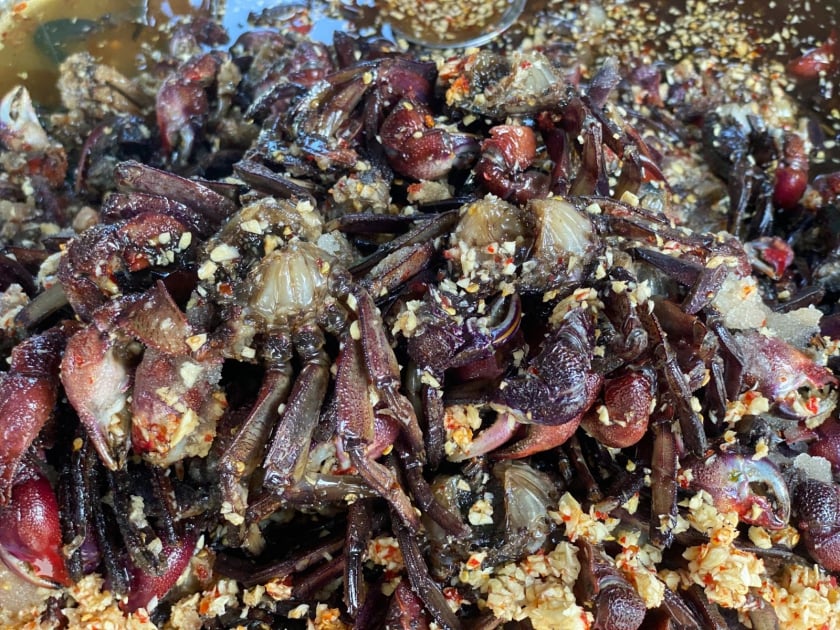
The three-spotted crab is a small crab-like species that lives in mangrove forests.
During the flood season, the three-striped crab also follows the water flow into the Mekong Delta region. The three-striped crab belongs to the crab family; perhaps because it has three stripes (grooves) on its back, it is called the three-striped crab. Three-striped crabs are usually small in size but have a lot of roe, firm flesh, eight legs including two large claws, and their entire body is covered in hair.
Previously, the economic value of the mud crab was not high; it was often used to make fermented mud crab paste, a common sight in the simple meals of people in Southern Vietnam. However, nowadays, due to increasing culinary demands, mud crab has become an ingredient in many popular and delicious dishes.
Rat meat
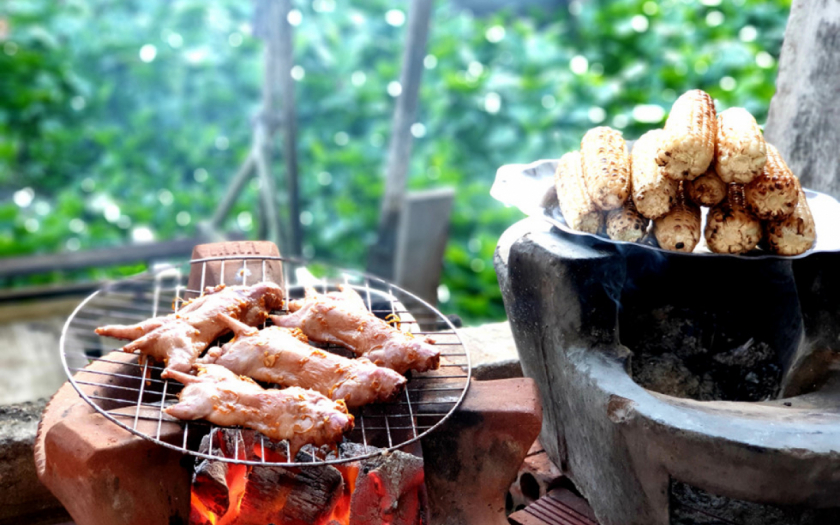
Field rat meat is a specialty dish of the Southwestern region of Vietnam.
After each harvest season, farmers take advantage of the opportunity to "hunt" for plump, meaty field rats. Field rats in the Mekong Delta feed on rice, crops, and burrow in the soil, so they are generally quite clean and do not carry as many diseases as sewer rats. Field rats have become a rare delicacy in the Mekong Delta since the area of rice cultivation has shrunk, replaced by crops and fruit trees to serve the needs of the whole country and for export.