VI
VI


“Alternate Existences” is a retrospective journey into 40 years of creating the unusual realities contained within each of photographer Tom Hricko's works.
Created from masterful experience in both handcrafted printing and digital photography, Tom Hricko's photographs are also a memoir reflecting half a century of rapid development and transformation in the art of photography – from the days of manual, darkroom photography to the advent and rapid development of digital cameras.
The experience is structured chronologically according to the artist's creative timeline, with three separate spaces on the 6th, 11th, and 14th floors at 198 Nguyen Thi Minh Khai Street, District 3. This unique arrangement allows viewers to easily journey alongside Tom Hricko, reminiscing about his years of tireless creative work.
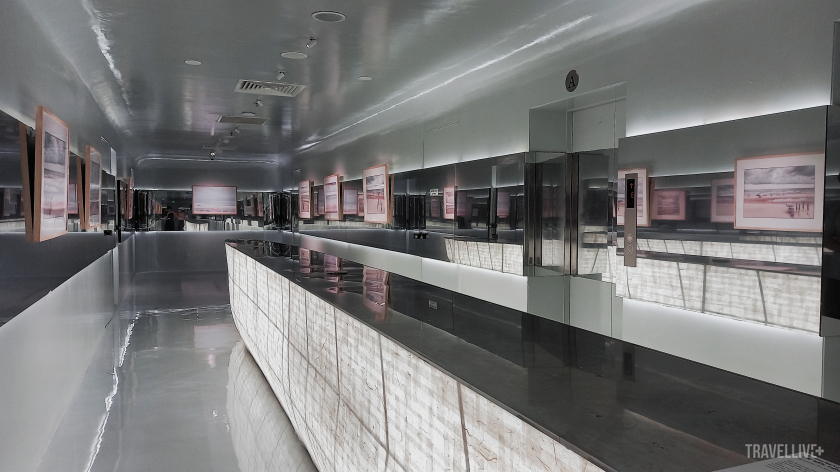
The experiential spaces are located on floors 6, 11, and 14.
A 40-year journey of perseverance.
Tom Hricko, born in 1945, is known as an American fine art photographer, photography educator, and master of hand-printed photographic techniques. His work has appeared in numerous collections across the United States, including Lincoln Financial Group, Phoenix Mutual, and People's Bank. Tom Hricko taught advanced black-and-white photography and printing techniques at the State University of New York at Purchase and Fairfield University. For over 20 years, he has found his true home and second homeland in Vietnam.
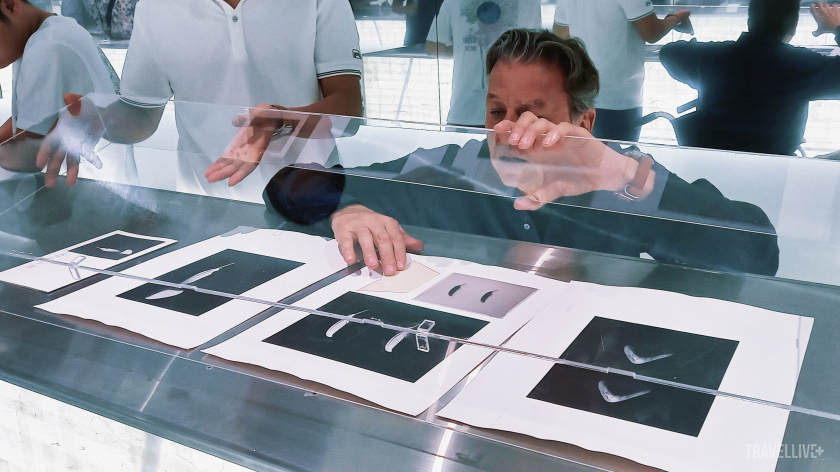
Tom Hricko, born in 1945, is known as an American fine art photographer, photography educator, and master of hand-printed photographic techniques.
From a very young age, Tom Hricko became acquainted with paper, ink, various art supplies, and even a basic set of photographic equipment provided by his parents, thus nurturing his artistic soul within a family rich in artistic tradition.
After shifting his focus from painting to pursuing art photography, Tom Hricko traveled extensively throughout America, Europe, and many other countries in search of romantic, traditional landscape photographs that evoked the pristine beauty of nature. In the course of his artistic pursuits, he quickly realized the magical ability of photography to establish new and distinct realities—irrational yet plausible worlds.

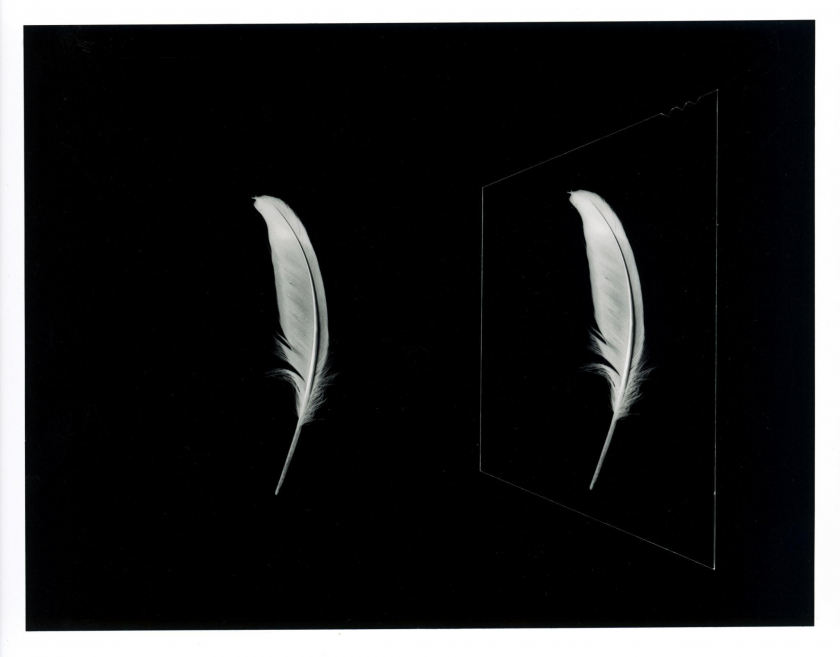
The work "Feather" belongs to the Object/Image series (1979)
Quiet contemplations
Tom Hricko's medium and large-format black-and-white photographs are influenced by Edward Weston and Paul Caponigro. Going against the idea of "capturing the moment," Tom aims to "extend the time" of the image extraction process through multiple exposures on a single subject. This creates a photographic process comparable to the creative process in painting.
This method is frequently found in his works such as "Requiem." In "Requiem," Tom Hricko uses the number 3 to honor the departure of the emotional journey: 3 objects in 3 different positions, with 3 exposures. Through the art of image layering, each exposure represents the moment the future becomes the present, and then from the present to the past. When the photograph is completed, the emotional journey comes to an end.
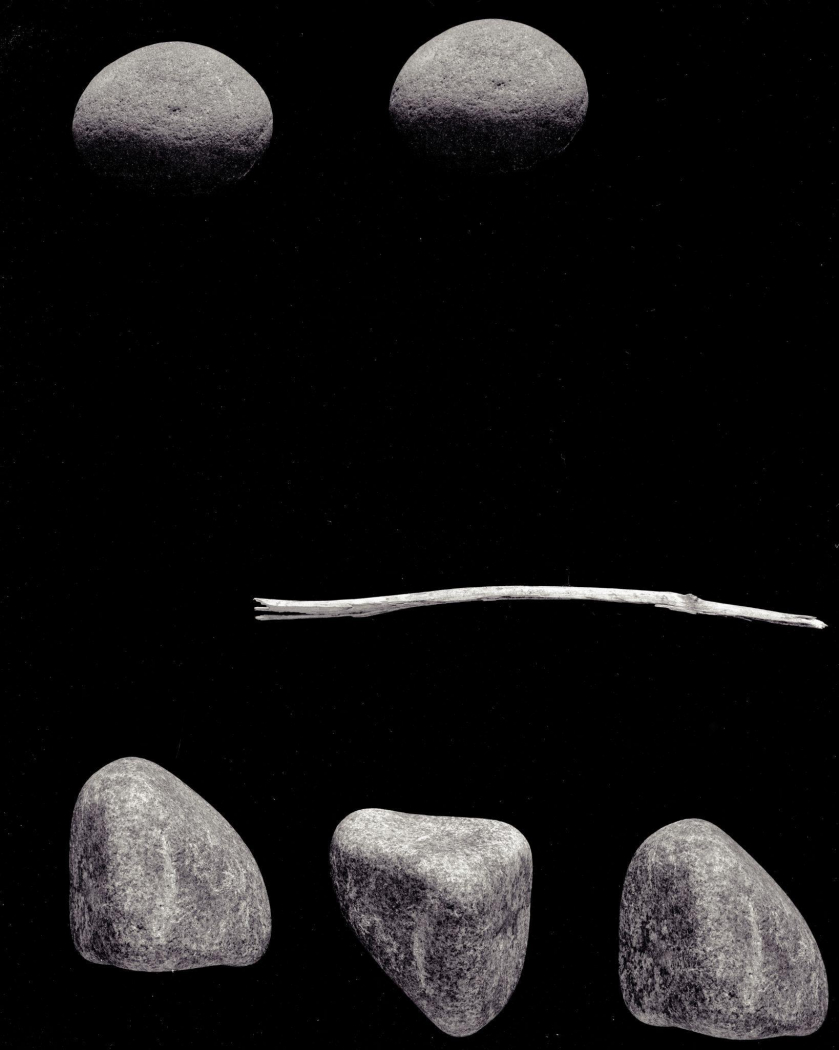
The work "Requiem" (1982) is likened to the impermanence of all things as they flow with the passage of time.
Using the same multiple exposure technique, Tom Hricko presents a different concept of time in Tulips. He captured a flower from two different perspectives simultaneously. When viewing Tulips, we experience two viewpoints in a single glance. Tom Hricko employs photographic techniques to deceive the eye, making us believe there are two flowers in the same image. Tulips was born from the idea of challenging the limits of human perception of time, prompting viewers to reflect on themselves and see the world through a more multi-dimensional lens.
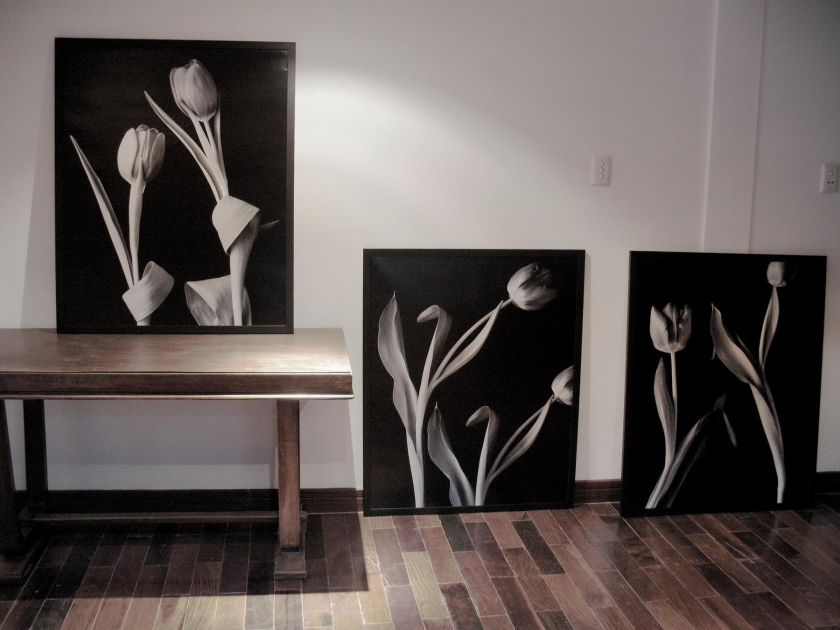
When we look at tulips, we have two perspectives in a single glance.
Beyond the technique of multiple exposures, Tom Hricko also loves capturing moments of objects that react uniquely to light, such as frosted tracing paper, reflective mirrors, clear glass jars, and flowers. The classic still-life compositions in his work, Arrangement, are reminiscent of his years studying painting. We can see the soft forms of flowers and leaves contrasting with geometric shapes, large objects contrasting with small ones, form contrasting with shadow, artificial contrasting with natural, clarity contrasting with ambiguity.
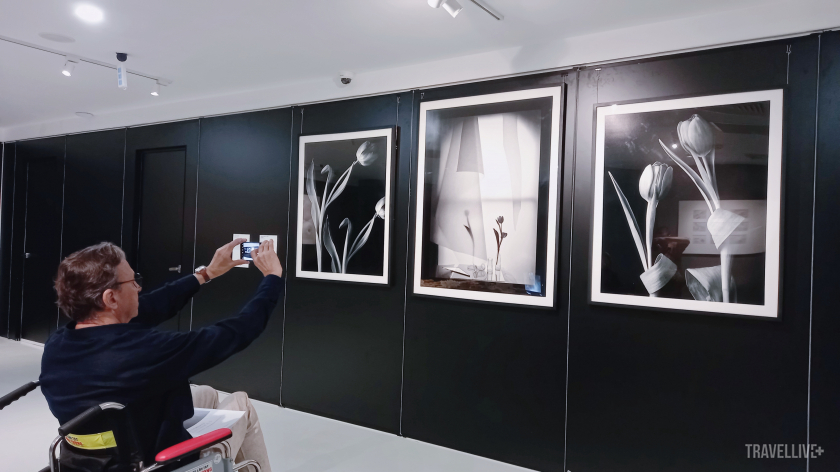
The artwork "Arrangement" (center) is reminiscent of his years studying painting, with its characteristic still-life composition.
Tom Hricko also takes viewers to a parallel space where works like "In Vitro Landscape" are captured using single exposure techniques and color filters to create shades that cannot exist in reality, making us question the reality of existence. This series also marks a shift in Tom Hricko's career from photographing realistic natural landscapes to man-made landscapes created using still objects.
Tom Hricko shared his concept of the reality of each artwork, saying, “I hope that people will take the time to ‘contemplate’ the artwork instead of simply ‘looking’ at it as they do with today’s common screens. By slowing down and looking deeply at the artwork, I hope that viewers will discover something truly original from the depths of their hearts.”
Most remarkably, these ideas and techniques, which were executed entirely by hand by the photographer, are still relevant and inspiring in today's digital age.
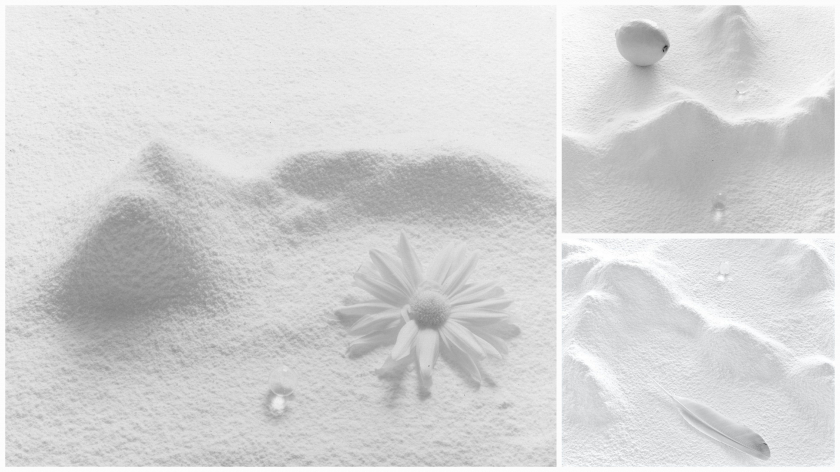
"In Vitro Landscape" is captured using single exposure techniques and color filters to create shades that are impossible to achieve in real life.
Vietnam and its fortunate connections
Tom Hricko and Vietnam share a strange connection from the very first days he set foot here in 1967. The Petri 7s photometric camera he bought in Vietnam, intended to satisfy his artistic nostalgia, led him to the path of authentic photography. And so he returned to Vietnam countless times since 1995, his affection and attachment to his second home prompting him to move beyond his "laboratory" photography and return to capturing the landscapes of Vietnam with his photo series "Echo Beach" and "Hue".
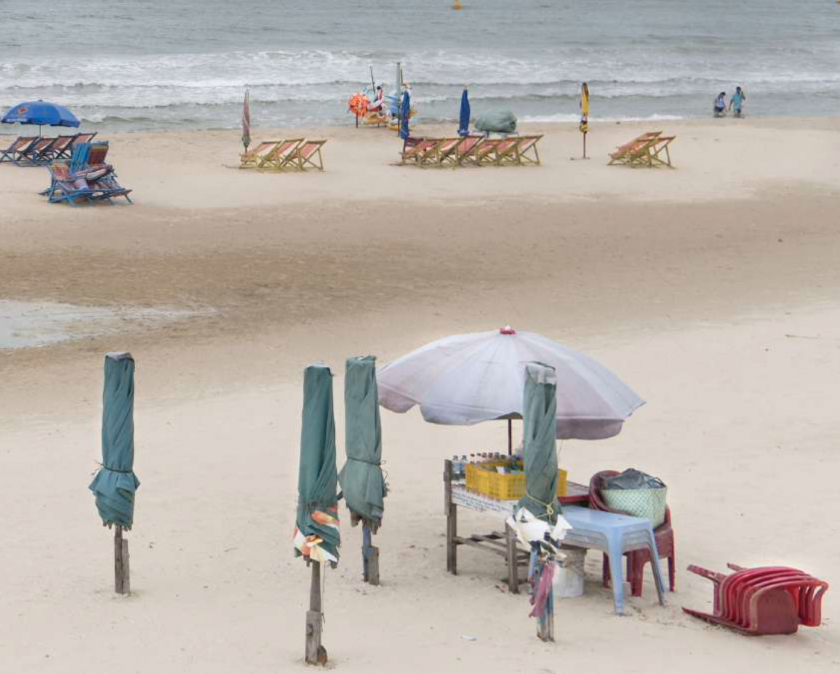
Vung Tau served as the inspiration for Tom Hricko's Echo Beach series of works.
Tom Hricko's Echo Beach series, created in Vung Tau, involves numerous experiments with varying color saturation and hues, drawing on the fact that the beach, usually bustling with people, appears almost completely empty within his work. During the viewing process, Charlie Lam, a Vietnamese-American, noticed the movement of life as a sequence of time. The image of a ship offshore, preserved within each still photograph, prompted him to express his thoughts to Tom Hricko about whether this intriguing arrangement was a deliberate calculation. In response, Tom Hricko quoted a saying by the master of light in photography, Ralph Gibson, to explain his perspective: "I am not the music; I am just the radio playing it. So I follow the work; I don't arrange it. I go where the work compels me to go."
Tom Hricko didn't intentionally arrange these things; he simply let his work guide him. And so, the concept of extending time was orchestrated by nature, and now Tom Hricko is the one who brings that arrangement into a different reality that he created.
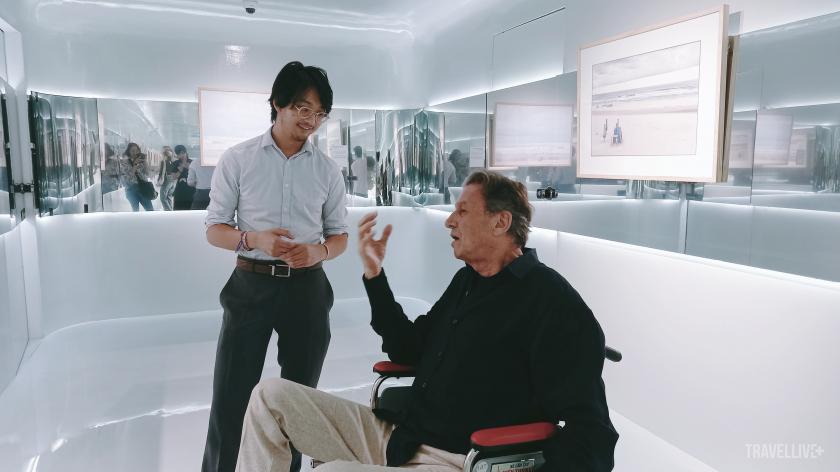
Tom Hricko shared some interesting insights with Charlie Lam, one of the fans of his Echo Beach series.
Alternate Existence has taken viewers beyond the conventional concept of "seeing." Each work is a testament to the unique capacity of photography: creating "alternative versions" that are both similar and different from the familiar objects and events of the everyday world. From this, the artist constructs new realities that can only be seen through the expression of the photograph. It is a miracle that moves us with its familiar simplicity and its ever-changing nature.
The exhibition is currently open from 9:00 AM to 8:00 PM, November 19th to December 10th, 2022, at TOONG, floors 6-11-14, 198 Nguyen Thi Minh Khai Street, District 3, Ho Chi Minh City.