VI
VI


Text and photos:Minh Trang(from the Netherlands)

Camping tourismas a way to enjoy autumn
The name itself is enough to give you an idea of this type of travel. If you own a car, enjoy long-distance driving, dislike restrictions, and especially don't necessarily need a comfortable bed, then you might consider this type of travel. Although the cost of renting a camping spot for two people and a tent for two only ranges from about fifteen to twenty Euros depending on the size and amenities of the campsite, which is much cheaper than a regular hotel room here, I wouldn't dare say this is cheap travel. Because to fully equip yourself for the trip, you will have to spend a considerable amount on necessary items, especially if it's your first time. However, once you've tried this type of travel, you won't have to worry about buying those items again, and it can be said that this type of travel is quite cheap and very free.


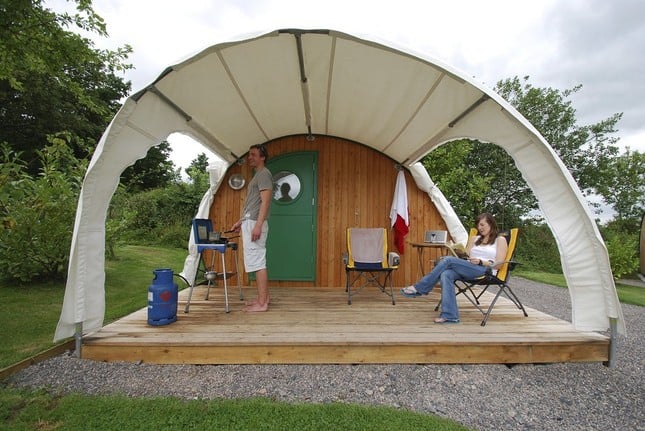
The first thing to prepare, of course, is a tent. Depending on your trip plan and duration, choose a tent that suits you. My husband and I like to visit many places, so we only camp for one or two days at each location, and we chose a trekking tent for quick setup and dismantling. This type of tent is small, with a sleeping compartment for two to three people and a small compartment for belongings. However, you can't stand upright or set up a chair. This isn't a problem when the weather is dry and sunny. When it rains, you can only crawl inside the tent, lie down, read, and chat with each other. Learning from our experience on our second trip, we bought a larger tent that could stand upright and had a proper compartment for a table and chairs to sit in during rainy weather or at night when it got colder.

Once you have a place to stay, you need to worry about sleeping arrangements. This is quite simple because when you go to stores specializing in outdoor gear, you can easily find suitable and affordable inflatable mattresses and sleeping bags. We usually visit cities or tourist destinations during the day, so we eat at restaurants there. In the mornings and evenings, we cook our own meals in our tent, which is a great experience. This is also the most distinctive and enjoyable aspect of camping, because the feeling of sitting in nature, cooking, eating, and chatting is incomparable. Therefore, you need to bring a portable gas stove, pots, pans, cups, bowls, plates, etc. Because you'll be moving around a lot, compactness is a priority.
| In the mornings and evenings, we cooked our own meals in our tents, which was a wonderful experience. This is also the most distinctive and enjoyable aspect of camping, as the feeling of sitting amidst nature, cooking, eating, and chatting is incomparable. |
Lightness is always the top priority. Therefore, most items forfishingMade of plastic or other lightweight materials so you can move them around easily.
Europeans don't usually sit on the floor to eat meals like we do, even outdoors. Therefore, tables and chairs are very important to them on such trips. The criteria of being compact and lightweight remain, so when buying tables and chairs, pay attention to choosing types that can be easily folded. Depending on your budget and weight, you can choose a suitable set of tables and chairs.

My wife and I usually take at least a week off, so camping far from home, hundreds or even thousands of kilometers away, is commonplace. However, many people camp within their own country or not too far from home on weekends. Nevertheless, whether far or near, driving a car is the most important thing. How can you bring your "house" (the campsite) with you without a car? I will refrain from mentioning those who...back-packingBackpackers typically travel using public transport, carrying all their belongings in backpacks. Because they often drive long distances and through diverse terrain, it's crucial to check their vehicles before departure, especially regarding insurance. We often register as members of international emergency assistance organizations so that if our vehicle breaks down along the way, we can call for help without incurring high costs if we're not members. This also helps prevent interruptions to your trip, as if your vehicle becomes unusable, you can borrow one to continue your journey and retrieve your own on the way back.
Most European countries don't allow camping indiscriminately. Therefore, researching campsites is essential. We don't like crowds, so we usually choose small campsites, often local farms. Although you can find all the information online, campsites are usually compiled and introduced in specialized camping books. For about fifteen to twenty Euros, you can easily find information about each campsite, from location to amenities. Whether large or small, star-rated or not, all campsites have toilets, showers, dishwashing facilities, washing machines, and even refrigerators or freezers. Except for our trip to Switzerland where we had to pay for showers, all campsite amenities were included in the tent rental price. Because we were two people and our tent, without electricity, we usually paid around 15 Euros per night in France, England, and Luxembourg. Switzerland was more expensive, at 26 Euros per night. If we want to use electricity, we have to pay an extra 2 or 3 Euros and need special wiring.
Warm sunshineisland nationOlder brother
Since we lived near Amsterdam, we chose to take a ferry across the Calais Strait in France to get to England. It was a four-hour drive from our home to Calais, followed by a two-hour sea ride to Dover, England. It's called a ferry, but it's actually a large ship; the lower decks house cars, while the upper decks contain restaurants and shopping areas.
From Dover, we drove to our first campsite in Somerset. Interestingly, having become accustomed to driving on the right side of the road in the Netherlands, we were often confused when we had to switch to the left, especially on country roads and around roundabouts. It was a truly enjoyable experience for our journey.


Although we had only planned to stay in Somerset for one night, the campsite and surrounding area were so beautiful that we decided to stay an extra night. We felt completely free to stay a little longer or shorter as we pleased. It was entirely up to us.
The weather improved in the following days, and we set off for Wales, the land of rocky hills and sheep. On the way from Somerset to Aberyswyth, a Welsh city where my husband had lived for a few years as a child, we had the opportunity to stop and visit some beautiful medieval sites. Both of us enjoy reading, so we chose to pass through Hay-on-waye, a small town specializing in used books, and found some interesting ones.
We camped for two days in a remote village 30 minutes' drive from Aberyswyth, and each day we drove to nearby towns for sightseeing. Then we headed straight to North Wales and camped on a farm near Betys-y-Coed, a charming tourist town nestled in the wilderness. From there, it was a little over an hour's drive to Chester, an old English town, where we spent a day wandering the streets and admiring the unique English architecture.
The drive from Wales back to Dover to catch the ferry to France, and then back to the Netherlands, was over six hours, so we decided to camp overnight in Canterbury before our ferry departure. Like Chester, Canterbury is an old, small city with typical English architecture and a large student population. A simple afternoon stroll through Canterbury captivated us with its cozy little alleyways and streets. Our trip to England and Wales ended with our ferry back to the mainland. However, the experiences of the trip lingered in our minds, and we are sure we will return to these places and definitely continue this "backpacking" style of travel.
Two weeks traveling through four European countries.
On last year's camping trip, we wanted to go to southeastern France, and this time we chose a route that passed through Luxembourg so I could visit one of Europe's richest cities. We arrived in Luxembourg on a cloudy, drizzly day. Partly prepared for the weather, we decided to explore the city center in the rain. When the rain stopped, we drove to a castle about 30 minutes' drive from the city for a visit. In the afternoon, with some time left and a few rays of sunshine, we visited Trier in Germany, just over half an hour's drive from the Luxembourg border and our campsite.


| That's the freedom of this type of camping. You can stay where you want, and leave where you want. The distinctly different terrain of each location makes the trip even more interesting. |
Because the weather wasn't very good, we decided to set off earlier than planned to venture further south into France. That's the freedom of this type of camping. You can stay where you want, and go wherever you want. In France, we continued our journey, visiting Besancon, Annecy, and Chamonix. Each place had a distinctly different terrain, making the trip even more interesting.
After a week of wandering around France, we went to Switzerland. The campsite in Annecy was just over an hour's drive from Geneva. Since it was our first time in Switzerland, we had booked our campsite in advance while still in the Netherlands, partly because the Swiss are known for their strictness. Our chosen campsite was a farm near Interlaken. From there, we could admire the majestic snow-capped mountains, the crystal-clear lakes, and hike up hills that looked like something out of a painting. Then, the weather turned capricious with a light drizzle; we went to explore Bern, the Swiss capital, an ancient city recognized as a UNESCO World Heritage site. Bern was only an hour and a half's drive from our campsite.


A week wandering around Switzerland felt so short. Luckily, the day we packed up, the weather was sunny and the tents dried out. We even took the opportunity to air out our sleeping bags and pillows before loading them into the car. Camping involves worrying about seemingly simple things like that, but it's these simple worries that create unforgettable memories. On the more than seven-hour drive from Switzerland back to the Netherlands, my wife and I took turns driving, stopping and resting along the way. It was tiring but fun.