VI
VI


The new bridge, officially named the Tongjiang-Nizhneleninskoye China-Russia Bridge, connects Tongjiang (a city in Heilongjiang province, northeastern China) with Nizhneleninskoye (a Russian border city along the Amur River).
The completion of the cross-border bridge means that China's northeastern railway network can be connected to Russia's Siberian Railway.
The 2,215-meter-long bridge took seven years to build since its groundbreaking ceremony in February 2014. The bridge structure was completed in 2019, and the final section of railway track was finished on August 17, 2021. The majority of the bridge, 1,886 meters long, is located on the Chinese side.

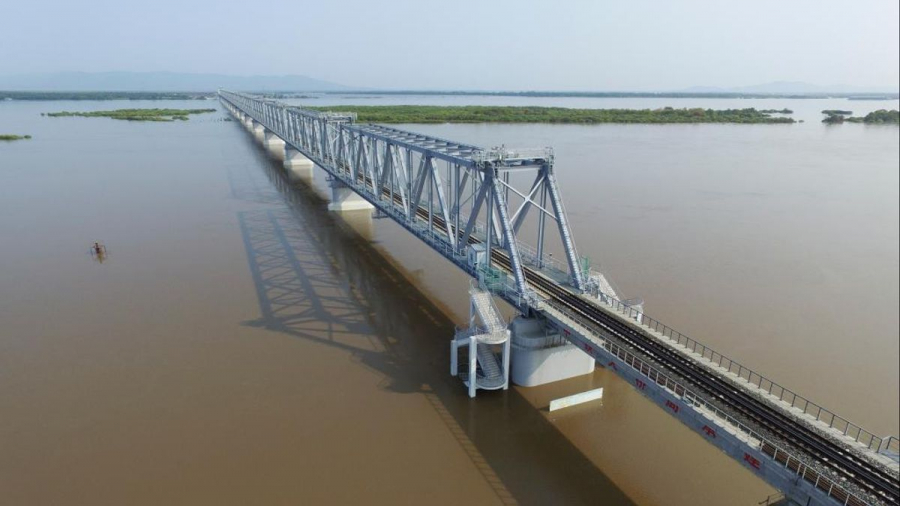
The Dong Giang-Nizhneleninskoye Bridge was completed after 7 years of construction.
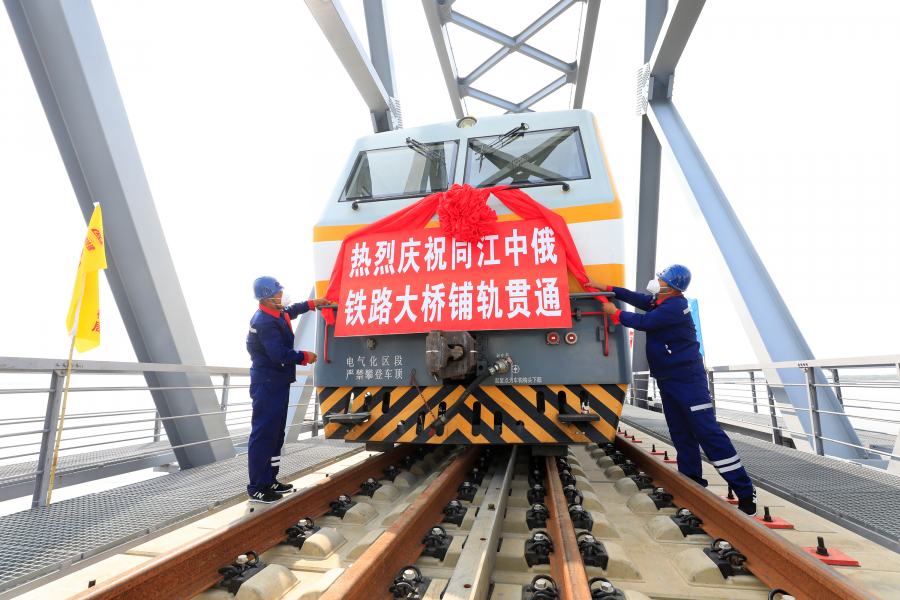
The workers celebrated after completing the final section of railway track on the bridge.
The Tongjiang-Nizhneleninskoye Bridge is the latest project completed under China's "Belt and Road" initiative, aimed at connecting Europe and Asia through infrastructure. According to China National Radio, the completion of the bridge will shorten the rail travel distance from China's Heilongjiang province to Moscow via Tongjiang by 809 km, reducing travel time by 10 hours. Reports indicate the bridge can handle 21 million tons of cargo annually.
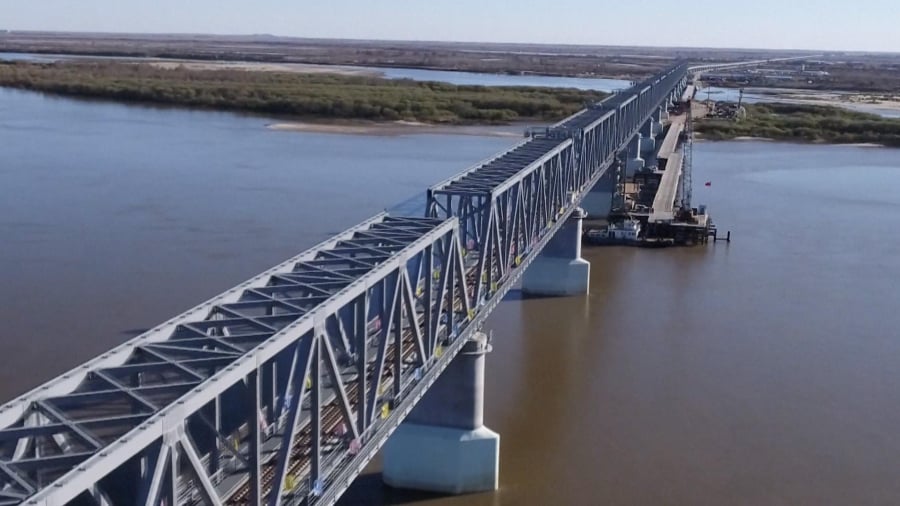
The bridgehead is on the Chinese side.
The Tongjiang-Nizhneleninskoye Bridge is not the only bridge connecting Russia and China. Prior to that, a road bridge was inaugurated in 2019, connecting Heihe in China and Blagoveshchensk in Russia.
These two cities are also working to build the world's first cross-country cable car system, designed by Dutch architects UNStudio. When completed, this cable car system will be able to transport tourists from one side to the other in less than 8 minutes.