VI
VI


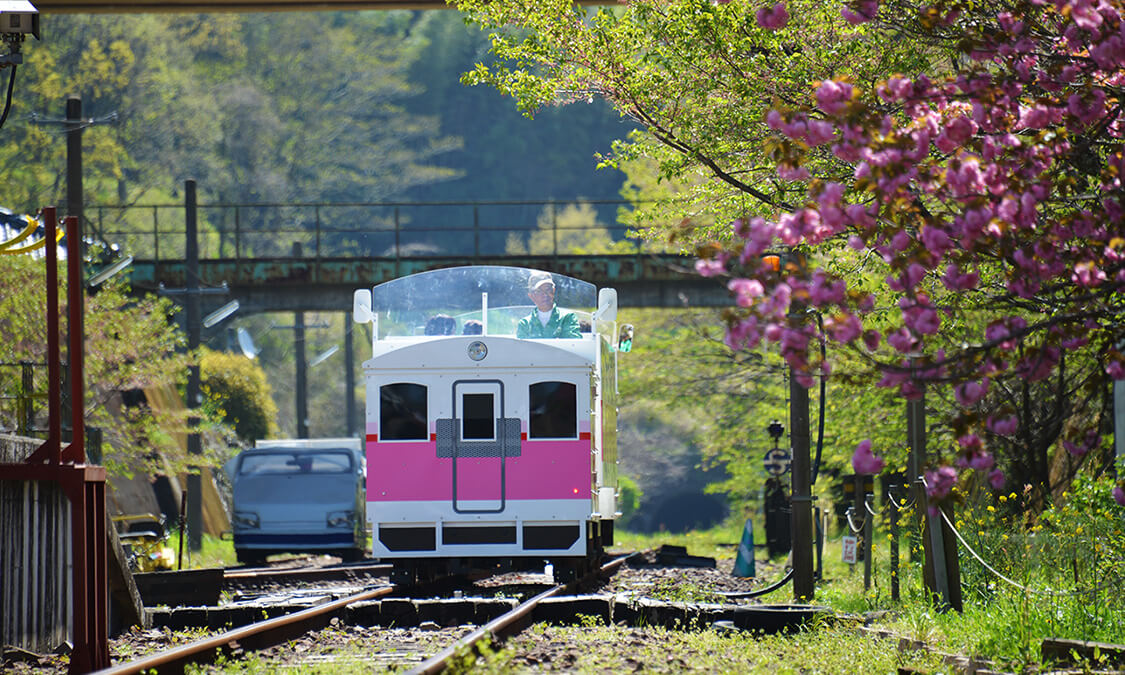
Recently, an open-top sightseeing train powered by biofuel made from used cooking oil and lard extracted from discarded ramen soup began operating in a southwestern Japanese town on August 1st.
The new fuel for trains operated by Takachiho Amaterasu Railway Company in Takachiho town, Miyazaki prefecture, is made by mixing discarded tempura oil with lard extracted from "tonkotsu," or pork bone broth and ramen soup obtained from restaurants, in a 9:1 ratio and using chemicals to purify it.
The leftover oil from the production of fried rice dishes is also used to power the scenic trains on Kyushu Island.
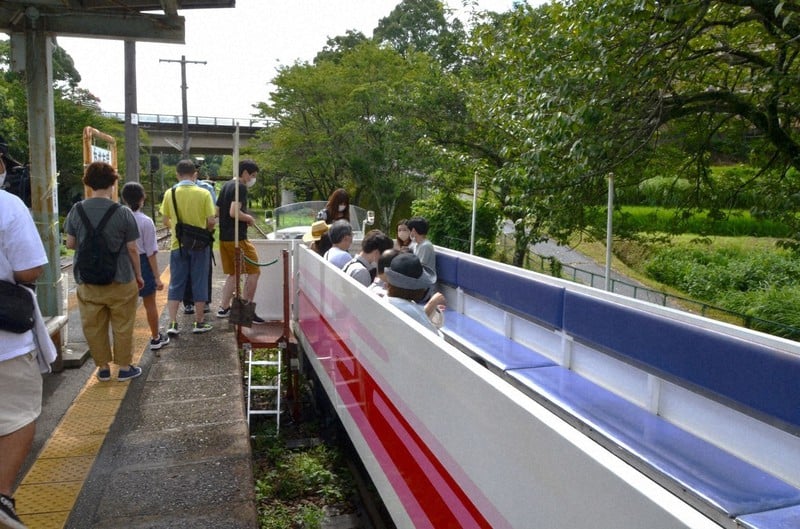
Tourists board a sightseeing train operated by Amaterasu Railway Company, powered by biofuel, in Takachiho, Miyazaki Prefecture, on August 1, 2022. Photo: Isao Araki
Tourists wishing to admire the picturesque Japanese scenery on this special train journey can visit the town of Takachiho in Miyazaki Prefecture.
This intriguing idea was developed by the Nishida Shoun transport company in Shingu town, Fukuoka prefecture (Japan). Soon after, they attracted interest from the Takachiho Amaterasu railway company, which was interested in environmentally friendly biofuels.

Takachiho Amaterasu Railway Co. is interested in biofuels because the company wants to proactively seek environmentally friendly solutions. They turned to Nishida Shoun, a transportation company in Shingu town, Fukuoka prefecture, which has developed this type of fuel. This company has also used refined leftover cooking oil to operate at least 200 of its railway trains since 2021.
Since mid-June, the railway company has continued conducting test runs and found that the engine starts smoothly and has no problems running on inclines. There is no black smoke or strong exhaust fumes, which are often seen in conventional diesel engines.
The town of Takachiho buys recycled cooking oil at the same price as regular gasoline and diesel fuel. This type of oil is environmentally friendly, and the ships' operational capabilities remain unchanged.
Biodiesel is a type of fuel with properties similar to diesel fuel, but it is not produced from petroleum; instead, it is made from vegetable oils or animal fats. Biodiesel, and biofuels in general, are a type of renewable energy.
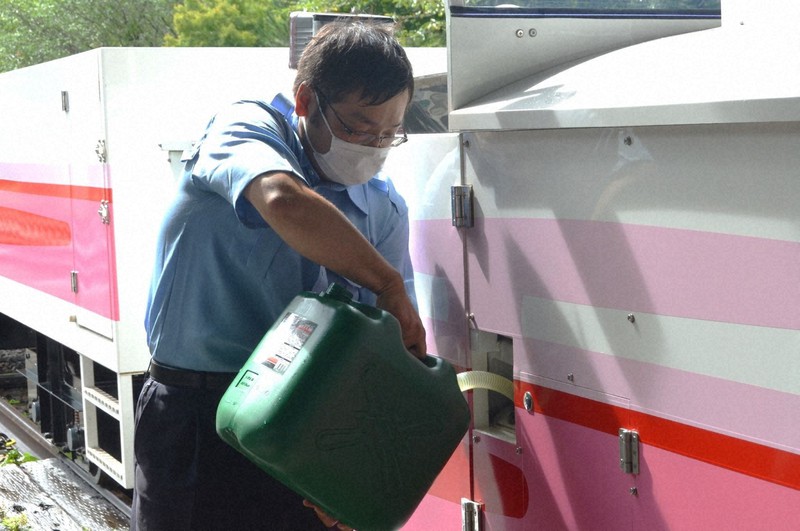
An employee of Amaterasu Railway Company refuels the first train of the day with biofuel in Takachiho, Miyazaki Prefecture. Photo: Isao Araki
A company worker refilled the train with fresh fuel before its maiden journey on the morning of August 1st. When the engine started, the platform was filled with the aroma of stir-fried oil, as if in a Chinese restaurant.
"This oil has a distinctive smell. It's like the smell of a Chinese kitchen, the characteristic smell of grease. The oil is collected from restaurants, refined, and combined with various chemicals to create a smokeless fuel," said Takachiho, the director of the transportation company.
Naoki Akimoto, 38, an office worker from Osaka Prefecture visiting with his family, was very impressed and said, "It's amazing to have a scenic train that can run on ramen soup."
Additionally, at the Takachiho Amaterasu Railway, visitors can fully enjoy the natural beauty of Takachiho. However, due to the outdoor nature of the area, heavy rain and strong winds may affect operations. Also, be aware of days when the railway is closed.