VI
VI


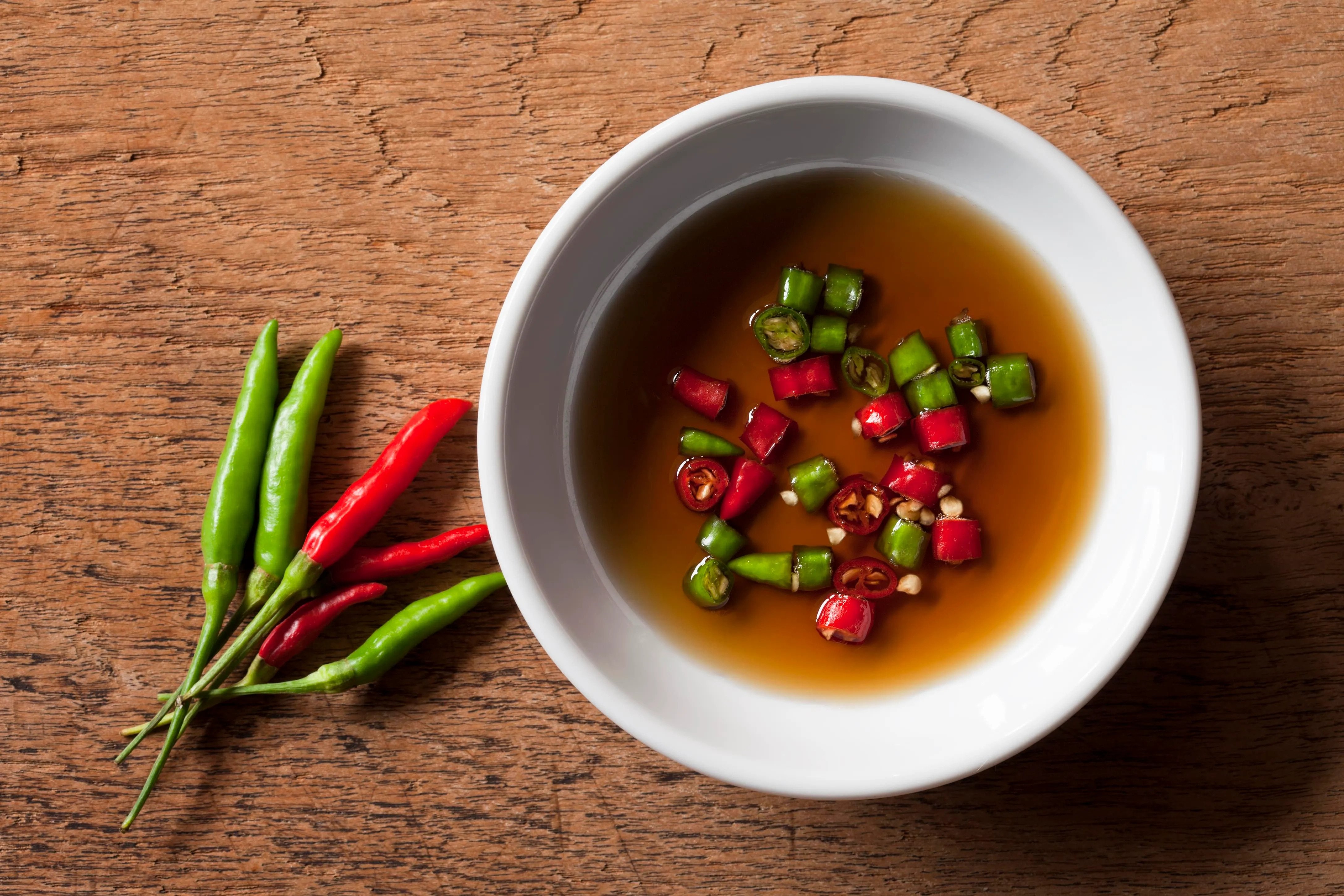

The process of making fish sauce takes about a year, from the stage of salting the fish in large wooden barrels to the fermentation of the anchovies and the extraction of the finest drops of fish sauce.
It is this meticulous process that gives Vietnamese fish sauce its unique flavor, and certainly no visitor to Phu Quoc can miss this signature souvenir.
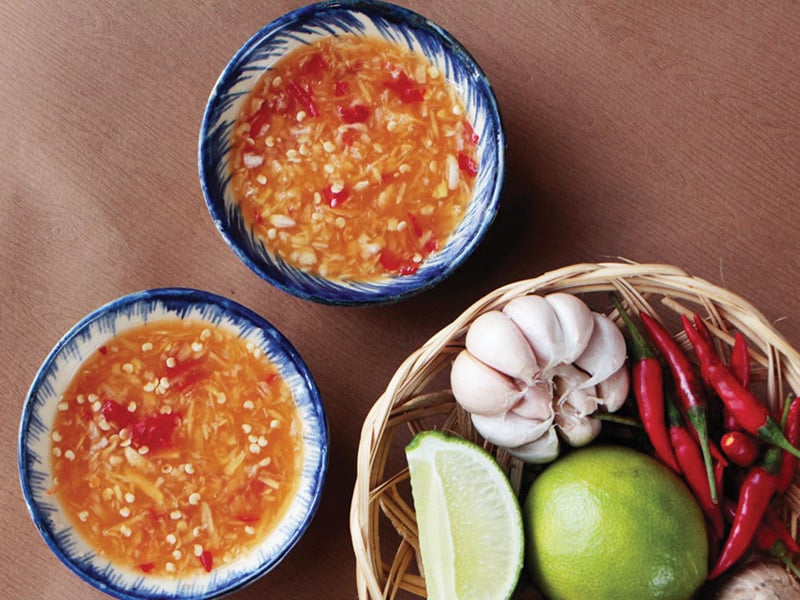
Fish sauce is an indispensable condiment in Vietnamese cuisine.
According to CNN, Phu Quoc is considered the pearl island of Vietnam. The first families in Phu Quoc started their fish sauce business in 1950 and are proud of their reputation as some of the finest producers of fish sauce in the country.
Original flavor
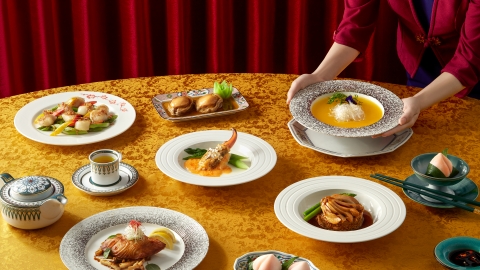
According to the chef of one of the most luxurious resorts on Phu Quoc Island, many of the visually appealing Vietnamese dishes they serve to guests, such as seafood, pomelo salad, or fried lobster with greens, are largely underpinned by the unique flavors and prominent umami – the distinctive salty taste derived from the local, high-quality fish sauce.
And the flavor of fish sauce is present in most Vietnamese dishes such as pho, spring rolls, broken rice, banh xeo (Vietnamese savory pancake), clay pot rice, and many more.
How is fish sauce made?
The key ingredients in making fish sauce are small anchovies, both black and white. These account for approximately 95% of the fish used, with the remainder being larger species like sardines and herring. Traditionally, the fish were caught in the waters around Phu Quoc Island, but nowadays, they are primarily caught around Tho Chu Island (part of Phu Quoc City, Kien Giang Province). The ideal fishing season is from April to September, coinciding with the rainy season.

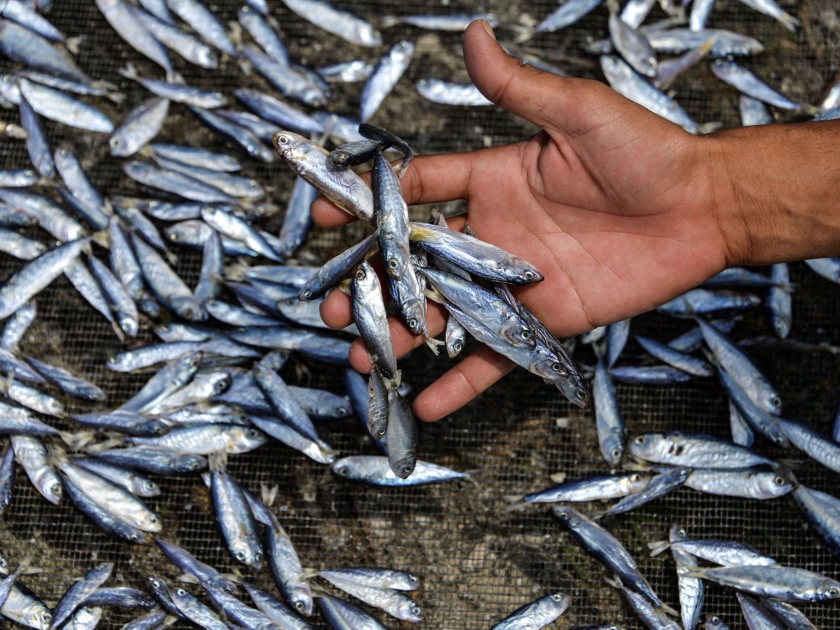
The main ingredient in fish sauce is anchovies, but it also contains sardines and herring.
In large-scale fish sauce production facilities, they all have their own fishing fleets to monitor the entire production process. After being caught, the fish are immediately drained on the boat, then salted and stored, and the fermentation process begins using the freshest fish possible.
Regarding the salt used in the fish curing process, it typically comes from the waters of Ba Ria - Vung Tau and is used at a ratio of 1 part salt to 4 parts fish. When the fishing boats dock, the barrels of fish, weighing nearly 200 kg, are collected and transferred to separate containers at the processing facilities.
Unique design from a fish sauce container.
Previously, fish sauce barrels were handcrafted from Dalbergia tonkinensis wood, a type of tree found in Phu Quoc National Park. However, due to the serious threat to the tree's population, wood is now imported from Cambodia. The wooden barrels play a crucial role in the quality and flavor of the fish sauce. Each barrel is made from 54 wooden planks, tied together by hand with rattan cord, and requires approximately 2-3 craftsmen and 3 weeks to complete.
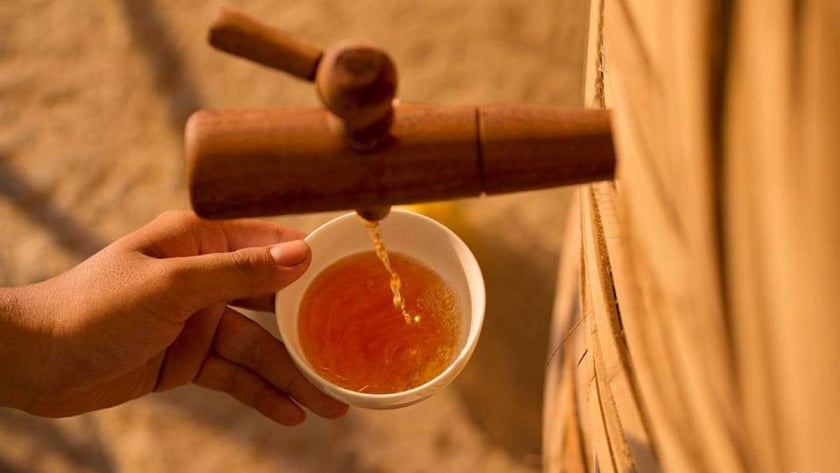
The secret to Phu Quoc's delicious fish sauce lies in the unique combination of environmental factors, including optimal humidity and temperature.
After the fish is filled into the barrels, the workers will stir and begin pressing down forcefully on the mixture of fish and salt. Each day, the liquid from the barrels is drained out and poured back in. Importantly, there is no further stirring or mixing. Once the fish sauce reaches the desired consistency and flavor, it is ready for packaging.
The secret to the delicious flavor of Phu Quoc fish sauce lies in the unique combination of environmental factors, including optimal humidity and temperature. In the final stage, the factory sends a sample of the fish sauce to a laboratory to measure its concentration and obtain certification on the bottle label. Concentration typically ranges from 35°N to 45°N.
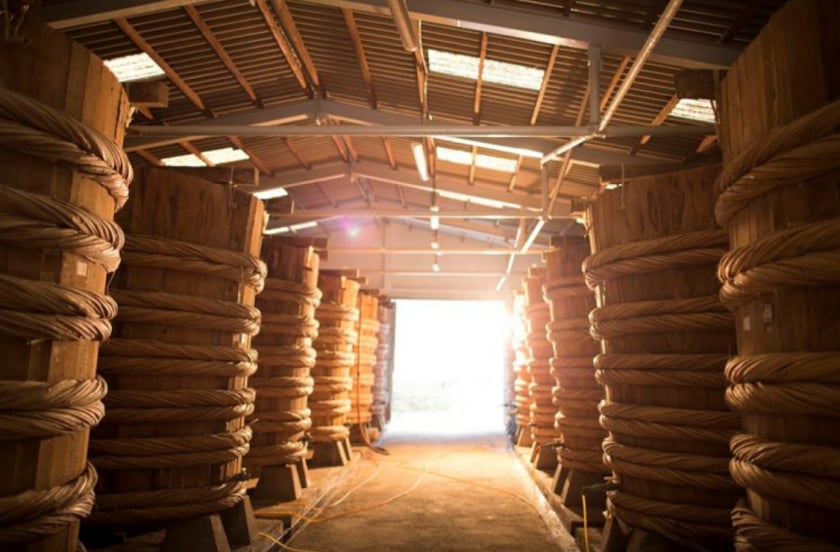
Fish sauce containers in Phu Quoc
The national spirit and essence of the Vietnamese people.
According to CNN, if you're using the most expensive and highly-rated fish sauce, it's almost certainly the first extraction from the fermentation vats, undiluted and unmixed. These drops of fish sauce are considered the best and are the first liquid extracted from the vats. Some people also call this "super-pure fish sauce."
Spanish chef Bruno Anon, who once led a culinary program at a resort in Phu Quoc, is also a devotee of fish sauce. He believes that fish sauce is the "national soul and essence" of Vietnamese cuisine and the condiment that creates the unique character of the country's food compared to other countries in the world. In every Vietnamese meal, a small bowl of fish sauce is a source of pride and a dipping sauce closely associated with dishes in family meals.
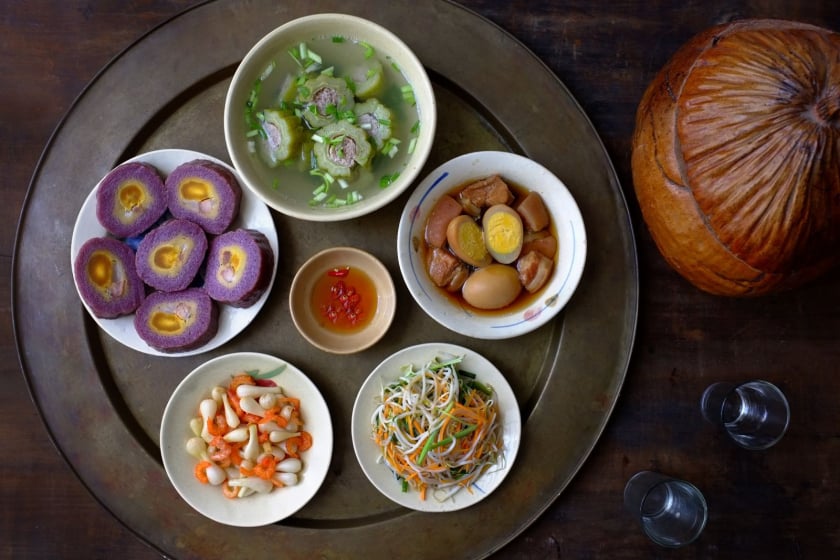
Fish sauce in Vietnamese family meals
"Some people might think fish sauce has a fishy or even salty taste. A quality blend has a well-rounded, sweet flavor that you can even taste right from the bottle," Anon emphasized.
According to CNN, back in 2016, in Hanoi, Vietnam, former President Barack Obama had the opportunity to enjoy a bowl of bun cha (grilled pork with vermicelli). The former US President savored the flavor of the fish sauce in this famous Vietnamese dish. And it is these side dishes, paired with this flavorful fish sauce, that have helped elevate Vietnamese cuisine globally.