VI
VI


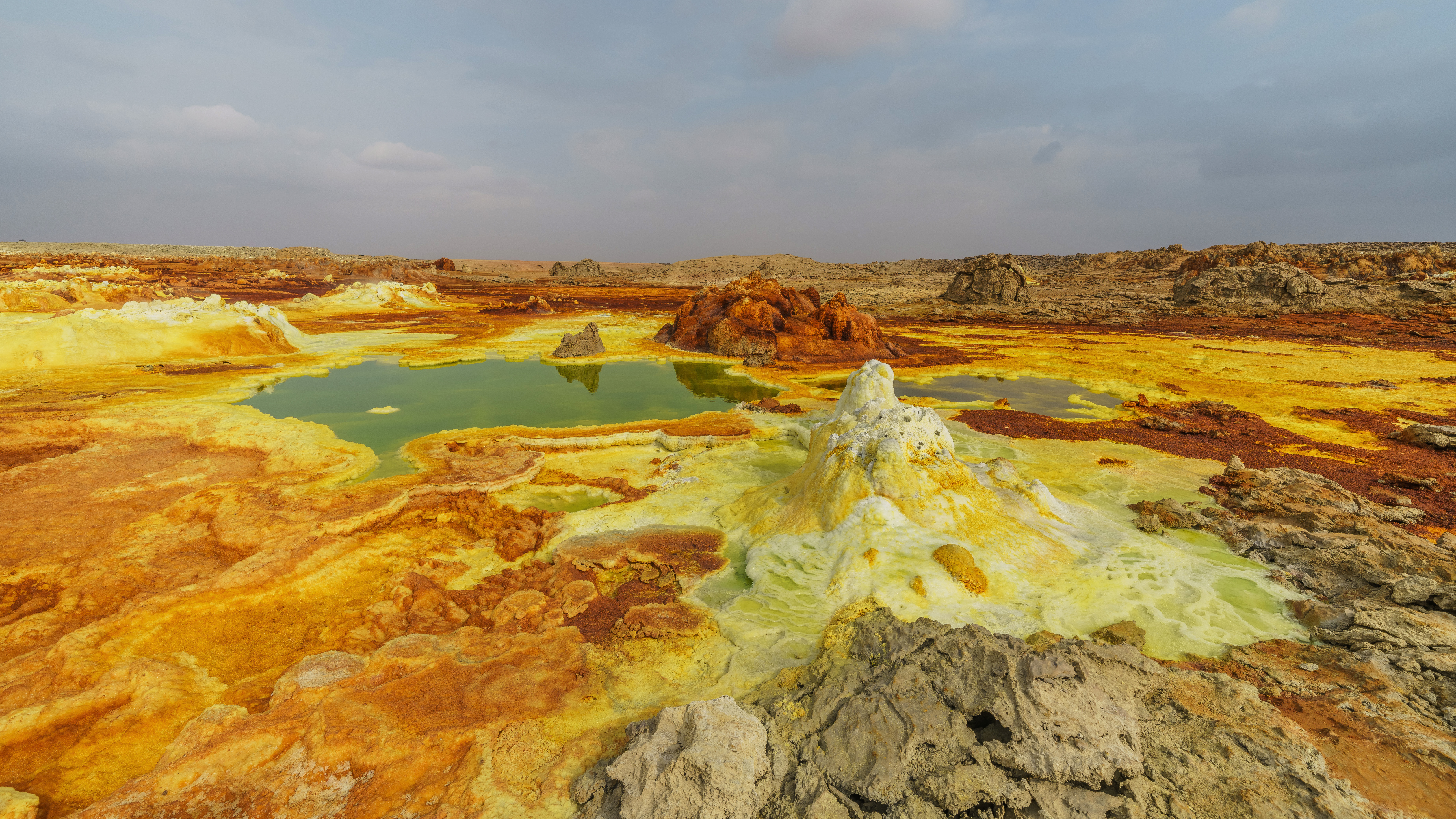
Researchers from the University of Paris-Sud discovered this "hell" using microscopy and chemical analysis on samples taken from four areas within the Dallol geothermal spring complex in Ethiopia between 2016 and 2018, in search of traces of life. Contrary to previous research, the scientists concluded that the combination of extremely high concentrations of salt and acid in the area makes it impossible for any organisms to survive in the intense geothermal pools of Dallol.
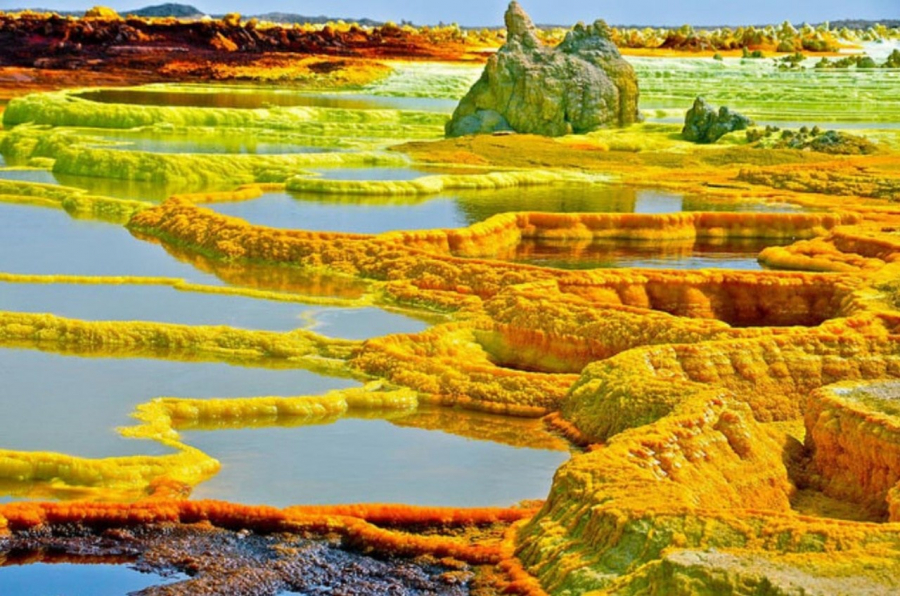
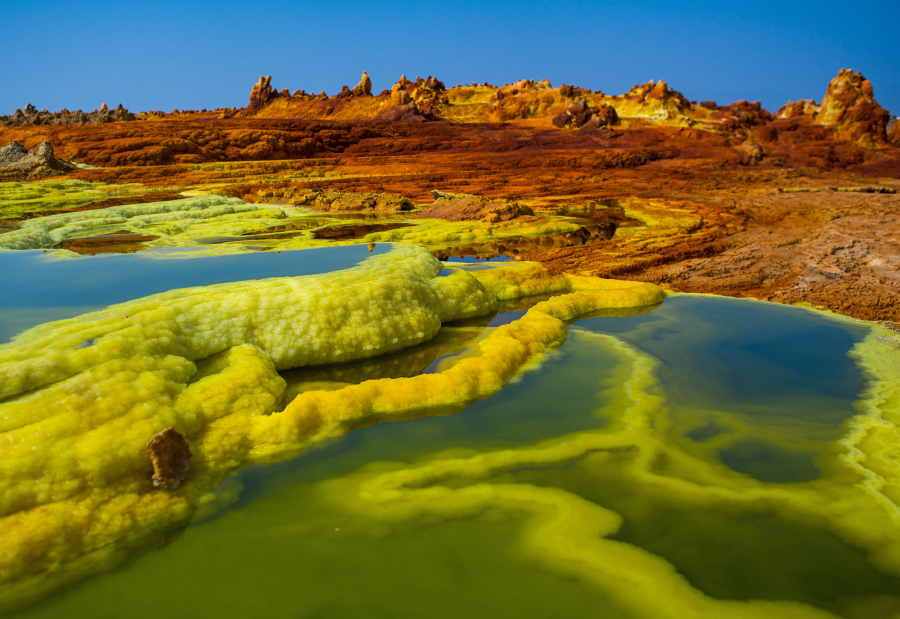
Dallol lies in the Danakil Desert Basin, a remote and isolated region in northern Ethiopia, near the Eritrean border. In the local Afar language, Dallol means "destruction." The average daily temperature in Dallol is no less than 46°C. Beneath the haze of chlorine and sulfur vapors, streams flow into water more than 10 times saltier than seawater, bubbling at temperatures above 108°C. The brine is also oxygen-free and has a pH of approximately 0.

"We have identified two main physicochemical barriers that prevent life from developing despite the presence of water. From a scientific perspective, the presence of water on a planet's surface is a criterion for assessing the potential for life. But the water in Dallol is highly acidic and salty, and the magnesium concentration is also very high. Under those conditions, any living cell would be destroyed," said López-García, Director of the French National Centre for Scientific Research.
For tourists wishing to witness the beauty of "hell" firsthand, a camel and guide can be hired from northern Ethiopia to reach Dallol. Currently, Dallol can be reached in one day from Mekele or in two days from the main Addis-Djibouti route. From there, visitors can easily access other notable destinations in the Danakil region, most notably Erta Ale, the volcano with the world's only lava lake.
Upon arriving in Dallol, you'll be truly captivated by the striking and dangerous beauty of a bizarre land, ablaze with vibrant colors of crimson mixed with green, yellow, and white, created by layers of salt, pools, and steaming hot springs. This multicolored palette is the result of potassium salt compounds colored by sulfides, chlorides, and oxides found in the geological crust of the area. In other words, the blue and green liquids you see aren't water, but sulfuric acid concentrated enough to dissolve shoe soles!