VI
VI


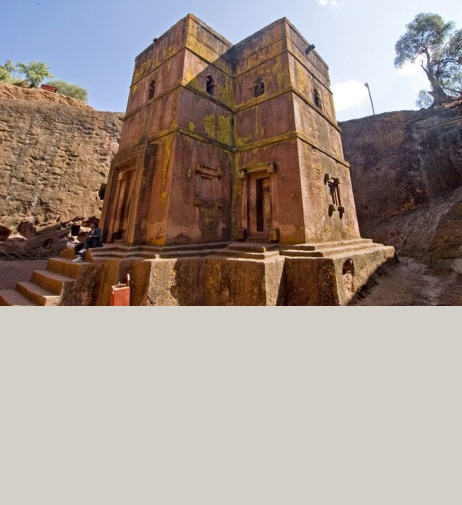
The church was designed by King Lalibela, who sought to recreate the new Jerusalem in the 12th century, after the Muslim conquests halted Christian pilgrimages to the holy land.
The mosques in Lalibela are grouped into two main sections, the first representing earthly Jerusalem and the second representing heavenly Jerusalem. Directly between these two sections lies a trench representing the Jordan River. This trench is 25 meters wide and features a small baptismal pool outside the mosque.
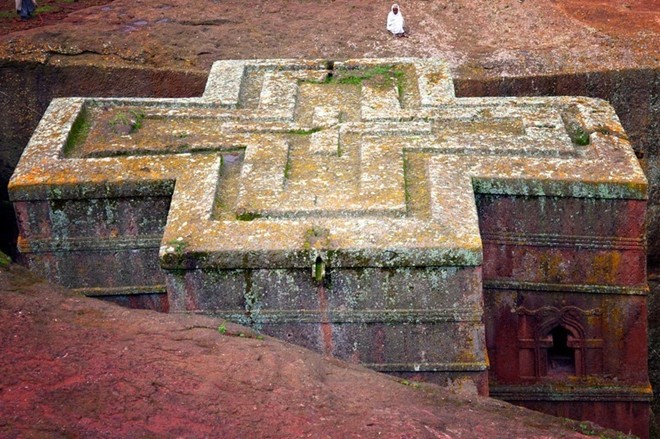
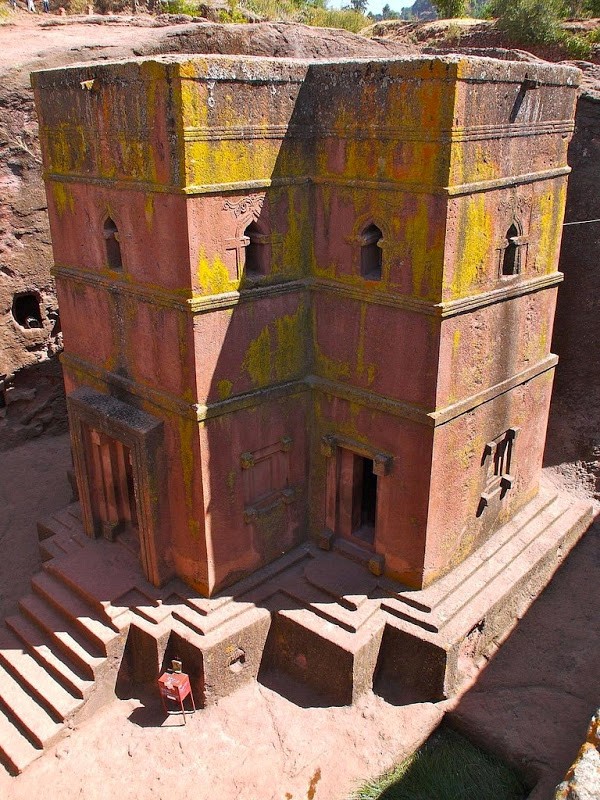
These churches were not built with ordinary bricks or stones, nor do they show any signs of joints in their walls. Instead, they were carved from a single solid block of stone. This solid block was then further chiseled to create doorways, windows, pillars, floors, roofs, and more.

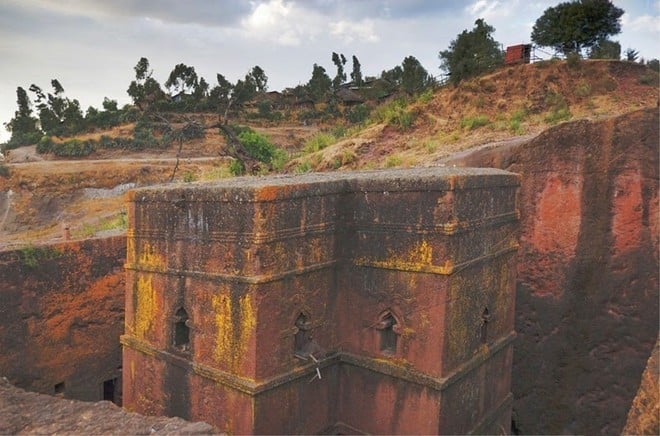
This elaborate sculptural work was further completed with an extensive system of drainage ditches, moats, and ceremonial corridors, some openings leading to hermitage caves and tombs.
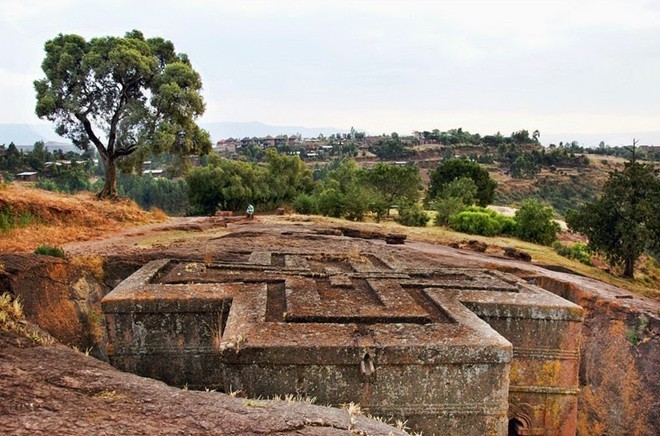
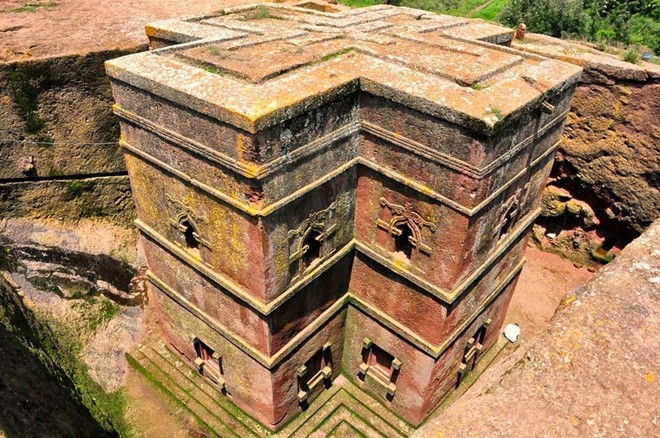
One of the most spectacular churches of the Lalibelaian church is Bete Giyorgis (Church of St. George).
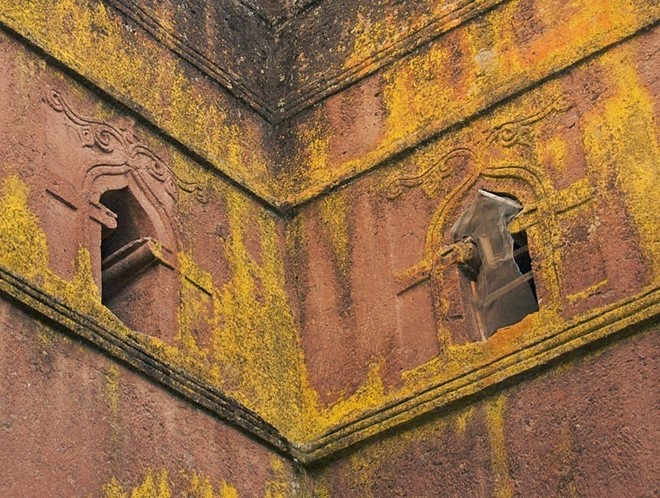
The church is a perfect cube, carved out in the shape of a cross and situated in a 15-meter-deep pit, with a cross-shaped roof.
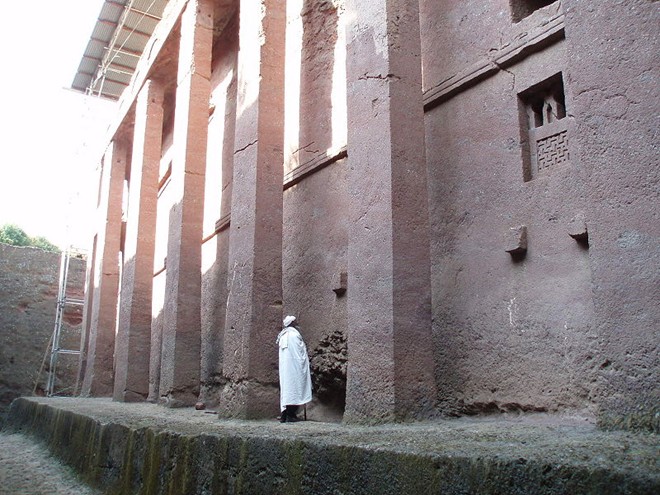
The Bete Medhani Alem, with its five aisles, is believed to be the world's largest monolithic church, while the Bete Giyorgis is a unique and noteworthy cruciform rock church.
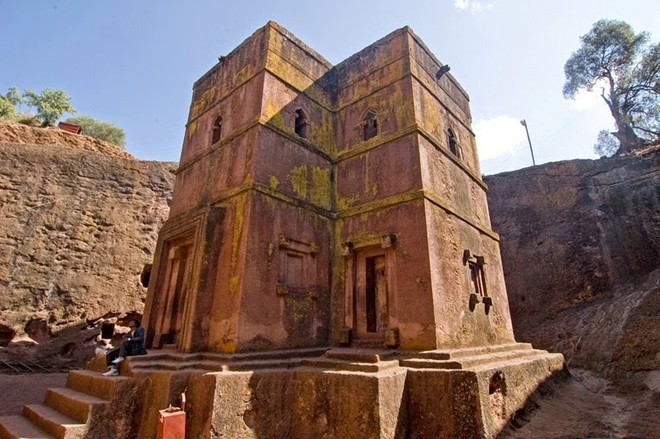
Almost all of the churches in Lalibela were used for their intended purpose from the moment they were built, but two of them, Bete Merceroos and Bete Gabriel Rafael, may have previously served as royal residences before becoming churches. Some of the church interiors are decorated with beautiful frescoes.
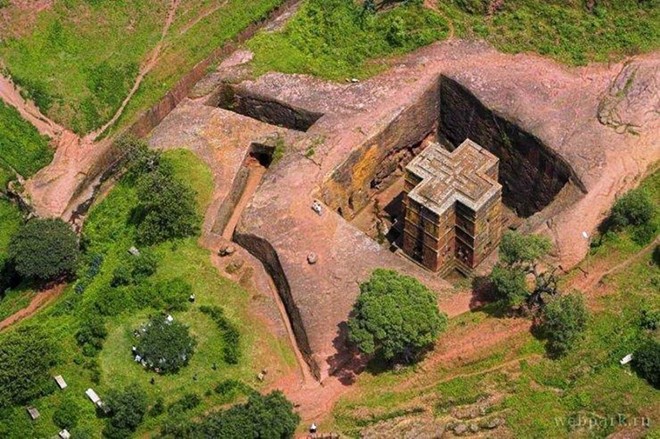
St. George's Church was recognized as a UNESCO World Heritage site in 1978.