VI
VI


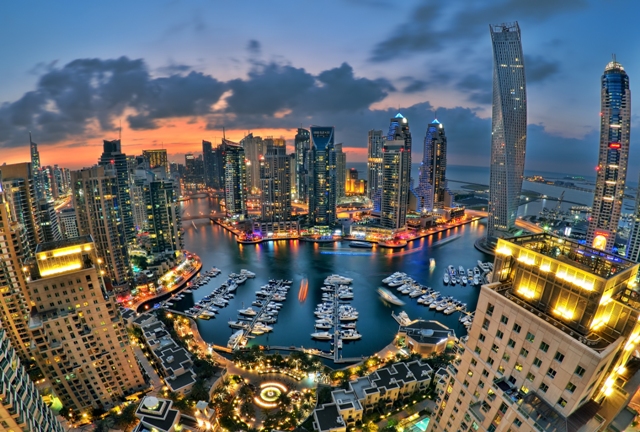
This city and emirate within the United Arab Emirates (UAE) has a metropolitan area of over 1,000 square kilometers but a population of just over 2 million people. While Dubai's luxury and wealth are often associated with oil, in reality, its main revenue comes from tourism, finance, and real estate. Dubai has transformed its perceived weakness of being a "barren desert" into a unique and highly sought-after attraction on the tourist menu.
"City tour," exploring the luxurious city.
Hop-on and hop-off tours are the most popular mode of transportation for city tours in many places around the world, but in Dubai, cars are the most suitable option. Even in late January, in the middle of the Arabian winter, the outside temperature is still 27 degrees Celsius, the climate is dry, windy, and the sun is blazing; you still need a scarf, hat, and sunglasses even inside the car.
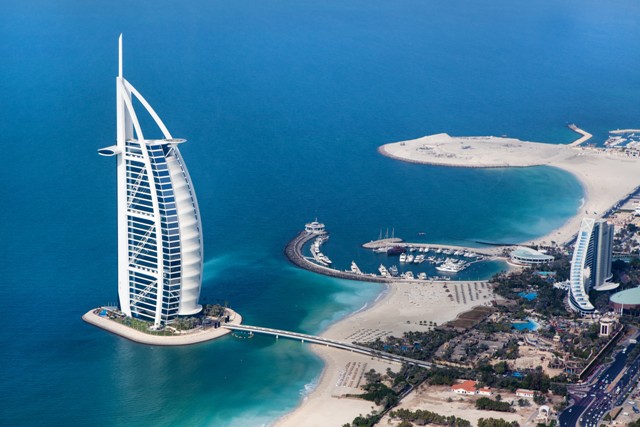
Dubai unfolded before my eyes as a verdant tapestry of towering skyscrapers, modern architecture yet still retaining traces of Arabian influences. Interwoven lanes, transportation infrastructure, real estate projects, hotels, and more, all under construction, were everywhere, showing that Dubai seemed relentless in its development. As a coastal city built on a desert, Dubai is rarely green. Only occasionally do you encounter clumps of shrubs and gnarled, dry branches.
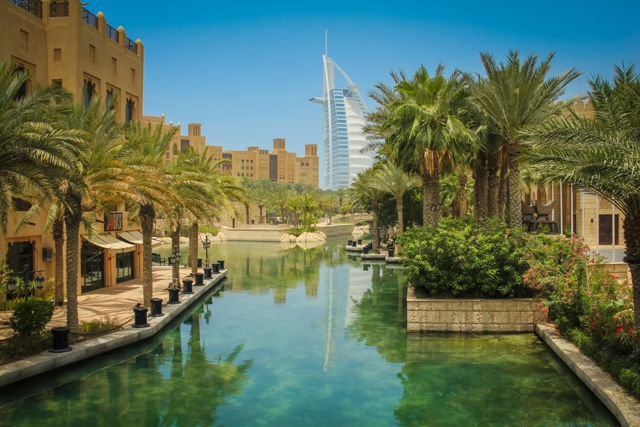
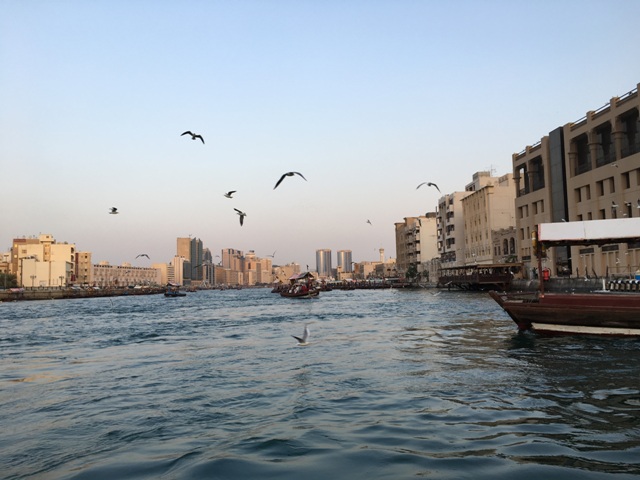
The most popular attractions on a Dubai city tour that no visitor wants to miss include strolling through the old Al Fahidi district, walking along the coastal road on the famous Palm Island, visiting the Burj Al Arab, the world's most luxurious 7-star hotel with its impressive sail-shaped structure built on the sea, and cruising the canals at sunset in a water taxi (motorboat). But the most exciting part is exploring the Spice and Gold Souks.
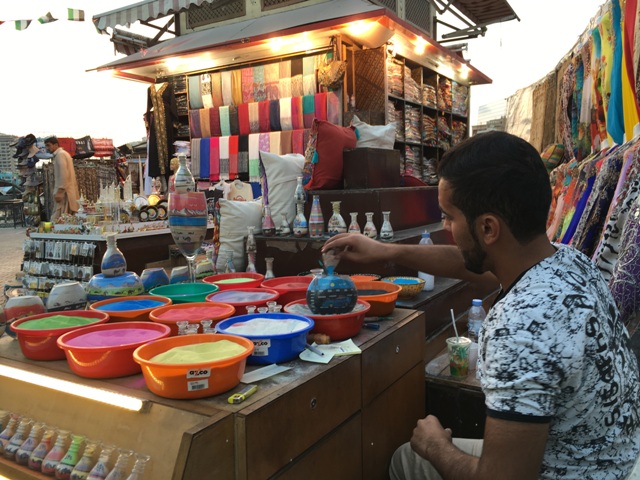
These are two traditional markets connected to each other. Here, tourists are easily captivated and tempted to buy many unplanned items. The spice market mainly sells dried goods, spices, and flavorings with hundreds of items ranging from tea, dried flowers, nuts, dried fruits, and traditional cakes, jams, and candies in a variety of eye-catching colors and shapes. The most popular item is dried dates; every shop sells them, and tourists can sample them and bargain freely. Dates are sold by the kilogram, but the price varies greatly depending on the quality.

Further inside, past the spice market, lies the gold market. Perhaps nowhere else boasts such a concentration of gold and jewelry shops as this one. Hundreds of shops, large and small, sit side-by-side, selling only gold and gold-crafted products. Even after dark, tourists and shoppers bustle about. The shops are brightly lit, displaying countless gold jewelry, handicrafts, and precious stones. Each shop looks opulent and luxurious, like a treasure trove from One Thousand and One Nights. The vendors are mostly men, mostly immigrants of various nationalities.
The enchanting darkness of the desert
Bidding farewell to the 7-star sail-shaped hotel, Palm Island with its luxurious villas, and the city of skyscrapers, we began our "Safari Night" desert adventure, departing at 3 PM – the perfect time to escape the harsh heat while still catching the desert sunset.

After about an hour and a half's drive from the city, the vast, flat desert unfolded before us, dotted with low-lying bushes and date palms. Everyone rested, drank water, and watched a falconry performance before venturing deeper into the desert. The falconry show is a beloved traditional attraction. After the performance, tourists of all skin colors, ages, and genders often line up to take selfies with the majestic birds and their trainers. Following the show, the group began their desert exploration in seven-seater Toyota off-road vehicles.
Our driver was a Syrian immigrant, tall, thin, and quiet, but very cheerful and witty. He instructed us to always wear our seatbelts, not to lower the windows, and to immediately notify him if we felt unwell. All the vehicles were inspected and had their tires deflated. Initially, we were puzzled by the series of strange actions and seemingly overly cautious regulations, but after a few minutes, we began to understand and gasped in amazement. The convoy of more than 10 vehicles followed each other into the desert, the flat stretches gradually giving way to large sand dunes, steep sinkholes, and unexpected hairpin bends. Passengers in the vehicles began shouting and clinging to their seats, sometimes accidentally bumping heads and causing pain. One vehicle had to stop because the occupants were not well enough. The scariest, yet most exciting, moment was when the car gained momentum to the top of the slope, then suddenly stopped and almost plummeted down the other side – due to a sand collapse creating a sheer, vertical chasm several meters deep.
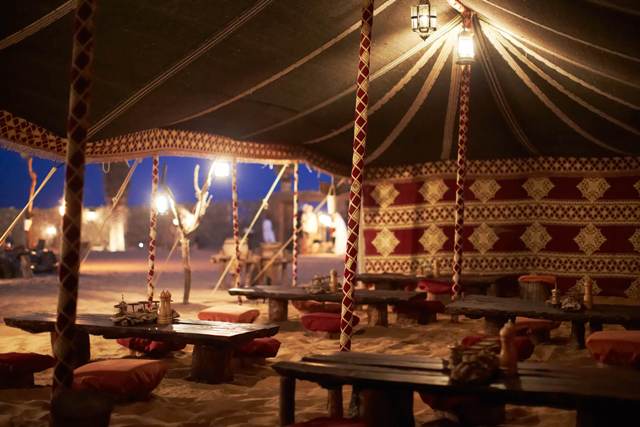
After driving for about ten kilometers, the convoy gathered at a high point in the desert, perhaps the most beautiful spot to watch the sunset and take some souvenir photos. Just minutes later, the sun had disappeared, leaving the desert sky a dark purple velvet tent-like canopy. At 7 pm, all the desert expedition teams had returned to the campsite for dinner. On a wide open space, hundreds of mats and Bedouin-style tents were set up around the stage. All they had to do was choose a favorite seat with their companions and begin enjoying the Arabic-style buffet.
There are many other exciting activities here, such as belly dancing, henna painting, sandboarding, camel riding... but the most enjoyable is sipping a hot cup of tea by the campfire while nibbling on dried dates piled high in a copper basin, or gathering around a shisha pipe for a chat. Late at night, the desert sky is dotted with stars, the sand dunes gleam, displaying their graceful curves like soft silk ribbons blending into the bluish-purple night. Before leaving the desert, the camp's lights suddenly went out. It turned out the organizers requested all visitors to temporarily leave behind all modern amenities for five minutes. Hundreds of people lay stretched out on the ground, relaxing, gazing at the sky, and breathing in the cool desert night air.
Shopping and night out in the heart of Dubai.
For shopaholics, a trip to Dubai is certainly time-consuming. Few tourists have the time and energy to wander through all the shopping malls and traditional markets. But Dubai Mall is the most bustling shopping destination that tourists simply cannot miss. Located at the foot of the Burj Khalifa – the world's tallest building – the heart of opulent Dubai, the mall offers panoramic city views from an altitude of 828 meters. Floors 124 and 125 are open to visitors who want to experience the entire city from an 828-meter vantage point.
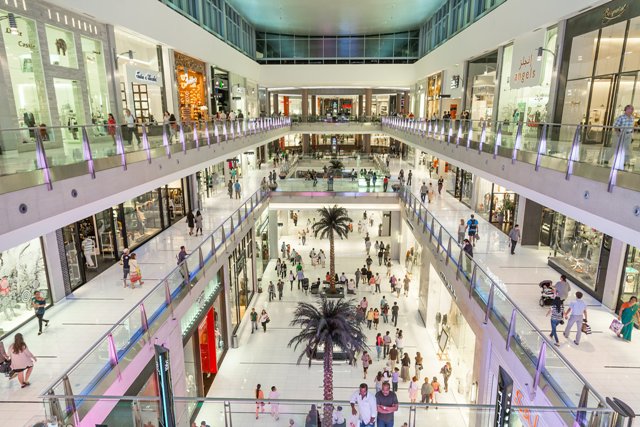
As the world's largest shopping mall, Dubai Mall boasts over 2,000 shops, entertainment areas, an aquarium, a food court, a cinema, and a separate area dedicated to boutiques of most of the top luxury brands such as Louis Vuitton, Cartier, Rolex, Prada, Givenchy, YXL, Dior, Chanel, and more. Outside the mall is a plaza with a large artificial lake, featuring a water fountain show every 30 minutes.
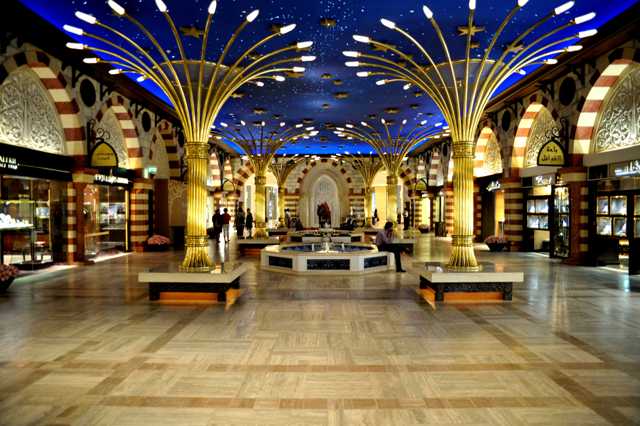
Every night, tourists throng the area, eagerly participating in shopping, dining, enjoying the water fountain show, and watching the light show on the Burj Khalifa tower. One of the restaurants with the best views in the area is Serafina in the Souk Al Bahar*. Here, guests can enjoy dinner while watching the water fountain show and the Burj Khalifa tower sparkling in the night sky. And you'll find it hard to think about going to bed early when you're greeted by the captivating and enchanting atmosphere of Dubai!
* Souk Al Bahar is a complex of old-style shops, hotels, and restaurants in the area.
--------------------------------
Additional information:
+ Lifestyle:As an open Islamic country, Dubai showcases a perfect blend of East and West, an allure of tradition and modernity, and a diverse population. Dubai's workforce is primarily composed of immigrants from countries around the world.
+ Safety:Dubai is renowned as a safe city, so tourists don't need to worry about security issues when visiting Dubai.
+ Currency:Dubai uses the Dirham currency. Currency exchange services are available at Dubai International Airport, with a minimum exchange rate of 200 USD. 100 USD is equivalent to approximately 350 Dirhams. Travelers should keep their exchange receipts to receive a refund for any unused amount.
Best time to travel:The best time to visit Dubai is from late November to April. During this period, daytime temperatures range from 20-30 degrees Celsius, and nighttime temperatures drop below 20 degrees Celsius. It's best to avoid visiting Dubai in the summer.
+ Outfit:You should bring a light jacket, windbreaker, scarf, hat, sunglasses, sunscreen, and moisturizer. Dress modestly and respectfully; women should avoid wearing short skirts or tank tops in public places.
Other must-see places in Dubai:Besides the destinations mentioned in the article, Dubai also has many other tourist attractions such as: Zabeel Royal Palace, Dubai Miracle Garden, IMG Worlds of Adventure entertainment area with cartoon characters from Cartoon Network, Dubai Ski Resort, Adventure Water Park, Dubai Museum, etc.
+ Cuisine:Many people feel uncomfortable with unfamiliar local food when traveling, which greatly affects the quality of their trip. In Dubai, you don't need to worry about this at all, because you can find everything from European, Chinese, and Middle Eastern dishes, including pho!
+ Journey:
-From Hanoi or Ho Chi Minh City, Emirates Airlines offers daily direct flights to Dubai. The flight times are convenient and save time for travelers.
- Emirates uses modern B777-300ER wide-body aircraft for both Hanoi and Ho Chi Minh City routes, offering comfortable and convenient service, including special services for Vietnamese passengers (such as Vietnamese-language entertainment programs and a Vietnamese-speaking flight crew).
Emirates was named the World's Best Airline at the Skytrax World Airline Awards 2016.
-Book tickets online: https://www.emirates.com/vn/English/
-Ticket office in Hanoi:
10th Floor, West Wing, Lotte Tower Hanoi, 54 Lieu Giai
Tel: 1900 1599 or +84 4 3811 0088.
-Ticket office in Ho Chi Minh City:
Room 1409, Sunwah Tower, 115 Nguyen Hue Street, District 1
Tel: 1900 1599 or +84839113099.
Article by Le Minh Phuong. Photos: Various authors.