VI
VI


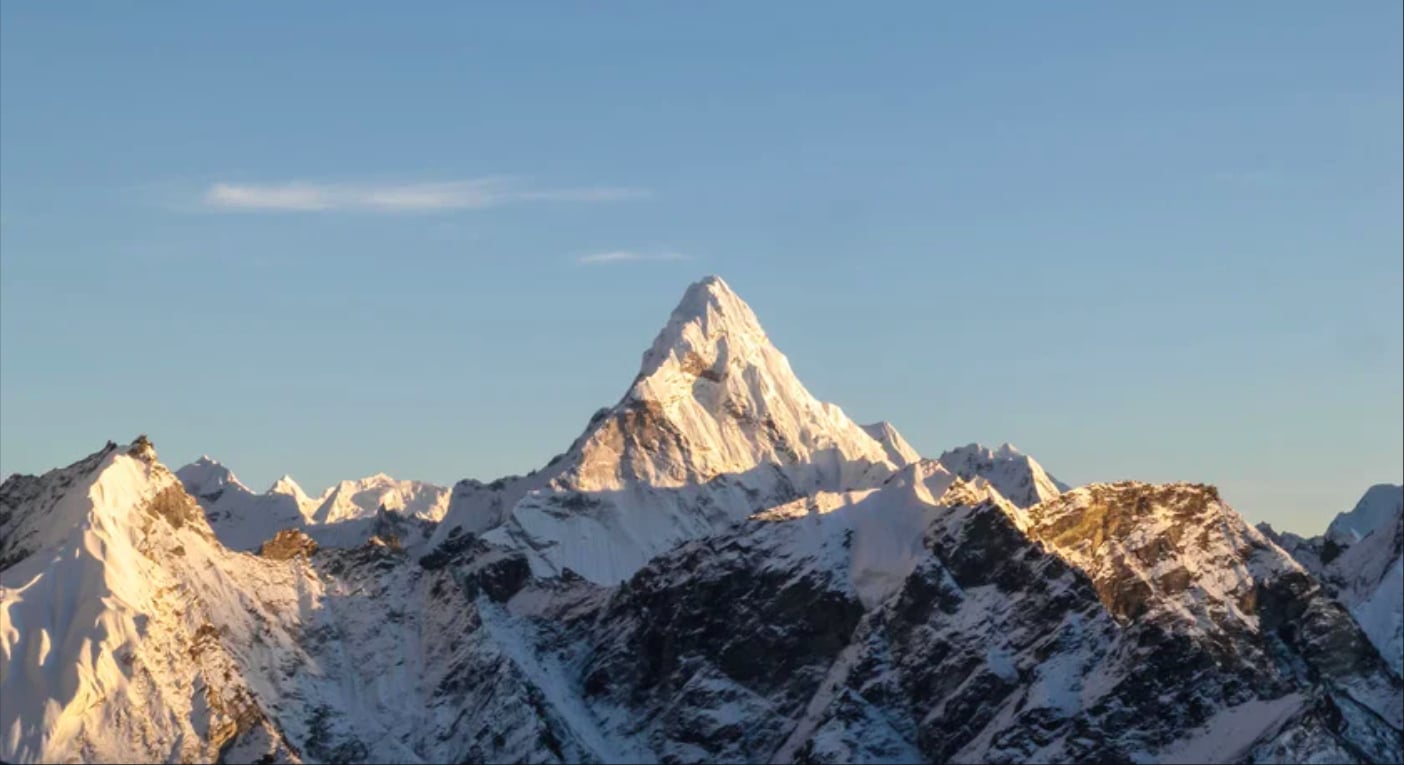
Mount Everest, at 8,849 meters, is not only a dream to conquer for thousands of climbers each year. With at least 344 deaths reported by the start of the 2026 climbing season, the planet's highest mountain is also the final resting place of hundreds of people who reached the summit but never returned.

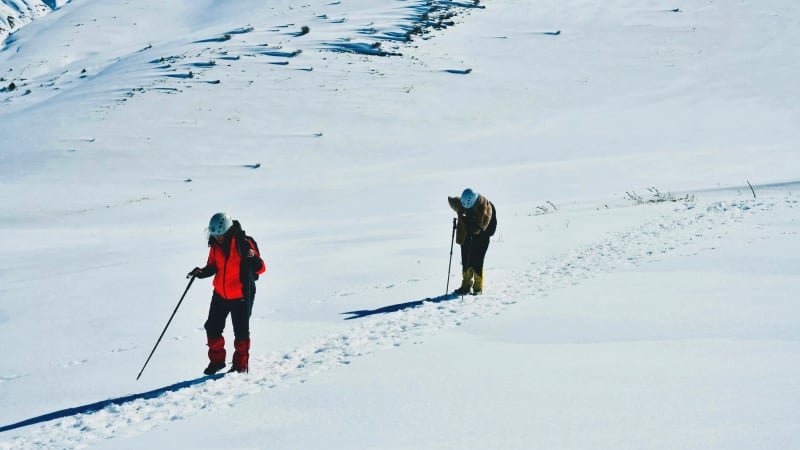
Since Edmund Hillary and Tenzing Norgay first conquered Everest in 1953, the mountain has become the destination for tens of thousands of climbers from around the world. The Himalayan Database, an organization that records climbing expeditions in the Nepalese Himalayas, has compiled statistics showing 232 deaths on the Nepalese side. The remainder of the mountain is in Tibetan territory and is administered by China.
Billi Bierling, the organization's director, acknowledged that this is not yet the complete figure, as many fatalities occur in locations too remote to be accurately recorded.
In June 2026, India will launch a plan to repatriate the remains of the "Green Boots" man after 30 years on the summit of Everest.
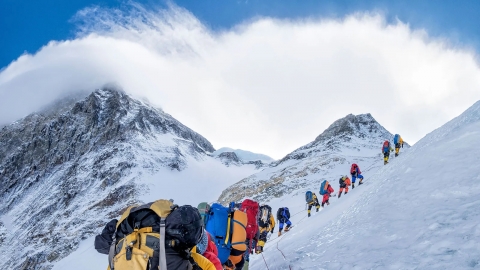
Most of the bodies lie scattered on the slopes at altitudes above 8,000 meters, an area that mountaineers call the "death zone"—where the oxygen is so thin that even standing still causes exhaustion. Over the years, snow and ice gradually cover the fallen, turning them into a part of the mountain.
Experts believe that bringing a body down from Everest is even more difficult than saving a dying person. Alan Arnette, a mountaineer and Everest historian, said that a repatriation operation requires a team of at least 6-10 people, with an extremely complex logistical process.

The rescue team had to navigate treacherous, technically challenging slopes while carrying a frozen body, all in an environment where every step consumed far more energy than under normal conditions.
In June 2026, the Indo-Tibetan Border Police (ITBP) announced a plan to repatriate the remains of "Green Boots," an Indian mountaineer who died on Everest around 1996 and had remained there for 30 years. The operation is planned for the climbing season from June to September, in coordination with Chinese authorities, to transport the remains from Tibet to Nepal and then to India.
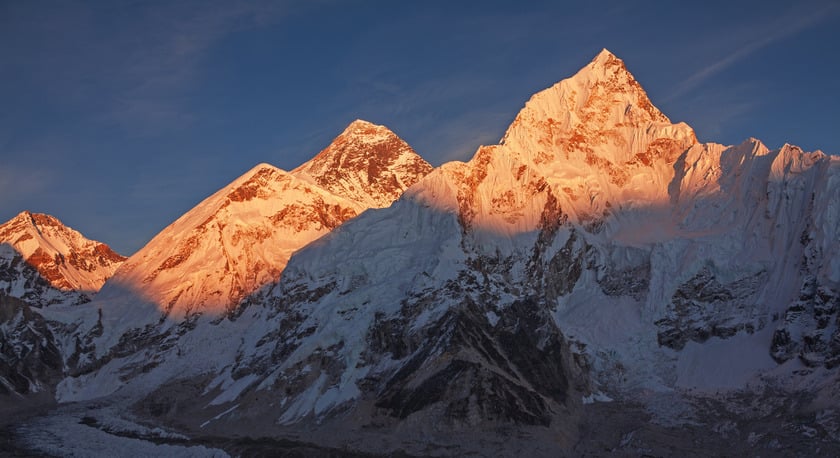
Due to the unique terrain and weather conditions, most of the bodies remain on the slopes at altitudes above 8,000 meters.
The location of the "Green Boots" is one of the reasons the operation is considered particularly difficult. The body lies on the north slope of Everest, in the area between the first and second rock faces – two sheer cliffs deep in the Death Zone at an altitude of over 8,500 meters. After 30 years, the body has completely frozen and is firmly attached to the mountainside. Arnette said the rescue team will have to use axes to break the ice to separate the body from the frozen mountain surface, a process he described as "extremely harsh".
The challenge didn't stop there. After separating the body, the rescue team had to continue to carry it over the second rocky step, a 30-meter-high cliff with a fixed aluminum ladder. Climbing a vertical cliff at an altitude of over 8,500 meters in bulky protective clothing, thick gloves, and oxygen tanks is one of the most grueling challenges a human being can set for themselves. The cost of the entire operation is estimated to range from $100,000 to $150,000.
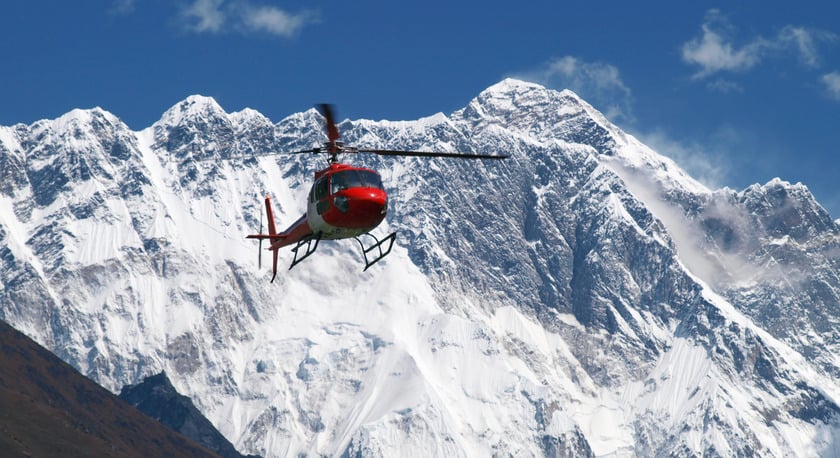
Unlike the Nepalese slopes where rescue helicopters can access certain altitudes, the Tibetan region imposes strict flight permit restrictions. Even with permits, helicopters cannot reach the height of the second cliff. Every step must be done manually.
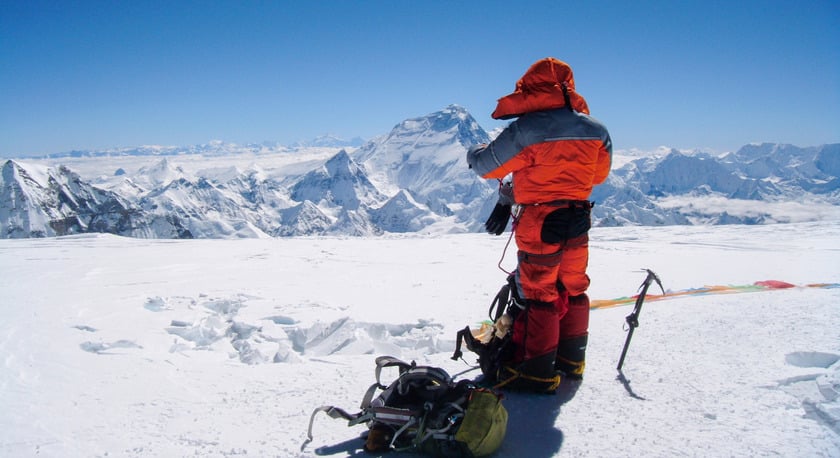
Most bodies on Everest cannot be recovered due to the dangerous and expensive search operations.
Another less-discussed but equally important obstacle is the spiritual factor. The majority of those supporting the campaign are Tibetan Buddhists. Arnette points out that using an axe to break through ice and directly impact the body could be considered a violation of local Buddhist taboos regarding respect for the deceased, a paradox given the campaign's initially purely humanitarian goal.
Everest's history records many similar repatriation efforts that ended in failure. In 2010, an operation to bring bodies down from the south slope had to be halted because the families of the victims wanted their loved ones to rest where they fell.
The body of American athlete Francys Arsentiev, nicknamed "Sleeping Beauty," lay for many years on the northeastern slope before being moved. Meanwhile, British mountaineer George Mallory, who disappeared in 1924, was found in 1999 after 75 years. Although his identity was confirmed by a name tag on his clothing, it was decided to leave him to rest peacefully on the mountain he had pursued his entire life.
Everest is more than just a test for the living. With over 344 people yet to be brought back, the mountain still holds the answer to a question that science, finance, and human will have yet to fully resolve: how to bring people home from the highest point on Earth?