VI
VI


After spending a long time at home due to the pandemic, Tí – my friend in Da Nang – messaged me: "Come to Da Nang, there are some great places. It's easy to get to, but you need someone who knows the area to go." After much questioning, he only revealed: "Just around Son Tra, nothing too far. Remember to bring your swimsuit."
Having been a diver hunting for fish in the rocky outcrops near the shore, and being familiar with almost every nook and cranny of the Son Tra - Hai Van coastline, Ti's words must mean something interesting. So, we set off.
Sailing out to Mũi Nghê (Nghê Cape)
Having gathered in Da Nang, we rode our motorbikes up to Son Tra Peninsula early in the morning. The sea and sky were a clear blue, and the city of Da Nang, with its tall buildings reaching towards the blue sky in the early morning sun, looked truly magnificent.
Tí suggested that since it was still early, we should take the opportunity to visit Linh Ung Pagoda and the thousand-year-old banyan tree. Almost everyone who goes to Son Tra has visited these places at least once – and of course, we were no exception, so we weren't particularly enthusiastic. But since the "local" recommended it, we just followed his advice.
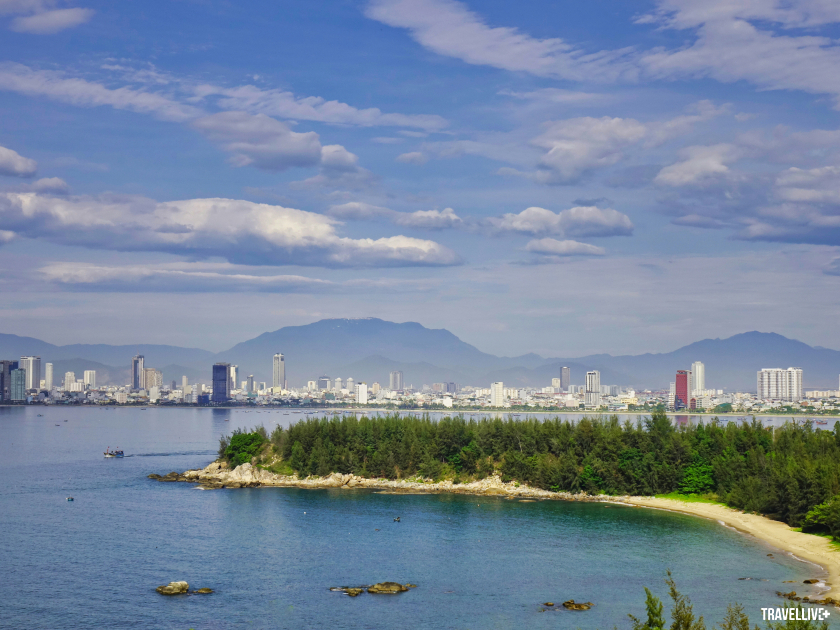
Beautiful Da Nang, as seen from Son Tra Peninsula.

Linh Ung Pagoda
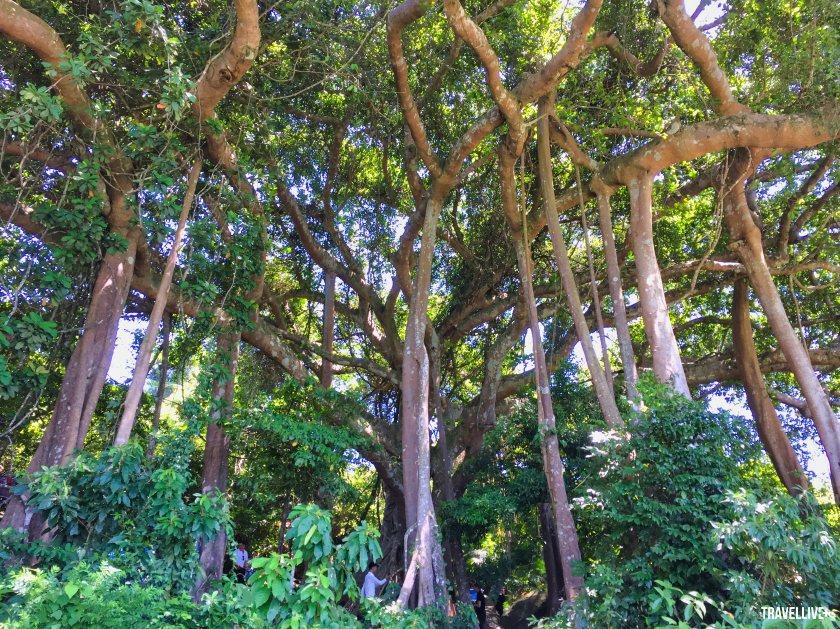
The thousand-year-old banyan tree
After leaving the area around the thousand-year-old banyan tree, Tí led us back towards the city, far away, leaving us all bewildered as to where he was taking us. Then, suddenly, he turned the car into the Bãi Đá tourist area – when we were almost back to Linh Ứng Pagoda.
After carefully locking the car in the parking area, Tí took out his tools and chuckled, "I was planning to take everyone to Mũi Nghê and then come back to admire the coral reefs and catch some fish to grill. But we left too early; we have to wait for the boat owner to finish breakfast."

They all boarded the wooden boat bobbing on the waves near the shore. The boat left Bai Da beach and followed the coastline towards Mui Nghe – the easternmost rocky promontory of the Son Tra peninsula. It is said that the name Mui Nghe originates from the fact that, from a distance, this rocky promontory resembles a mythical creature (Nghê) lying on the sea, facing the mainland.
As the boat circled around Mũi Súng (Shot Point), we began to see Mũi Nghê (Nghê Cape) in the distance ahead. The sea and sky were clear blue, the Cham Islands were to the southeast, and in front of the boat was... a stone Nghê (mythical creature) lying on the surface of the sea, its head turned towards the Sơn Trà peninsula. It was incredibly similar.
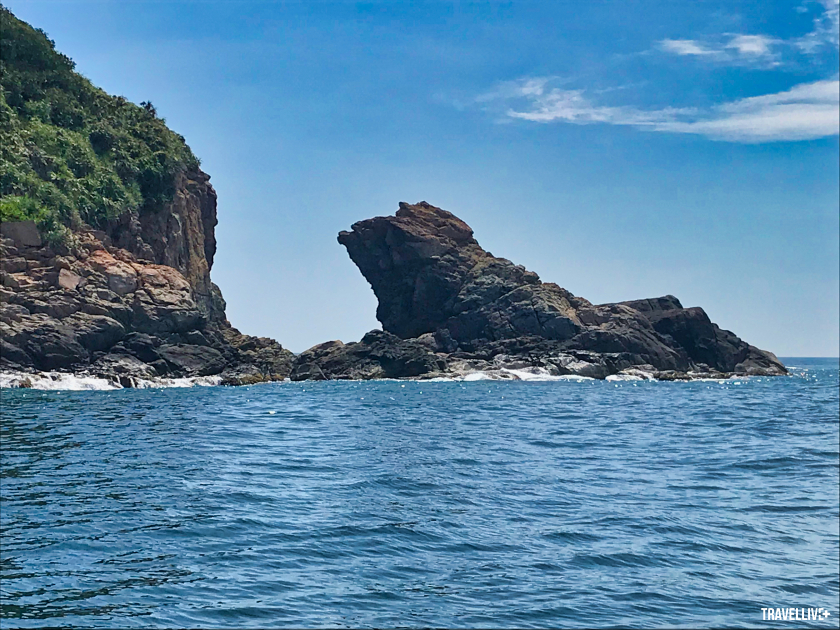
Looking out at Mũi Nghê from the sea, one understands why it's named that way.
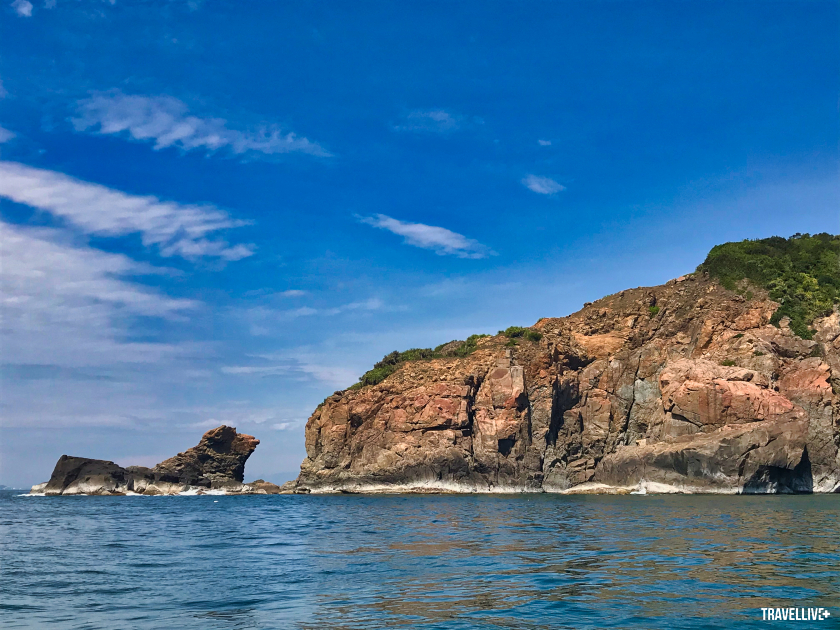
The stone mythical creature lies facing Son Tra mountain.
Only then did Tí say that you have to travel by sea to understand why it's called Mũi Nghê (Nghê Cape), because only from this vantage point can you see how much it resembles a mythical creature. If you go to Mũi Nghê by land down the mountain, it's very easy to get lost because of the dense forest and dangerous because of the steep cliffs; the view also makes it difficult to visualize the Nghê shape of this rock formation.
See coral reefs right off the coast of Da Nang.
From Bai Da to Mui Nghe, it looks close, but the wooden boat takes almost an hour to get there, because the distance from the thousand-year-old banyan tree to the turnoff to Bai Da is about ten kilometers. After the driver circled Mui Nghe so we could admire, photograph, and marvel at its beauty, the boat turned around and headed back.
After a while, the boat suddenly slowed down, turning its bow towards the rocky shore. Seeing our bewildered expressions, Tí smirked mischievously: "Now let's go down to the sea and look at the coral. It's not that beautiful or abundant, but not everyone knows about this coral viewing spot right off the coast of Da Nang."
We changed into our swimsuits on the boat, getting ready to go into the sea. Tí also brought his diving suit, complete with fins and nearly ten kilograms of lead weights around his waist. Grabbing his slingshot, he said, "Everyone, just admire the coral here, Tí will dive down to catch some fish for lunch," and then disappeared underwater.
The boat pulled close to the shore so we could easily get in and wade onto the small sandy beach dotted with rocks. The driver said, "The locals call this place 'U-shaped beach' because the small sandy shore curves like the letter U. There used to be a lot of coral here, but most of it died out and is only just beginning to regenerate, so it's not very abundant or beautiful yet. But few people know that you can see coral right here in Da Nang!"
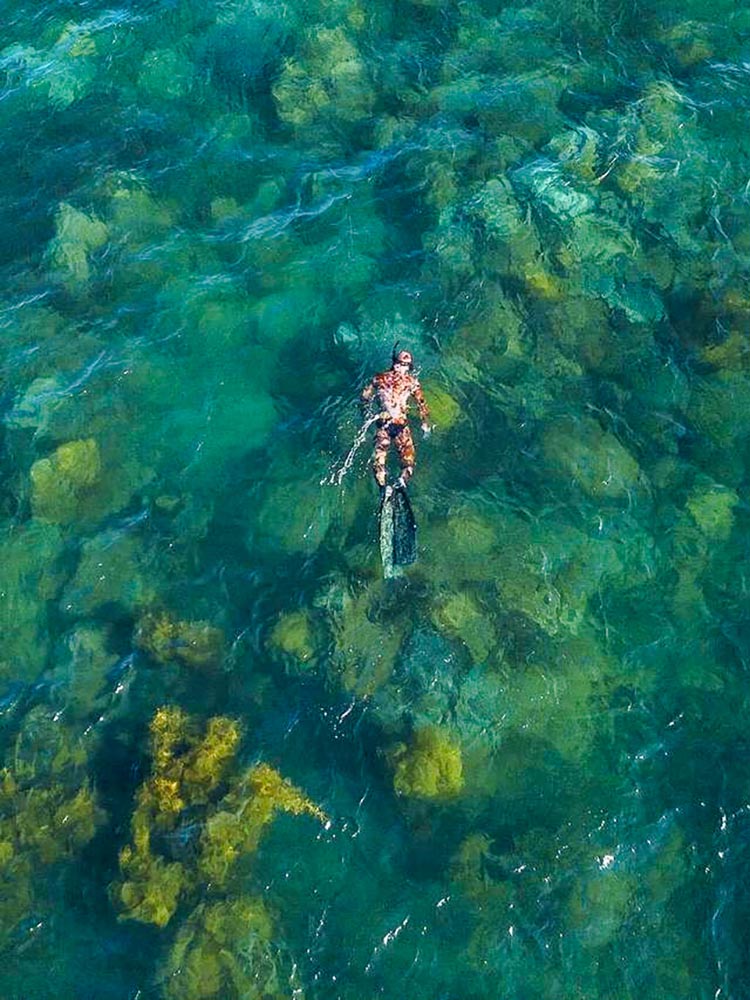
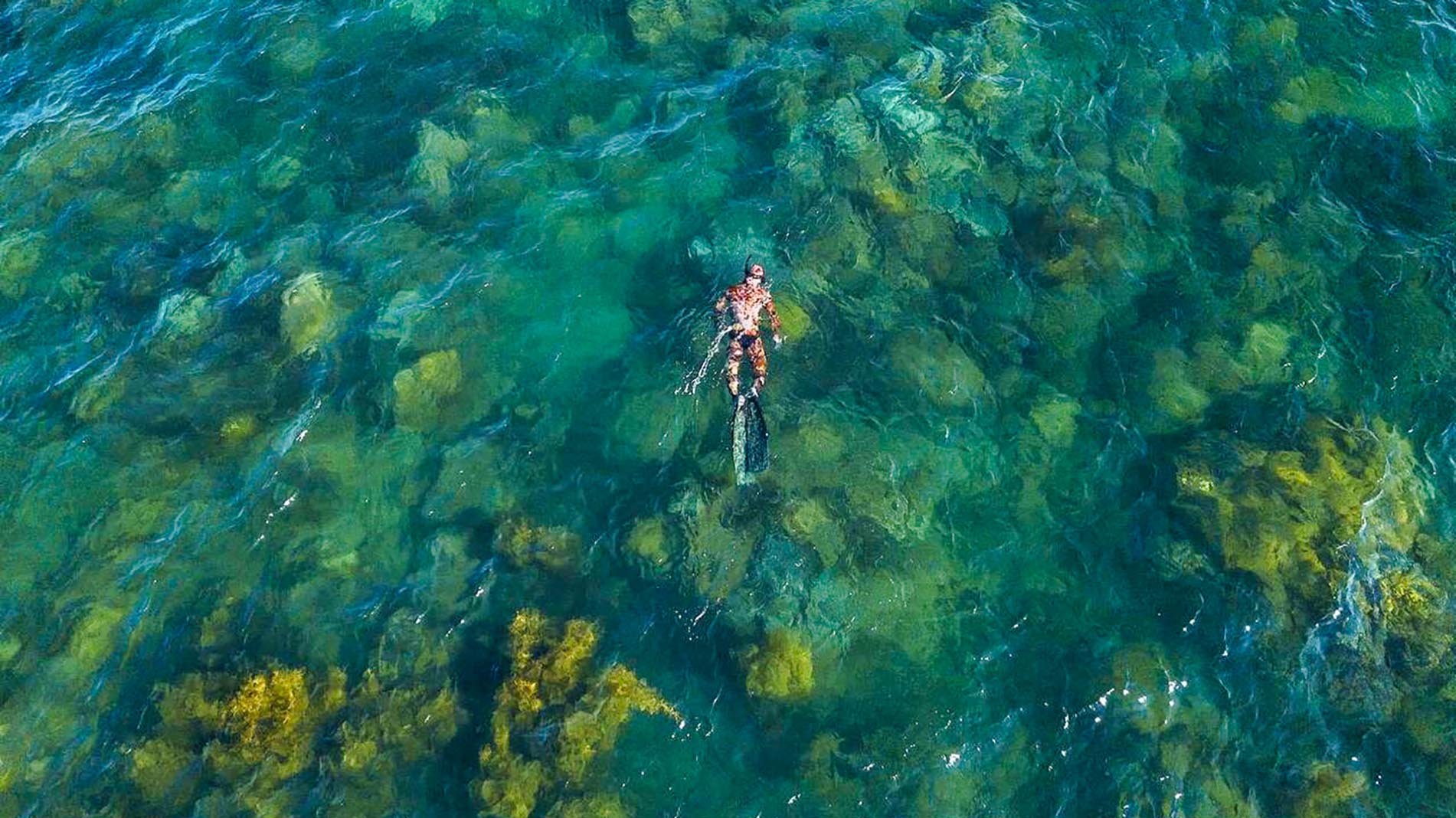
We left the boat and plunged into the sea. The water was crystal clear, so when we dived down, we could see the bottom quite well. Coral reefs were regenerating beneath the clear water, and colorful fish swam around freely – they didn't seem afraid of humans at all.
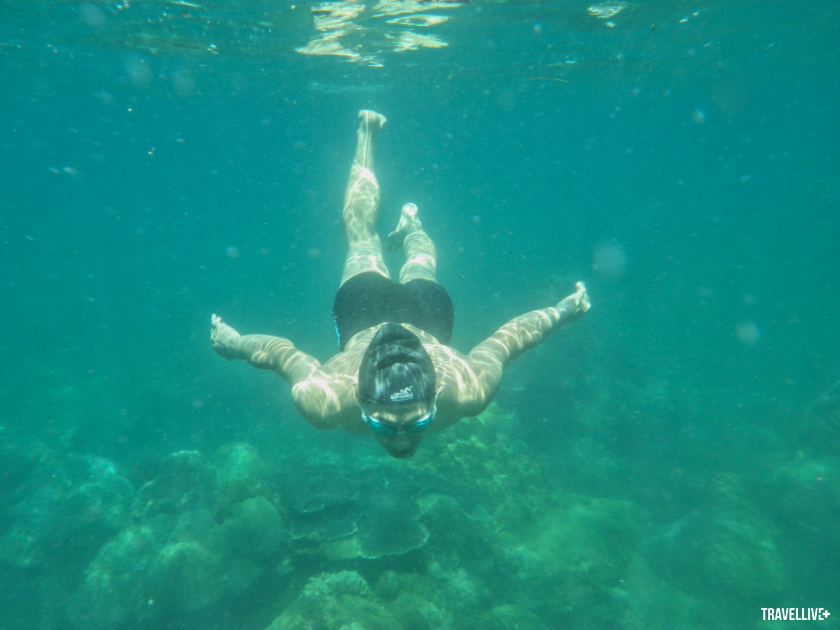
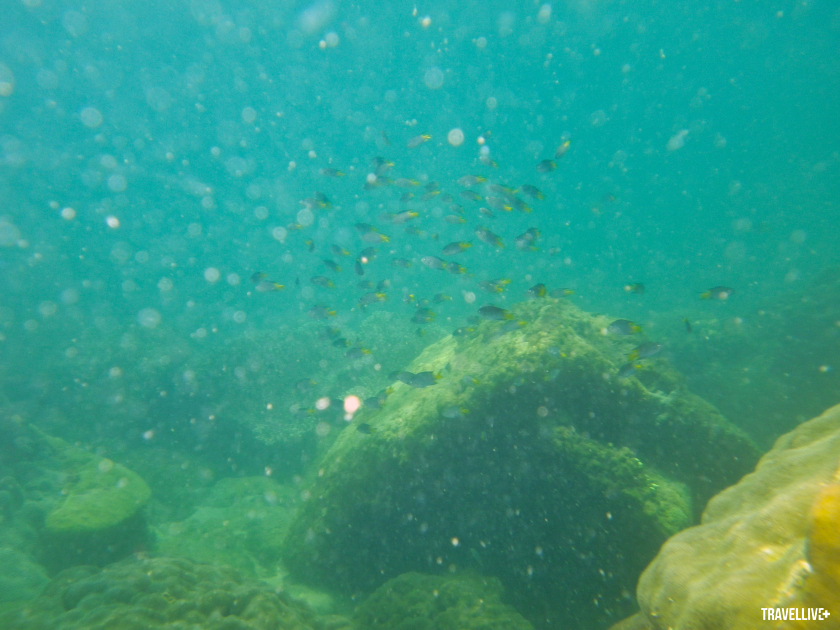
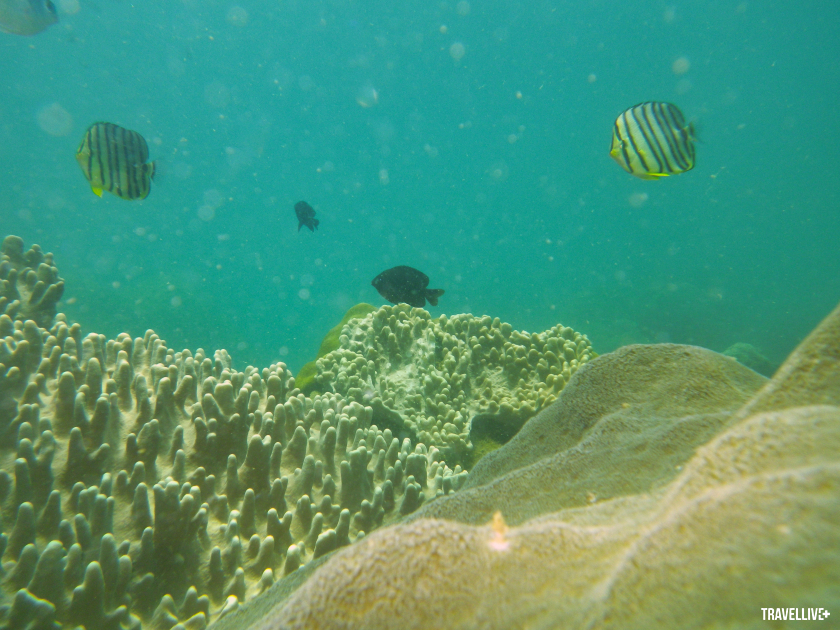
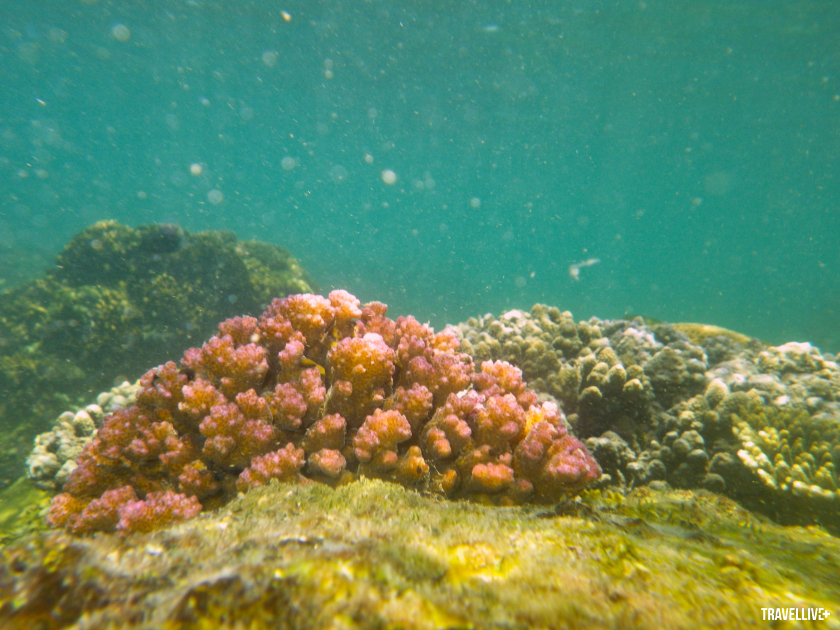
It's true that the coral is scarce and not yet beautiful. The entire area is covered with old coral remains, with glimpses of new life just beginning to sprout. But it was still a very interesting experience – to see coral right here in Da Nang, in a surprisingly natural and easy way. Hopefully, after some time, the coral will regenerate strongly in this area.
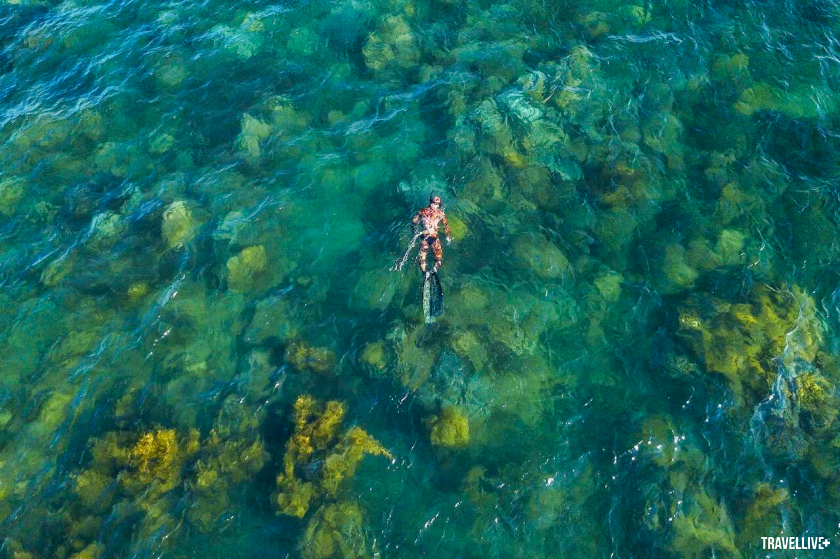
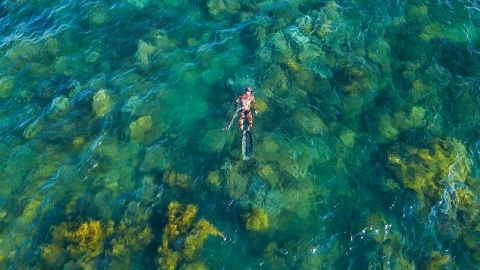
Coral and seaweed beneath the crystal-clear seawater (Photo: Tí)
Tí had returned by then, carrying several large sea bream, about the size of a flip-flop. The group waded ashore, seeking shade among the rocks and gathering dry firewood to grill the fish on the spot. The fresh fish, grilled over charcoal, was dipped in a mixture of salt, pepper, and lime juice, courtesy of the boat.Oh my!It was so sweet, fragrant, and delightful. The wooden boat continued to bob gently near the shore, patiently waiting for us.
Around mid-afternoon, the boat took us back to Truong Ngoc tourist area to pick up our motorbikes and head back to the city. We lingered around Da Nang for a while, then visited Hoi An, and only left the following evening. When we parted ways, Ti chuckled, still with his mischievous and mysterious demeanor: "Da Nang isn't just about the beach; the mountains, forests, and waterfalls are also amazing. Get ready for another trip!"
Additional information
Currently, there are no organized tours for tourists to Mũi Nghê; the only way to get there is through negotiation with local fishermen. Only fishermen in the area know the exact locations of coral reefs. The best time to visit Mũi Nghê is from March to September, and you should leave before 2-3 PM, as there are usually strong winds at sea after that time.
- At Bai Da tourist area, jet skis are available for rent to tourists, or further towards Bai Rang near Linh Ung Pagoda, there are more water sports activities.
- Tourists can dine at Truong Ngoc restaurant in Bai Da Tourist Area, or at nearby tourist areas such as Bai Nam and Bai Da.
- This area also features the Son Tra Lighthouse on the northern part of the peninsula.
- Most hotels and resorts in Son Tra are quite expensive; however, near Bai Rang area, there are beachfront campsites for those who want to experience nature.