VI
VI


AUTUMN COLORS OF THE HIGHLANDS DURING PEAK TOURIST SEASON
Having gathered mostly online, our group of 12 amateur backpackers didn't even know each other's faces or names before we set off. It wasn't until we were about to get on the bus that everyone was shocked to learn that my Chinese language skills, as the main interpreter for the group, were only at the level of someone who had "studied for two months three years prior."
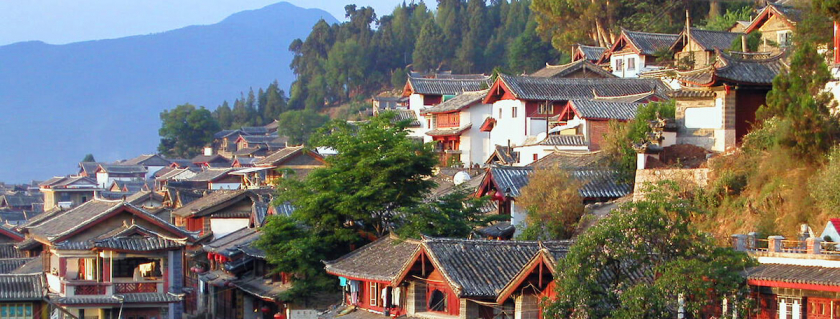
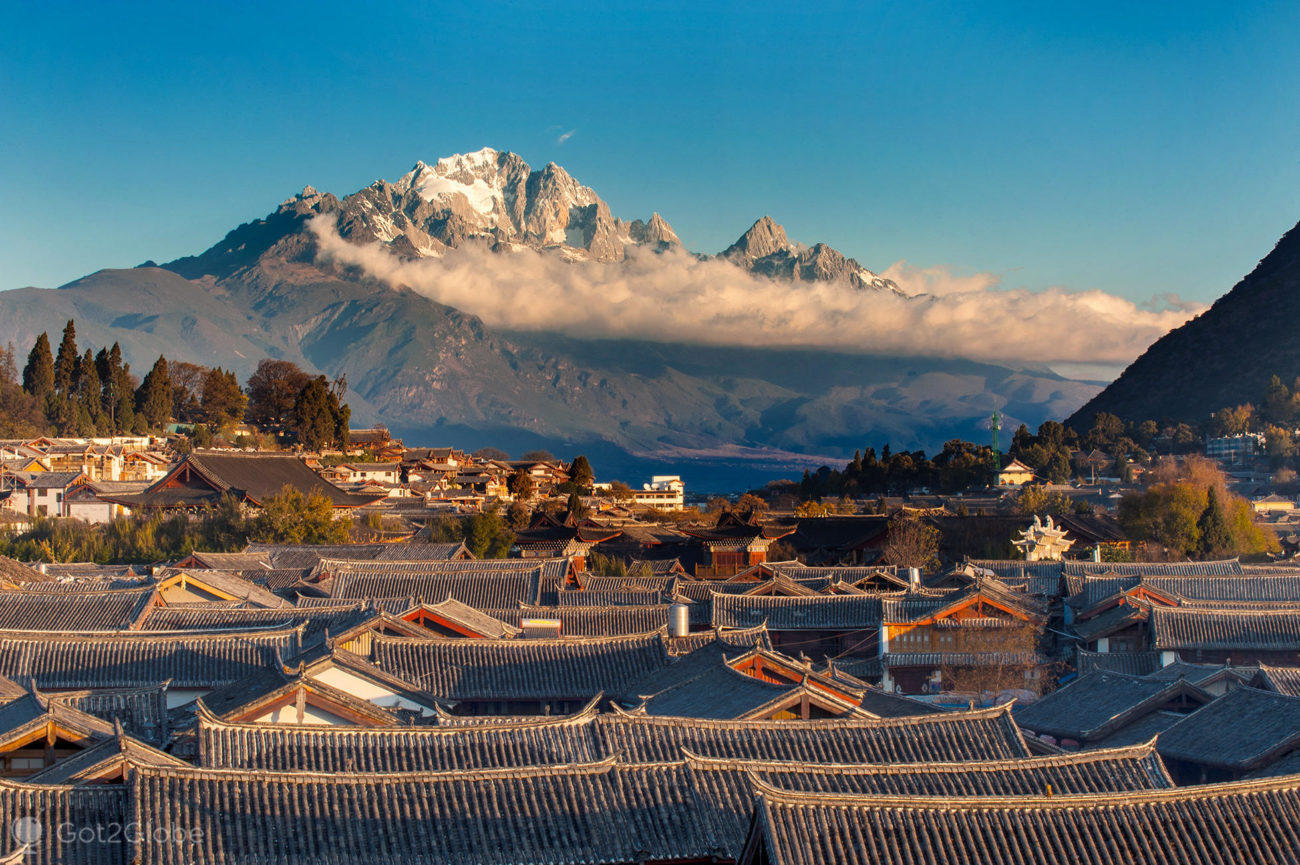
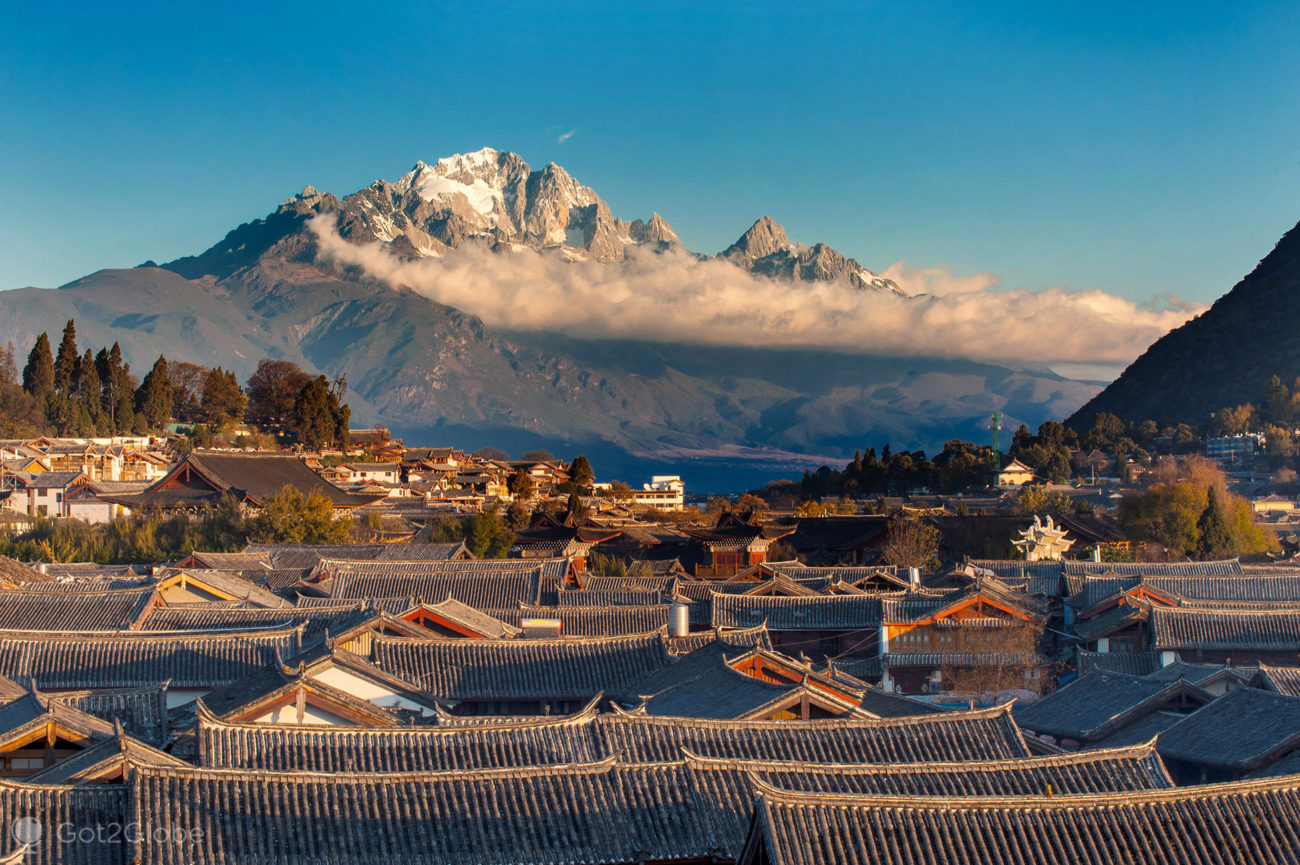
Lijiang Ancient Town captivates visitors from the very first glance with its tranquil, nostalgic charm. (Photo: globalheritagefund.org)
But "taking risks pays off," so the whole group enthusiastically boarded the bus and headed straight to Huu Nghi Quan border gate. The start was quite favorable when the group quickly met a "helpful benefactor" – a fellow traveler whose fiancée lived in Nanning. The benefactor called and asked her to help us book train tickets from Nanning to Kunming.
Therefore, arriving in Nanning was less rushed, and we even had time to have dinner before boarding the train. Luckily, another benefactor appeared. Mr. Dong, with his tall stature typical of people from Northeast China, happened to be sitting near our group of Vietnamese backpackers. Seizing the opportunity, I practiced my Chinese, but this surprised Mr. Dong when he learned that the Vietnamese group would be spending 9 days in a country where English is rarely spoken, with only their rudimentary Chinese skills.
Mr. Dong generously took on the responsibility of helping us buy train tickets for the Kunming-Nanning leg and bus tickets to Lijiang. Upon arriving at Kunming station, with Mr. Dong's invaluable assistance – translating from "fast" Chinese to "slower", easier-to-understand Chinese – we quickly purchased train and bus tickets for our group to Lijiang. We parted ways with Mr. Dong, all deeply moved and grateful for the warm kindness of our new acquaintance.
The bus was "fancy": double-decker, with comfortable seats like on an airplane, modern equipment, a "standard" highway, and stunning scenery of golden and red leaves on both sides, making the whole group forget their fatigue and take lots of photos.
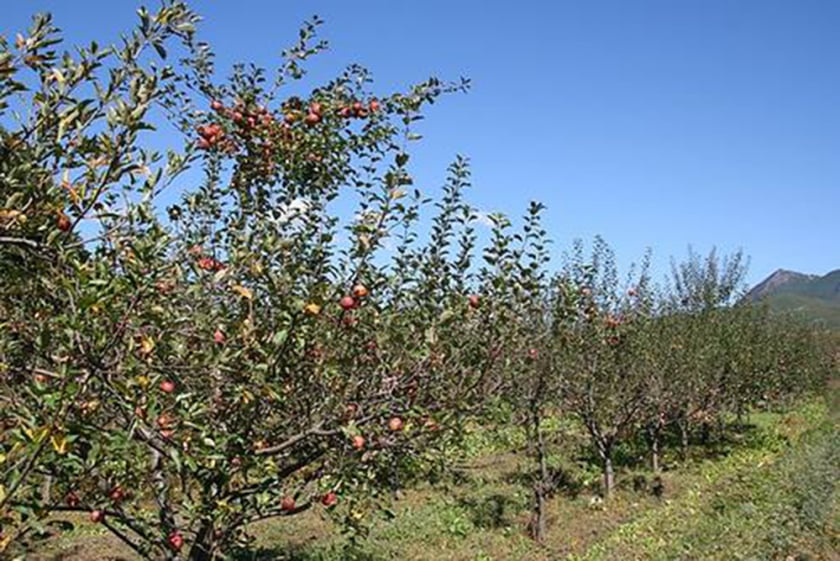
This is the starting point of the famous Lijiang-Shangri-la Apple Road. Tour buses often stop here so that tourists can get off and admire the orchards laden with apples stretching along the roadside.
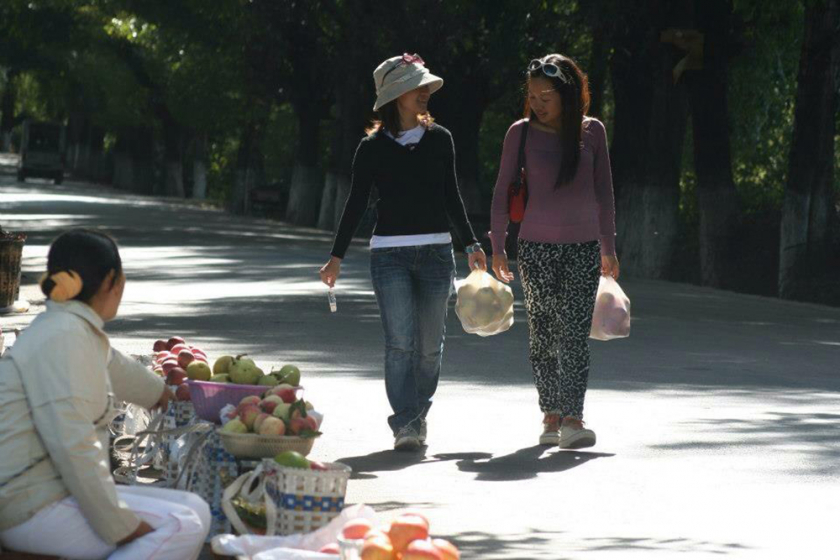
Freshly picked apples are sold by locals along the roadside, offering a delightful taste. The red apples are crisp and sweet, while the yellow apples are refreshingly sweet and fragrant.
NOSTALGIA WITH THE "VENICE OF THE ORIENT"
The bus arrived in Lijiang in the late afternoon, and the whole group took a taxi straight to Lijiang Ancient Town, not far away. Although both are in Yunnan Province, each tourist destination on this so-called "horizon road" itinerary has its own unique and captivating features. There's the famous wooden waterwheel of Lijiang Ancient Town, but… oh my, it's so crowded!

Lijiang city includes: New Town, Dayan Old Town (also known as Lijiang Old Town), Shuhe Old Town, and Baisha Old Town.
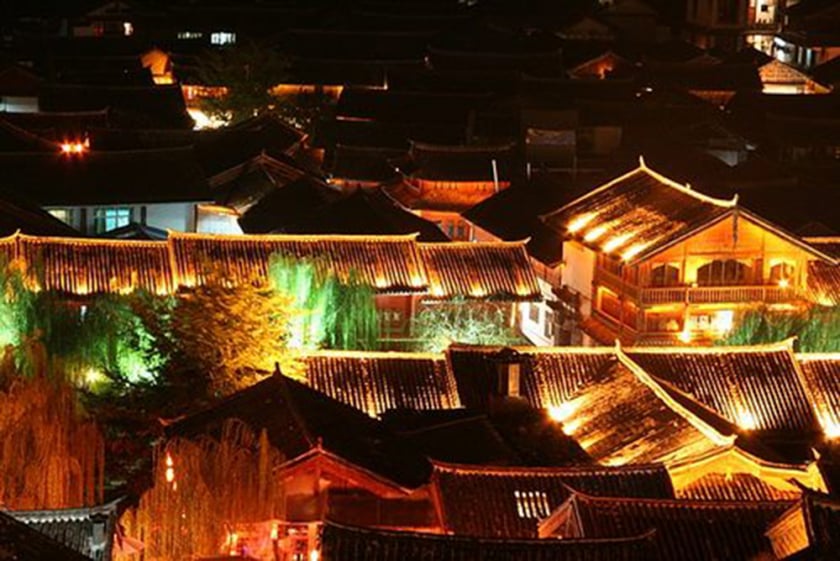
The rooftops of Lijiang's ancient town glow beautifully and magically at night.
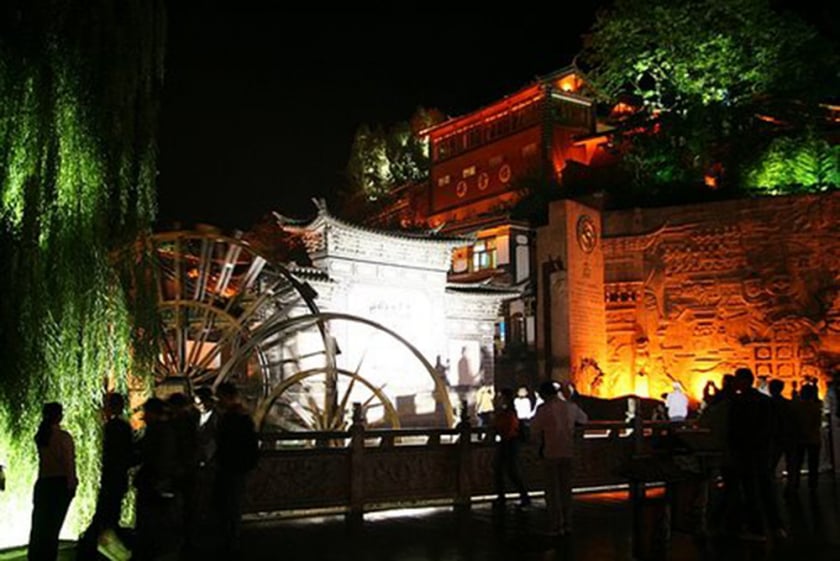
The iconic wooden waterwheel is a popular check-in spot attracting tourists to stroll around and explore the nightlife at the entrance to the central square of Lijiang Ancient Town.
Lijiang Ancient Town, originally the capital of the Nanxi Kingdom, was built during the late Song and early Yuan dynasties, covering an area of 3.8 square kilometers.2Located at an altitude of 2,400 meters on the Yunnan-Guizhou Plateau, 500 km from Kunming, Lijiang Ancient Town is not only captivating with its fairytale-like scenery but also with its rich history reflected in its unique traditional culture. This "fairytale land" is most famous for its waterway system and 354 bridges spanning the rivers, with a density of 93 bridges per kilometer.2Therefore, it is also known as the "Venice of the East" and has been recognized as a UNESCO World Heritage Site since 1997.
Lijiang is an ancient town with a population of approximately 30,000 people, primarily consisting of Bai, Naxi, and Tibetan ethnic groups. 30% of Lijiang's residents still practice traditional crafts such as bronze casting, silver engraving, weaving and embroidery, and leather and fur tanning, adding to the charm of Lijiang's tourist attractions.
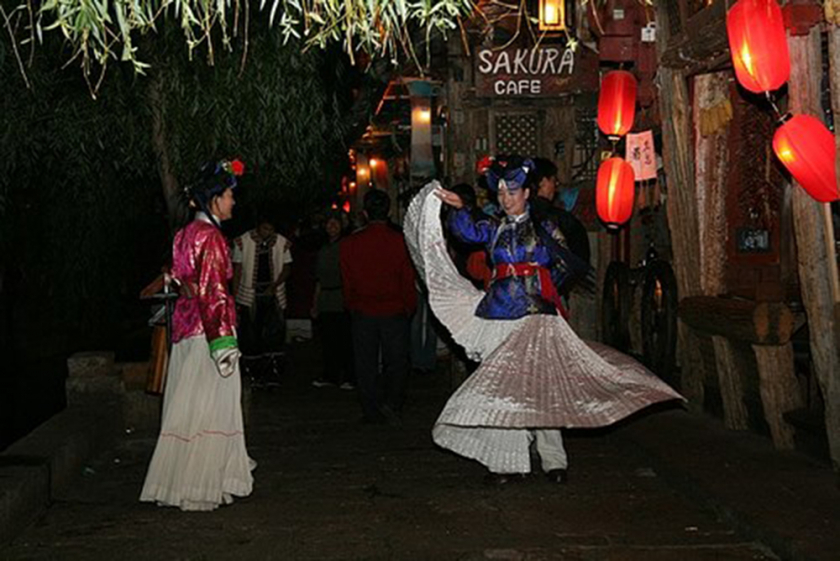
A performance takes place outside the restaurant, welcoming visitors to explore the nightlife and culinary culture of Lijiang Ancient Town.
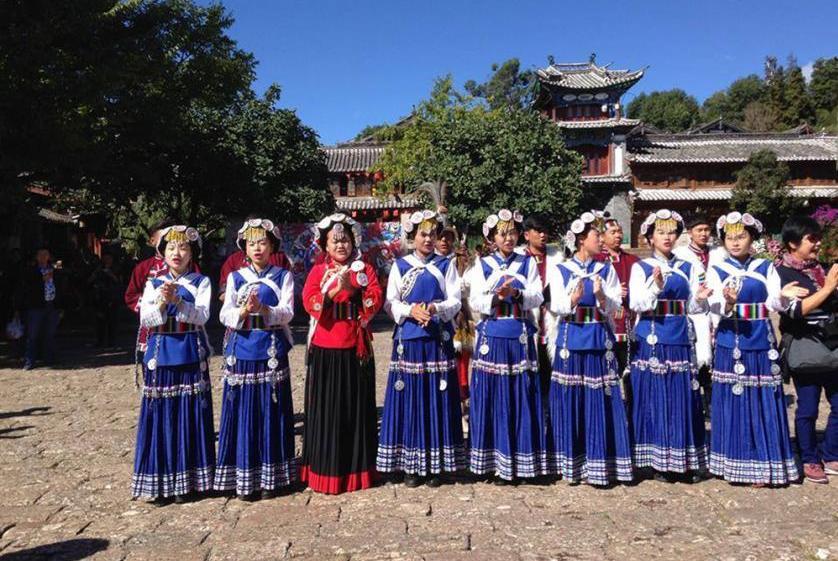
Modern-day Naxi attire worn by women in Lijiang.
Although the destruction of one-third of Lijiang Ancient Town in the February 1996 earthquake is a thing of the past, this famous tourist destination remains overcrowded. The peak season is late autumn and early winter, with breathtaking scenery of golden and red leaves and pristine white snow, creating a fairytale-like atmosphere at the Jade Dragon Snow Mountain scenic area.
Contrary to my previous expectations of peace, antiquity, and moss-covered charm, Lijiang, while still retaining its nostalgic feel, has blended many modern touches with a vibrant atmosphere and dazzling colors; crowds of tourists fill the charming cobblestone streets; and shops, stores, and restaurants line both sides of the road…
Every visitor to Lijiang Ancient Town wants to capture the moment of immersing themselves in the fresh air, surrounded by graceful willow trees with their delicate clusters of leaves, and tiny, curved wooden bridges spanning small canals with crystal-clear water, where clusters of green algae can be seen swaying gently with the rippling waves… In the evenings, beautiful female dancers often perform in front of the shops to welcome customers.
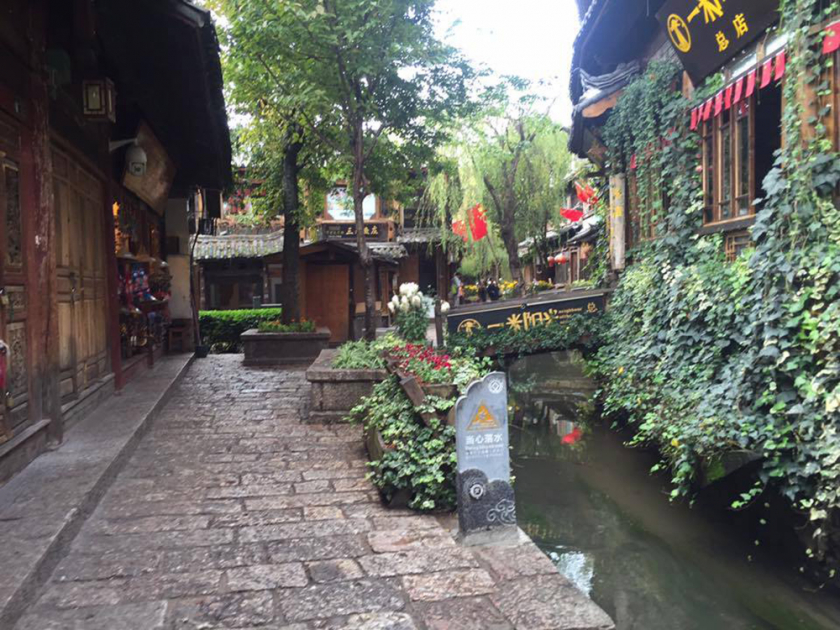
The early morning brings a rare sense of tranquility before tourists flock to Lijiang Old Town.
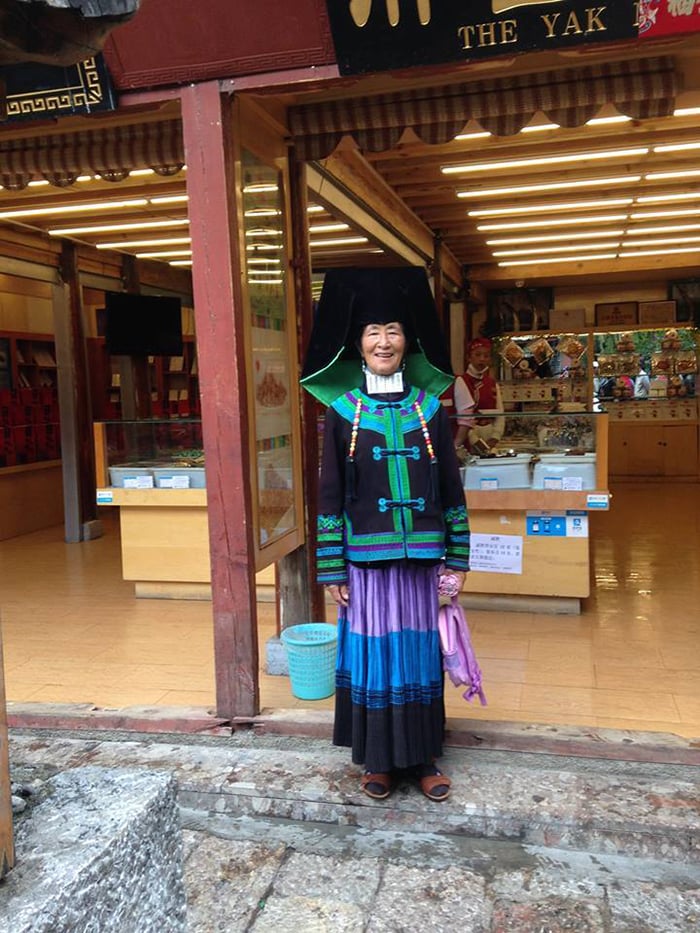
A Nanxi woman in Lijiang Ancient Town poses for photos with tourists.
The excitement immediately lit up the faces of our Vietnamese backpacking group; everyone was busy taking photos and posing for check-ins to commemorate our journey to this ancient town, hailed as the most beautiful in China.
I also took a few photos while calling Ms. Man, the owner of the guesthouse that the previous Vietnamese backpacking group had recommended, to ask her to arrange rooms and come to welcome our group, which was lost in the sea of people bustling like a New Year's Eve festival.
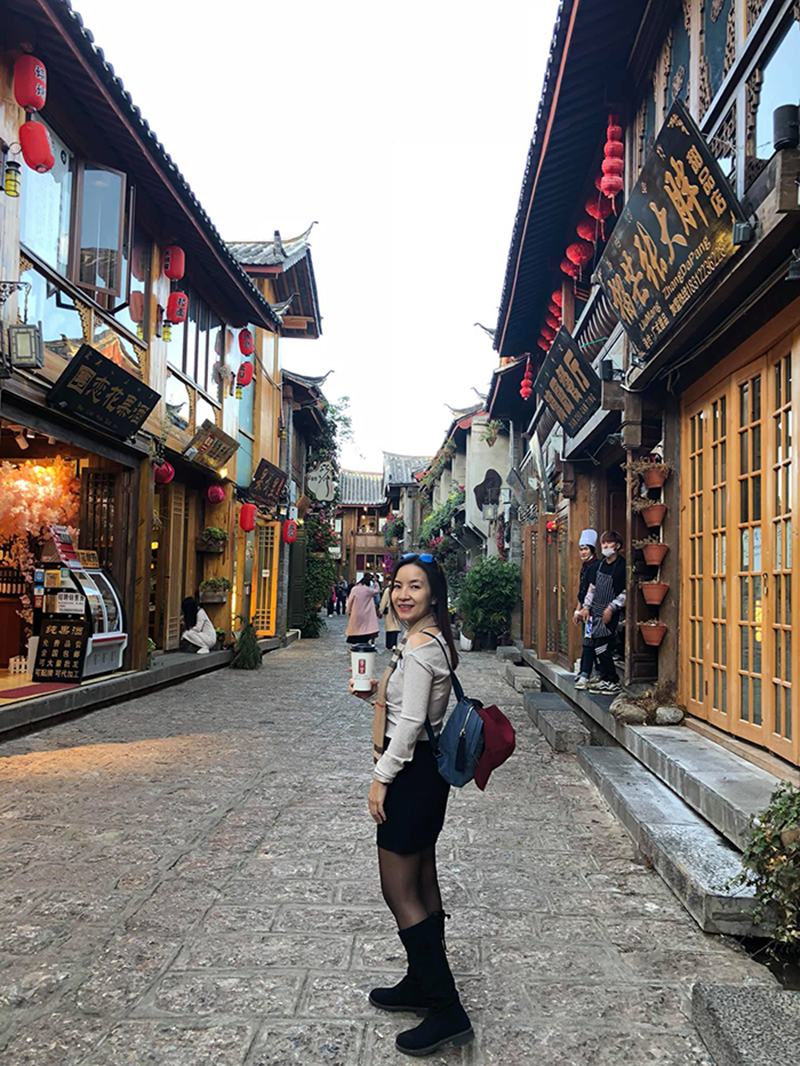
Enjoy a hot cup of Gongcha (milk tea) early in the morning, before the ancient town of Lijiang is crowded with tourists.
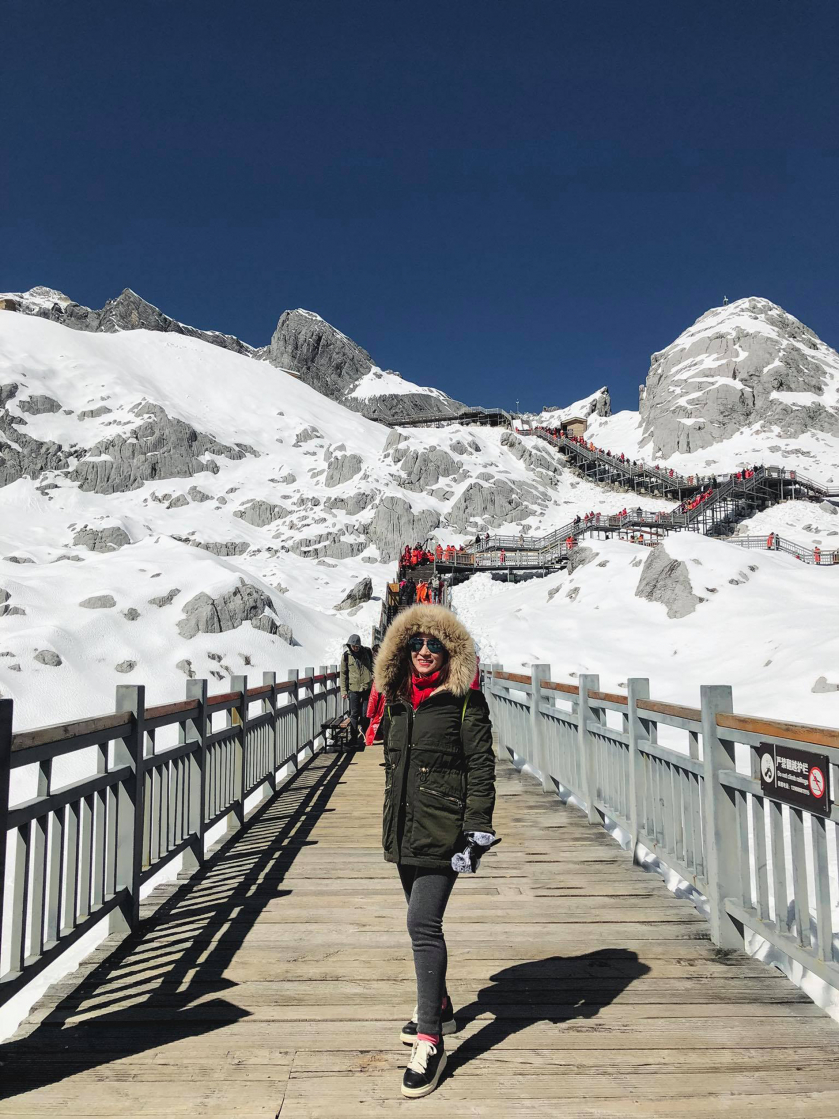
Take a cable car up to admire the view of "snow falling outside..." at Jade Dragon Snow Mountain near Lijiang Ancient Town. Right at the foot of the mountain is Shuhe Ancient Town, with its magical, fairy-tale-like beauty.
My Chinese had improved significantly after those "transactions" on trains and buses, the kind where even the most fragile things can be broken. Therefore, after a three-minute phone conversation, I was overjoyed to have managed to book the last three vacant rooms at Ms. Man's guesthouse for 25 Yuan (approximately 90,000 VND) per person.
Loading our luggage onto a bicycle-rickshaw, we arrived at our guesthouse and were immediately captivated by the charming house, built entirely of stone and wood, with willow trees in front and a stream flowing through it – a quintessential example of Lijiang architecture. A warm and romantic feeling stayed with us throughout the first leg of this "horizon-side" journey. Lijiang truly deserves its title as one of the seven most attractive "honeymoon destinations" in the world.
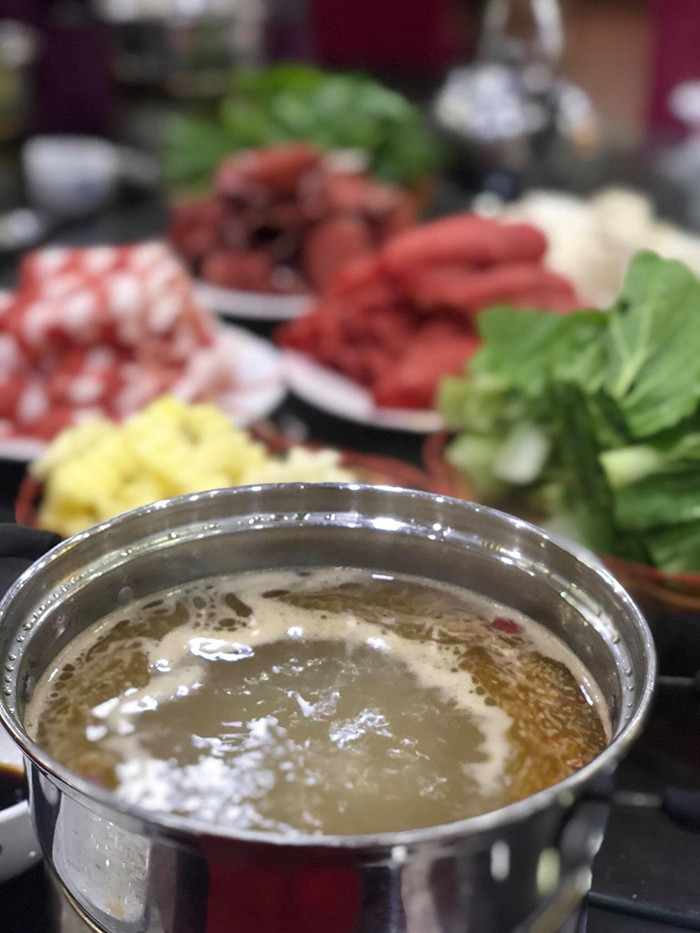
For our first dinner in Lijiang, we treated ourselves at a restaurant near the city center to a famous hot pot dish featuring yak beef, tofu, mushrooms, and fresh mountain vegetables, costing less than 300 yuan (approximately 1.1 million VND) for the whole group.
Our next destination on the itinerary was Shangri-la, known as the "Lost Horizon." We moved up a day because the tickets were cheaper, only 600-700 Yuan (approximately 2.14 million - 2.5 million VND). Going later, on a weekend, would have been more expensive.
(to be continued)