VI
VI



A video shared on Chinese news sites and social media shows multiple timers installed above each women's restroom. When the stall is empty, the LED screen displays the word "empty" in green. If activated, it displays the number of minutes and seconds the door has been locked.


Explaining this, an employee at the tourist attraction said that the clocks were installed to accommodate the increasing number of visitors and that they were not intended to control the time visitors spent in the restrooms. The stopwatches serve as a reminder for visitors to use water sparingly and avoid waste. The use of stopwatches demonstrates the tourist area management's concern for environmental protection and promoting civilized tourism.
The timer was installed on May 1st of this year and is primarily a safety measure to ensure the health of all guests, to warn some guests who use the restroom for extended periods, and to assist other guests in "emergencies".

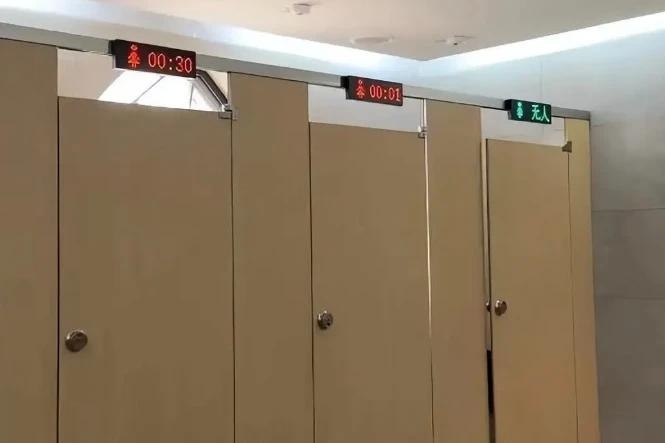
A video showing a series of timers installed on toilets at the Yungang Caves tourist area is going viral.
Some netizens supported installing timers in public restrooms, complaining that many tourists spend too long in them just to surf the web. However, others argued that this was a violation of privacy. They questioned, "Why don't the management spend the money building more restrooms instead of installing timers?"
This debate reveals the diversity of community perspectives on solutions for managing public restroom usage time, while also raising questions about investment priorities and the protection of individual privacy.
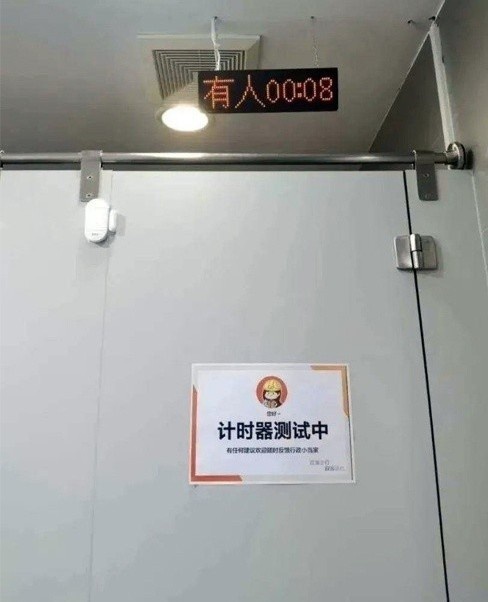
The timer is located above the counter in the restroom at the tourist resort.
Recognized as a UNESCO World Heritage Site in 2001, the Yungang Caves are one of the most popular tourist destinations in Shanxi Province, China. In 2023, this famous scenic spot welcomed 3 million visitors, a record high compared to 1.98 million visitors in 2019.