VI
VI


The lovable robot cat Doraemon has long been more than just a comic book character; he's been a close friend to countless generations, even after the series ended in 1996 following the sudden passing of artist Fujiko F. Fujio. Over the years, this robotic cat has become a legend and an icon of Japanese culture.
Doraemon – a name that has long been an irreplaceable symbol for the Japanese people. Doraemon's hometown is Shirakawa-go village.
Many childhood Doraemon fans may not know the true hometown of this robotic cat. In Japan, the land many consider Doraemon's home, it's not the glamorous Tokyo, but a small village in Gifu Prefecture called Shirakawa-go.
It was the peacefulness, beauty, and unique architecture of this village that inspired author Fujiko F. Fujio to write the first Doraemon stories. There were rumors that Fujiko conceived Doraemon while living in a house here. If that's true, then Shirakawa-go village could be considered Doraemon's birthplace.
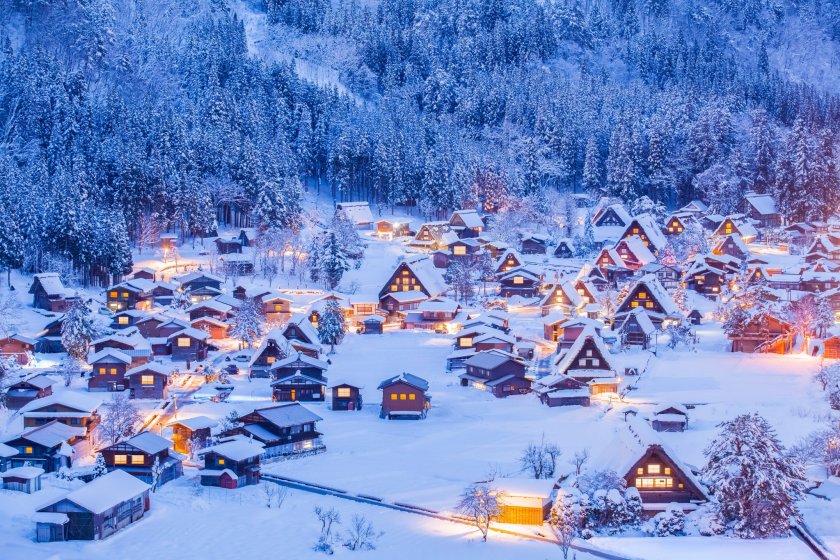
This ancient and serene village, recognized as a UNESCO World Heritage site in 1995, is also the place where author Fujiko F. Fujio drew inspiration for the first Doraemon stories.
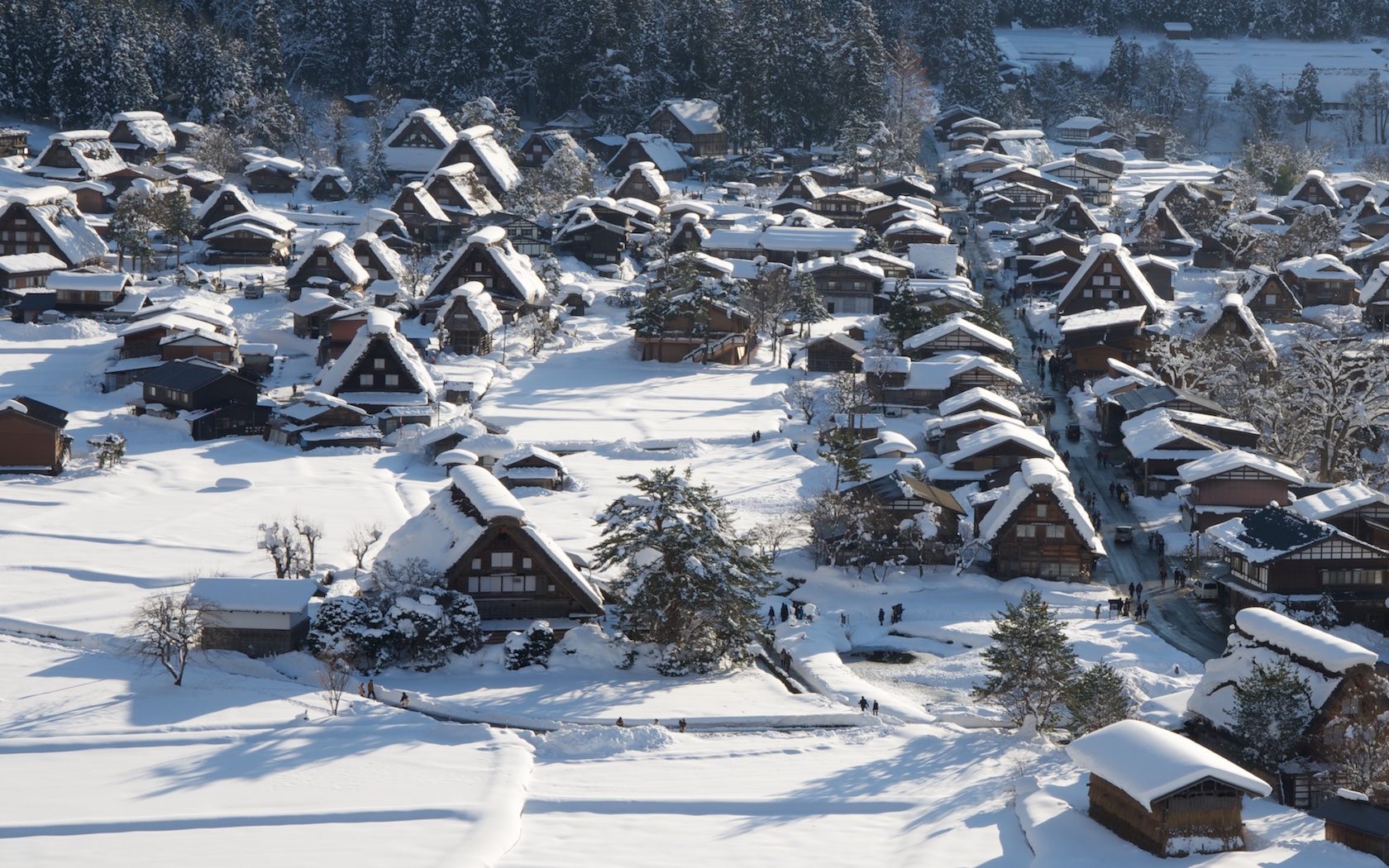
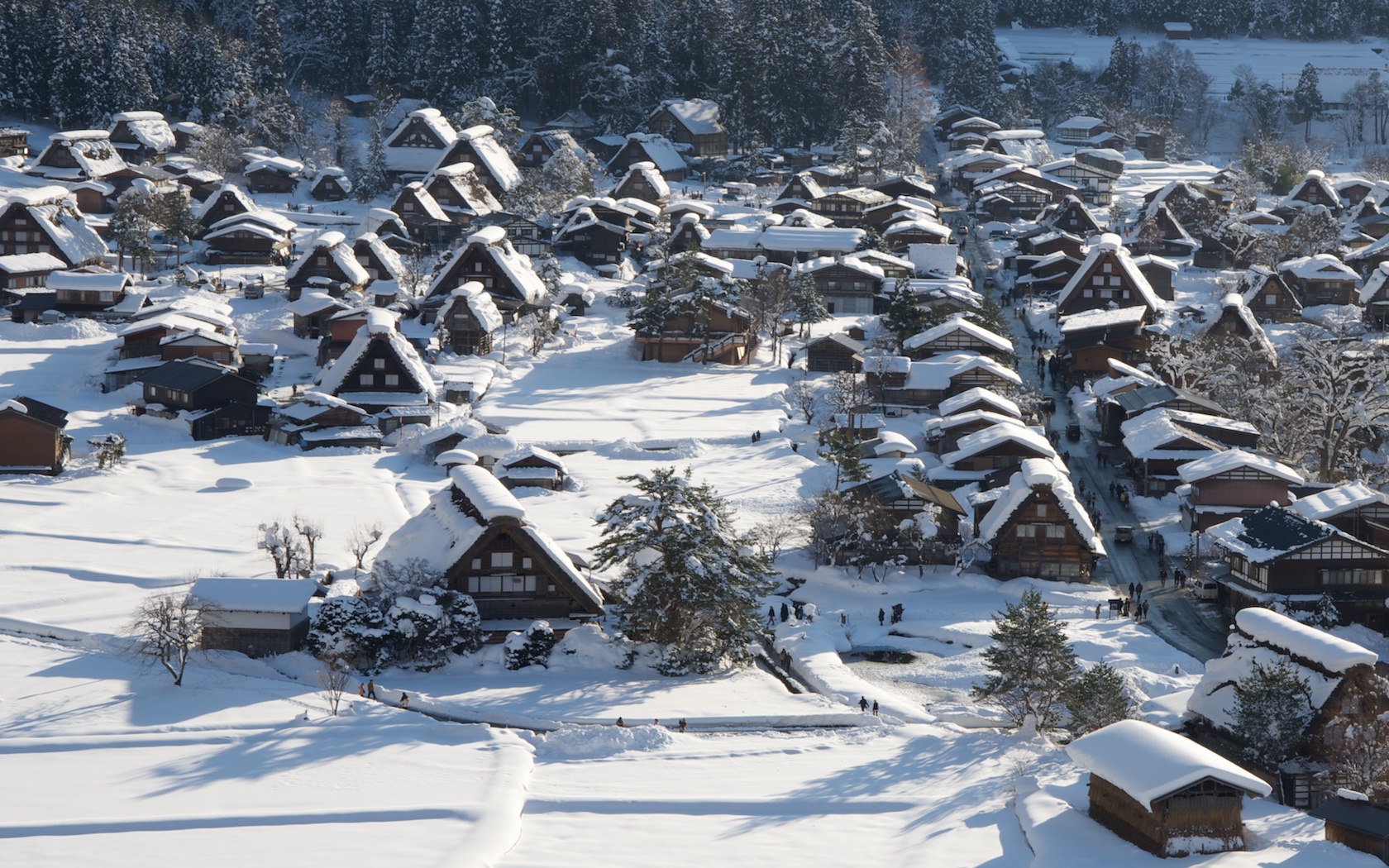
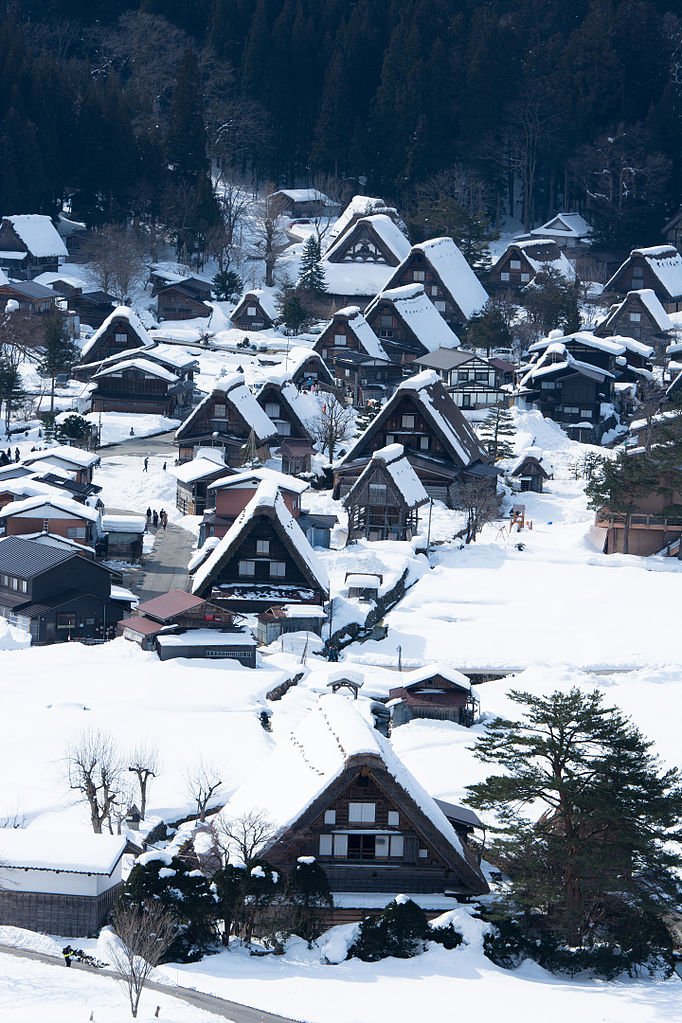
Shirakawa-go, whose name means "white river village," is one of the oldest villages in Japan. In winter, the farmhouses here are covered in snow, creating a fairytale-like scene. To this day, the village still preserves over 100 houses with the traditional Gasshō-zukuri architectural style, characterized by roofs designed to allow snow to easily fall, covering the entire structure in white.

In spring and summer, the area takes on a vibrant, lush green landscape. In autumn, the scenery becomes enchanting as the leaves begin to turn red. It's no surprise that Shirakawa-go has remained one of Japan's most popular tourist destinations for many years.
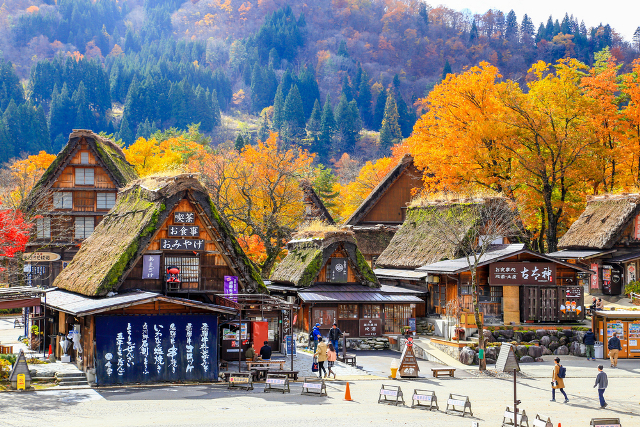
Because of its rich historical and scenic value, in 1995, the birthplace of the robot cat Doraemon was recognized by UNESCO as a World Cultural Heritage site.
Due to its geographical location, Shirakawa-go village has always faced a harsh climate. Winters here are very cold, with snow covering the village for up to three months. But thanks to its Gasshō-zukuri-style houses, the village not only retains its ancient charm but also remains warm and cozy. This architectural style helps you understand the scientific and meticulous approach of the Japanese people from hundreds of years ago.
The houses here have quite a distinctive feature: they have a thatched roof, with a high gable consisting of one or two layers. The straw layer is 40-80 cm thick, designed to withstand harsh weather and significantly insulate the house. Beneath this thick layer of straw and leaves are hundreds of large wooden beams, braided together with rope. The amount of wood has been scientifically calculated, given the considerable weight of the thatched roof, plus the weight of the heavy snowfall during the winter months.
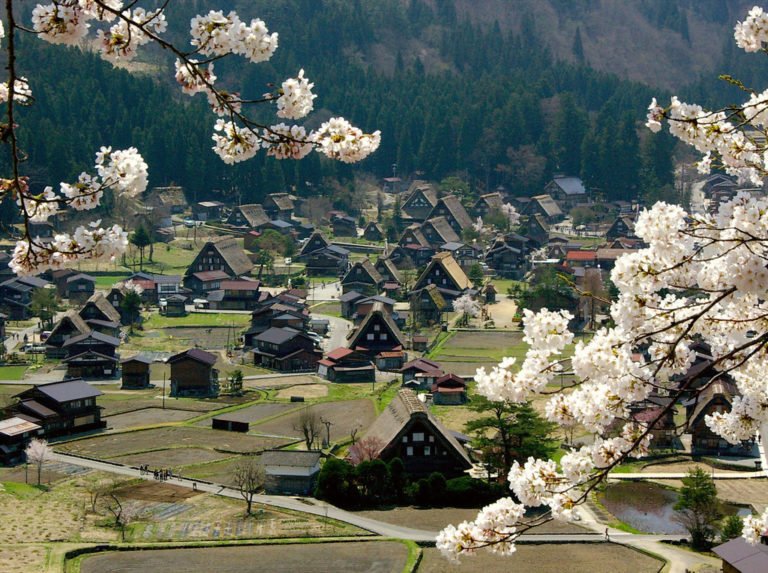
Shirakawa-go village in spring
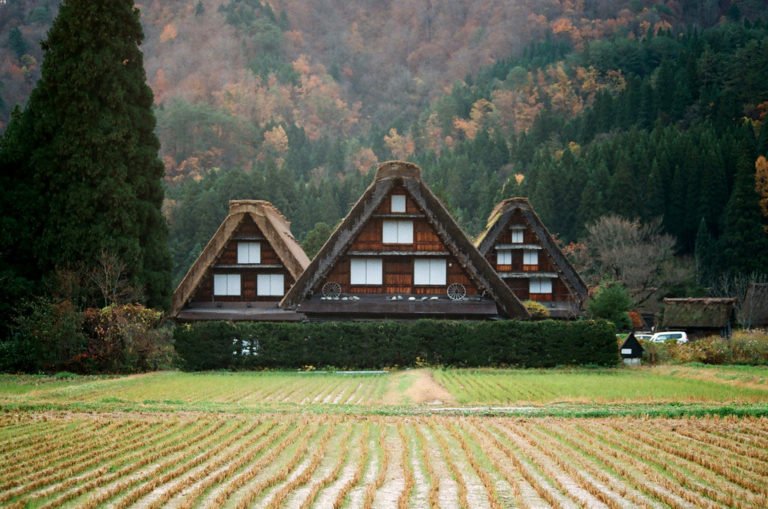
Shirakawa-go village, located in Gifu Prefecture in central Japan, is one of only two ancient villages in Japan that still retain the traditional Gasshō-zukuri architectural style, evident in its old houses.
However, during the three months of snow cover, this roof also erodes. Therefore, the locals have to replace the roof every year, and this process has been preserved intact to this day.
These houses are also decorated in an extremely traditional style. A typical house has three floors. The first floor features traditional Japanese architecture, including a living room, reading room, and altar. The second floor is for storing dry goods. This is also where family activities such as cooking and handicrafts are carried out. And the third floor is the highest attic, which also features the braided wooden beam design mentioned earlier.
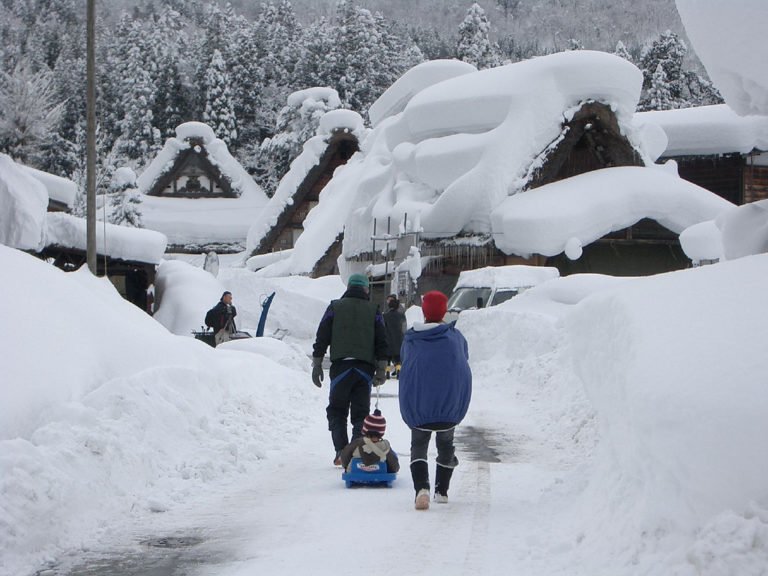
Tourists are captivated by the houses covered in snow.
The village of Shirakawa-go dates back to the 11th century, but to preserve its unique character, the Japanese government has invested considerable effort and resources. In 1995, the village was recognized as a UNESCO World Heritage Site and has become one of Japan's most popular tourist destinations.