VI
VI


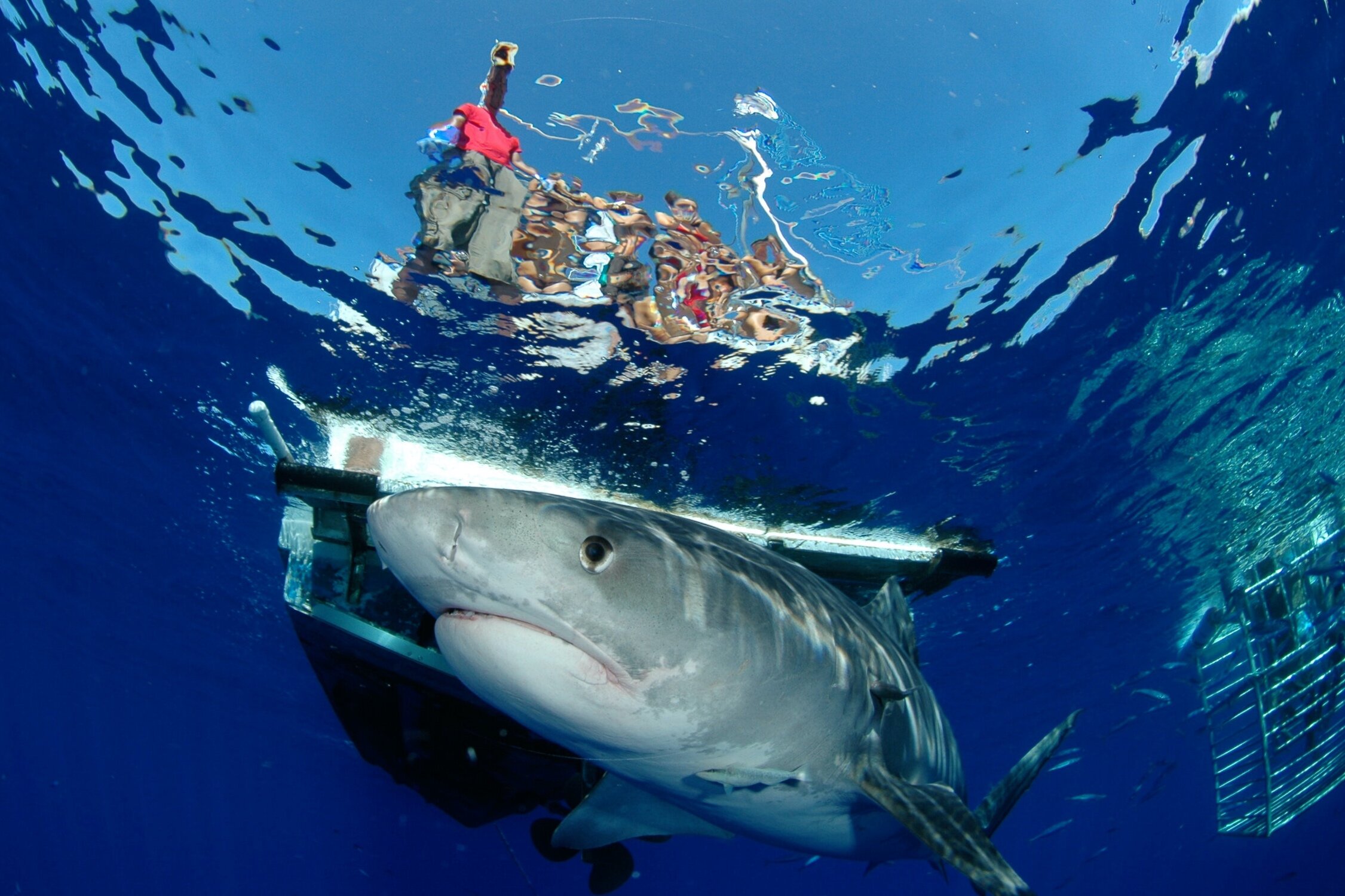
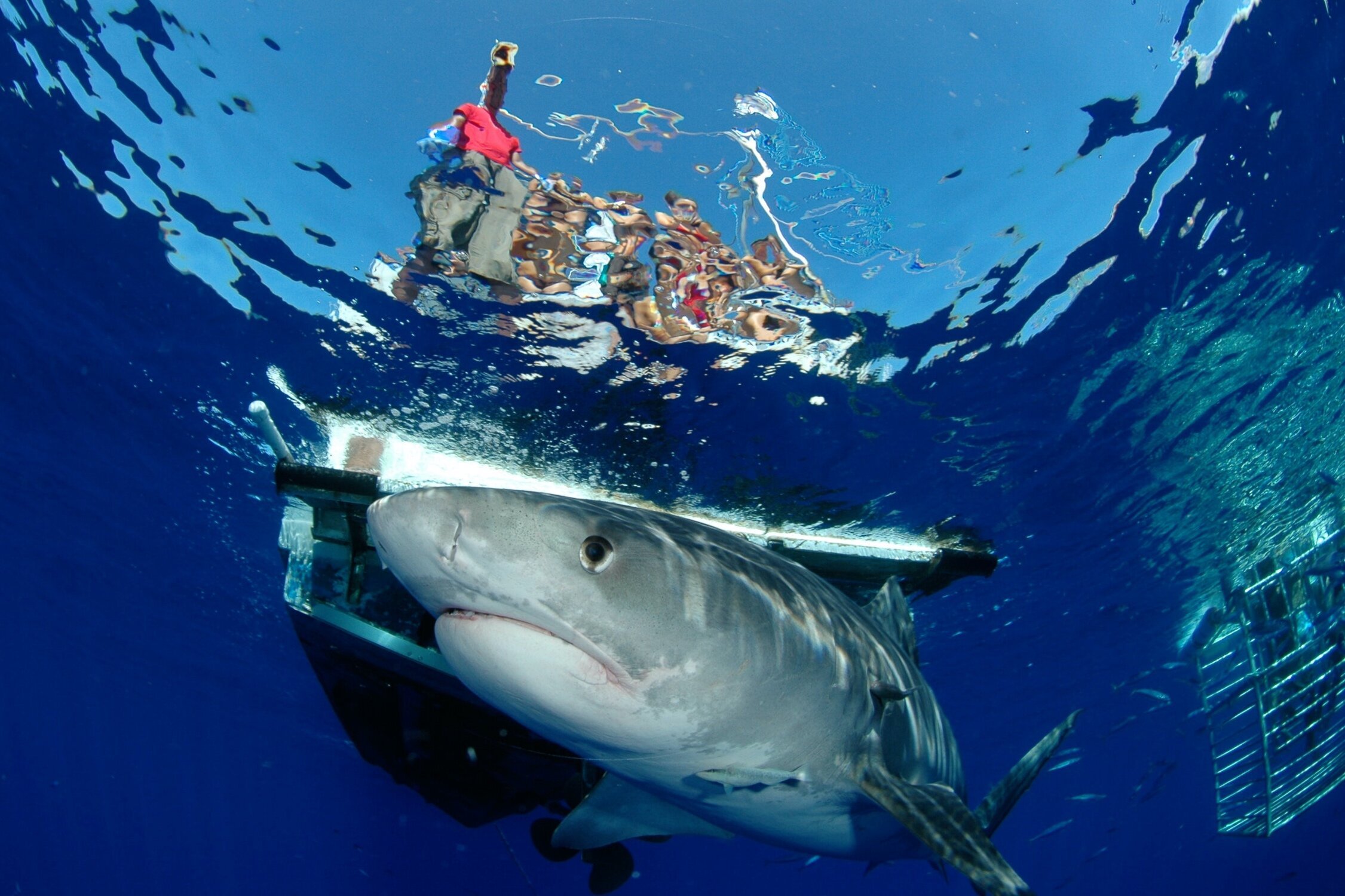
Currently, the world's oceans are home to over 440 different species of sharks. From carpet sharks to whale sharks and silverfish to rough-skinned sharks, it's easy to see why so many scuba diving enthusiasts are fascinated by them. Many of us plan entire vacations and dives around to see these magnificent creatures.
Bajo Alcyone – Cocos Island, Costa Rica
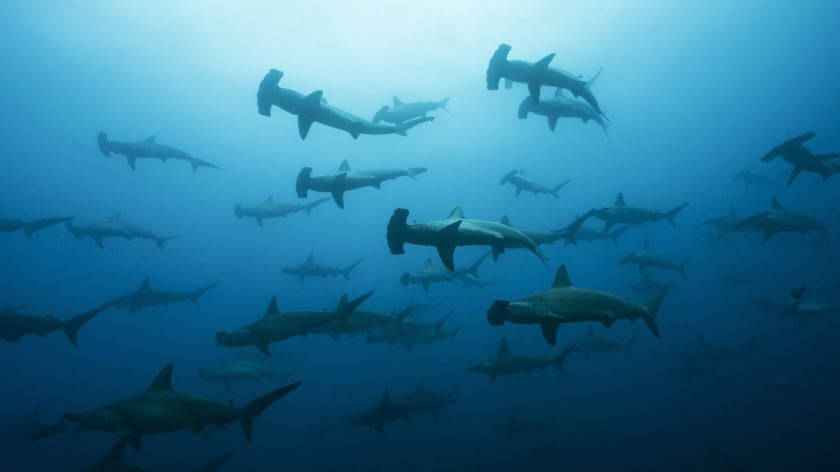
This is the world's most dangerous diving route.
Located far from the Costa Rican mainland, Cocos Island consistently ranks as one of the world's top destinations for hammerhead shark diving. This location is only accessible by liveaboard. Baojo Alcyone is the world's most challenging and adventurous dive trail. It reaches depths of 82 feet (25 meters) and attracts dozens of hammerhead sharks. All you have to do is dive to the top of the platform, enter a protected area, and admire the schools of sharks swimming around you.
Monad Shoal – Malapascua, Philippines
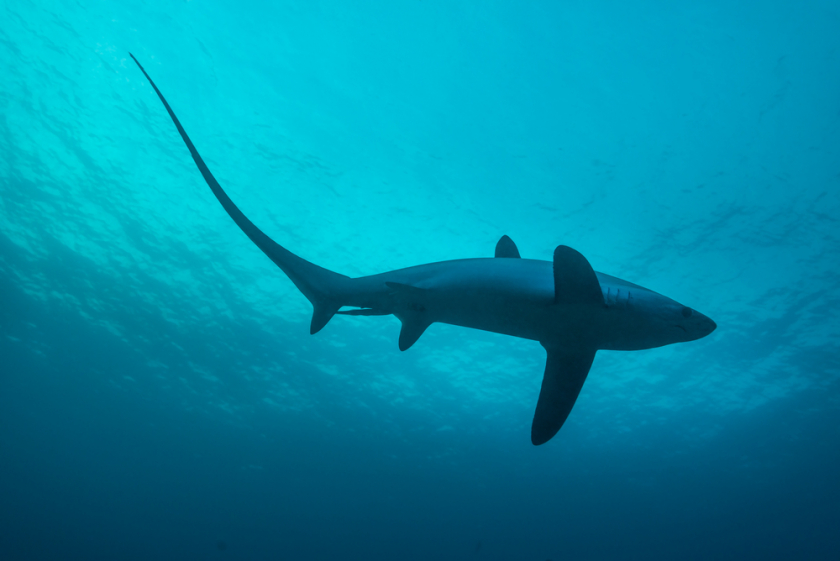
Shark-watching spots in the Philippines.
With over seven thousand islands, the Philippines boasts hundreds of shark diving spots where visitors can admire whale sharks, reef sharks, and zebra sharks. However, shark enthusiasts will know the Philippines for a particularly special dive site – Monad Shoals in Malapascua. This is the only place in the world that is home to the longtail shark. At a depth of 100 feet (30 meters), divers wait for the sharks to arrive for their daily grooming.

Gordon Rocks – Galapagos Islands, Ecuador
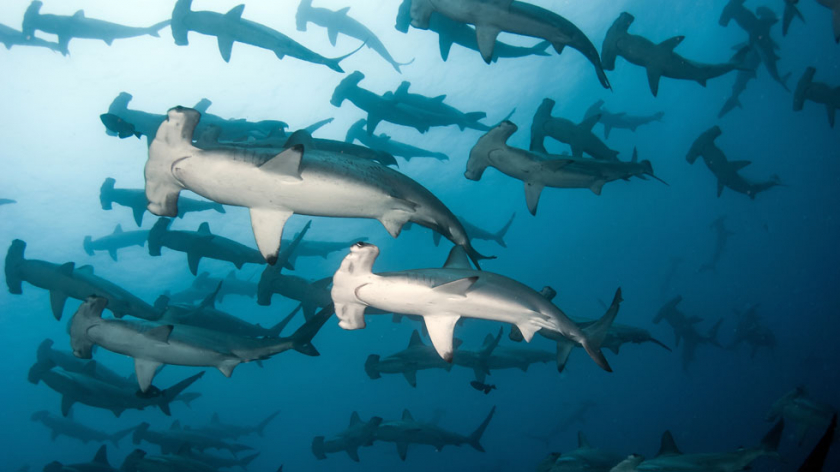
Hammerhead sharks in the Galapagos.
The Galapagos Islands are one of three destinations that make up the “Shark Triangle.” The other two islands are Cocos and Malpelo. Like the other destinations, the Galapagos are home to schools of hammerhead sharks, and one particular location is known as a shark diving sanctuary. At Gordon Rocks, an eroded crater near Santa Cruz Island, strong currents draw dozens of hammerhead sharks into a confined area. Divers can get fairly close to the sharks safely, but this diving location should only be undertaken by experienced current-diving divers.
Tiger Beach – Grand Bahama Island, Bahamas
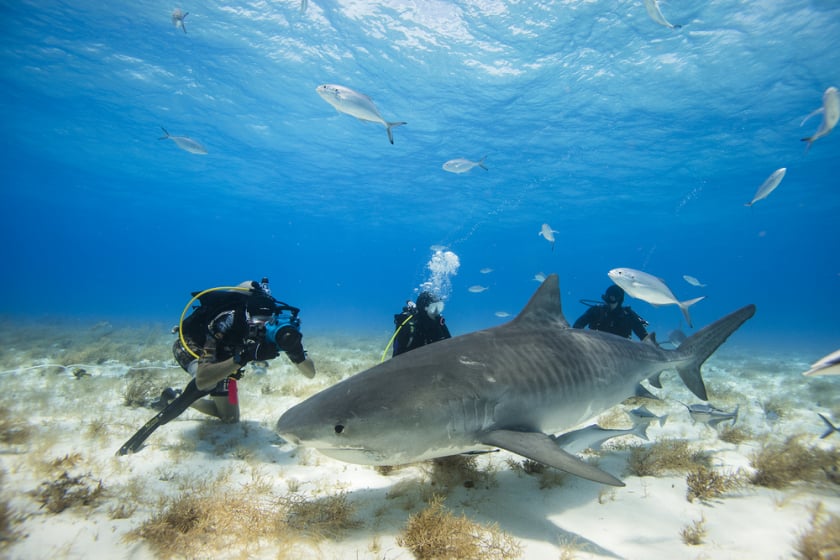
Watch ferocious tiger sharks at Tiger Beach.
The Bahamas is known as the world's most exceptional shark-watching destination. Here, you can swim with reef sharks, hammerhead sharks, and great white sharks on the ocean floor around these stunning islands. However, one of the best spots is Tiger Beach, where you're almost guaranteed a safe encounter with tiger sharks. Each day, a few of these aggressive sharks appear for local divers to see. The divers wait in groups on the sandy bottom as the sharks circle for minutes. As an added bonus, you can also see nurse sharks, lemon sharks, and Caribbean reef sharks while diving at Tiger Beach.
Pipín – Jardines de la Reina, Cuba
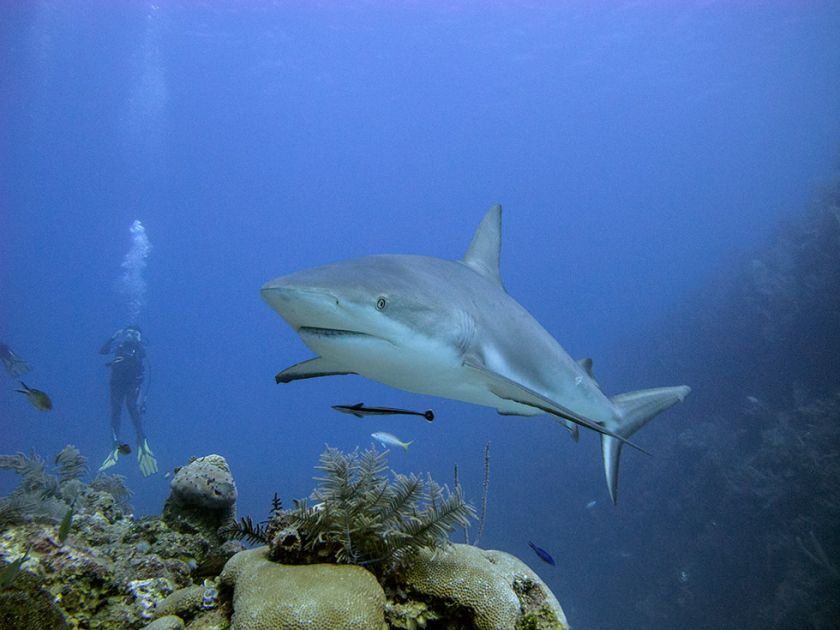
Queen's Garden is home to a large population of sharks.
The Queen's Gardens (also known as Jardines de la Reina) in Cuba is rapidly becoming one of the world's most exceptional shark diving destinations. Accessible only by liveaboard, the reserve boasts some incredibly sharp dive spots. At Pipín, divers can swim alongside 30 sharks and Caribbean reef sharks in a single dive. After years of protection by the Cuban government, these sharks are comfortable allowing divers to approach them.
Isla Guadalupe, Mexico
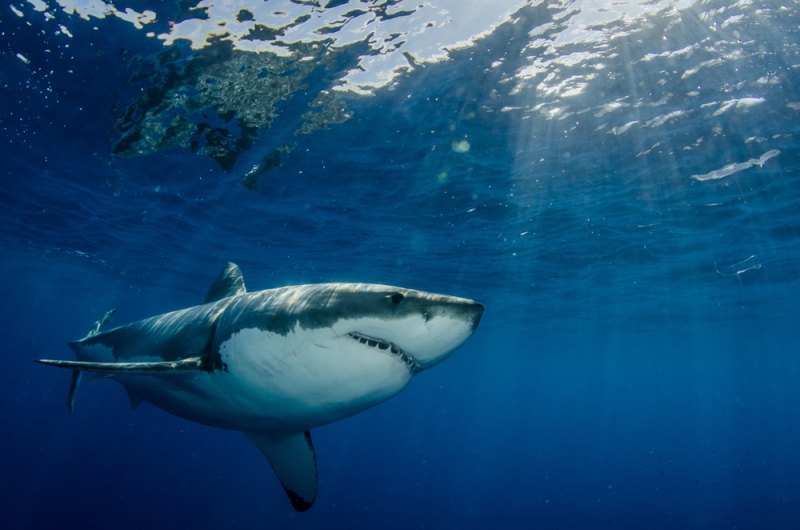
Watching great white sharks in Mexico.
As one of only four places in the world where you can dive with great white sharks, Isla Guadalupe has quickly become a favorite spot. The reason great white sharks appear here is due to the warm, clear waters. Here, you can dive with these giant sharks using an open cage, half-extending from your protection for an unobstructed view of the predators. Isla Guadalupe is only accessible by liveaboard.
Placencia, Belize
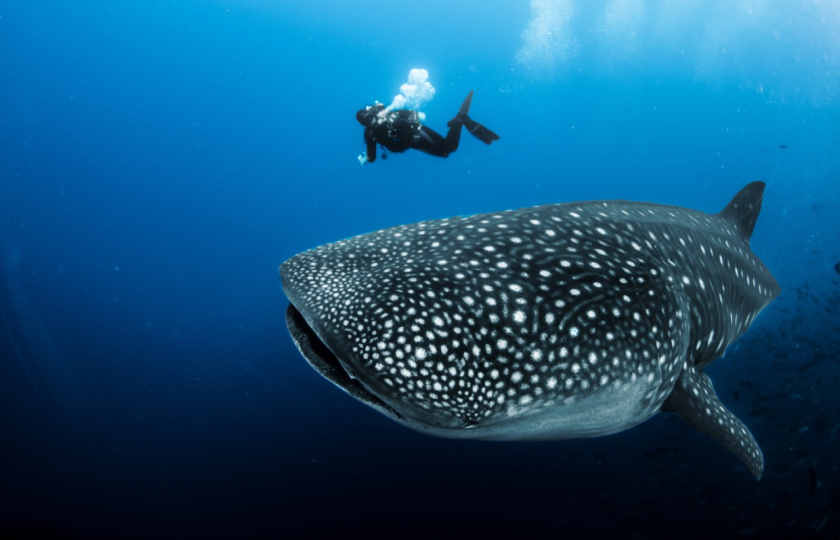
Watch the giant whale sharks.
If you're looking for slightly more docile sharks, try diving with whale sharks in Belize. Gladden Spit near Placencia is known as home to these giants. They are drawn to the area for the delicious roe produced by snapper spawning. The best chance to see whale sharks while diving occurs just before and just after the full moon.