VI
VI


.JPG.JPG)
Text and photos:Dam Duc Vu
City of Colors
Kota welcomes those eager to conquer the peak.
Kinabalu, the capital of Sabah state, is affectionately known locally as KK. Kota Kinabalu boasts numerous tourist attractions both within and outside the city, and is also one of the important commercial centers of East Malaysia.
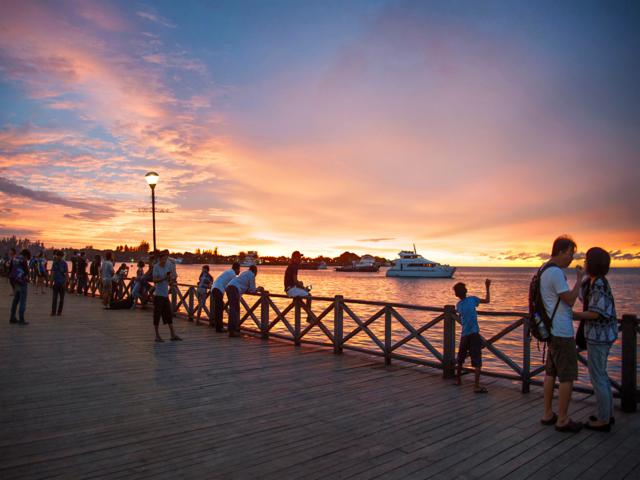
The city boasts numerous cultural attractions: the Sabah Museum – Sabah's main museum – is located near Queen Elizabeth Hospital; the Sabah Art Gallery; and the Ethno Botanical Garden. The Wisma Budaya Art Gallery in the city center hosts national and regional exhibitions. The Hongkod Koisaan building in Penampang houses the Kadazan-Dusun Cultural Association. Every March, the Association hosts the Harvest Festival and the Unduk Ngadau beauty contest. But the most exciting attraction is the outdoor night market along the seaside promenade.
.jpg_13.jpg)
The market opens at sunset, when distant visitors are captivated by the enchanting splendor as the sunlight dances with the wind, creating a spectacular display of colors. Vibrant hues range from green and yellow to metallic shades, from brilliant pink to romantic and mysterious purple; while the water acts as a mirror, occasionally disturbed by carefree children leaping from the bridge into the water.

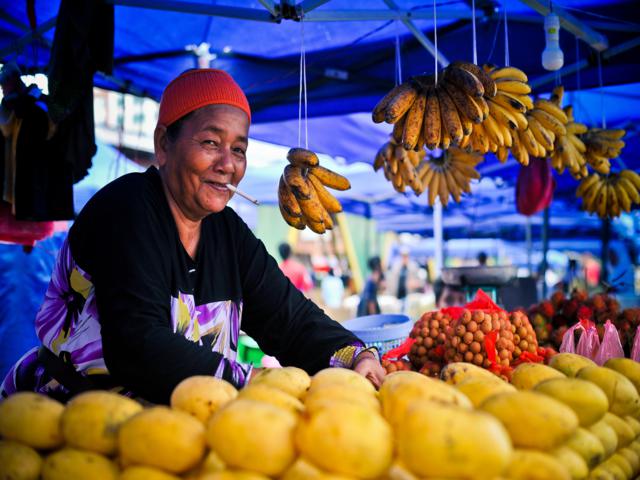
KK Waterfront is a waterfront entertainment area in the city center, featuring restaurants, cafes, bars, and nightclubs. Along this 4.5 km stretch are the Royal Sabah Equestrian Club, the Sutera Harbour Golf & Outdoor Sports Club (located on reclaimed land with a golf course, marina, two hotels), and numerous shopping malls, including Kompleks Karamunsing, Centre Point, Wisma Merdeka, Warisan Square, Plaza Wawasan, Kompleks Asia City, City Mall, KK Plaza, Suria Sabah, and 1Borneo – the city's largest shopping mall. Some newly constructed malls include the Suria Sabah Shopping Mall and the Megalong Shopping Mall. The Gaya Street Sunday Market is a weekly gathering place for vendors offering a wide range of goods from traditional ethnic souvenirs to pets and flowers.

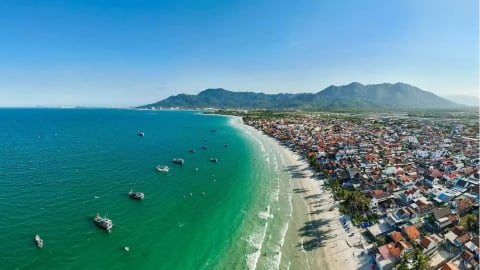
In the opposite direction, just 6km from the city center, lies Tanjung Aru Beach, stretching along the West Coast; its name comes from the rows of casuarina trees (Aru) growing along the shoreline. Along the more than 2km stretch of beach are numerous eateries, restaurants, and nightlife clubs. Near Tanjung Aru are Prince Philip Botanical Garden, KK Yacht Club, and Shangri-la Resort. Tanjung Aru is famous for its stunning sunset views.
Kinabalu National Park
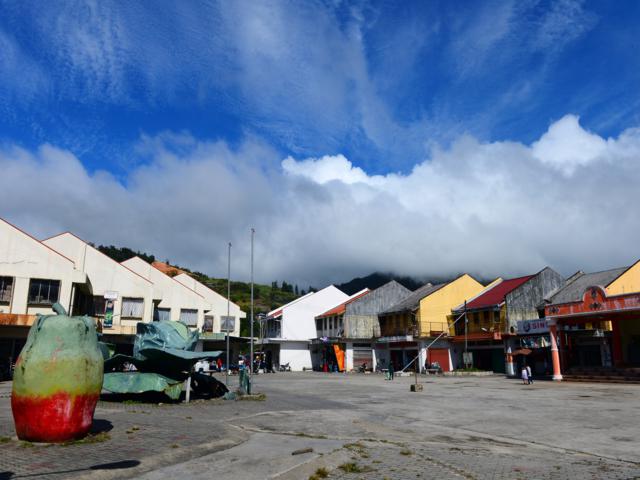
If you enjoy the mysteries of dense forests, Kinabalu National Park in Sabah is an ideal destination. It's Malaysia's first UNESCO World Heritage site, home to over half of the world's existing plant species, including the exotic and unique Rafflesia flower. Girls, don't even think about asking your boyfriend to find this flower! It's not a difficult or easy task. The flower, with a diameter of up to 1.5 meters and weighing up to 12 kilograms, has been portrayed in Hollywood films as an extremely rare yet dangerous treasure: a predatory flower! (This is fictional) and when it blooms, it emits an unpleasant odor (this is true).
TAR Marine Park
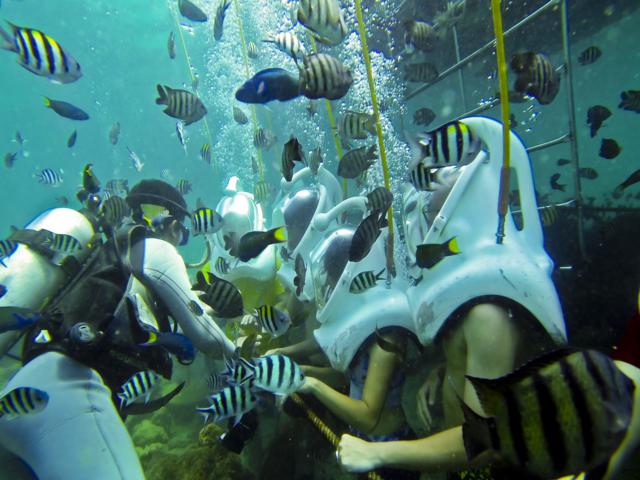
Located in Gaya Bay, about two nautical miles from Kota Kinabalu, the marine park comprises five islands with hilly terrain and tropical rainforests, interspersed with reefs and white sand beaches. Named after Malaysia's first Prime Minister, Tunku Abdul Rahman, in 1974, it is Sabah's second national park. TAR Marine Park can be reached by speedboat (approximately 30-45 minutes depending on sea conditions) from Jesselton Pier north of Kota Kinabalu.
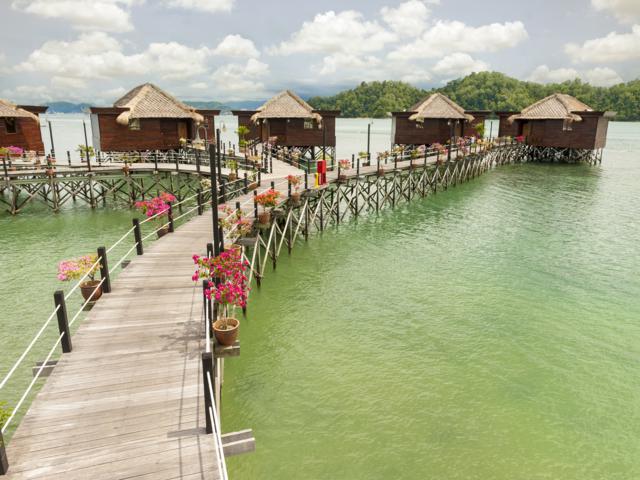
The boats depart from 7:30 AM to 4:30 PM, with a frequency of one hour per trip. To travel between the islands, you can take a "water taxi" for a round trip costing approximately 17 RM (equivalent to 110,000 VND) per island. Each trip takes about 10-15 minutes, depending on the route.
Sapi Island, spanning 10 hectares, is renowned for having some of the most beautiful beaches in this marine park, with popular tourist activities such as scuba diving and snorkeling. Visitors can rent some equipment on the island, such as tents, sleeping bags, tables and chairs, and BBQ cooking equipment.
.JPG_12.JPG)
As the second largest island in the group of five, Manukan boasts many beautiful beaches on its southern coast, although the most stunning beaches are located on its eastern coast. Offshore are vibrant coral reefs, ideal for snorkeling and diving. Of the five islands, Manukan is the one with the most developed tourism infrastructure and facilities.
Let's adopt a sea creature.
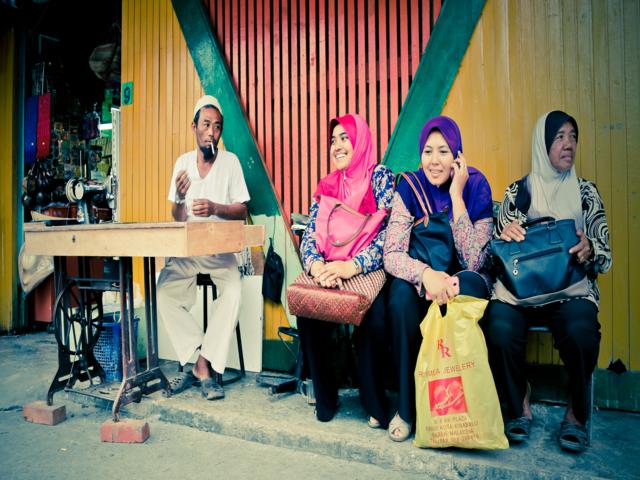
The Marine Ecological Research Centre (MERC) began operating in 2007 as an educational center, later developing into a research and ecological restoration facility. MERC truly rose to prominence after being listed in the Malaysian Book of Records for successfully cultivating seven species of giant clams native to Malaysian waters. Beyond its research and educational center, it has also become a popular ecotourism destination, winning a conservation award from the Malaysian Ministry of Tourism.

Visitors can reach the center by speedboat, yacht, or helicopter. The most popular activity at MERC is adopting a coral branch; after two weeks of cultivation at the center, the coral will be officially transferred to the offshore coral garden. The "foster parents" of these coral clusters can monitor their growth through an online website. This activity aims to raise awareness and responsibility among people in protecting marine life in general and the environment in particular.
Mari-Mari Cultural Village
.JPG_11.JPG)
The Mari-Mari Cultural Village was established in December 2008, a 45-minute drive from the center of Kota Kinabalu. It was created as a living museum to preserve the culture of the indigenous peoples of Borneo by showcasing their knowledge, history, culture, and traditions. Visitors can explore and experience the culture and lives of five indigenous tribes: Kadazan-Dusun, Rungus, Lundayeh, Bajau, and Murut, gaining a deeper understanding of the history and culture of the local inhabitants.
The price for each tour is 160RM/adult (1,000,000 VND) and 140RM/child (900,000 VND).