VI
VI


A chance encounter leads to a traditional craft village.
On July 27th, while traveling to Bac Son (Lang Son) to photograph rice fields, photographer Nguyen Trong Cung happened to visit a small village in the former Bac Quynh commune. He was surprised to find that alongside the shimmering golden rice paddies, another world unfolded, filled with smoke, fire, clay, and yin-yang tiles – a type of tile characteristic of the Tay and Nung people that has existed for hundreds of years.
"The process of making roof tiles is entirely manual, laborious, but also very artistic and requires skill and experience. Many foreign tourists come to see and experience it, as it is a unique feature in the culture of the ethnic groups in the highlands," he shared.
Related articles

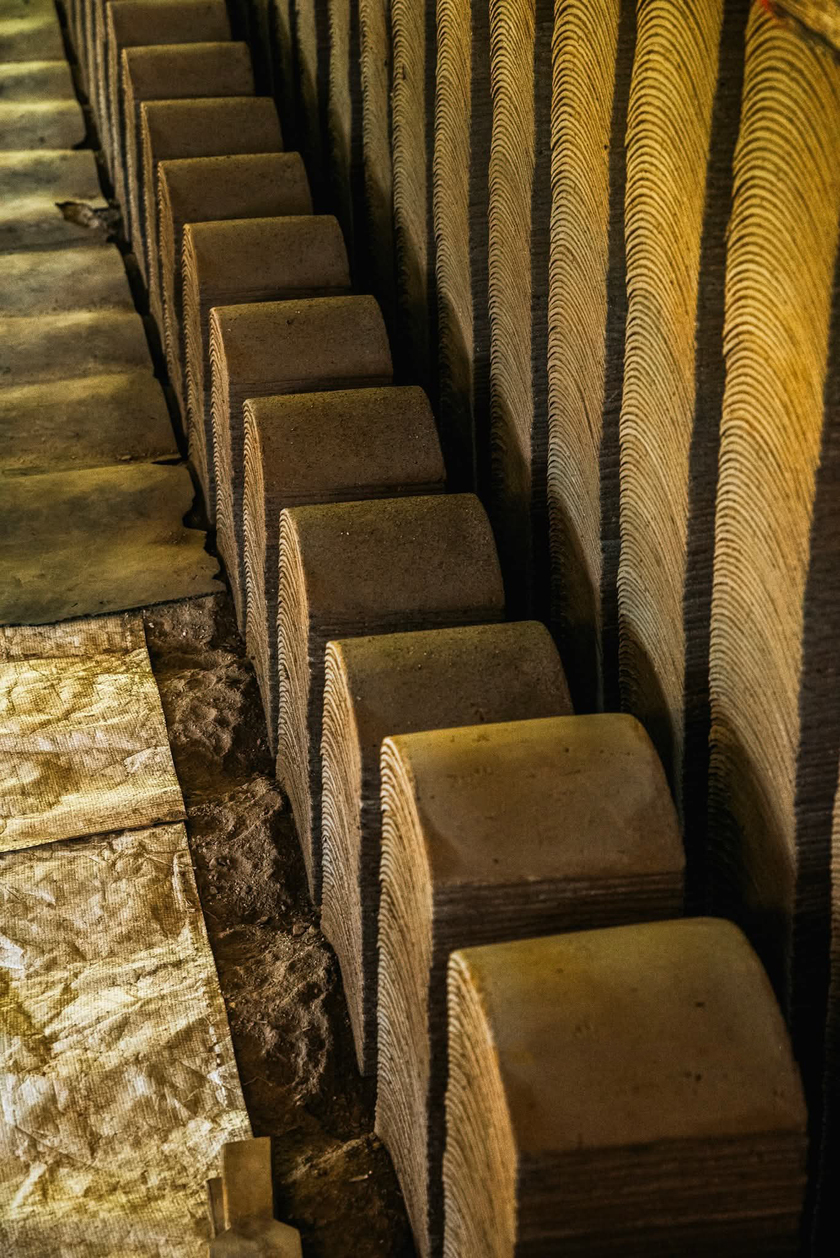
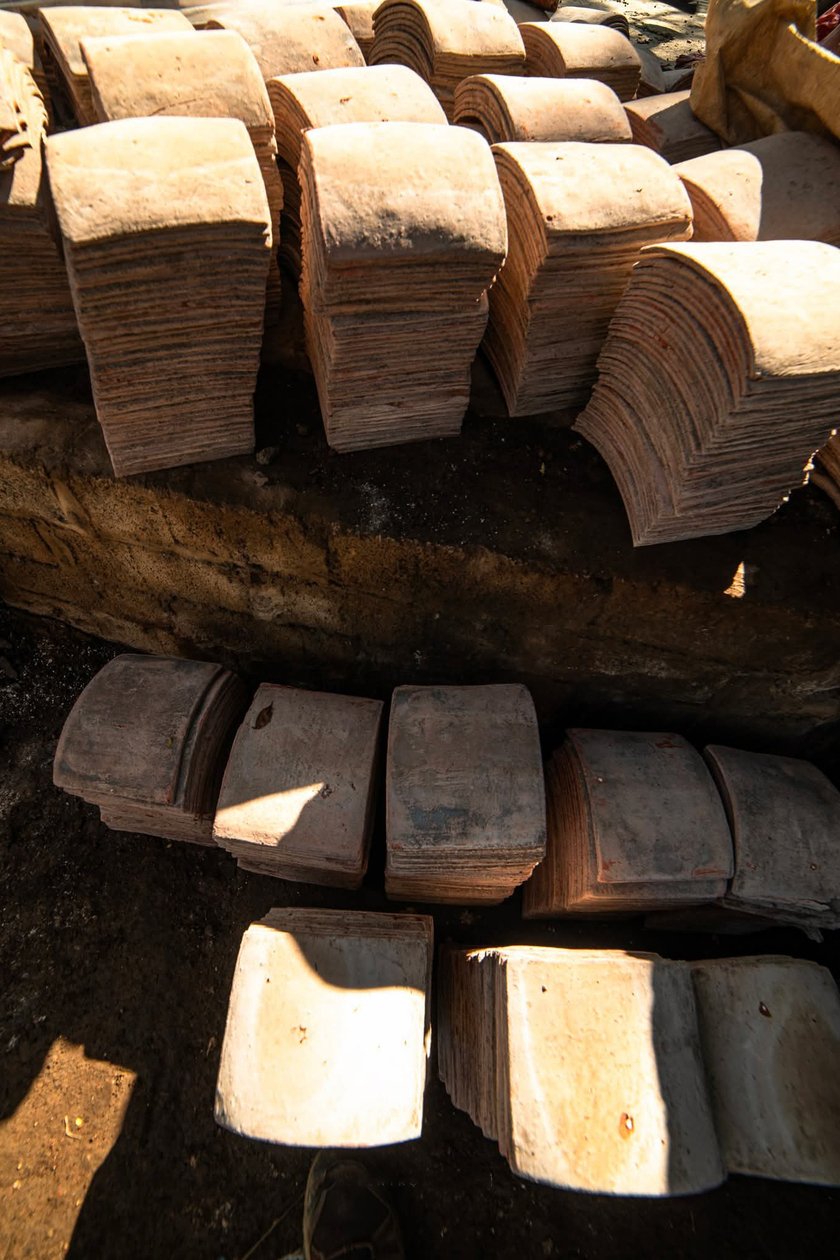
Yin-yang tiles, also known as trough tiles, are an indispensable material for roofing stilt houses of ethnic minorities in mountainous regions. Each tile has a soft, curved shape like a small trough, overlapping each other in a yin-yang pattern, with some tiles facing down and others facing up, providing both sturdiness and ventilation. The name "yin-yang" is not just a name, but also a symbol of a philosophy of living in harmony with nature, with balance between above and below, a very Vietnamese aspiration.
Between the kiln smoke and the smell of clay
From the foot of Tam Canh Pass, a left turn less than 50 meters reveals a different world. Along both sides of the road, rows of tiled huts stand close together, smoke rising silently from the kilns, a testament to the enduring vitality of this ancient craft. Some sift gravel, others tread the clay, still others mold the bricks… Each person has their own task, silently and rhythmically, without the need for machinery or announcements. Only the sound of bowstrings cutting the clay, the clacking of fired tiles against each other, and the rumbling of the fire fill the air day and night.
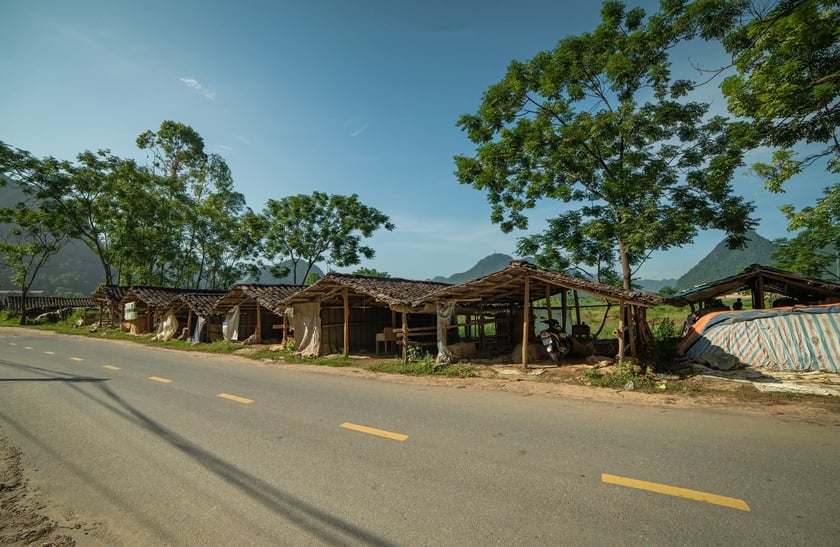
The huts and shelters on both sides of the road leading into the village are all roofed with yin-yang tiles.
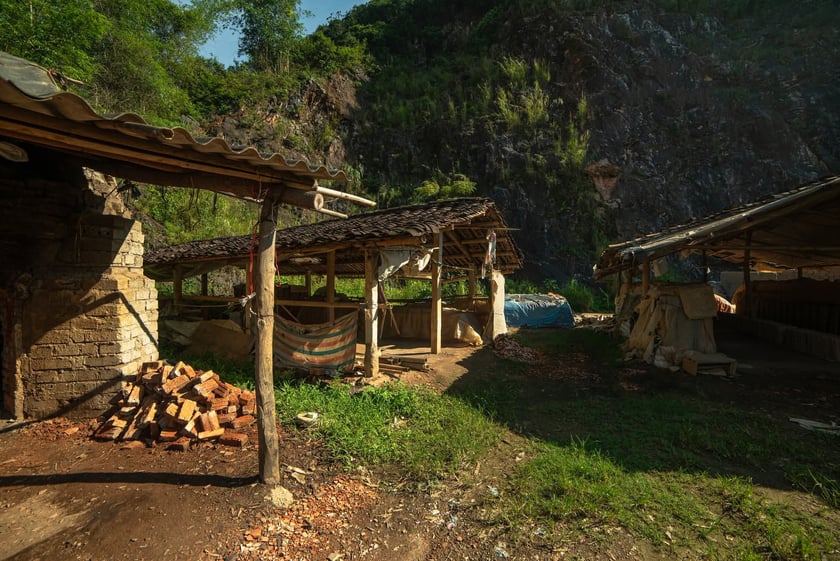
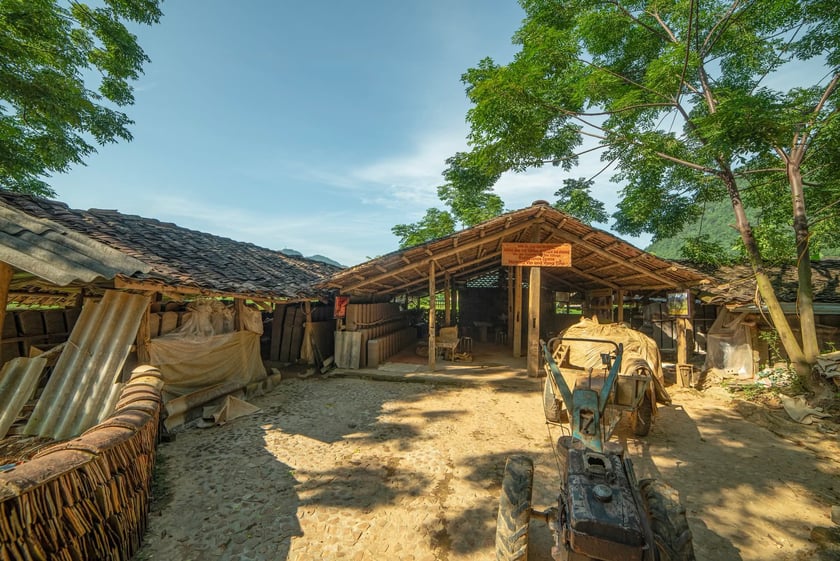
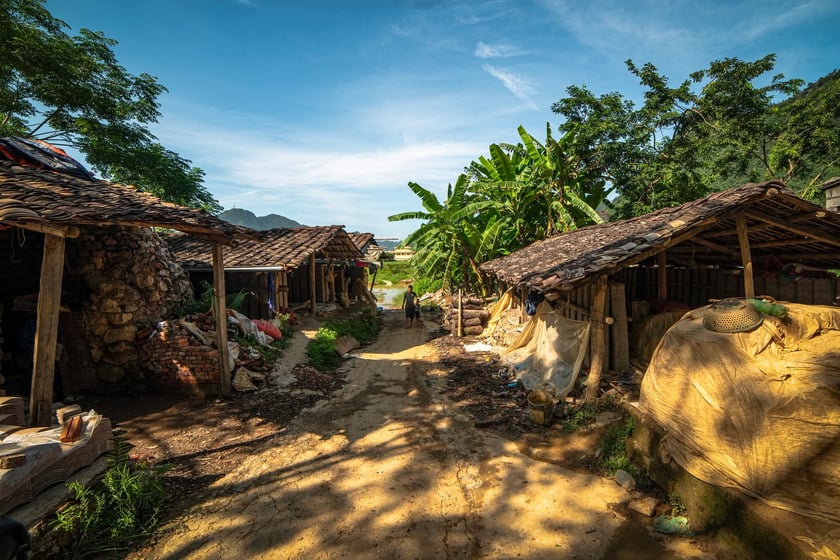
The traditional craft of making yin-yang roof tiles in Bac Son district originated in the late 19th century and is currently concentrated mainly in two areas: Bac Quynh and Long Dong, with over 50 households still engaged in production. Each household earns an average of 80 to 100 million VND per year. This is a significant amount for a rural mountainous region.

To produce high-quality roof tiles, the craftsman must begin by selecting the clay. It must be a pliable, fine clay, usually sourced from flooded rice paddies. After filtering out pebbles, the clay is left to ferment for about 20 days to achieve the ideal consistency. Then, the clay is cut into blocks and placed into rectangular wooden molds coated with ash to prevent sticking. The tilemaker stomps on the clay to compress it evenly, then uses a bowstring to trim away the excess. Each step requires strength, skill, and perseverance.
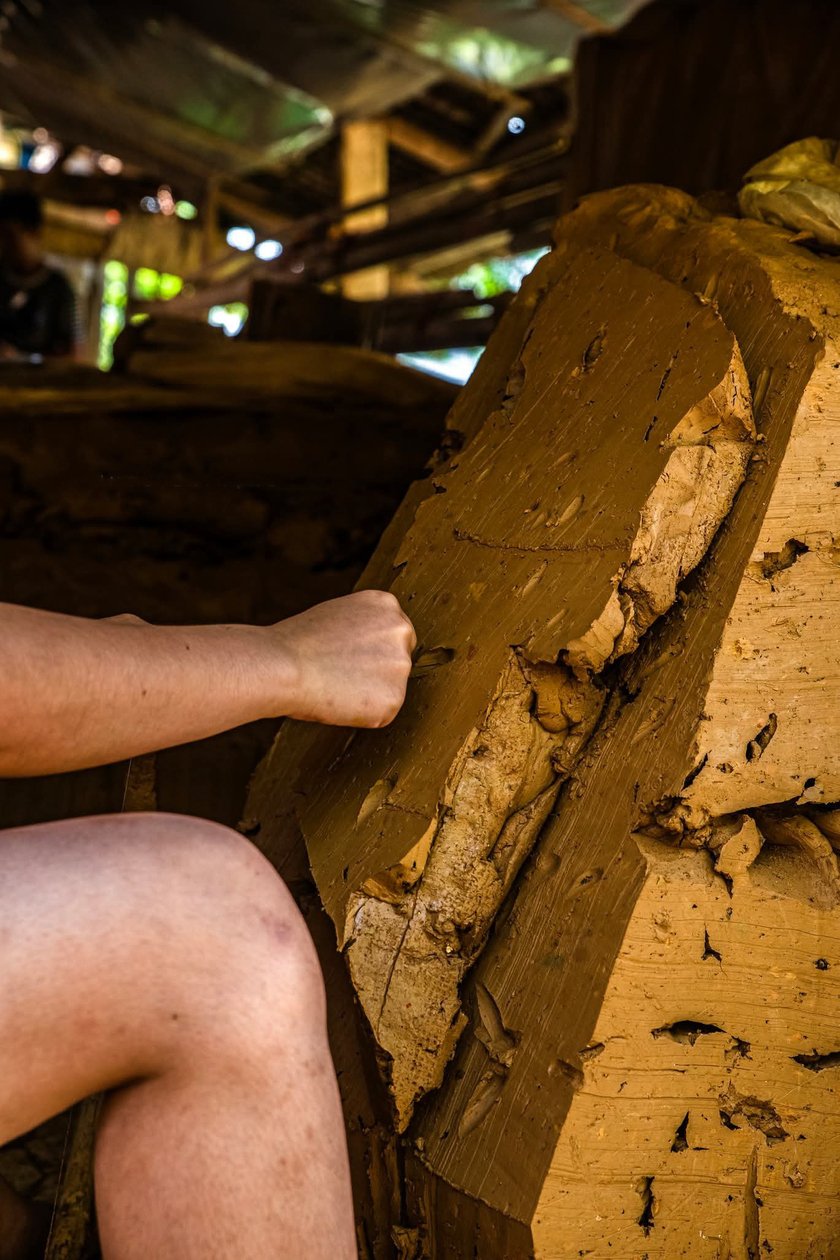
The process of filtering out pebbles before composting makes the clay smooth and pliable.
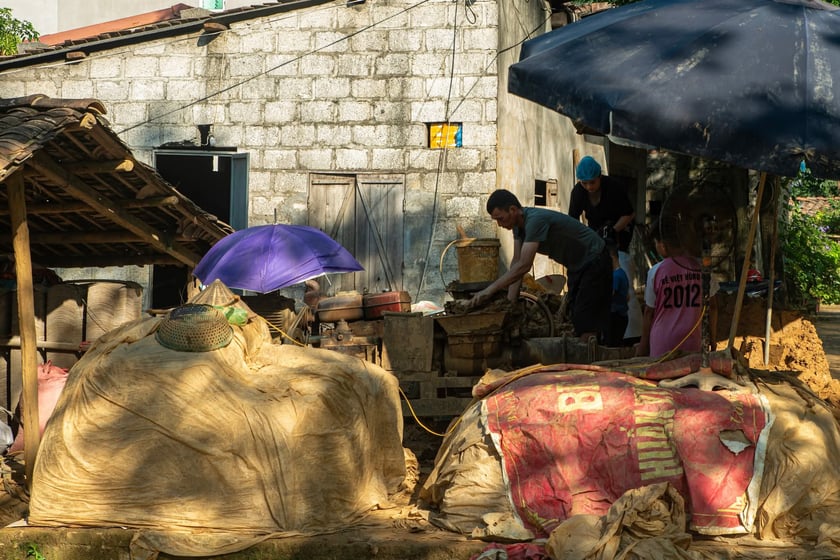
Then, the clay is cut into blocks.
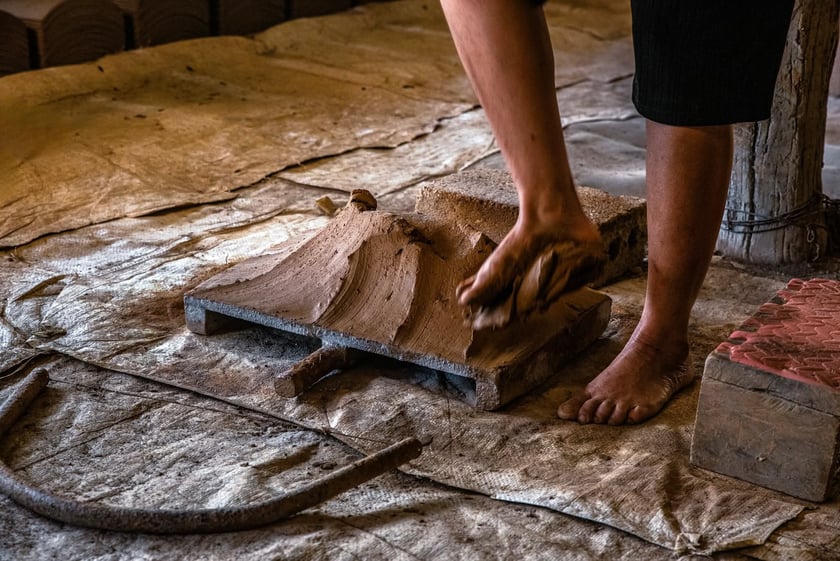
The worker stomps on the ground to ensure the soil is evenly compacted.
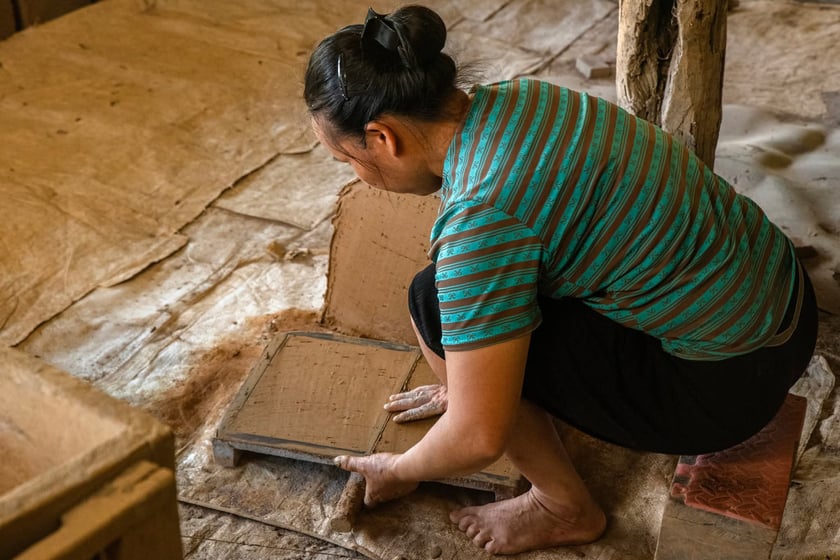
Clay is placed in a wooden mold coated with ash to prevent sticking.
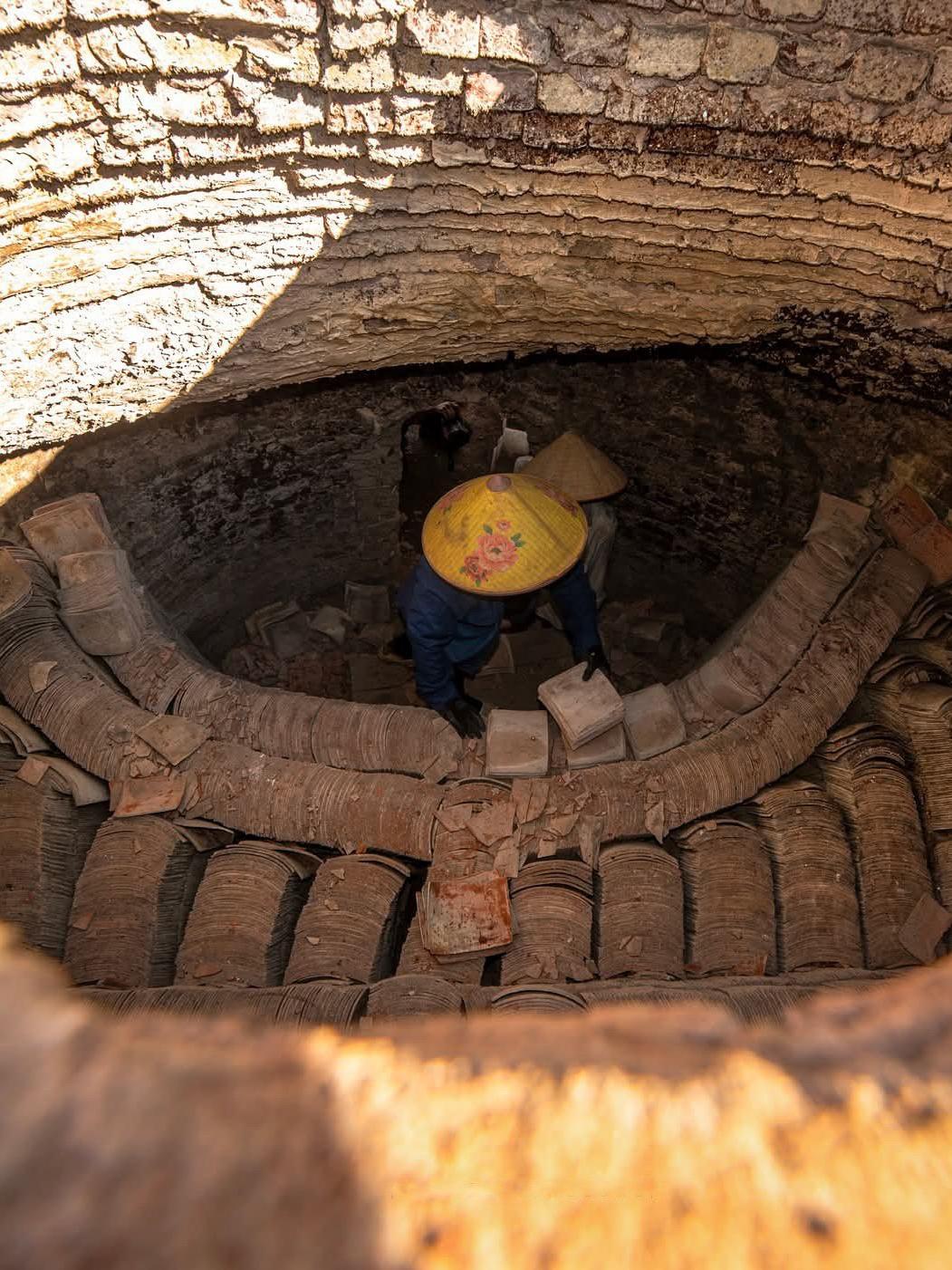
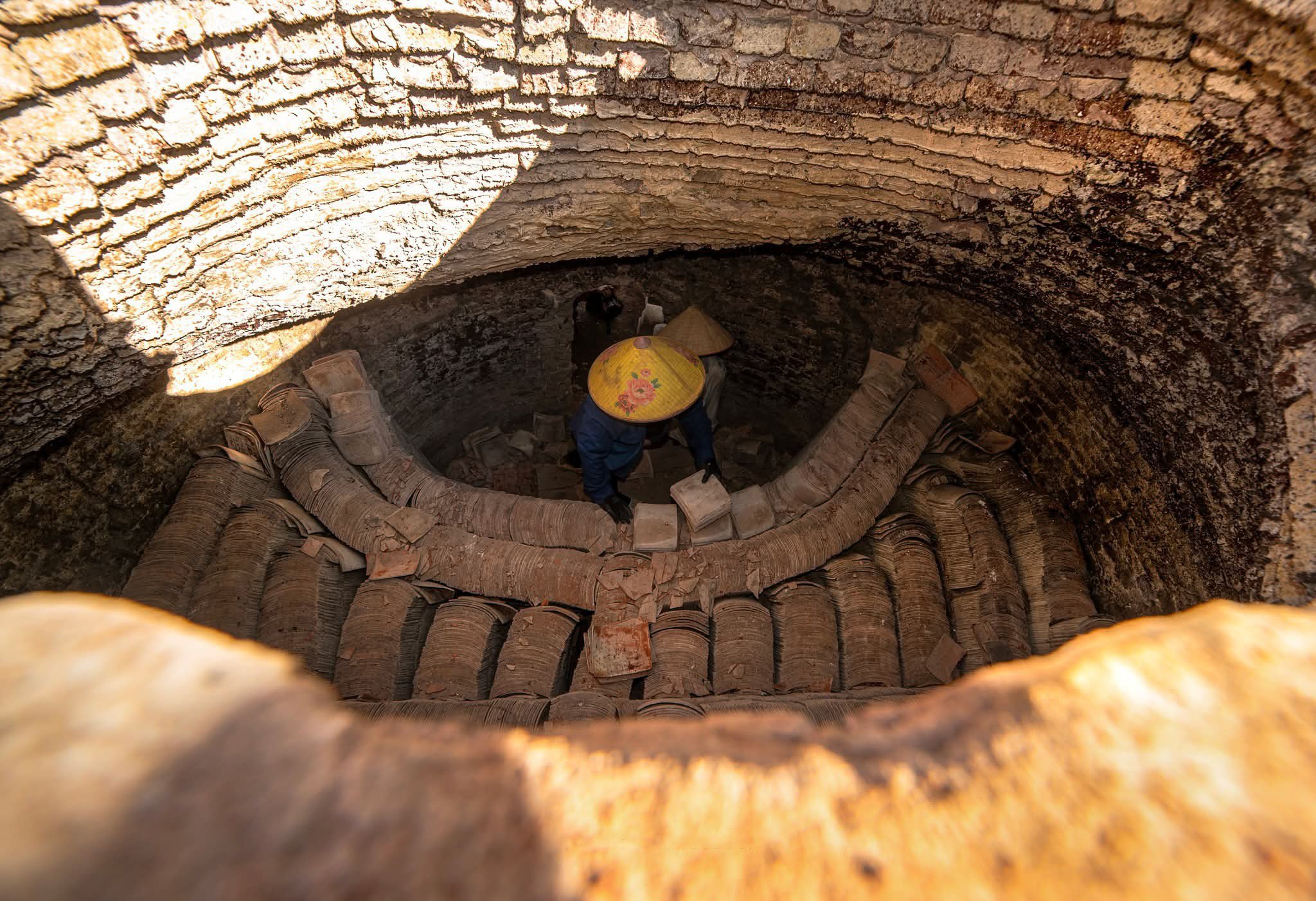
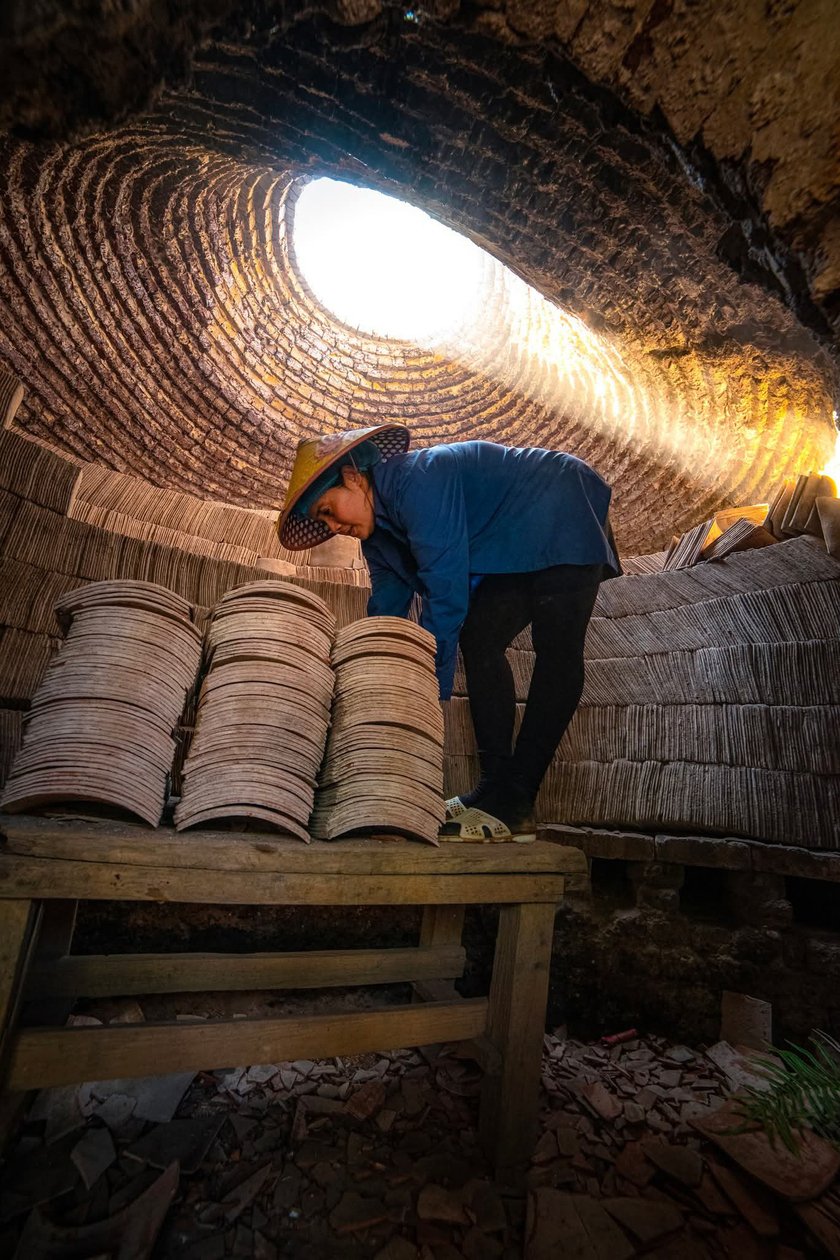
After being molded, the tiles are dried for several days, then stacked in piles awaiting firing in the kiln. Each batch can produce up to 60,000 tiles, with continuous firing for 10 to 15 days and nights. The entire family takes turns watching over the fire, ensuring it burns evenly. Afterward, the tiles are left to cool in the kiln for another 5 days before being removed, sorted, and arranged in rows. In each batch, there are usually about 2,000-3,000 defective tiles, which is an inevitable part of the craft.
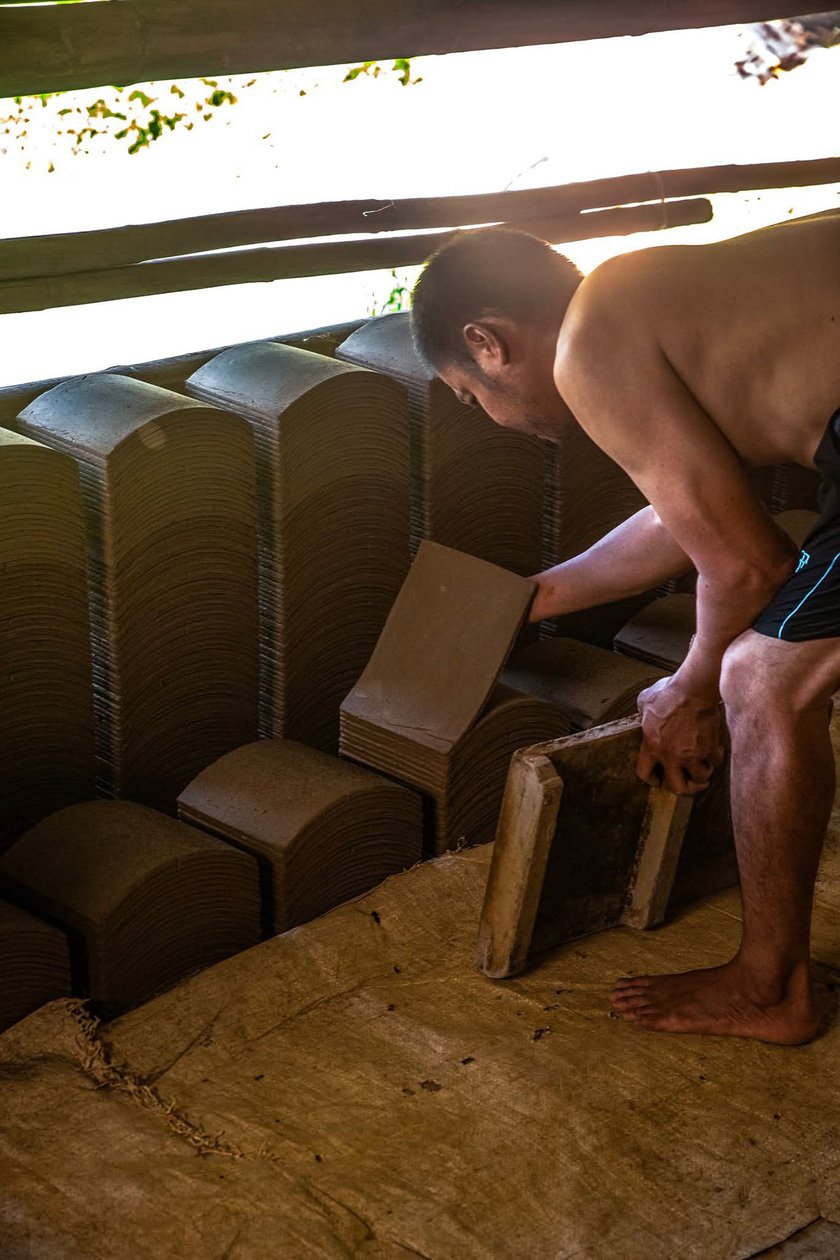
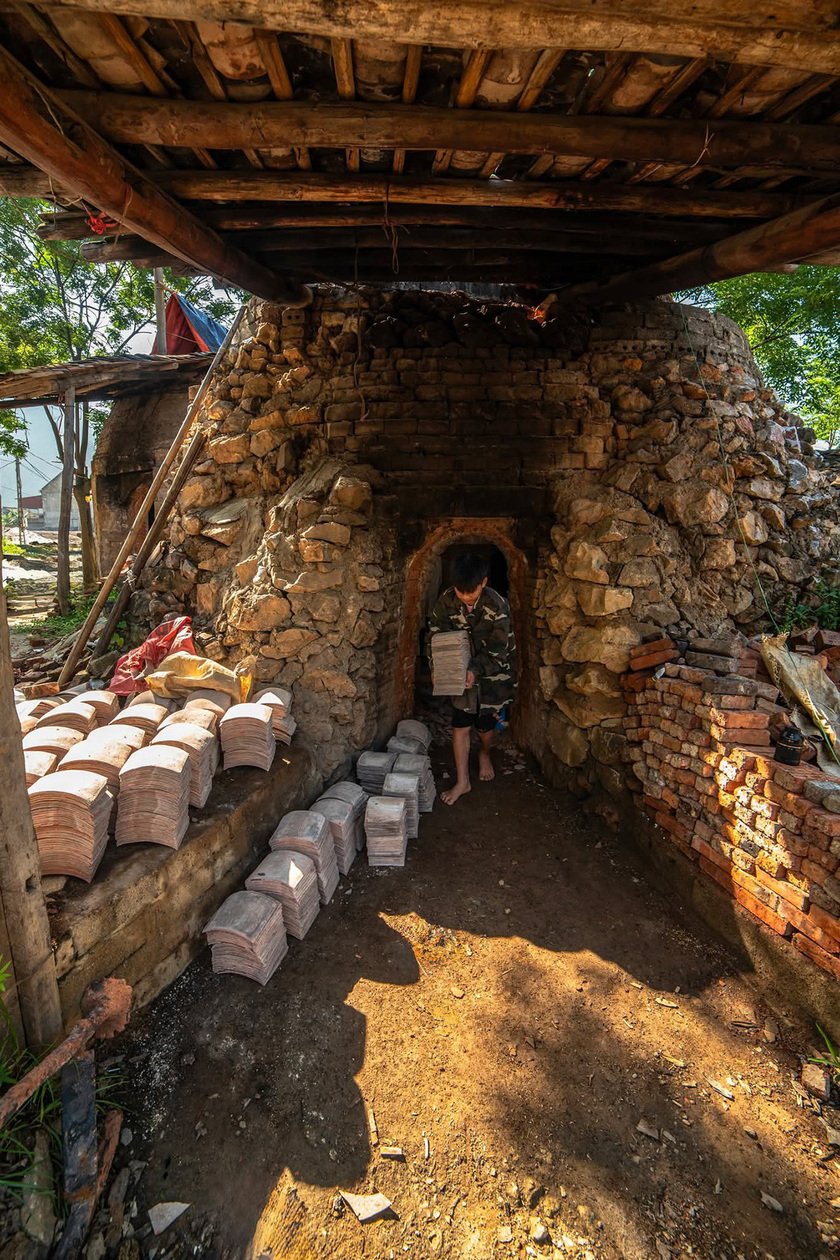
Preserving the tiled roofs, preserving the soul of the homeland.
In the former communes of Long Dong and Quynh Son, over 98% of households still live in traditional stilt houses. The yin-yang tiled roof is not only a material for protection from sun and rain, but also a part of their memories. The Tay people have a saying: "Mừng chắc, câu chắc, pài ngọa chắc," which roughly translates to: "You know, I know, the tiled roof knows." The roof not only provides shelter, but also holds countless stories of joy and sorrow from a lifetime.
Many ancient communal houses in Lang Son, such as the Nong Luc communal house (Hung Vu commune), are also roofed with yin-yang tiles as a testament to time and folk art. To this day, tiles made in Bac Son not only serve neighboring areas such as Van Quan, Binh Gia, and Van Lang, but also reach provinces (old place names) such as Hoa Binh, Thai Nguyen, Hanoi, Bac Ninh, Hue, Quang Nam, and Ha Giang...
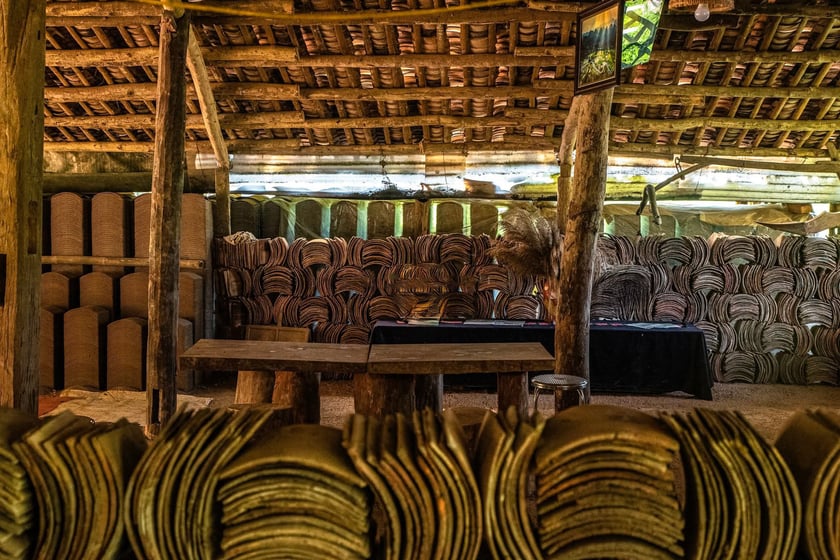
The yin-yang tile roof is not just a material for protection from sun and rain, but also a part of the memories of the people here.
However, keeping the craft alive is not easy. In recent years, finding high-quality raw materials has become increasingly difficult due to the depletion of local clay resources. Tile-making households still operate spontaneously, without cooperatives or a common brand, while the market is rapidly shifting towards industrial tiles, corrugated iron, and cement-based materials.
Nevertheless, the artisans here persevere in preserving their craft. Partly for their livelihood, and partly out of pride. "The craft village is a legacy left by our ancestors; as long as we preserve it, the soul of the village remains," said an elder in the village.
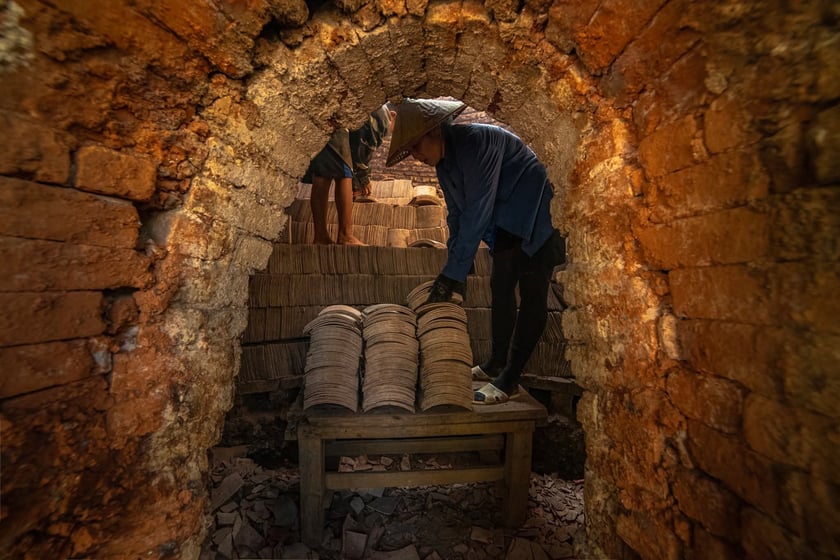
Amidst the industrialization and modernization, many families in Bac Son still preserve traditional crafts, safeguarding cultural values passed down from their ancestors.
Local authorities have also taken initial steps in preservation, establishing vocational training classes for local youth and connecting with tourism organizations so that visitors can experience the traditional tile-making process. Some households are even experimenting with integrating tile-making into community tourism development to both generate additional income and spread the cultural values of the Tay and Nung ethnic groups.
In a seemingly tranquil place like Bac Son, yin-yang roof tiles are not only present on the houses but also in the way of thinking. They embody a harmonious life between people and the land, between manual labor and emotion. Just as the yin-yang tiles embrace each other to protect the roofs, the people here quietly preserve their identity amidst the flow of modernity.
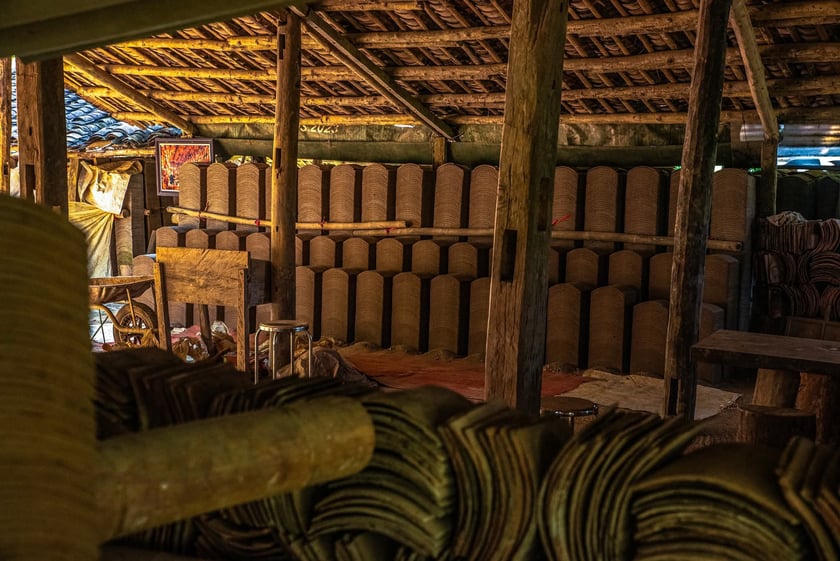
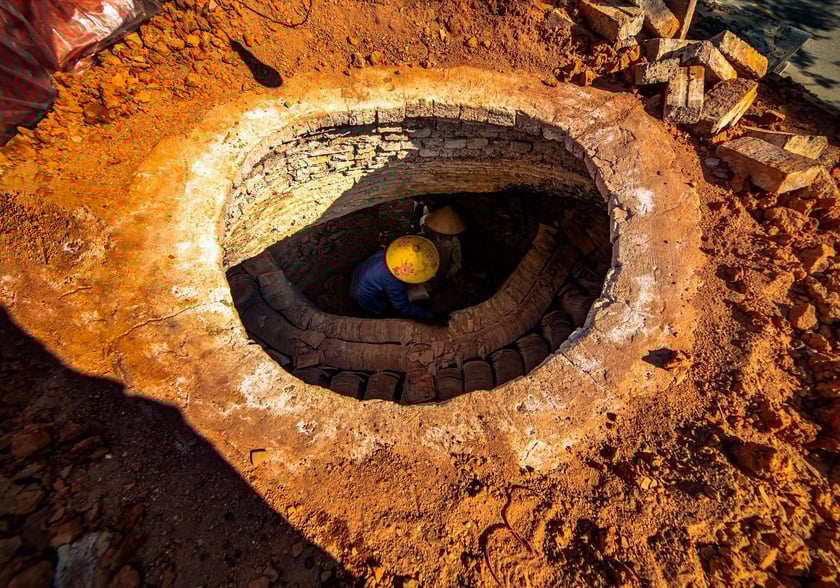
The yin-yang tile roof embodies a harmonious life between people and the land, between manual labor and emotions.
A stacked roof tile, a smoky kiln, a craftsman treading clay beside a wooden mold – all like a slow-motion film of culture, not flashy but enduring. And who knows, with people like Nguyen Trong Cung, these fortunate, serendipitous travelers might attract even more to Bac Son, not only to admire the golden rice fields, but also to touch each yin-yang tile that holds the essence of time.