VI
VI


Sao Ha Village (Ha Giang) - The movie "The Soul Eater"
This December, the film "The Soul Eater" will officially hit theaters, telling the story of the meaning behind the image of a mouse wedding and the bizarre mouse mask. The film is adapted from the original novel of the same name by author Thao Trang, which was released online concurrently with the film. It is also a film within the same "Hell Village" universe.
Set in Sao Ha village (Ha Giang province), the film features unique and independent designs, along with the beautiful, eerie atmosphere of the Northeast mountainous region. Sao Ha village retains its pristine, rustic charm, from the village roads to the houses. The filming location closely resembles the novel: the village appears hazy in the fog, like long-abandoned ruins. A village described as having "three no's"—no electricity, no water, and no phone signal—creates a sense of desolation and gloom, perfectly suited to the mysterious nature of a horror film.
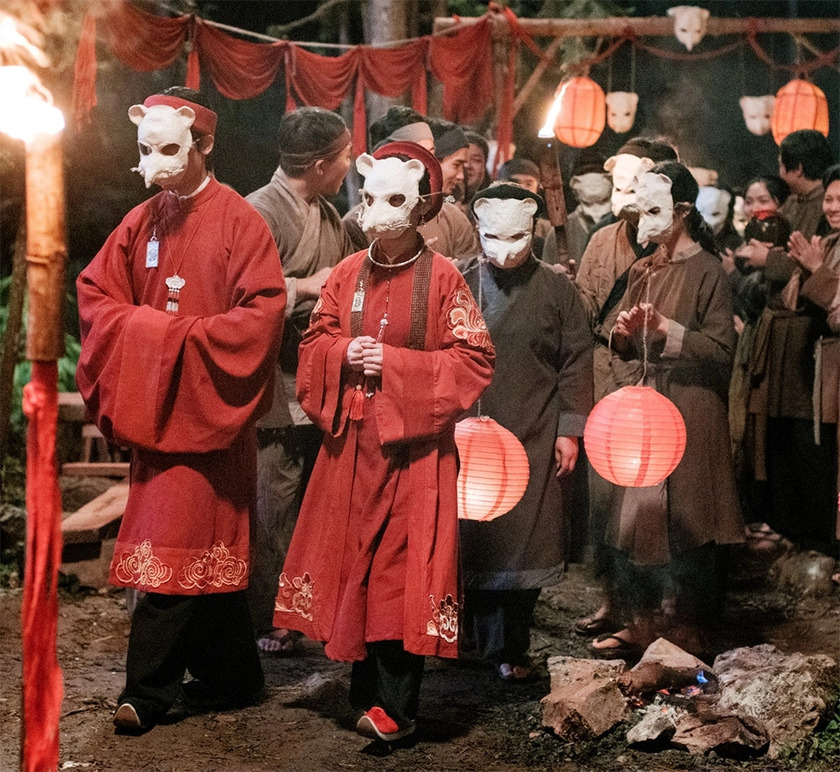
The movie "The Soul Eater" will officially be released in theaters in December.
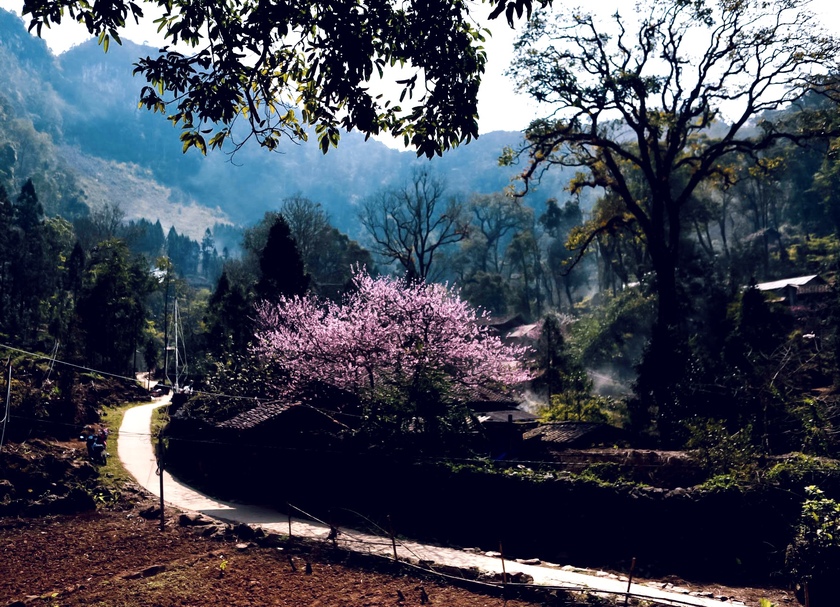
Sao Ha village still retains its pristine, rustic charm, from the village roads to the houses.
Ba Be Lake (Bac Kan) - Film "The Last Wife"
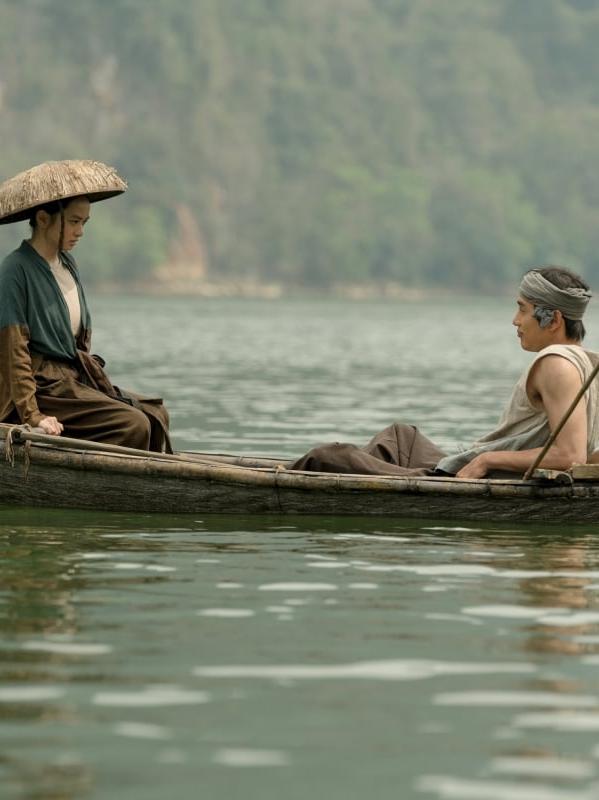
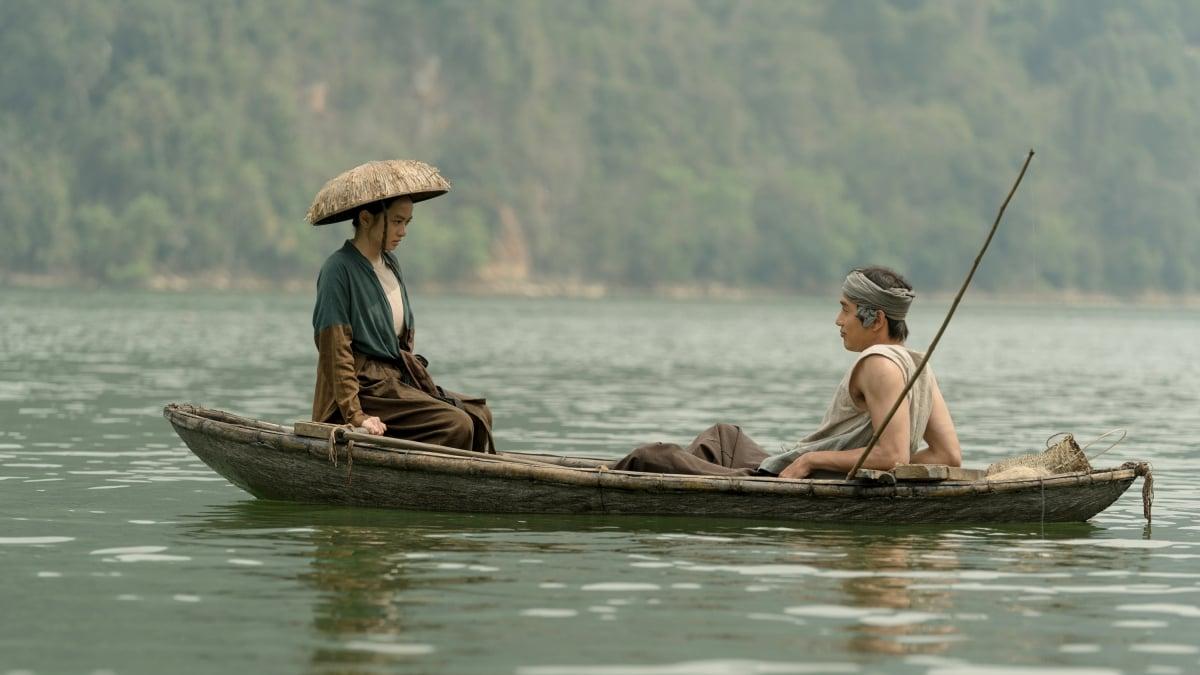
Inspired by the novel "Lake of Resentment" by author Hong Thai, the film "The Last Wife" is set in 19th-century Vietnam. Ba Be Lake (Bac Kan province) was chosen by the film crew as the backdrop for many impressive scenes due to its unique characteristic of changing scenery three times a day: early morning, noon, and sunset. In the film, An Ma Island and Ba Goa Island are highlighted with images of numerous large and small rocks stacked on top of each other, with lush green trees peeking through.
Not only does the film "The Last Wife" evoke fond memories with its poetic scenery, but it also scores points with its elaborately staged scenes. The rural market in the film helps viewers visualize a remote town that is both familiar and unfamiliar. In particular, the water puppet show scene receives much attention, from the stage design and water system to the puppeteers and the puppets' appearance.

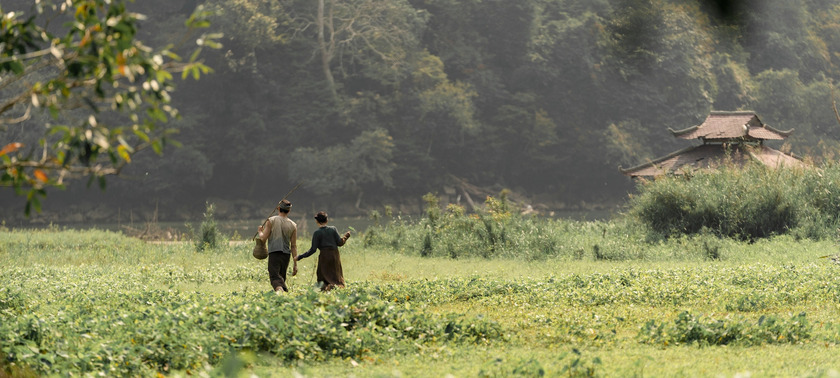
The film "The Last Wife" is set in 19th-century Vietnam.
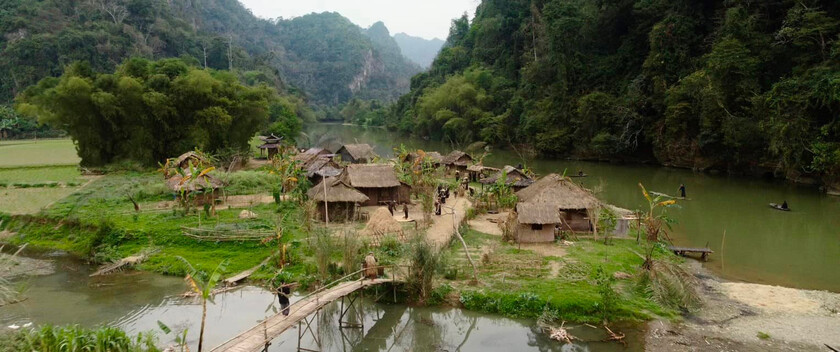
The film "The Last Wife" scores points with its elaborately staged scenes.
Tra Su Melaleuca Forest (An Giang) - Featured in the film "Southern Forest Land"
Recently, Tra Su Melaleuca Forest (An Giang) was chosen as the setting for the film "Southern Forest Land" directed by Nguyen Quang Dung. Prior to that, Tra Su was also the filming location for the film "That Son Tam Linh" directed by Ham Tran.
The Tra Su Melaleuca Forest was chosen as the setting for the film because it still retains the pristine and majestic beauty of the Southern Vietnamese forest, "matching" the description by writer Doan Gioi. The characteristic landscape depicted in the film is the image of a typical floating market of the Southwestern region of Vietnam in the 1920s. Interspersed with this are canals overflowing with silt and the deep green melaleuca forest stretching as far as the eye can see, creating a romantic, cinematic beauty.
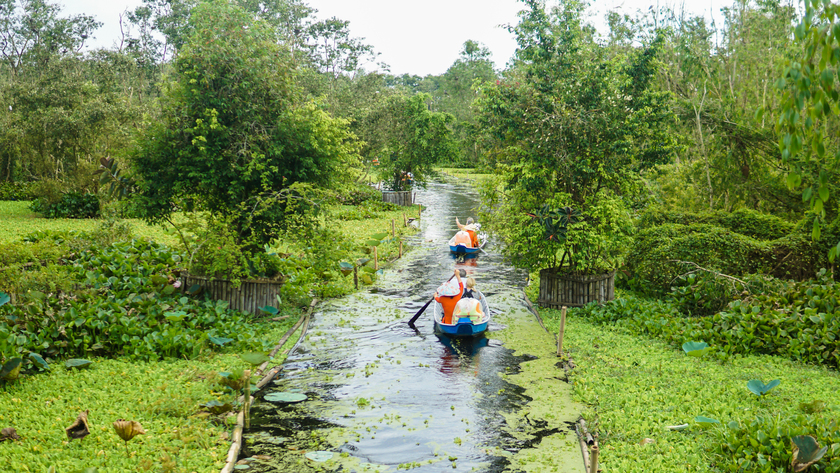
Tra Su Melaleuca Forest was chosen as the setting for the film because it still retains the pristine and majestic beauty of the Southern Vietnamese forest.
Dinh Yen mat-making village (Dong Thap) - Film "Flip Face 6"
In the film project "Flip Face 6," Dinh Yen mat-making village (Dong Thap province) was chosen as the main setting. Instead of a virtual film set, director Ly Hai recreated the scene of the traditional craft village during its heyday using the existing foundations and relics of the village.
The Định Yên mat weaving village is located right next to the Hậu River. The area has many alluvial plains and sand dunes, so plants like sedge and rushes thrive there. With skillful hands, the villagers weave smooth, brightly colored mats. These mats are also closely associated with the lifestyle of the people of Đồng Tháp. In 2013, mat weaving was recognized as a national intangible cultural heritage.
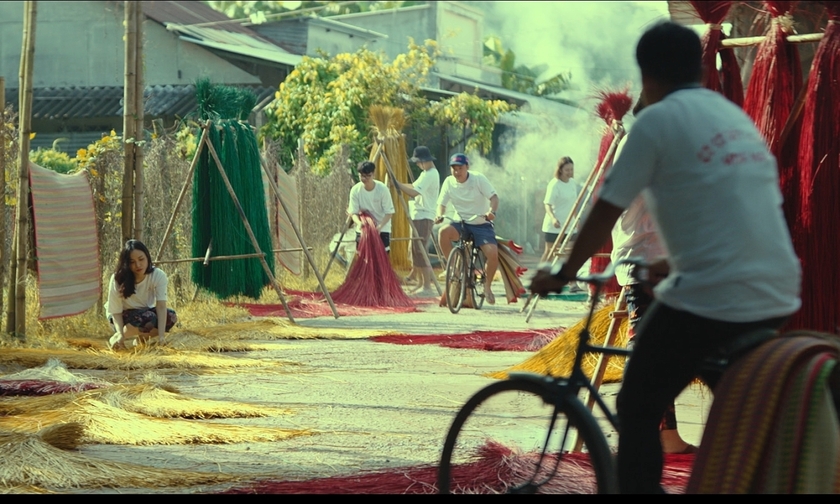
The Định Yên mat-making village (Đồng Tháp province) is "revived" in "Face Off 6".
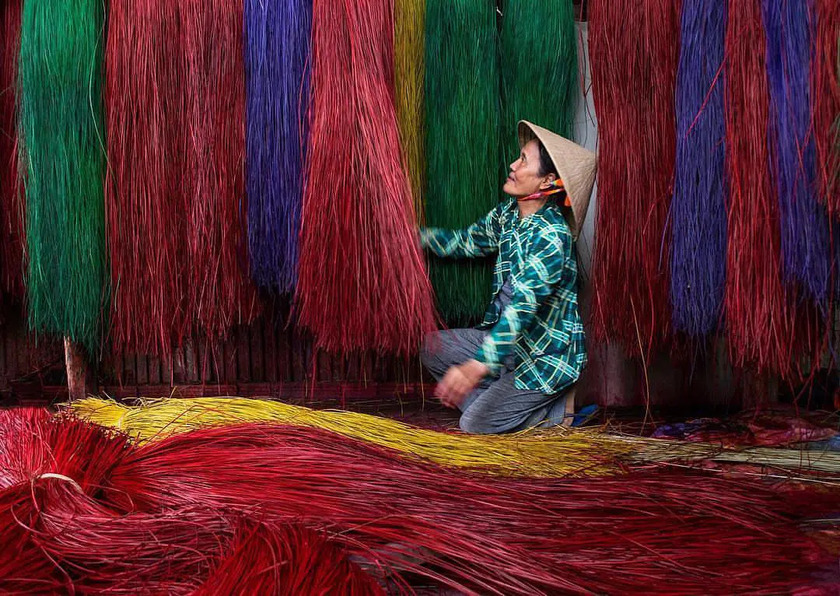
Those mats are also closely associated with the daily life of the people of Dong Thap.
An Hien Garden House (Hue) - Film "Em and Trinh"
The film "Em and Trinh" (You and Trinh) recreates the life of the late musician Trinh Cong Son, who is considered a legend of Vietnamese love songs. In the film, An Hien garden house (Hue) is chosen as the setting for the home of sisters Bich Diem and Dao Anh. This is also where musician Trinh Cong Son played music for them in the rain.
In fact, this house was the residence of the 18th princess of King Dục Đức, as well as royal relatives and nobles, after changing hands several times. The entrance to the An Hiên garden house is a small arched gateway; turning left leads to a rectangular pond planted with lotus and water lilies. The house's frame is made of wood with three bays and two wings (three rooms, with two additional small rooms added). Notably, the garden house still preserves many rare and valuable royal artifacts.
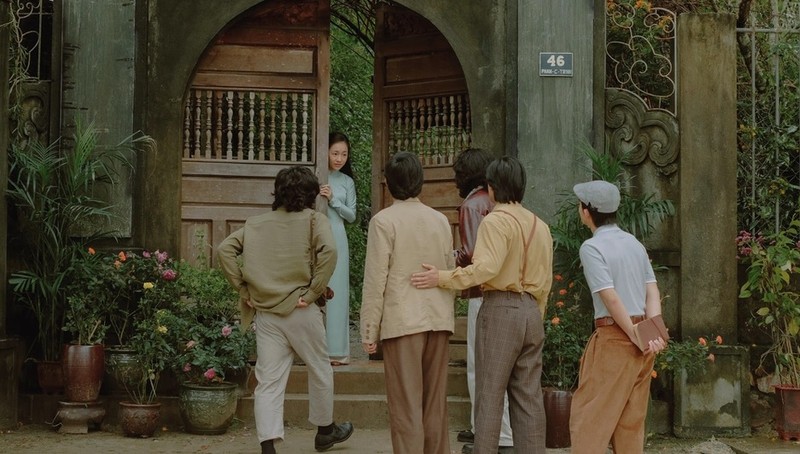
The film "Em and Trinh" recreates the life of the late musician Trinh Cong Son.
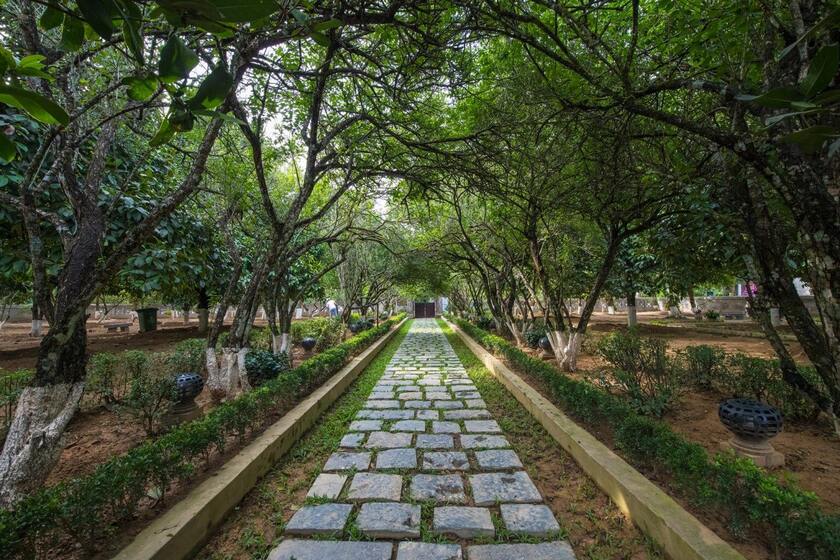
An Hien Garden House (Hue) was chosen as the setting for the home of sisters Bich Diem and Dao Anh.