VI
VI


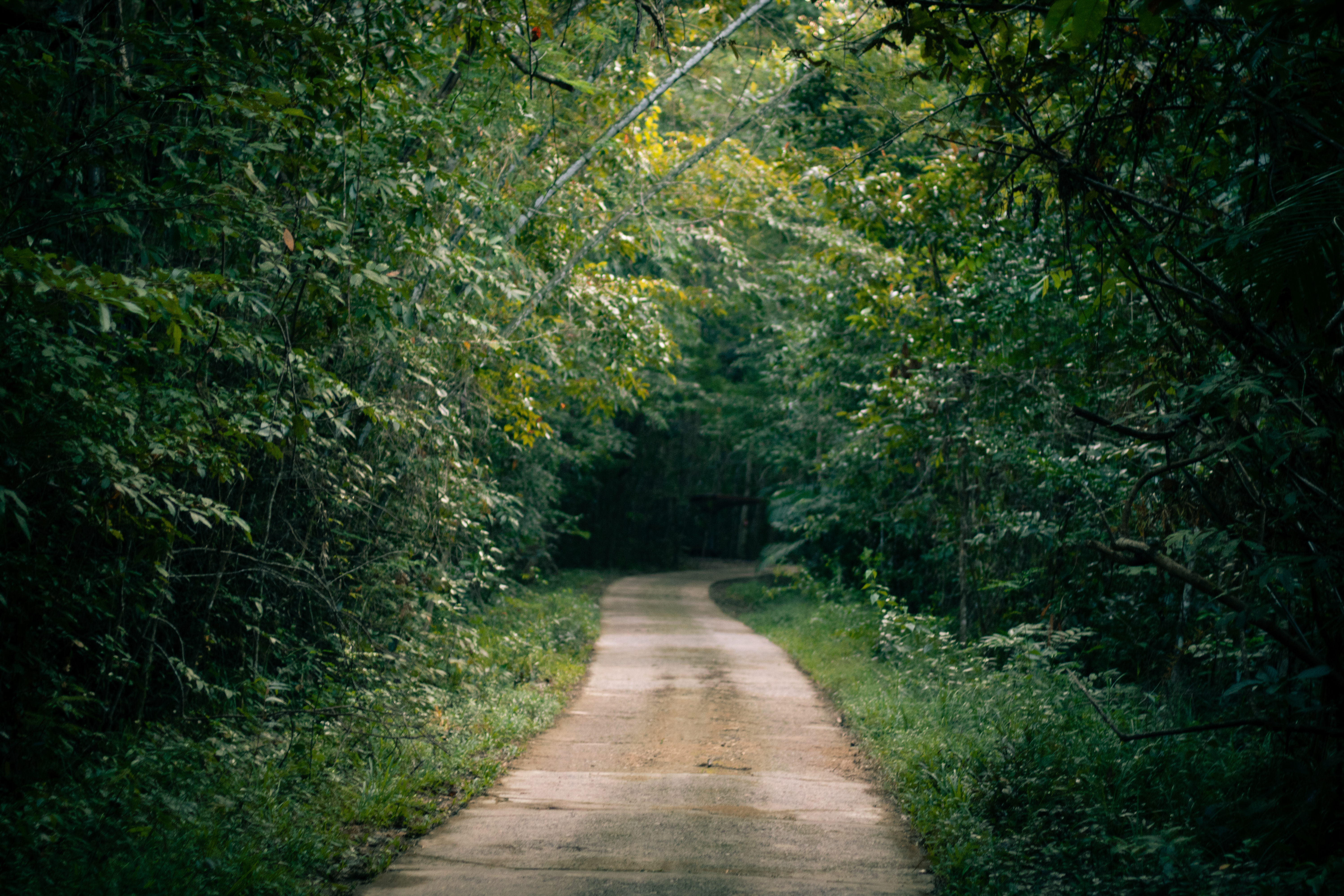
Normally, to reach Bau Sau, you start from the administrative center of Cat Tien National Park, traveling 9 km by car and then hiking more than 5 km through the forest. However, my companions and I decided to hike the entire 14 km to fully appreciate the beauty of the Nam Cat Tien forest.
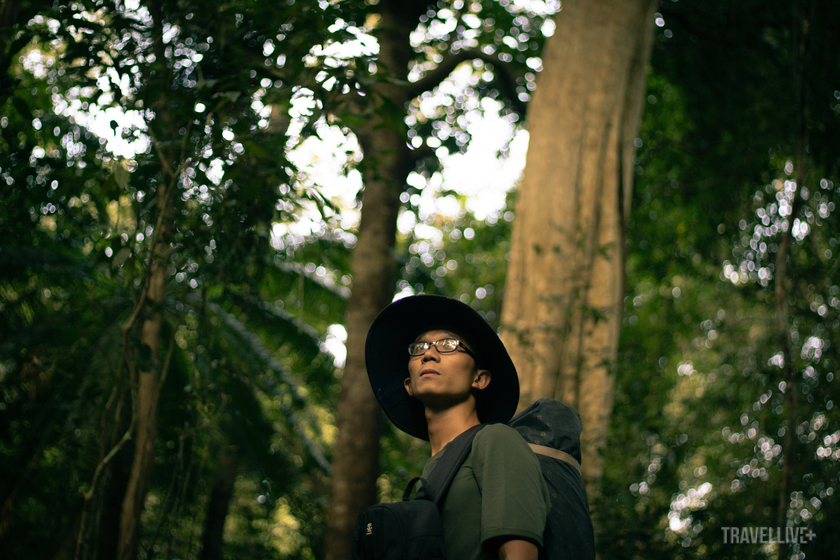
Overwhelmed by the beauty of Nam Cat Tien forest.
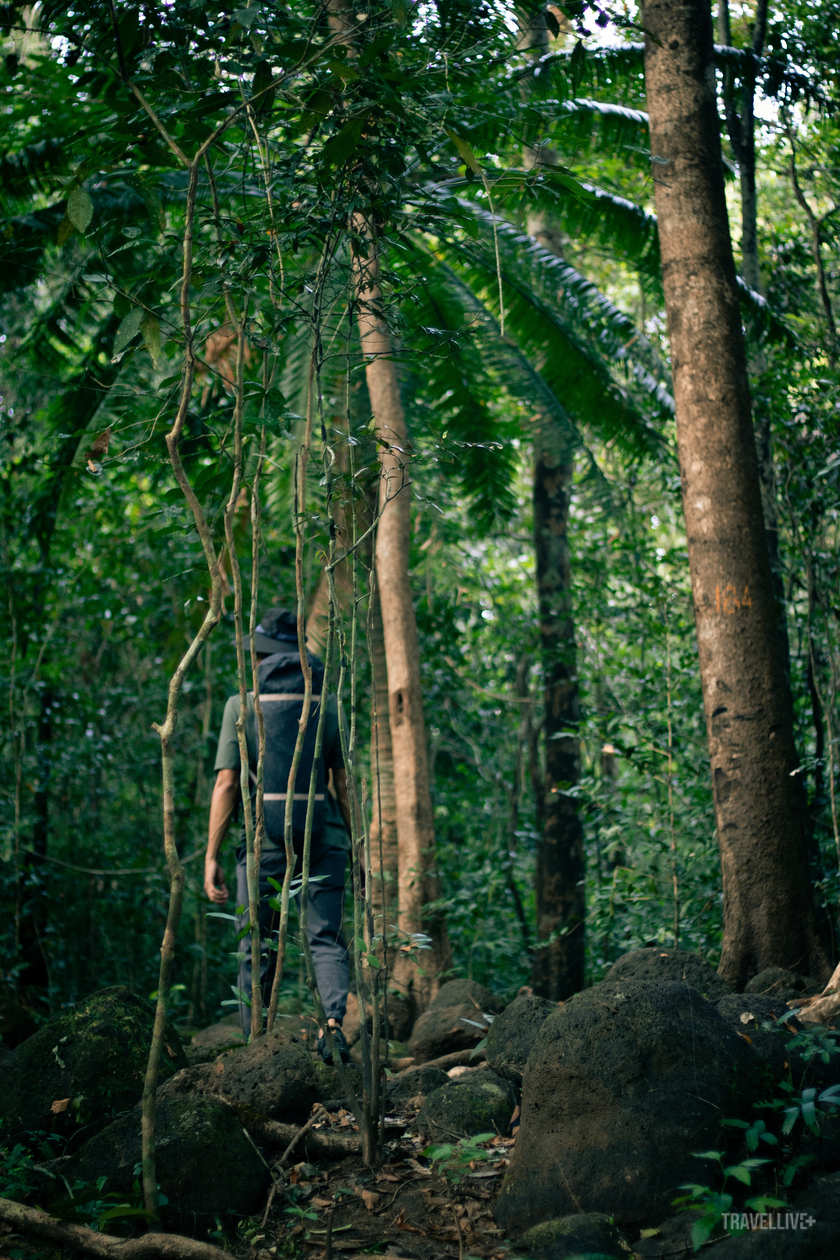
Hiking through the forest allowed me to pass through some very beautiful forest trails in Cat Tien National Park.
Another very special highlight of Cat Tien National Park in Dong Nai is the majestic tung trees. These are large trees with sturdy trunks and long, deep-rooted roots, found in tropical forests around the world. There's no need to travel all the way to Ta Prohm (Siem Reap, Cambodia); right here in Cat Tien National Park, visitors can witness the grandeur of these ancient tung trees firsthand.
The tung tree nicknamed "Thunder Lizard" in Cat Tien National Park has buttresses taller than a person's head and extends up to about 20m, while the tung tree on the forest trail to Bau Sau, of a similar age, has buttresses, at the base, that are even twice as tall as an adult.
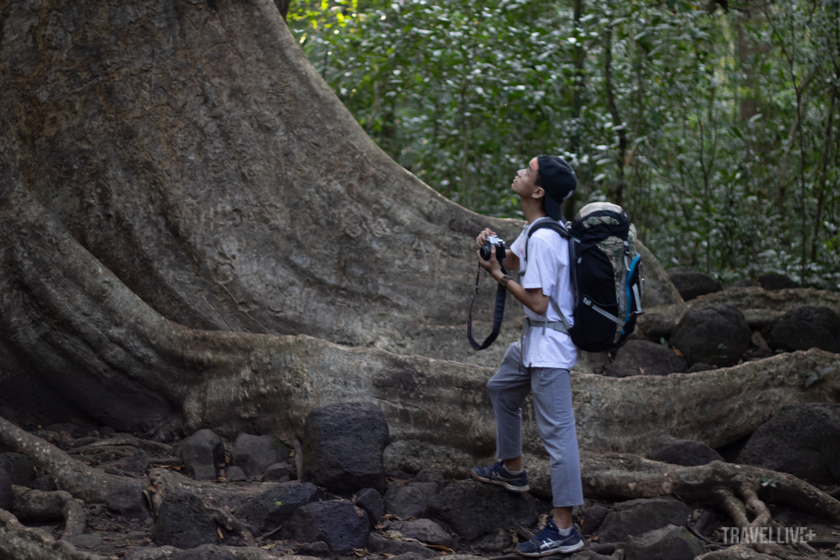
The immense size of the ancient tung tree captivated those who wandered along the road.
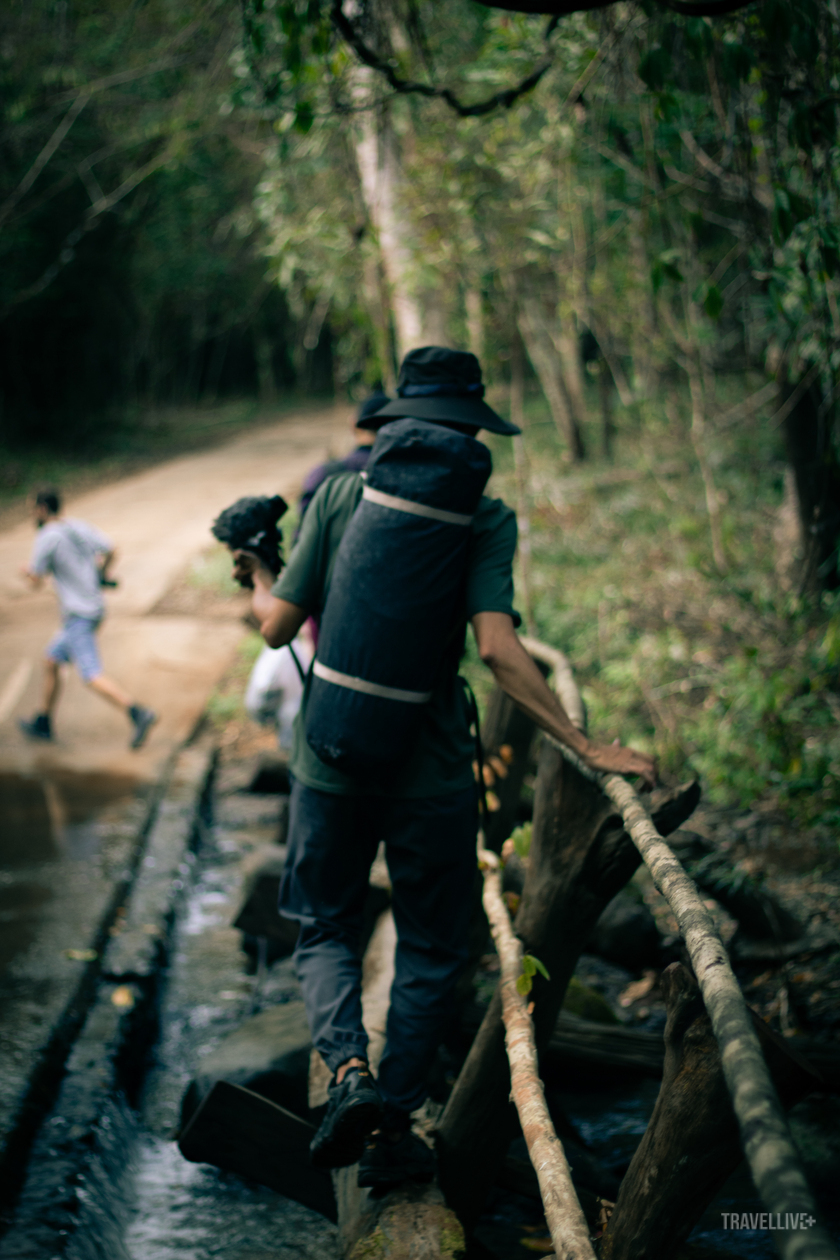
The 9km road leading to Bau Sau is challenging but also very interesting.
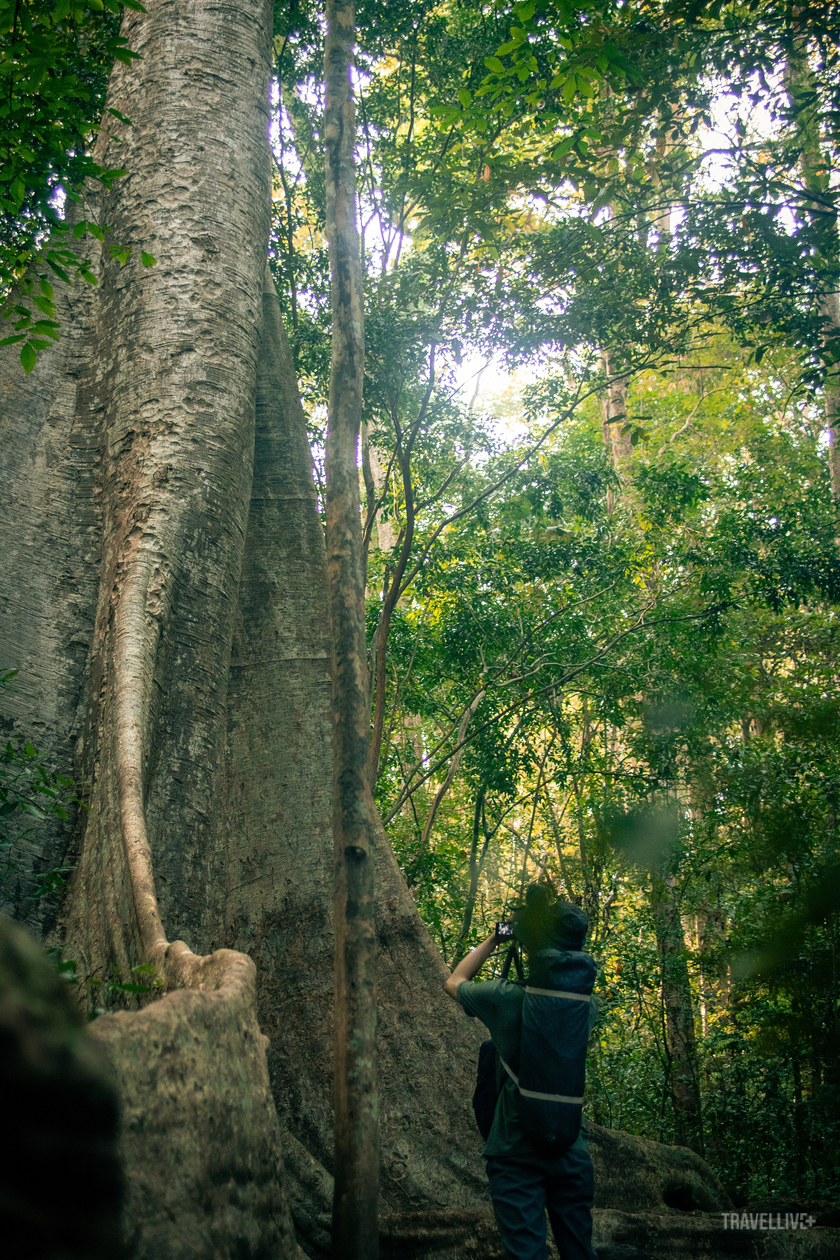
The 9km road leading to Bau Sau is challenging but also very interesting.
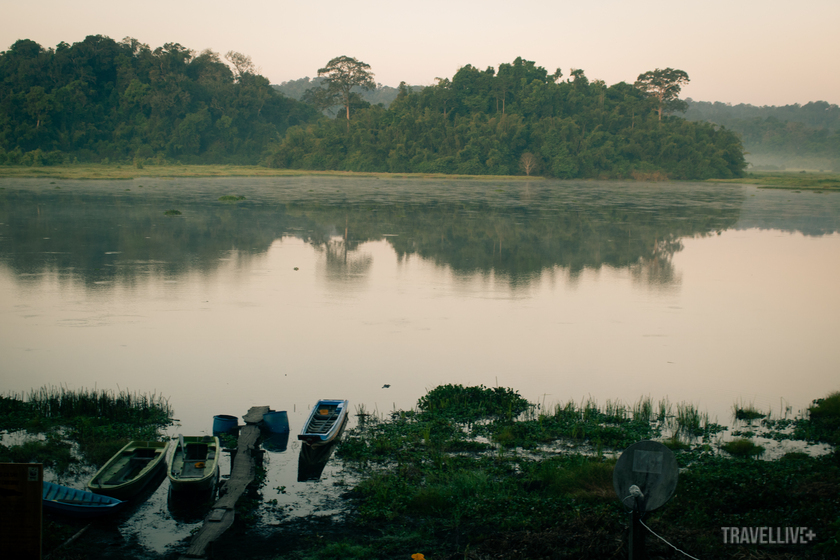
My teammates and I have finally reached Bau Sau after a challenging journey.
Bau Sau is nestled within the core area of Cat Tien National Park, under the direct management of the Bau Sau forest ranger station. It is known that the name Bau Sau originated before the establishment of the present-day Cat Tien National Park. The Bau Sau area is not only home to crocodiles but also to many species of flora and fauna listed in the Red Book of Vietnam and the world.

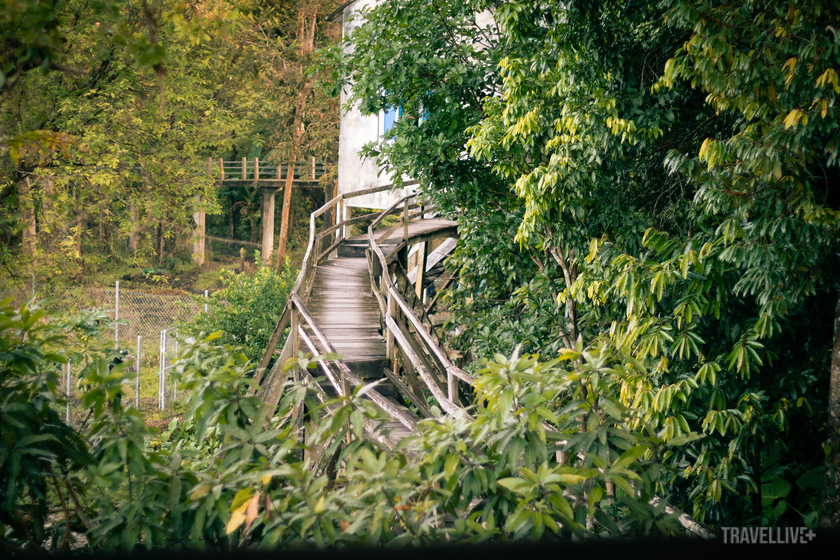
At Bau Sau, I will spend the night at the Bau Sau forest ranger station.
What sets the Bau Sau area apart is the large number of crocodiles that inhabit the swamps. Crocodiles are present everywhere in Bau Sau, posing a threat to many of the plant and animal species living in the area. Therefore, Bau Sau has naturally become a territory completely dominated by crocodiles. Even so, seeing images of crocodiles swimming leisurely in the swamp has led many to mistakenly believe they are the original inhabitants of Bau Sau.
In fact, there used to be many purebred crocodiles living here. Both locals and revolutionary soldiers passing through the Bau Sau area were terrified by the crocodiles' stealthy attacks. With their cold-blooded nature and superior hunting abilities, crocodiles took the lives of many animals in Bau Sau, and even claimed the lives of many people. To counter the crocodiles' ferocity, humans retaliated with indiscriminate hunting, leading to the extinction of freshwater crocodiles in their natural habitat.
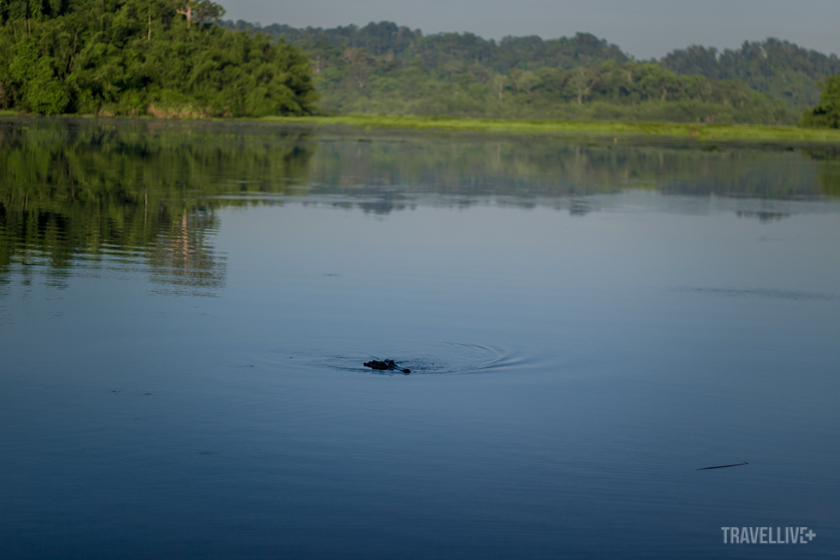
The image of a crocodile stands out against the tranquil landscape of Bau Sau.
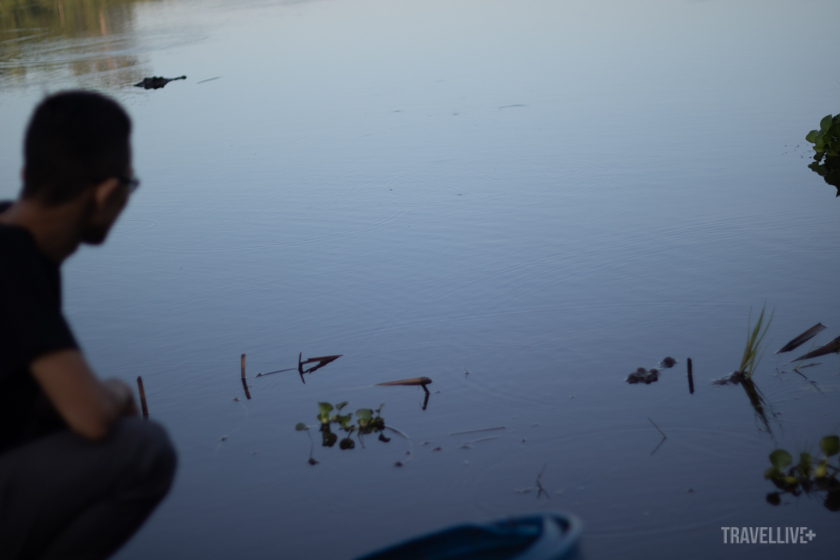
It's not uncommon to spot crocodiles here.
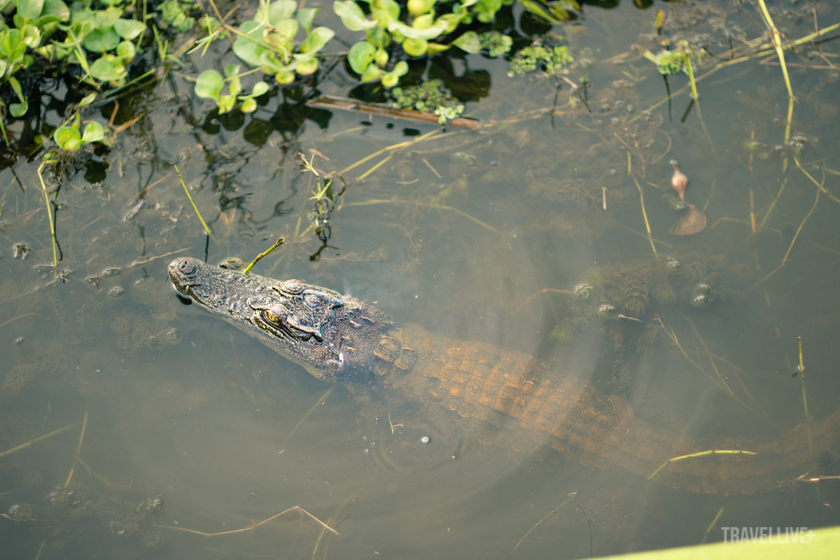
I managed to take a picture of a Siamese crocodile, a species currently undergoing conservation and rehabilitation at Bau Sau.
Later, recognizing that the Bau Sau area was suitable for crocodile development, the Cat Tien National Park conservation project outlined a plan to restore freshwater crocodiles. In 2001, the project was put into practice based on the search for purebred freshwater crocodiles of the same family as the crocodiles that previously existed in Bau Sau.
The crocodile species recovered in the Bau Sau area is known to be the freshwater crocodile (Siamese crocodile). They have a long body and a long, clamp-like snout. Their lower jaw has many long, sharp teeth, a tall, strong tail, and webbed, rectangular hind legs. Freshwater crocodiles have a gray body, with the underside lighter than the back. The average length of a Siamese crocodile is 2.20-2.28 meters. They typically feed on fish, crabs, birds, and small mammals like mice. More importantly, this crocodile species is one of the most threatened. International conservation organizations have classified it as highly endangered.
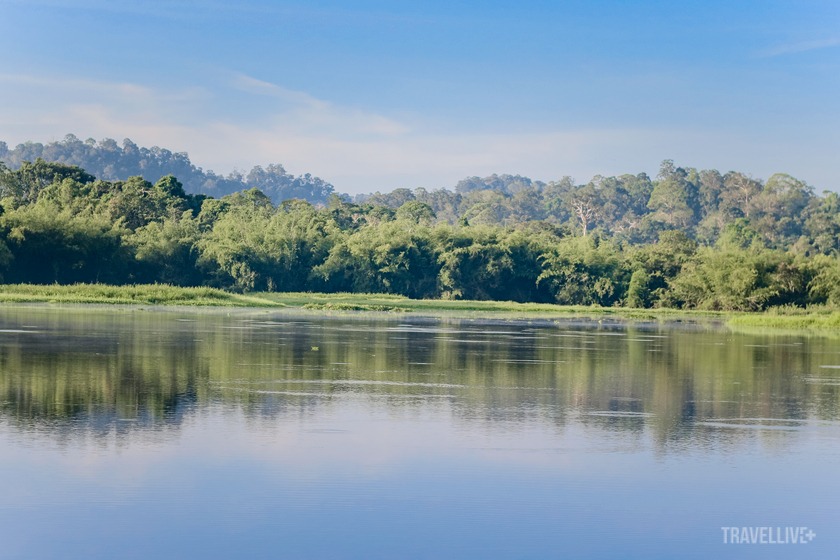
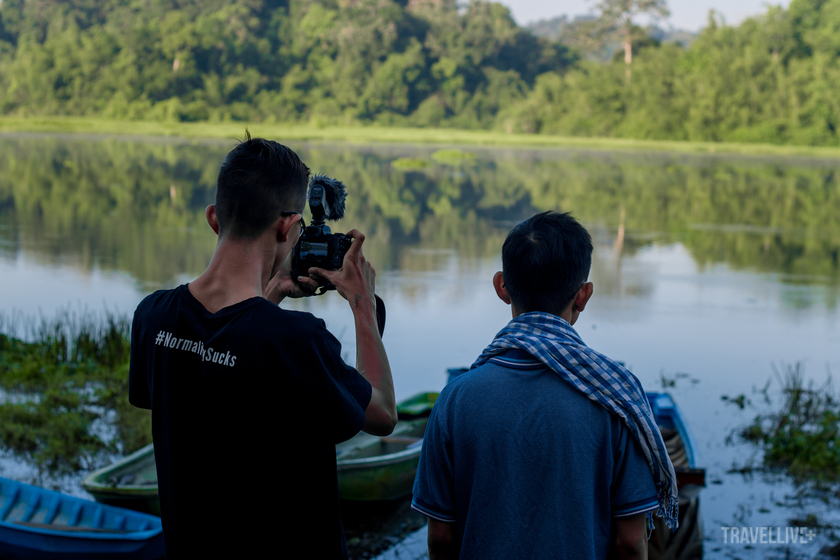
The scenery at Bau Sau is very peaceful and spacious.
About the author: Thinh, a writer specializing in cultural geography, currently lives and works in Ho Chi Minh City. Thinh is a storyteller, sharing his experiences through articles, photo series, and documentaries. His stories are personal reflections and experiences from his travels across the country.