VI
VI


Here are five amazing destinations you can't miss when visiting Cuba, a country with stunning natural landscapes and a unique culture in Central America. Join me, with a glass of intoxicating mojito in hand, as we wander through the narrow streets, traditional markets, beautiful beaches, and intercity buses to capture glimpses of Cuban life and its people.
Explore the old city of Havana and experience staying in a traditional casa to gain a deeper understanding of the local culture.
My first steps into Havana weren't solely focused on the fact that it's the capital of Cuba, but rather on the fact that this city fully embodies the country's struggles, its pride, and its challenges. I chose a casa, a house in Havana's Old Town, to gain a deeper understanding of their way of life. Previously, accommodation in Cuba was quite expensive because they used two currencies: the Cuban Cup for locals and the Cuban Currencies for foreigners. In recent years, the Cuban government has standardized all domestic transactions to use only the local CUP. This means foreign tourists will spend at the same rate as locals. I booked a casa for several reasons. Not only was it cheaper than other types of accommodation, but it also allowed me to witness firsthand the stories of a nation that has endured terrible foreign embargoes.
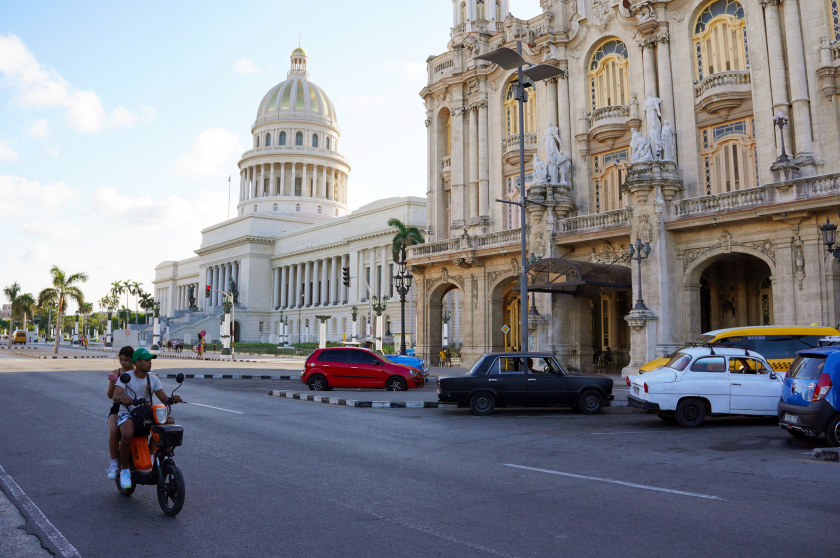
This city most fully embodies what the country is going through.
I was greeted by a couple, David and his wife, both in their 50s and speaking fairly good English. Their house was an old, quaint home located a few hundred meters from the city's historic center. What was impressive was its decor, reminiscent of a model aristocratic family home from the time when Cuba was a Spanish colony. Everything bore the dust of time: the old piano, the hat rack, the wobbly iron chair, and the framed photos of three generations placed on wooden bookshelves. David said they were all family heirlooms.
Seeing my puzzled expression as to why Cubans are so fond of rocking chairs, with every household seemingly having several, David smiled sadly: “Every family has elderly and unemployed people, so this is the only enjoyable way to relax that every household has. It becomes a cherished memento in each family.” David is a doctor, but his salary is still insufficient to cover expenses as his children grow older. A few years before the pandemic, the number of tourists visiting Cuba increased, and David rented an additional house to offer his services, but now things have become more difficult and burdensome. David reassured me that it's very safe here, and the neighborhood is mostly inhabited by the elderly and young children. The adults are busy working all day, like the driver who took me from the airport to the hotel in his old car parked in front of his house – it's practically the most valuable asset of his three-generation family.
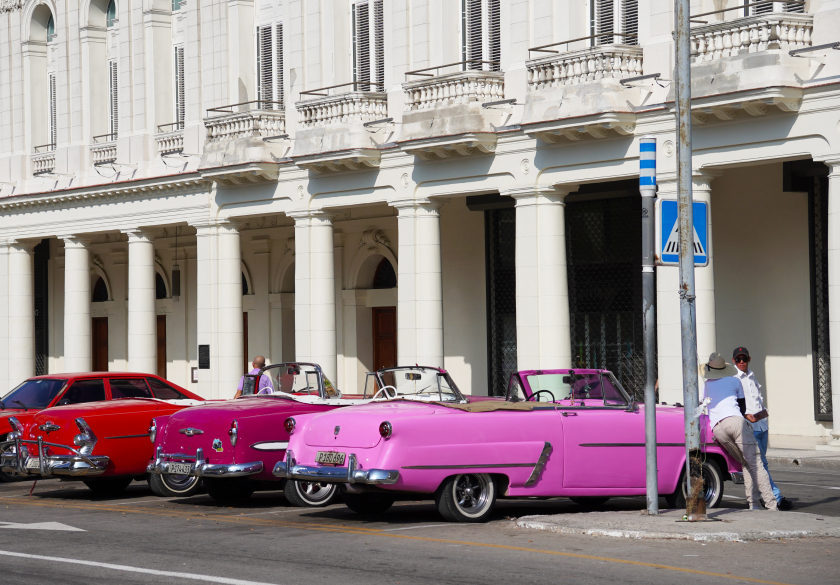
I could clearly hear the sigh of present-day life alongside the rumble of convertible cars.
A day in Havana brought me back to life from thirty years ago, vividly present like precious old film footage. Horse-drawn carriages rattled through narrow alleys, young men sat fishing along the Havana coastline, just as Hemingway described in "The Old Man and the Sea." Ancient churches stood silently, crowds waited indifferently for buses, long lines of people bought groceries, and the friendly glances behind the bars of old men holding cigars with only the tips remaining… all recreated before my eyes a complete Cuba in Havana.
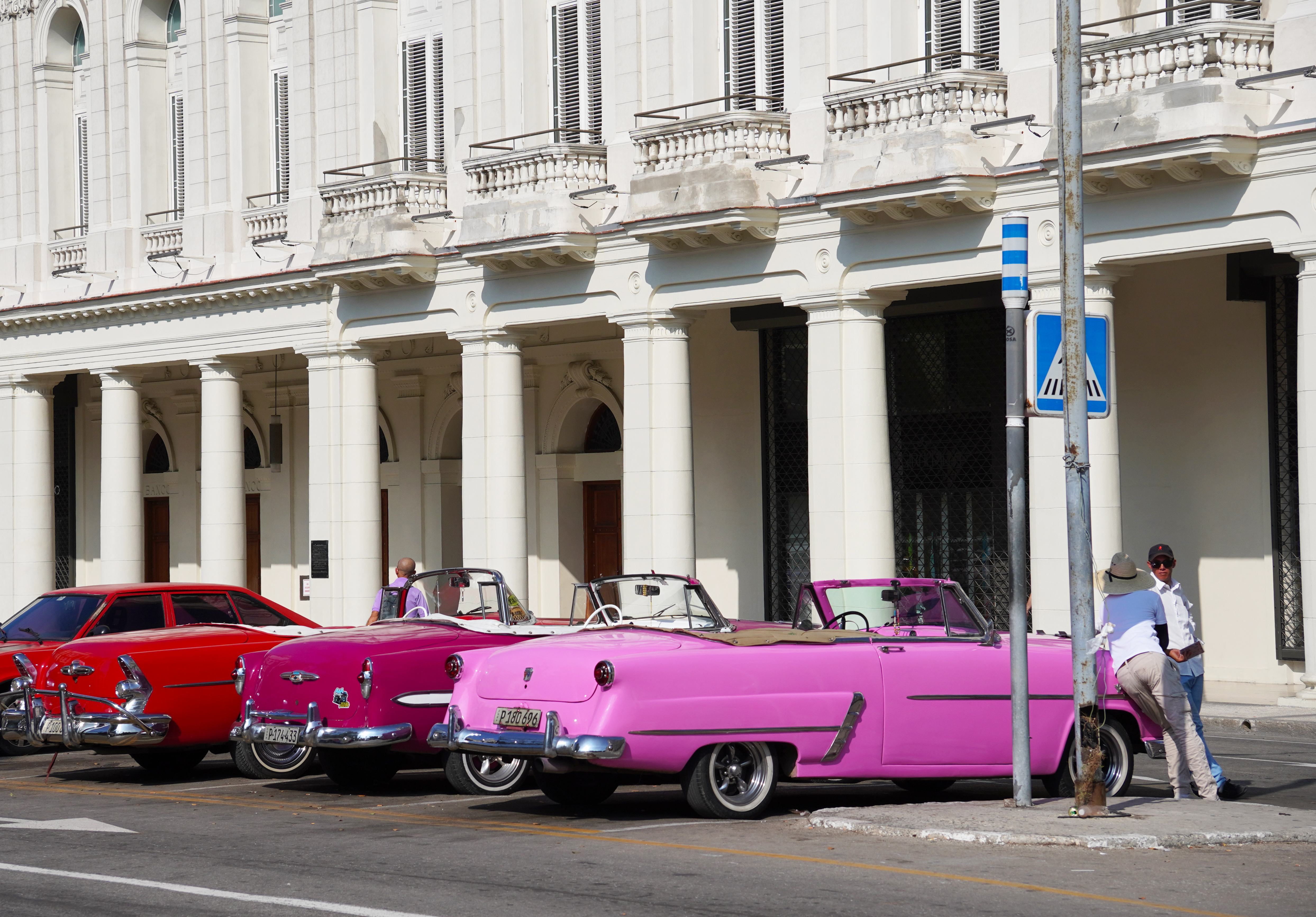
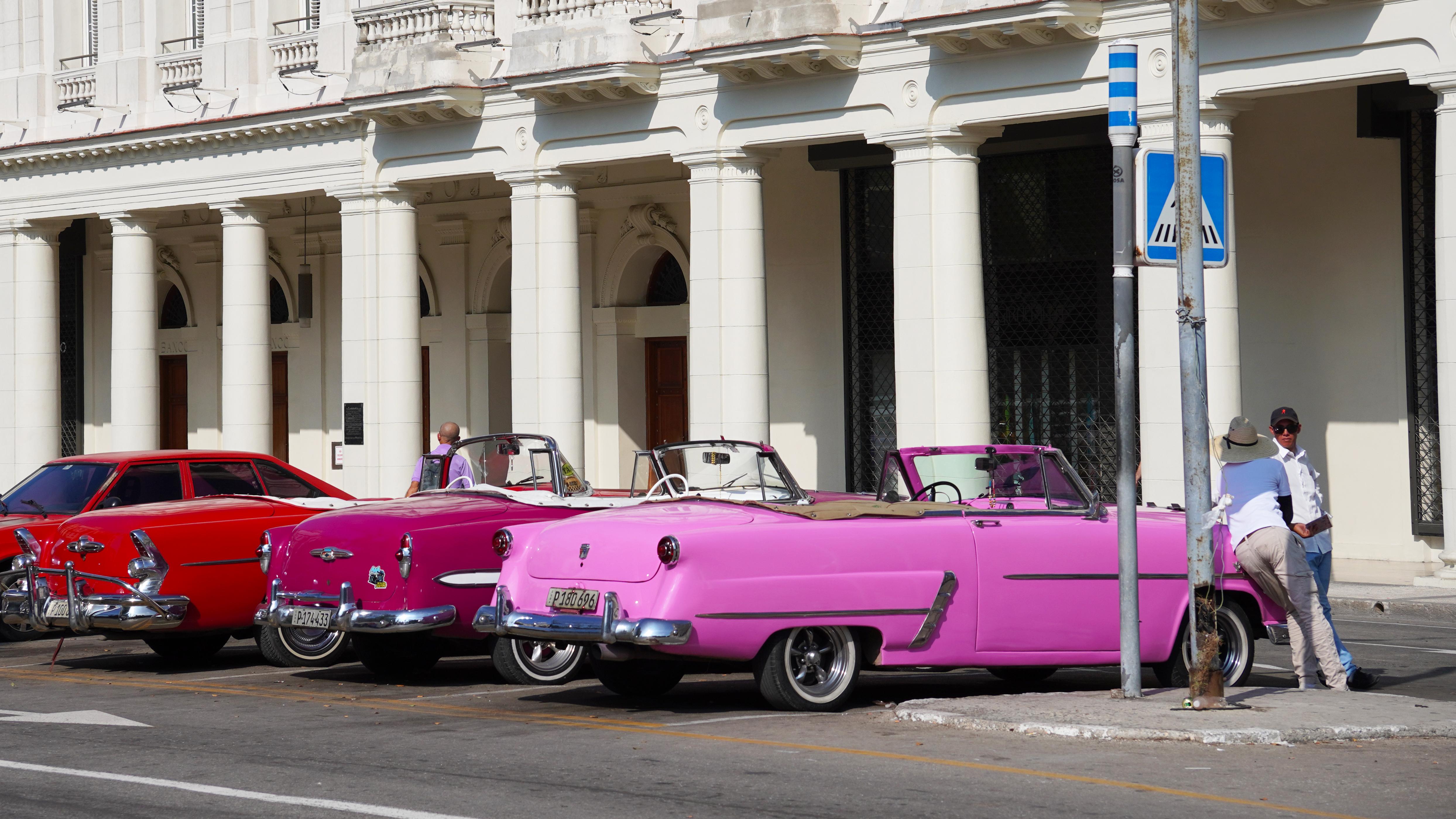
I could clearly hear the sigh of present-day life alongside the rumble of colorful convertibles carrying tourists back and forth along the grand avenues, the lively music in the bars, and the exclamations of awe from visitors as they passed the magnificent architecture of Havana. I think you'll be impressed by this city!
The quiet colonial city of Trinidad
I left bustling Havana for the small city of Trinidad in central Cuba. It's the best-preserved colonial city in Cuba. Life here feels frozen in time, a unique blend of 1850s architecture and modern neighborhoods harmoniously integrated into the old town. Trinidad was one of the first towns founded by the Spanish, and much of its architecture, including its cobblestone streets, remains today. Both nights in the city saw alternating three-hour power outages; there was no sound of horses' hooves on the cobblestone streets, only the whispers of people on porches, and occasionally the sound of a taxi arriving late at night.

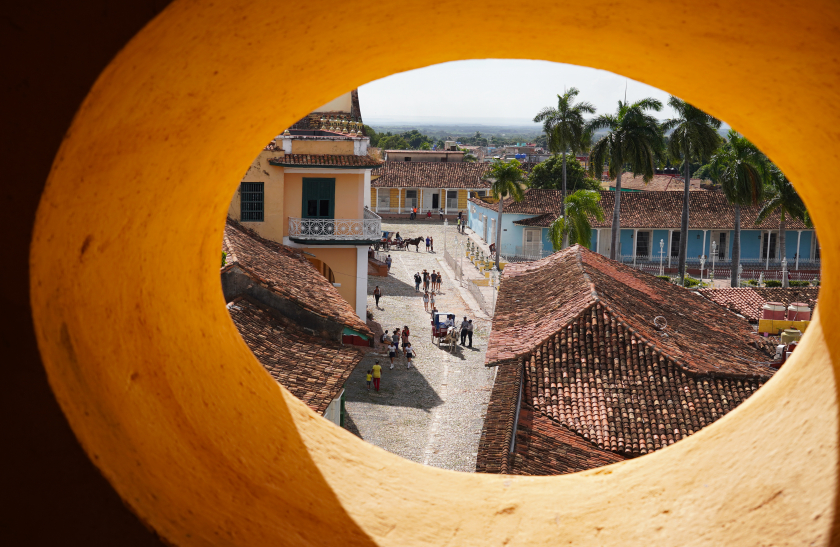
The ancient city seen through the window.
Trinidad is unusually quiet this season, with very few tourists and even the absence of the traditional changui music, making the city quite subdued. All day, I wandered through the narrow alleys, and when my feet ached, I hired a horse-drawn carriage for a tour of the city, as the coachman promised to tell me interesting stories about it. Roberto introduced himself as a Mulato native, with a white father and a black mother. He had captivating blue eyes and a tanned, rugged complexion, typical of a cowboy. Roberto invited me to sit with him to hear his stories about the city. Roberto's family has been involved in pottery, a traditional craft in Trinidad, since before he was born. When he wasn't driving tourists around, he helped his family create traditional earthenware items. Roberto said he wasn't very skilled, so he only helped with simpler crafts like the Canchanchara cocktail jars from Trinidad.
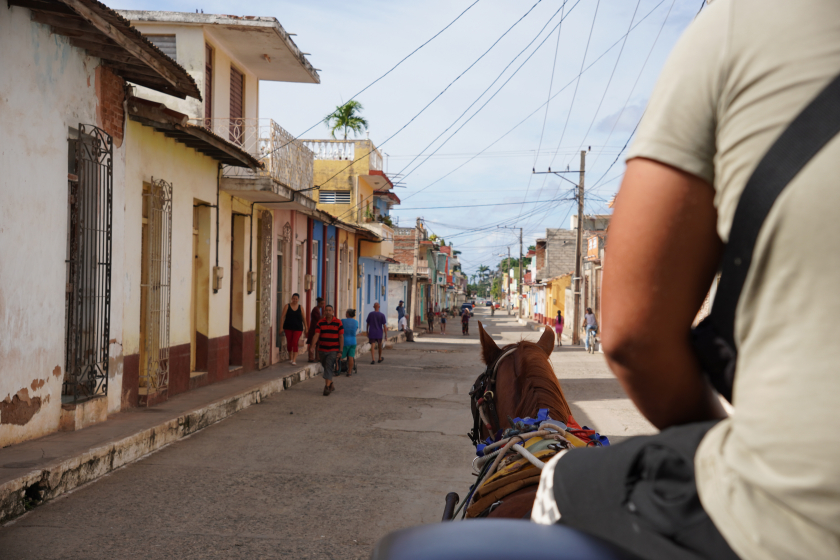
Trinidad has very few tourists this season, and the absence of the traditional changui music makes the city seem rather quiet.
The enthusiastic young man explained as he stopped at a café next to Plaza Mayor for me to enjoy a glass: “Canchanchara is an invigorating Cuban cocktail that originated in this town, created by guerrilla fighters during Cuba’s war for independence. The simple recipe includes rum, lime, honey, and ice. It’s served in tiny earthenware jugs that fit in the palm of your hand, yet are enough to give you a euphoric feeling. Canchanchara is considered the oldest known Cuban cocktail!” Roberto stopped the car at the blue bell tower of the city’s history museum, a popular spot for tourists to photograph in Trinidad and offering panoramic views of Trinidad from above – the small streets, the red tiled roofs, and the distant Escambray mountain range. He added proudly, “The cover of Lonely Planet’s Cuba travel guide features a picture of our old Trinidad!”
Historic city of Santa Clara
In contrast to the grand architectural buildings of Havana, or the restored, time-worn structures of Trinidad, Santa Clara is a small town in the Villa Clara province. With only about 255,000 residents, Santa Clara boasts a rich and diverse history and culture. As someone passionate about exploring culture and history, I chose Santa Clara as my next destination while discovering Cuba.
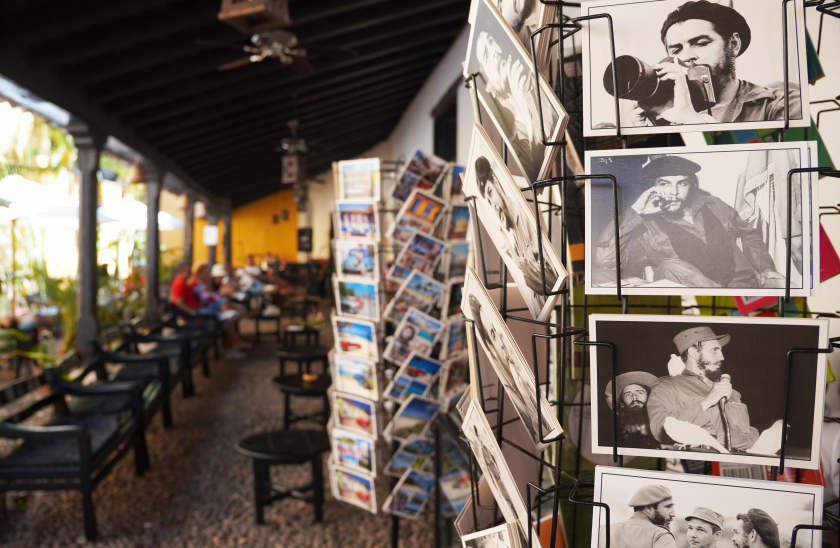
Santa Clara's historical traditions and culture are incredibly diverse and rich.
My host recommended the Museum of the Revolution café, located just a few streets from the city center, a must-visit for any tourist in the city. The café is charming and artistically decorated like a miniature museum, showcasing unique images and artifacts related to the Cuban Revolution, the hero Che, and the leader Fidel Castro. Upon entering, a fair-skinned, blonde-haired waitress introduced me to Santa Clara, particularly the incredibly important historical battle of the Cuban Revolution in 1957 that overthrew the Batista dictatorship.
This uprising has gone down in history, is widely recounted in Cuba, and is famous in many countries because it was an extremely important battle not only for the Cuban people but also for the world. In Santa Clara that year, Che Guevara's forces, along with many other revolutionary fighters, overthrew the regime, achieving a resounding historical victory. Today in Santa Clara, a memorial to Che Guevara has been built in the city, a very important destination that the staff member said I shouldn't miss. Priceless and almost unique photographs are preserved in this cafe. Santa Clara is small but rich in historical value, and the people are friendly and enthusiastic, just like the staff member who spent hours telling me fascinating historical stories about Santa Clara.
Varadero Beach Paradise
My host, Juan Carlos, in Santa Clara, was hesitant, thinking I didn't like the city, so he said to me as we parted ways: "If you're not satisfied with Cuba, then go to Varadero. There you'll feel like you're in paradise; Cuba is right here in Varadero." So I took a bus from Santa Clara to this beautiful seaside city on the northern coast of Cuba. Here, you can easily buy bus tickets by booking online or asking your guesthouse owner to buy them for you. You can also buy tickets directly at the bus station using a credit card, which is quite inexpensive.
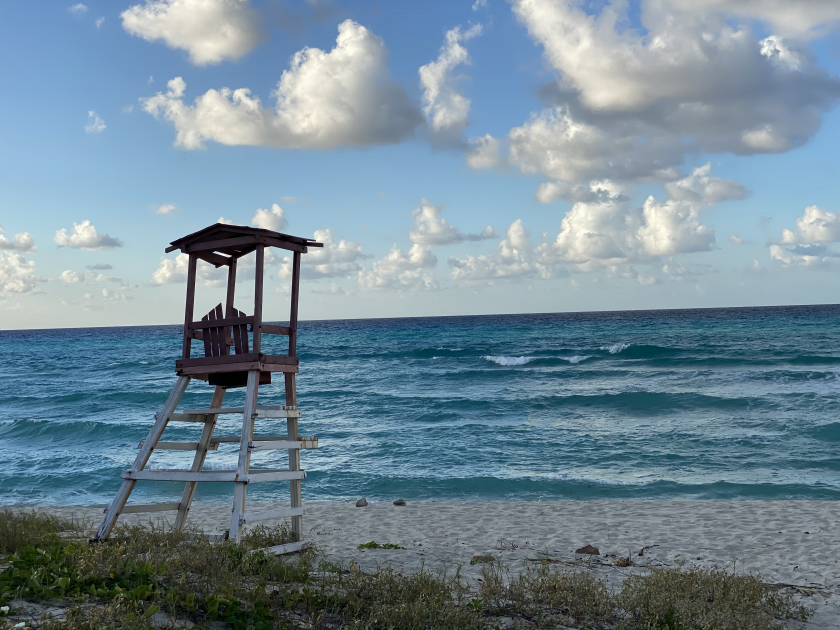
If you're not satisfied with Cuba, then go to Varadero; you'll feel like you're in paradise there.
Varadero is a famous seaside tourist city in Cuba and the Caribbean. Despite its small size of only 1.2 square kilometers and a coastline stretching over 22 kilometers, Varadero boasts a vast number of hotels and resorts with tens of thousands of rooms, serving millions of visitors annually. The middle and upper classes from North America and Europe frequently choose 4- and 5-star resorts for their vacations because the sea here is beautiful year-round and is not significantly affected by storms.
I chose a guesthouse on Street 28, facing a white sandy beach, just over a hundred meters from the bus station and not too far from the traditional market in Varadero. Swimming, strolling along the beach, sightseeing, and shopping were what I experienced in this city. The scenery and the sea here seemed flawless; everything was beautiful, the water crystal clear, the long, clean, smooth sandy beach... the scenery in Varadero was perfect visually, satisfying the eyes with a true seaside paradise.
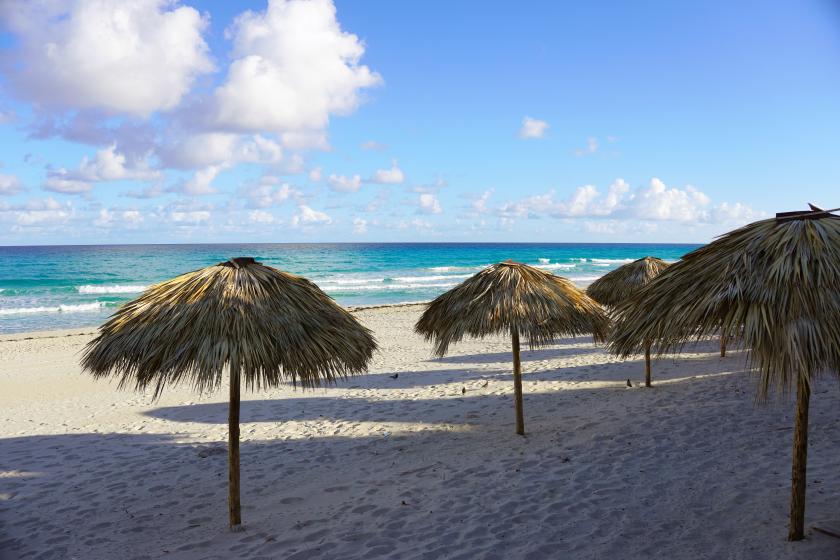
Varadero Beach, a tranquil seaside paradise in Cuba.
Vinales Cigar Valley
On my last day in Cuba, I hesitated about whether to visit Vinales because I don't have a particular fondness for cigars or cigarettes. However, cigars are considered the "national treasure" of Cuba, so missing this destination would mean my Cuban experience wouldn't be complete. So, I ended up sharing a taxi to Vinales on a bright, sunny day. Located nearly 180 km from Havana and surrounded by large mountain ranges, the Vinales valley is even more appealing thanks to the vernacular architecture of its farms and villages, which illustrate the cultural development of the Caribbean islands and Cuba.
As the car sped up the steep slopes, a valley bathed in the green hues of palm forests and tobacco hills caught our eye. The driver, who spoke a little English, introduced the area, saying, “The Vinales Valley is also home to the largest tobacco plantations in the country, producing cigars. The town of Vinales is also home to many families living in red brick houses, with charming, quaint streets.”
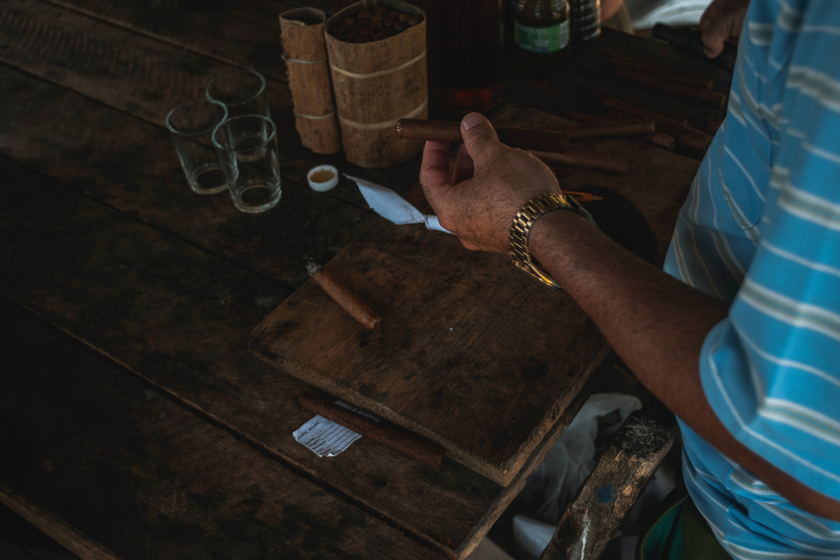
Cigars are a product that no tourist should miss when visiting Cuba. (Photo: Unsplash)
I also learned that in the valley there are prehistoric paintings depicting the evolution of human life and its changes over time. These paintings are painted on a mound called Pita, and the stones where they were painted have been cleaned to prevent future erosion by rain. The paintings depict giant animals and mollusks representing the indigenous Guanahatabey people. Before leaving, I didn't forget to buy some cigars as gifts for friends and family, and a cigar pipe to complete my collection of travel stories and interesting mementos of Cuba.