VI
VI



The traditional salt-making craft of Sa Huynh, a distinctive cultural feature of Quang Ngai province, has a long history. Through generations, the people of Sa Huynh have persistently preserved and practiced the traditional handcrafted salt production methods of their ancestors. The salt-making process here follows the rhythm of nature, usually beginning in the first lunar month, when the northerly winds begin to blow strongly, and lasting until the seventh lunar month, when the summer rains begin. During this period, the intense sunlight and strong sea breezes create ideal conditions for the evaporation of seawater and the crystallization of salt.
Today, the Sa Huynh salt fields span an area of approximately 106 hectares, providing a livelihood for over 560 salt-farming households. The vast white salt fields stretch out like giant mirrors reflecting the sunlight, creating a picturesque and prosperous scene. Annually, the Sa Huynh salt fields supply the market with around 6,500-7,000 tons of salt, making a significant contribution to the salt supply for the region and the entire country. This salt production not only meets daily consumption needs but also serves the food processing industry, especially seafood processing. Besides its economic value, the Sa Huynh salt fields also hold profound cultural value, serving as a historical witness to the region and a source of pride for its people.

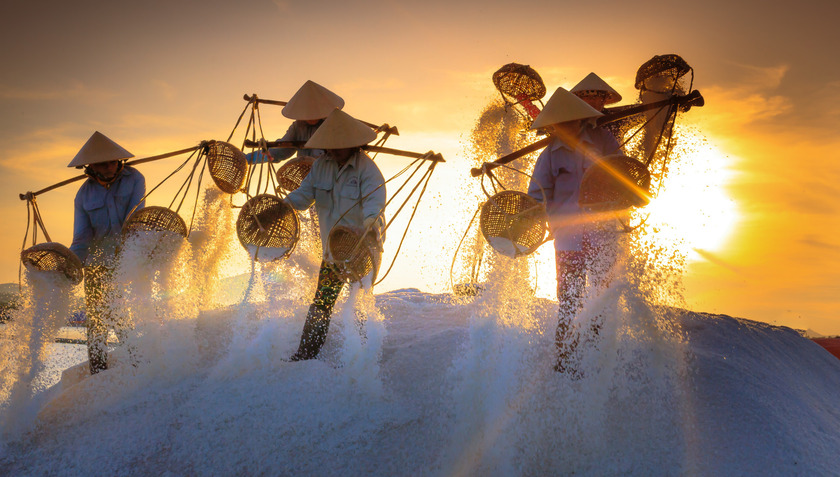
Sa Huynh salt-making, a unique traditional craft in Duc Pho town, Quang Ngai province, is a National Intangible Cultural Heritage.
The official inscription of Sa Huynh salt-making as a National Intangible Cultural Heritage is of immense significance. This is not only a strong affirmation of the long-standing and unique cultural value that this salt-making craft has preserved and passed down through generations, but also a powerful impetus, further strengthening the conservation and promotion of the fine traditional values of salt making in the Sa Huynh region.
This recognition serves as a testament to the intangible cultural values embedded in every stage of salt production, from selecting the land, channeling water, drying the sand, to observing the weather and the experience accumulated over hundreds of years. It honors the skill, meticulousness, and profound understanding of nature of the salt farmers of Sa Huynh. At the same time, being recognized as a National Intangible Cultural Heritage also opens up new opportunities for the Sa Huynh salt industry. It facilitates the promotion and introduction of the salt industry to domestic and international tourists, contributing to the promotion of community tourism and sustainable local economic development.
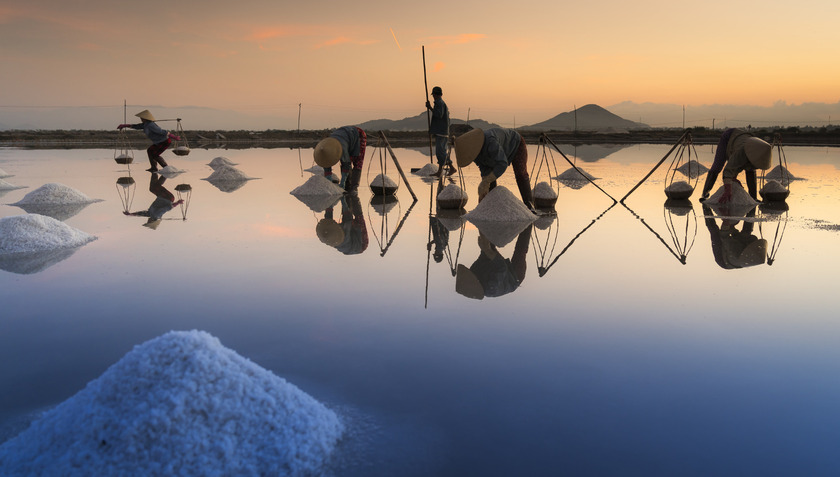
This event is not only a source of pride for the people of Sa Huynh but also a well-deserved recognition of the cultural, historical, and economic values that this salt-making industry has contributed to the country over generations.
Furthermore, this event carries profound educational significance, fostering pride in the homeland's traditions within the community, especially among the younger generation. It encourages future generations to continue learning, preserving, and promoting the precious cultural values of Sa Huỳnh salt production, ensuring that this traditional craft will not fade away over time but will continue to live on alongside Vietnamese culture. This recognition goes beyond simply preserving a craft; it also preserves a part of the history, culture, and people of the Sa Huỳnh region.