VI
VI



Twenty-five years ago, the My Son temple complex (Duy Xuyen district) and the ancient town of Hoi An, Quang Nam province, were recognized by UNESCO as World Heritage Sites.

According to Ho Quang Buu, Vice Chairman of the Quang Nam Provincial People's Committee, 25 years ago, Hoi An Ancient Town, which faced numerous difficulties and the risk of its historical sites collapsing, has now undergone an emergency rescue operation and still retains its serene and ancient charm within a nearly perfectly preserved complex of traditional urban architecture.
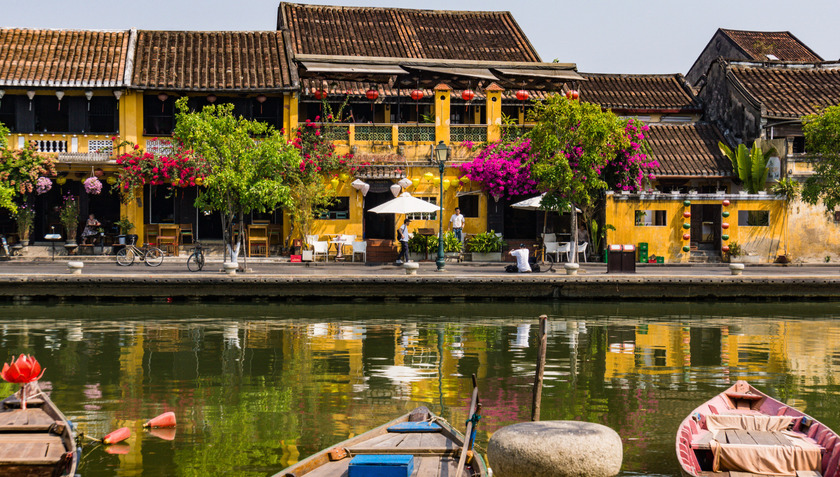
From an ancient town gradually falling into oblivion, Hoi An has undergone a spectacular journey of revival.
Hoi An is currently a leading tourist destination in Vietnam, the region, and internationally; the lives of the majority of the people have improved significantly thanks to the benefits brought about by the heritage. This is a tremendous and proud achievement throughout the 25 years of preserving and promoting the value of the Hoi An Ancient Town World Cultural Heritage site.

Hoi An has become one of the most exemplary examples in Vietnam and the world of preserving and promoting tangible and intangible cultural heritage through close cooperation between the government and the local community to boost socio-economic development. This approach not only helps preserve cultural identity and community autonomy but also ensures sustainability through the active participation of local people.
Hoi An City has made significant efforts to preserve and promote over 50 traditional crafts, including 6 recognized as National Intangible Cultural Heritage. Besides the well-known Bài Chòi folk art, recognized by UNESCO as a Representative Intangible Cultural Heritage of Humanity, in 2023, the Lantern Festival and the Mid-Autumn Festival in Hoi An were added to the list of National Intangible Cultural Heritage. Notably, in October 2023, Hoi An City was officially inscribed into the UNESCO Global Creative Cities Network.

However, thanks to the tireless efforts of the community, Hoi An has been meticulously restored and preserved, regaining its original beauty, and has been recognized by UNESCO as a World Cultural Heritage site.
Tourism activities in the ancient town: if in 2000, Hoi An had 192,420 visitors, this number increased to nearly 5.7 million in 2019; the total number of tourists visiting and staying in 2023 reached 7.5 million, including 3.8 million international tourists, with tourism revenue of 7,950 billion VND. For the first nine months of 2024, the total number of tourists visiting and staying is estimated at 6.5 million, an increase of 6% compared to the same period in 2023; of which, international tourists reached 4.3 million, and tourism revenue for the first nine months of 2024 reached 6,230 billion VND, an increase of 8% compared to the same period in 2023.
In the current development trend, the ancient urban heritage of Hoi An is facing many risks and challenges related to urbanization, climate change, natural disasters, epidemics, and management failing to keep pace with the rapid development of tourism. This has caused much concern for both the city's political system and the team of people working to preserve and promote Hoi An's heritage.