VI
VI


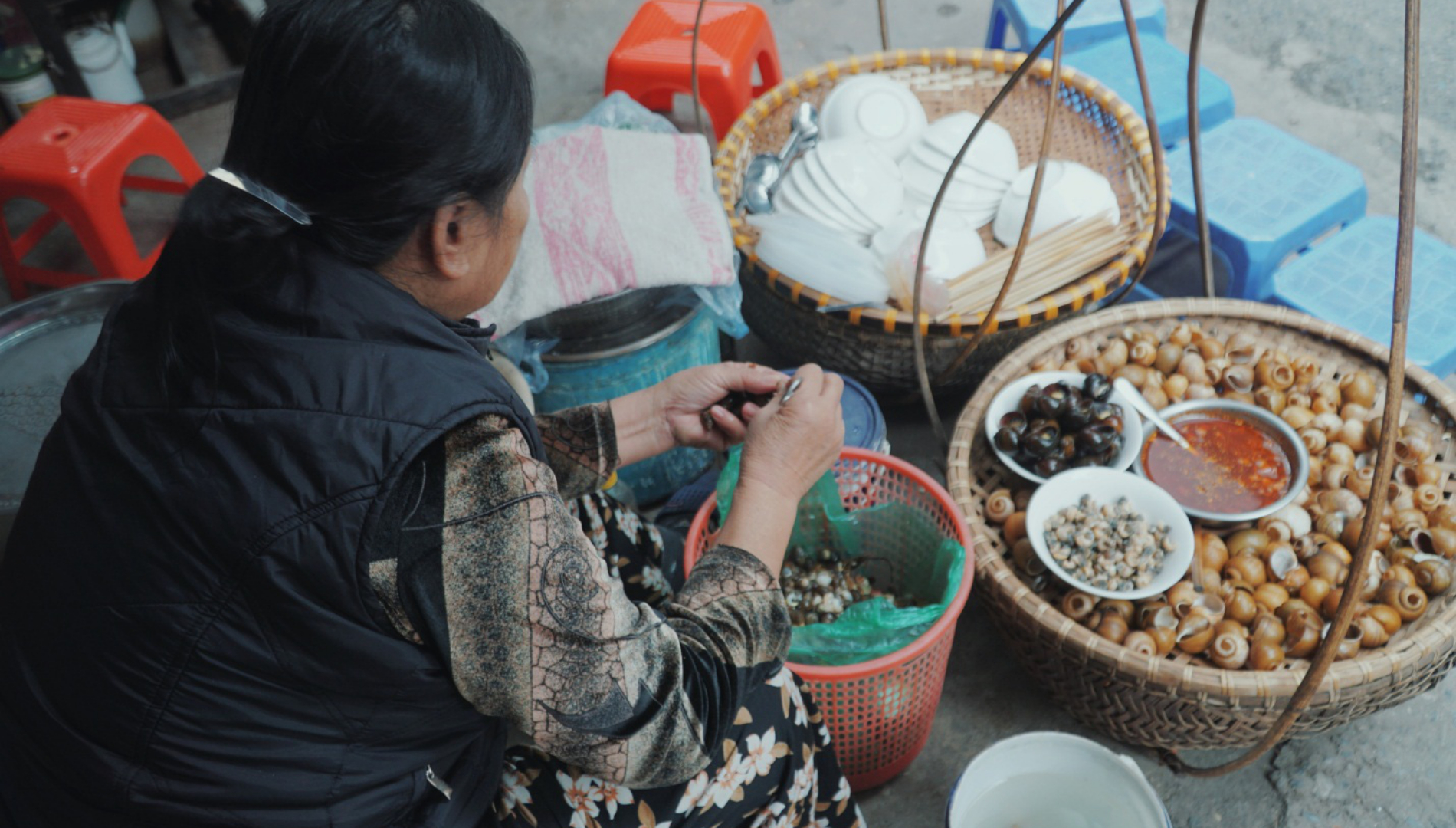
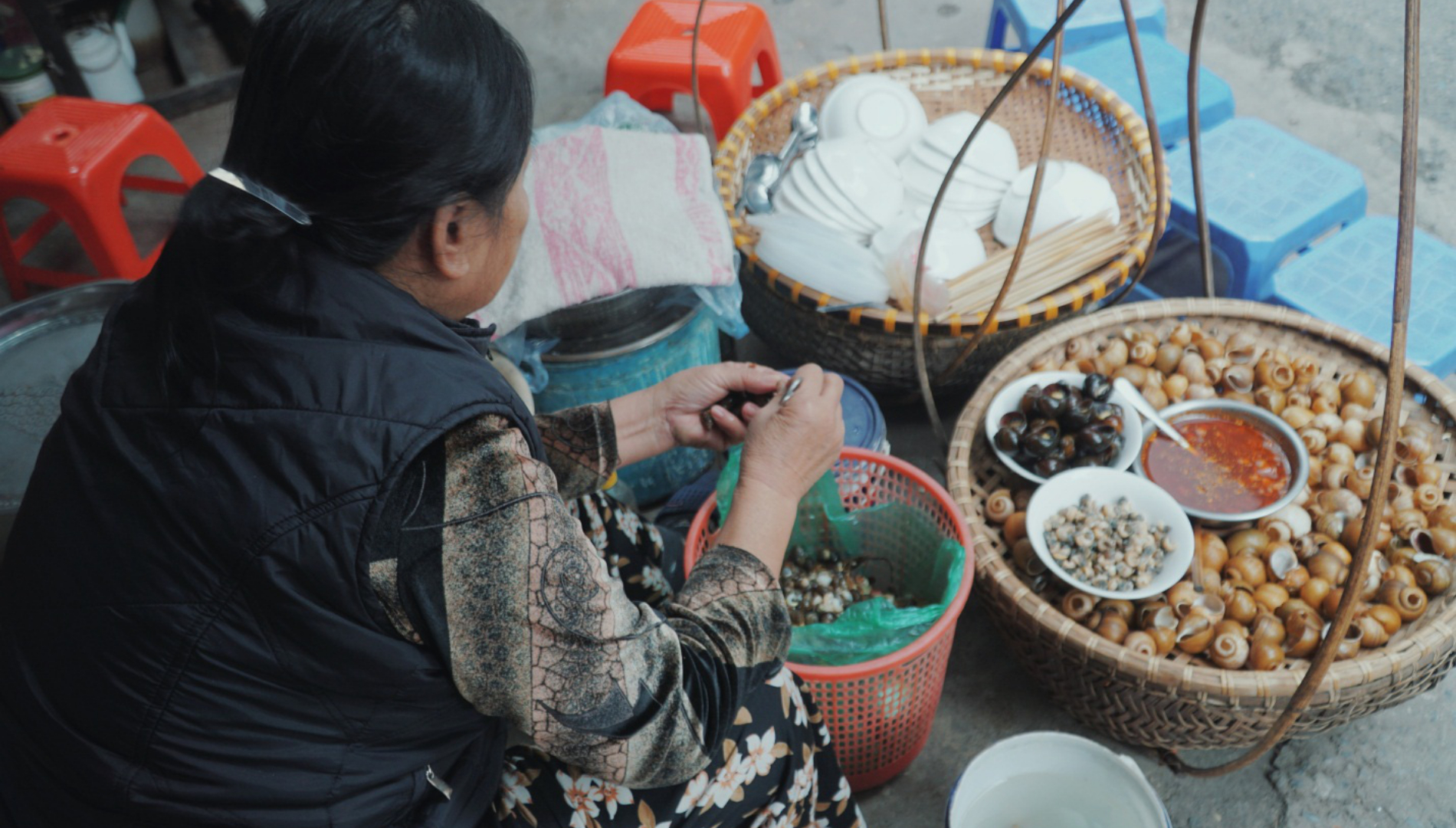
Cold snail noodle soup, a simple yet sophisticated dish, has transcended the streets of Hanoi to conquer the hearts of diners both domestically and internationally. On culinary forums, debates about its distinctive flavor and the proper way to enjoy it never cease. Images of a bowl of snail noodle soup have even appeared on American television, carrying with them the pride of Vietnamese people in this culinary masterpiece.

Although the exact origins of cold snail noodle soup remain unclear, the name has subtly permeated the consciousness of Vietnamese people, especially those in Hanoi. It can be said that Vu Bang elevated this humble dish to a new level when he used eloquent words to praise it in his work "Delicious Dishes of Hanoi." Thanks to this, cold snail noodle soup is not just a simple dish but has become a cultural symbol, an indispensable part of Hanoi's culinary landscape.
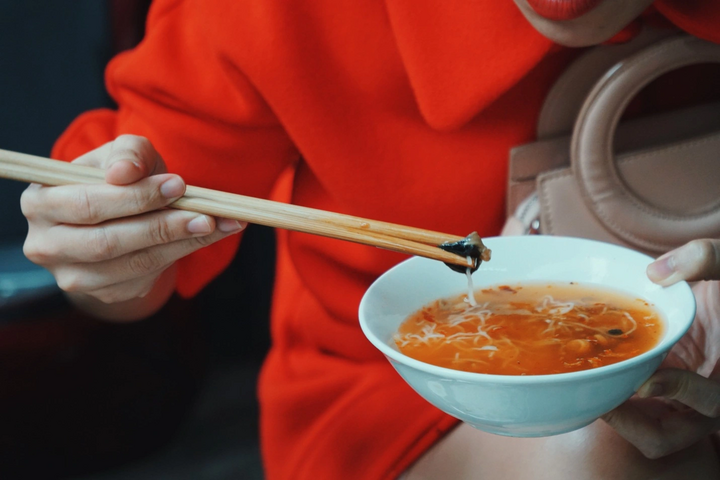
Hanoi is famous for countless noodle dishes, but if you had to choose one iconic noodle dish, food connoisseurs would undoubtedly name snail noodle soup.
Cold snail noodle soup takes the soul on a "wandering" journey.
In his book "Delicious Dishes of Hanoi," writer Vu Bang stated that "snail noodle soup is a dish that can be said to have reached the pinnacle of culinary art for the people of Hanoi." According to Vu Bang, what dish is as extraordinary as snail noodle soup? Just seeing the woman carrying the basket passing by is enough to make you crave it; all your taste buds seem to be in turmoil, constantly increasing your salivary glands.
More than just a meal, snail noodle stalls are small but meaningful pieces in the mosaic of Hanoi's memories. The image of the fragrant broth, the delicious bowls of noodles being served, the vendors' calls... all evoke a warm, familiar feeling. Each time one enjoys a bowl of snail noodles, they not only satisfy their hunger but also return to their childhood, to beautiful memories.
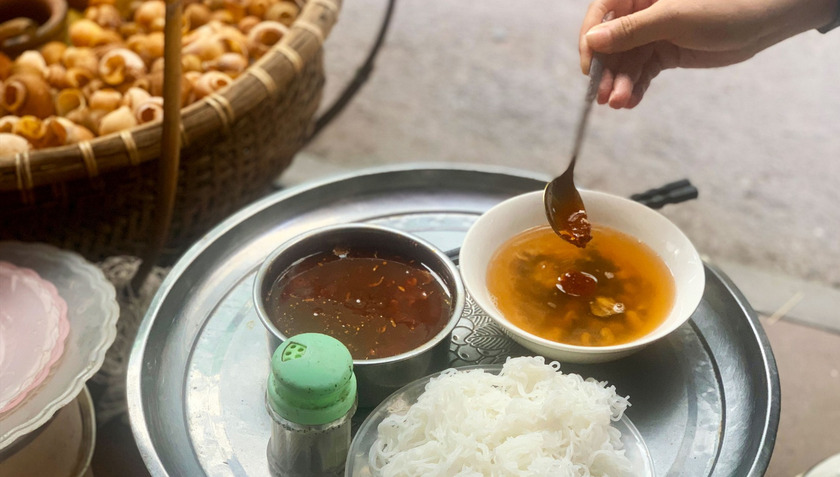
Many people assert that it's not hot snail noodle soup that's truly delicious, but rather cold snail noodle soup.
In the chapter "Still Hanoi's Delicacies," from the book "Hanoi: Thirty-Six Streets and Alleys," writer Thạch Lam says that he liked the snail noodle vendor's stall the most, not because of the food she sold, but because he enjoyed watching people eat. "Because I heard that her snack was an indispensable part of a scene of ordinary people working in the alleys and on the sidewalks. People gathered around to eat the snail noodles in such a delicious way!" Thạch Lam wrote.

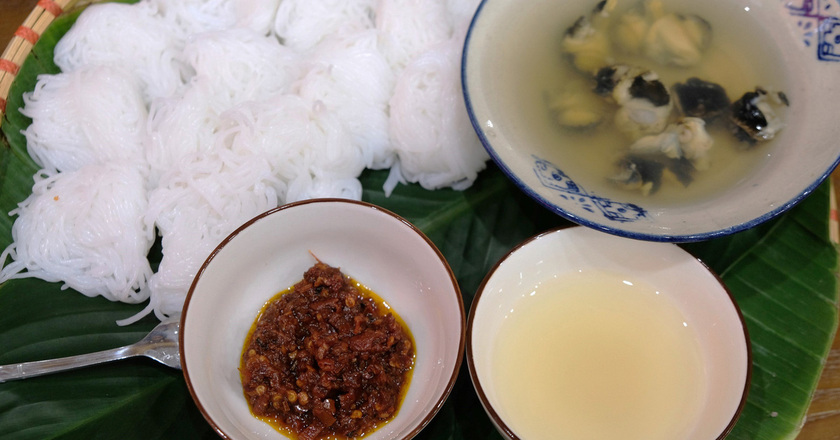
Cold snail noodle soup is eaten in the style of a dipping noodle dish, with a plate of noodles and a separate bowl of broth containing snails.
In the old days in Hanoi, families would gather to eat snails while watching the moon. From the Mid-Autumn Festival to October was the best time for snails. Summer or winter snails were very thin and mostly baby snails. There's a folk saying: "Better to eat snails in May than in the summer."
Hanoi's "fancy" snail noodle soup
Hanoi residents say that cold snail noodle soup is usually made with clam noodles or coin noodles, using periwinkle snails. It only contains snail broth and fermented rice vinegar, without shrimp paste. Tomatoes are stir-fried with chili peppers to create a reddish hue, which is added when serving, giving it a subtle spiciness. This is a traditional Hanoi afternoon treat, sold by street vendors carrying their wares throughout the city.
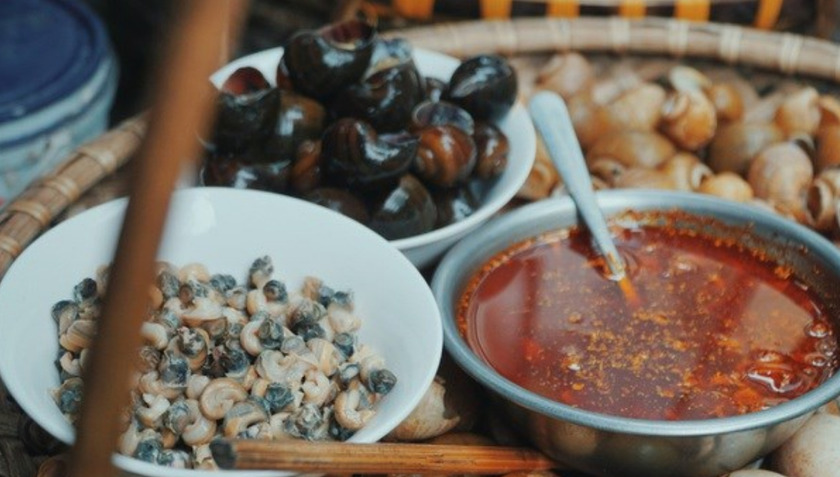
Just a few small, plump snails in a bowl of watery broth, prominently featuring the rich, sour aroma of fermented vinegar, with a layer of chili oil floating on top—half intensely spicy, half glistening with a reddish hue—as if inviting you to eat.
To make delicious cold snail noodle soup, vendors often go to snail markets to select batches of snails, such as periwinkle and apple snails, that are not slimy or fishy. Then, they soak and scrub the snails clean. This step needs to be done carefully because the broth is made from the water used to boil the snails. The snails are boiled just enough so that the meat remains fresh and the flavor infuses into the broth. The snail broth is then simmered to make a soup for diners to enjoy.
Storing the broth in an earthenware pot will preserve its flavor longer than storing it in a regular pot or basket. The broth is made from boiled water mixed with fermented rice vinegar, seasoned to taste. The noodles served with cold snail noodle soup must be coin-shaped noodles, also known as clam noodles or snail-scale noodles; the most authentic version comes from Phu Do village.
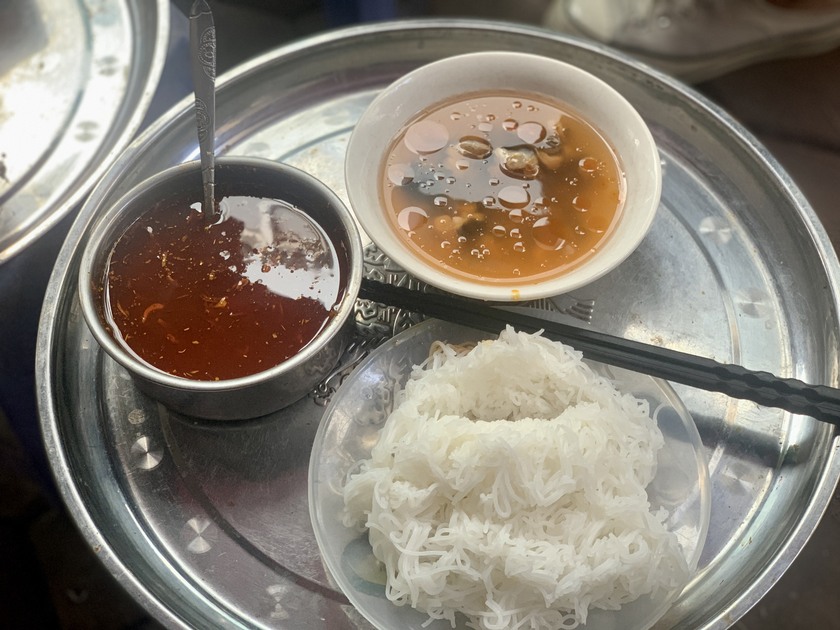
Just large, coin-sized chunks of white rice noodles placed on a bamboo tray lined with a green banana leaf.
Most diners prefer eating cold snail noodle soup in the summer because of its refreshing, light flavor and lack of oil and grease. Unlike modern bowls of snail noodle soup overflowing with snails, pork sausage, beef, and even duck eggs, cold snail noodle soup remains simple, consisting of a single bowl with snails, a few noodles, and broth garnished with a little annatto oil and chili.
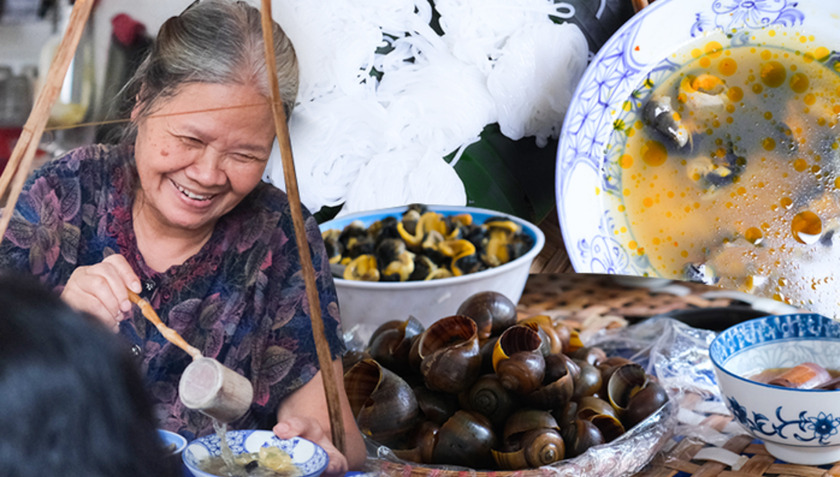
Cold snail noodle soup is truly a light and refreshing snack, leaving you wanting more even after you've finished, and you'll feel a lingering sense of regret even after you've left.
The key to the broth's distinctive flavor comes from the fermented rice vinegar made from glutinous rice. The vinegar is homemade in different places, so the taste will vary. Whether you can handle spicy food or not, diners should add a little chili paste to enhance the color and flavor of the cold snail noodle soup, with the spiciness complementing the light, tangy, and fragrant broth.
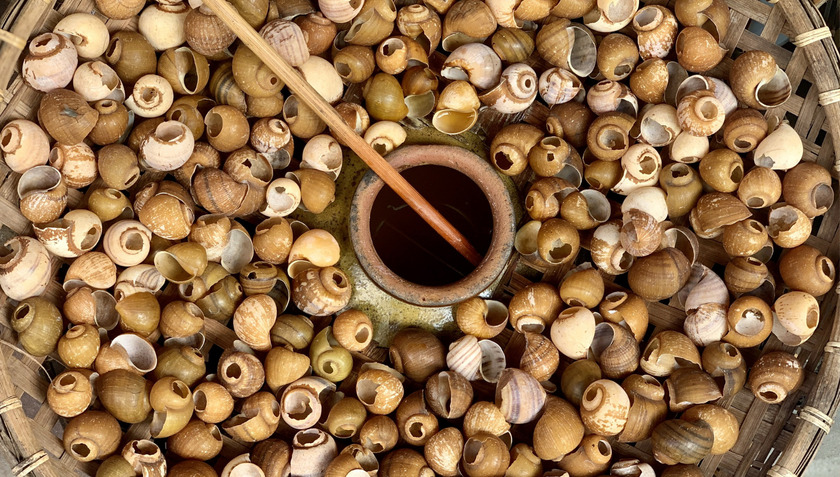
Specialties showcasing the exquisite flavors of Hanoi.
Although it's unclear exactly when or where this dish originated, it's certain that the snail noodle stalls have become a familiar and characteristic sight in the alleyways of the capital. And even those native to Hanoi who live far from home can never forget the comforting taste of a bowl of snail noodles enjoyed on a leisurely autumn afternoon.